Polaroid Fotobar Stores Designed To Print ‘Trapped’ Photos From Instagram, Smartphones

Things You Can Do With Your Instagram Photos


Retro, meet retro.

Polaroid is planning to open at least ten “experimental” retail Fotobar stores, where customers can edit and print photos taken on their smartphone and stored by services like Instagram, Facebook and Picasa.

The first Polaroid Fotobar is set to open in Delray Beach, Fla., next month and will be outfitted with work and edit stations where customers can wirelessly transmit photos from their phone. Uploaded photos can be edited for red eye, contrast and brightness with the option to add another filter to the photo. (You know, in case the Instagram filter you’d already applied wasn’t enough.) The store will also offer a variety of printing options, including poster-sized blowups and frame selections, and will even let you print on materials like bamboo, metal and acrylic.

For Polaroid, the mission of Fotobar is to free your “trapped” photos.

“There are currently around 1.5 billion pictures taken every single day, and that number continues to grow in tandem with the popularity and quality of camera phones,” Warren Struhl, Fotobar’s founder and CEO, said in a statement. “Unfortunately, even the very best of those pictures rarely ever escape the camera phone with which they were taken to be put on display around our homes and offices. Polaroid Fotobar stores are going to change all of that.”

New-age Instagram and the 75-year-old Polaroid have, in a way benefitted from one another. While Instagram relies on the analog look and feel of past Polaroid photos, the app also symbolizes the instant viewing gratification that Polaroid once provided to both amateur and professional photographers. While more impatient users may be perturbed by the 72-hour wait time for their prints, Polaroid is insisting a unique experience through workers known as “phototenders.” At the company’s Florida location, a room called “The Studio” will be available for customers to rent for private parties, attend photo classes and exhibit portrait photography.

Polaroid plans to open Fotobars in New York, Las Vegas, Boston and elsewhere in 2013. The company also plans to expand the printing service to incorporate photos from more sites and apps: Over at TheNextWeb, they’re crossing their fingers in the hopes that Flickr, Google+ and 500px are added next.

Check out some pictures of the upcoming store below: [images via Polaroid Fotobar]

polaroid fotobar

polaroid fotobar


Manit Sriwanichpoom’s ‘Obscene’ Art Exhibition Contains Sacred Dildos, Baroque Nudes (NSFW PHOTOS)

As the new year brings a new barrage of self-declared “shocking” art exhibitions, how does an artist actually unnerve a largely desensitized audience? Thai photographer Manit Sriwanichpoom‘s new exhibition “Obscene” delivers with an unusual combination of eroticism and introspective insecurity.

Sriwanichpoom’s exhibition is made up of two parts, both exploring the masculine vices of greed and lust, according to the artist’s statement. The first portion, dubbed “Holy Machismo,” features close-up, blurry shots of traditional Thai lingams (sacred fertility symbols or holy dildos), or what Coconuts Bangkok awesomely described as a “Penis Twilight Zone.”

The confrontational images contain deeper meaning than merely an uncanny resemblance to sci-fi tropes, however. In fact, the images represent Sriwanichpoom’s sexual insecurity as he contemplates his balding head and loss of virility.

The gaudier portion of the show, titled “Obscene,” features sumptuous Baroque nudes in various poses. Sriwanichpoom criticizes and exaggerates vulgarity while reveling in it a bit himself with his seductive models sporting Thai nationalist colors and opulent golden accoutrements. In one image, a female nude holds the Thai constitution in one hand and a gun in another, which acts as a not-so-subtle swipe at government power and corruption in the Southeast Asian country.

“Obscene” is currently on view at H-Gallery Chiang Mai in Thailand. Get a taste of the subversive subject matter below and let us know if you think the NSFW artwork is as “obscene” as the gallery and artist both claim.

Warhol At Auction: The Pop Artist Reigns As World’s Biggest Seller In 2012 (PHOTOS)

The auction results are in — pop artist extraordinaire Andy Warhol has snagged the position as the world’s biggest seller at auction last year.

The Campbell Soup connoisseur raked in $380.3 million in sales in 2012, according to figures compiled by Artnet for Bloomberg News. Warhol’s “Double Elvis” fetched a whopping $37 million, and his 1962 “Statue of Liberty” sold for an even more impressive $43.7 million at auction.

The pop artist beat out other high-selling artists like Pablo Picasso, last year’s most expensive artist Zhang Daqian, and the world’s biggest selling living artist, Gerhard Richter. According to Bloomberg, Warhol’s all-time auction sales skyrocketed to $2.9 billion, while Picasso remains the top seller overall — raking in around $5 billion in total sales.

The past year was a profitable one for post-war and contemporary artworks as a whole, with auctions at Sotheby’s, Christies and Phillips de Pury & Co. raising a record $1.1 billion in the month of November. Christie’s alone made $412.2 million in its sale of contemporary artists like Franz Kline, Jeff Koons, Jean-Michel Basquiat and Richard Diebenkorn.

“Contemporary art is where the dynamic energy is at auctions,” Jonathan P. Binstock, senior adviser in postwar and contemporary art at Citi Private Bank Art Advisory & Finance, said in an interview with Bloomberg. “The market is selective and concentrated on works by certain artists. The instant recognizability of masterpieces by Warhol and Richter makes them well suited to performing well.”

The record-breaking rankings of Warhol, Picasso and Richter seem to indicate the continuing dominance of Western post-war art in the international market. Who will shake it up in 2013? Let us know your thoughts in the comments below.

Scroll through the slideshow of the biggest art auction sales of 2012, including the year’s most expensive — Edvard Munch’s $119 million “The Scream.” For more on the art world’s exorbitant prices, check out our article on the art market bubble here.

For the Love of Forgery

Jonathon Keats is the author of Forged: Why Fakes are the Great Art of Our Age ($19.95, OUP)

“Utterly rotten.” Those were the words with which Tom Keating described the art world that he failed to impress as an artist, and subsequently humiliated as a forger, passing off fake Gainsboroughs and Renoirs to gullible collectors and curators who declined to acquire paintings bearing his own signature. To buttress his case, Keating embellished his counterfeits with anachronistic details, ensuring that people would eventually realize they’d been duped.

Keating’s story, which played out primarily in England in the 1960s and ’70s, can be read as a typical tale of vengeance, and his popularity following his capture — including his own TV program on Channel 4 in the UK — can be seen as a standard case of underdog allure. Keating deserves more credit. A closer look at his work and its impact reveals a challenge to tradition more subtle, and probably more potent, than the majority of Dada and Pop Art. In a stroke, Keating’s paintings called into question sanctified notions ranging from the authority of connoisseurship to the importance of authorship to the cult of originality. And they did so with a directness that was accessible not only to insiders, but to everybody.

Keating is far from the only forger whose work is as worthy of serious consideration as the art of acknowledged masters. Han van Meegeren invented a whole period in the career of Johannes Vermeer — making up Biblical scenes unlike anything Vermeer ever painted — effectively hijacking Vermeer’s reputation. Elmyr de Hory passed off fakes by Picasso and Modigliani by faking his own past, pretending to be a fugitive aristocrat desperate to sell his belongings. Eric Hebborn made his fakes more difficult to detect by claiming that some authentic old master drawings were his counterfeits.

In myriad ways, forgers have powerfully challenged ‘legitimate’ art in their own time, breaching accepted practices and upsetting the status quo. Moreover, many of the present-day cultural anxieties that are major themes in the arts — from the ways we establish value to the reasons we trust our beliefs — are more provocatively confronted by forgers than by the vast majority of contemporary artists. A successful forgery depends on a keen sense of our vulnerabilities. When they’re exposed, forgeries reveal aspects of our character we’ve ignored or suppressed.

Vilified by institutions and applauded by outsiders, art forgery has been much discussed as a crime. The time has come to look at great forgeries as high art.

Richard Parsons, Ex-Time Warner CEO, Leads Drive to Restore Historic Harlem Hotspot

(From left) Thelonious Monk, Howard McGhee, Roy Eldridge, and Teddy Hill, Minton's Playhouse, New York, N.Y., ca. Sept. 1947

This old dive in Harlem has been shuttered for about as long as it had been open. Yet Minton’s Playhouse will always be known as the cradle of bebop, where the likes of Dizzy Gillespie, Thelonious Monk and Charlie Parker jammed into the night.

Money woes long ago left the doors locked and the electric blue marquee on West 118th Street dark.

But on a recent frigid morning, there were signs of life, a steady beat with far-reaching reverberations: hammering inside by construction workers, and a public hearing notice for a liquor license taped to the window.

The applicant is Harlem Jazz Enterprises L.L.C., led by the businessman Richard D. Parsons, who played trumpet growing up in Bedford-Stuyvesant, Brooklyn; headed two Fortune 500 companies, Citicorp and Time Warner; and has always wanted to open a jazz spot in Harlem. “I love jazz,” Parsons said in an interview. He recalled the snappy supper clubs of the 1950s and ’60s, when good music and good food made uptown “something special.”

“And you must know the whole story,” he continued. “I took my senior prom date to a place called the Hickory House, and we heard Billy Taylor. And I still remember it. It was my first adventure in being a grown-up, to listen to some good jazz.”

Parsons said such clubs had disappeared. “They have some jazz venues,” he said. “But most of them you wouldn’t go to eat. And the elegance has kind of left the building.” His aim, he said, “is to try to create that feel.”

Recently, there has been a turnover of jazz clubs in Harlem. The popular St. Nick’s Pub, which opened in the ’60s, shut down in 2011 after the police raided it for not having a liquor license. The site of the well-known Lenox Lounge began the new year with a new owner, Richard Notar, a former managing partner in the Nobu restaurant chain. The previous owner of the Lenox Lounge, who has trademark rights to the name, plans to open a new venue on Lenox Avenue.

Past efforts to revive Minton’s Playhouse have sputtered.

Henry Minton, a tenor saxophonist, opened the club in the late 1930s on the first floor of the Cecil Hotel. About 40 years later, it closed, and the city seized the property from the landlord, Cecil Hotel Corporation, for back taxes. In 1987, the city handed it to the Harlem Community Development Corporation, which made Housing and Services Inc., a nonprofit, low-income housing developer, the landlord. The building became an apartment complex for formerly homeless adults.

In the mid-1990s, a group of investors that included Robert De Niro and the restaurateur Drew Nieporent was interested in the Minton’s Playhouse space, as was Quincy Jones. In 2006, the jazz club impresario Earl Spain, after leaving St. Nick’s Pub, reopened Minton’s, only to see it close in 2010.

Read more: NY Times

Diana Ross Causes Scene At Beverly Hills Restaurant

The diva strikes back.

Never one to shy away from dramatics, former Supremes headliner Diana Ross caused a scene in a Beverly Hills restaurant last Thursday after she was told she would have to wait to be seated.

Ross arrived at upscale Italian eatery La Scala to have lunch with her daughter when she was told the restaurant does not seat anyone without a reservation until the entire party has arrived. Because Ross showed up ahead of her daughter, she was asked to wait. She declined and marched on to a corner booth anyway, according to the New York Post.

The Post reports that management walked over to discuss the restaurant’s seating policies with the singer, telling Ross that she would not be served if she didn’t wait for her daughter to arrive. Naturally, Ross refused to move and a scene ensued once her daughter did show up, with both women eventually storming out of the restaurant.

“I’m sorry that Ms. Ross had a problem with that and she feels that the rules didn’t apply to her,” La Scala owner Gigi Leon told the Post. “Our policy is that we don’t sit incomplete parties. If people jump the line, our policy is we don’t serve them, and she was told that. We treat everyone the same, whether you’re famous or not. We love having her as a customer. We’d be happy to have her back.”

David Bowie Album: ‘The Next Day’ Will Be Legend’s First Record In 10 Years, Led By New Single ‘Where Are We Now?’

 01/08/13 03:38 AM ET EST AP

NEW YORK — David Bowie is celebrating his birthday by releasing new music.

The English singer announced Tuesday, his 66th birthday, that he has released his first song in 10 years titled “Where Are We Now?”

A new album, “The Next Day,” will be out March 11 and 12 in the United Kingdom and the United States, respectively.

The slow groove was released on iTunes and in 119 countries. It was produced by longtime collaborator Tony Visconti.

Bowie’s last album was 2003’s “Reality.” The fashion forward singer debuted in the 1960s, releasing multiple successful albums with sounds that range from rock to pop to glam rock to soul and funk.

The Rock and Roll Hall of Famer’s hits include “Let’s Dance,” `’China Girl,” `’Fame” and “Dancing In the Street.”


Amy Winehouse Inquest Report: Second Coroner’s Review Confirms Singer Died Of Accidental Alcohol Poisoning

AP  |  Posted: 01/08/2013 4:55 am EST

LONDON (AP) — A second coroner’s inquest confirmed Tuesday that Amy Winehouse died of accidental alcohol poisoning when she resumed drinking after a period of abstinence.

Coroner Shirley Radcliffe ruled that the 27-year-old soul singer “died as a result of alcohol toxicity” and recorded a verdict of death by misadventure. She said there were no suspicious circumstances.

She said that Winehouse “voluntarily consumed alcohol — a deliberate act that took an unexpected turn and led to her death.”

The Grammy-winning singer was found dead at her London home on July 23, 2011.

Radcliffe said a postmortem had found that Winehouse had a blood alcohol level five times the legal driving limit, and above a level that can prove fatal.

She said that that much alcohol could affect the central nervous system so much that a patient could “fall asleep and not wake up.”

Winehouse’s family did not attend the 45-minute inquest, which was held after the original coroner was found to lack the proper qualifications for the job.

The coroner later resigned after her qualifications were questioned. She had been hired by her husband, the senior coroner for inner north London.

The first inquest in 2011 produced an identical verdict.

Artists’ Works at California African American Museum Are Wide-Ranging

Charles Alston, The Negro in California History: Colonization and Exploitation

In the art world, fluff shows of corporate art collections are generally the lowest of the low. An exception is at the California African American Museum through June. “The Legacy of the Golden State Mutual Life Insurance Company: More Than a Business” surveys art from a storied corporate patron. In 1965, GSM, a black-owned firm, initiated a collection of African-American art at its Los Angeles headquarters. That was three years before the founding of the Studio Museum in Harlem. GSM became a crucial collector when the art market and museums weren’t interested in black art unless it came from Africa.

Then Golden State Mutual fell off a fiscal cliff. In 2007 it sold the cream of its art collection at Swann Auction Galleries, New York. The works at CAAM are mostly second-string, supplemented by a few loans. The quality is wildly uneven, but that’s part of the interest. This is a core sample of one of the first systematic collections of its kind. A wall label describes, in hopeful tones, the possibility of the museum acquiring the remaining works in the GSM collection.

Most interesting are two works that aren’t actually in the show. In 1949, before the official art collection began, GSM commissioned two major Harlem Renaissance painters, Charles Alston and Hale Woodruff, to paint a pair of murals for their Paul Williams-designed building in Los Angeles at Western Avenue and Adams Boulevard. They were both titled The Negro in California History, with Alston doing Colonization and Exploitation and Woodruff Settlement and Development. In 2011 the Smithsonian’s National Museum of African-American History offered $750,000 for the two murals. The Smithsonian withdrew after a West Coast outcry (and claims that the murals were worth more than offered).

That leaves the fate of the murals in the air. Though neither painting is at CAAM, the museum has a room on their history with documents, installation photos and large color reproductions. For the time being, both murals can be seen by appointment in the GSM building.

Read more: Art Info


‘The Black Chicago Renaissance’ Chronicles a Major Black Arts Movement Overshadowed by Harlem’s

Dr. Darlene Clark Hine co-author of ‘The Black Chicago Renaissance’

In 1997, Darlene Clark Hine came across an essay in which Harlem Renaissance writer Arna Bontemps argued that black Chicago had its own, little-known renaissance that began in the 1930s and rivaled the famous one that occurred in 1920s New York.

“I read this and said, ‘What in the world?’” said Hine, a professor of history and African-American studies at Northwestern University. “Bontemps was saying that Chicago had a major black arts movement without finger bowls and highfalutin intellectuals. Most of Chicago’s artists were hardworking, working-class people creating the people’s art.”

Bontemps’ essay was the inspiration for “The Black Chicago Renaissance,” a recently released anthology published by University of Illinois Press and co-edited by Hine and Indiana University professor John McCluskey Jr.

The book offers highly readable essays from scholars who tell stories about the artists — including some Harlem Renaissance ex-pats who came to Chicago — and the conditions that contributed to a major arts movement in the city that lasted for more than two decades.

McCluskey, a professor emeritus of African-American and African Diaspora studies, said even before the book was published there was significant pushback regarding whether a Chicago Renaissance really existed.

“New York was important, but no city has a monopoly on art,” he said. “Even the Pullman porters were going from city to city dropping off culture. We do a disservice when we forget (the black arts movements) in Chicago, Los Angeles, Washington, D.C., and later, Atlanta.”

Poet Arna Bontemps

But a renaissance is a big deal. A rebirth. A reinvention. Did that happen in Chicago?

Hine said it did, with some major differences between Harlem and Chicago.

Unlike the Harlem Renaissance, from about 1919 to the mid-1930s, the Chicago movement didn’t have as its face such well-known intellectuals as W.E.B. Du Bois. Chicago artists didn’t have relatively large numbers of wealthy white patrons who helped to support their art. In addition, Chicago, unlike New York, wasn’t the publishing mecca of the country, so artists and their work weren’t as readily introduced to a national audience.

But Chicago was a mecca in other ways.

It had an influx of new residents from the South who mixed their culture with that of those already here. For example, Thomas Dorsey, the father of gospel music, was blending the raucous music of the Southern Pentecostal Church with the showmanship of the city’s blues district.

Chicago had thriving black businesses and enough residents who worked in the steel mills, factories and meat-packing industry to support the arts.

The city also had a group of young artists who wove together art, politics and the struggle for civil rights…

Read more: Dawn Turner Trice, Chicago Tribune


Tommy Mottola Claims Mariah Carey’s Success in Memoir

In his new book, former Sony Music CEO Tommy Mottola claims his ex-wife Mariah Carey should be grateful for his hand in her success.

In his new memoir, Hitmaker, Mottola writes: “If it seemed like I was controlling, I apologize. Was I obsessive? Yes. But that was also part of the reason for her success.”

While half admitting the controlling behavior that characterized their stormy May/December romance (they married when he was 43 and Carey 23), Mottola still sees himself as instrumental to Carey’s discovery. Mottola met Carey at an industry party for recording artist Brenda K. Starr (for whom Carey sang backup in the late 1980s), and Starr handed him Carey’s demo tape.

“An unbelievable energy was running though me,” Mottola writes, “screaming, ‘Turn the car around! That may be the best voice you’ve ever heard in your life!’”

Mottola continues that everyone from his children to his shrink persuaded him not to get entangled romantically with Carey as he mentored her career. In Hitmaker, he recalls he would scream at his shrink “You don’t understand! Mariah is going to be the biggest star in the world. She’s going to be as big as Michael Jackson.”

While Mottola’s prediction came true, the relationship became too much for Carey, who grew tired of Mottola trying to dictate her every move, both personal and professional. In an MTV interview several years ago, Carey noted “For me, to really get out was difficult,” she said. “[It] was not only a marriage, but a business thing where the person was in control of my life.”

Even Mottola admits an incident where Carey asked for a break after her second album. “My feeling was that there’d be plenty of time for Mariah to celebrate just a little ways down the road,” he writes. “I’m not talking 10 years, just a few.”

Clearly, Mariah got impatient waiting, because the pair divorced just a few years later in 1997.  Hitmaker hits shelves, Kindles and iPads on January 15–one day before Carey is set to debut as a judge on American Idol.

Read more: Popular Critic

New Series ‘Deception’ Addresses Sex, Privilege But Avoids Race

January 7, 2013 | Posted by
“Deception,” a new drama premiering on NBC this week, introduces us to yet another wealthy family full of secrets. This time, the drama begins immediately with a murder. Troubled daughter Vivian Bowers is found dead, leading her former best friend and FBI detective Joanna Locastro (Meagan Good) to go undercover to investigate her death.

Bowers family patriarch Robert (Victor Garber) owns a pharmaceutical company, alongside sons Edward (Tate Donovan) and Julian (Wes Brown). Rounding out the family are Robert’s trophy wife Sophia (Katherine LaNasa) and their daughter Mia (Ella Rae Peck).

There is one major twist within the detective story of “Deception.” Detective Joanna grew up in the Bowers household alongside Vivian, making her even more eager to investigate the family and avenge her friend’s death. Joanna’s mother worked as the Bowers’ maid.

Given the family setup, a beyond the fourth wall conversation of race also echoes throughout the “Deception” premiere. The mother of Good’s character is referred to as the “head of household.” At a recent press outing, producers were intentionally not calling her a maid.

Through such terminology, it seems the producers are couching the racial tensions within the family as opposed to exploring them in full. During her investigations, Good’s character never seems curious about the treatment of her mother while she served the Bowers family. The show’s creator, Liz Heldens, admits this lack of attention to racial issues, claiming the diversity of the cast speaks for itself.

“It is sort of a way to sort of deal with race without actually having to talk about it,” Heldens said at the Television Critics Association’s Winter Press Tour. “But it’s not really something we talk about too much in the writer’s room.”

Read more: Julia Cox, Popular Critic

Great Banksy Street Art Photo

Here on Street Art Utopia have we a lot of artists and collectives representing. These are the ones that have one or more collection dedicated to them. A list that will grow after every collection-post that comes online on Street Art

read more…….

Ted Danson, Whoopi Goldberg and Other Odd Celebrity Couples

by Nic Ferguson on December 26, 2012


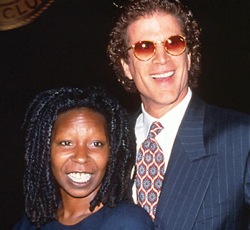
It’s easy to forget that Ted Danson once dated Whoopi Goldberg. Why? Because it was just so damn random, that’s why.

But they’re not the only odd celebrity pairing, not by far. We’ve rounded up just a few of the most bizarre celebrity couples in the history of celebrity-dom.

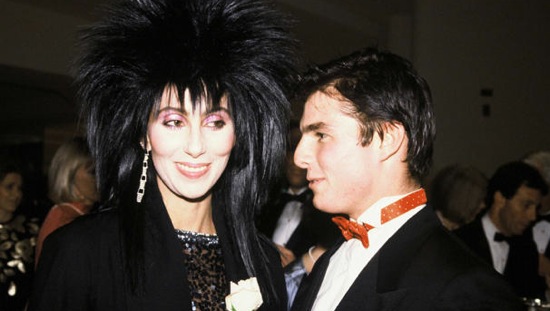
Tom Cruise and Cher

Yep. That happened. Tom Cruise dated a considerably older Cher back in the 80s, and the singer bragged that they even shacked up at one point.

Tom Cruise and Cher dated

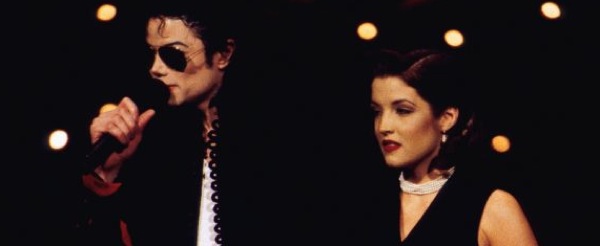
Michael Jackson and Lisa Marie Presley

Who the hell could forget this bizarre hookup? It was as if they couldn’t even believe they were dating.

After the relationship, in 2007, Presley expressed her regret. She said in an interview with Marie Claire:

“My biggest mistake? Let’s see. How can I word this? Um. Well. Leaving my first marriage, for the person that I left it for — that was probably the biggest mistake of my life.”

Michael Jackson and Lisa Marie Presley

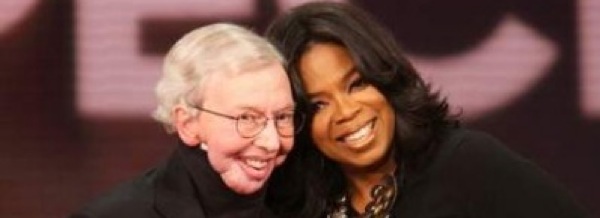
Oprah Winfrey and Roger Ebert

I’m not sure why this one is so weird, it just is. When Oprah was just starting out, the two went on a couple of dates, though a relationship never truly blossomed. However, Ebert does credit himself with helping Oprah become Oprah. Apparently, he convinced her to try to start her own talk show. He definitely deserves a car.

Oprah Winfrey and Roger Ebert

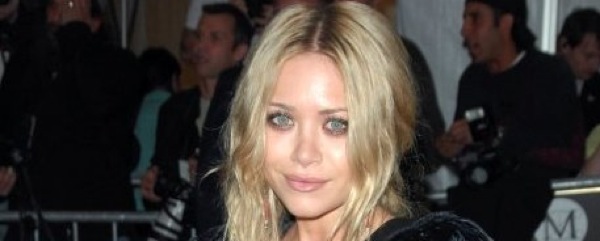
Lance Armstrong and Ashley Olsen

Olsen was only 21 when she was caught making out with Armstrong at a bar in New York City. He was 36 at the time. Weird. Just weird.Lance Armstrong and Ashley Olsen dated

Conan O’Brien and Lisa Kudrow

Kudrow was a stand-up comedian in Los Angeles and O’Brien a writer for Saturday Night Live when these two crazy kids got together. Kudrow said of their romance:

“He was really smart, really funny and he thought I was funny, but found we were better as friends.”Conan O'Brien dated Lisa Kudrow

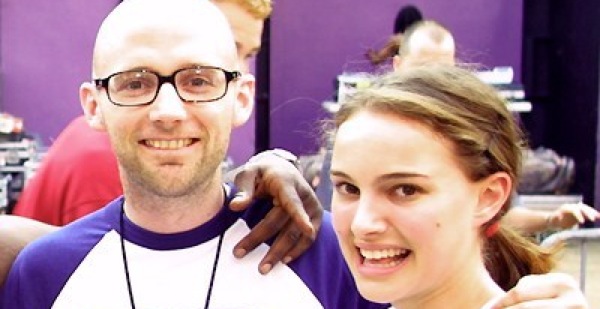
Moby and Natalie Portman

Remember when pretentious musician Moby dated the even-more pretentious Natalie Portman? Me neither! I had no idea these two were an item, but apparently, Moby joked about their May-December relationship pissing off a bunch of nerds:

“You don’t date Luke Skywalker’s mom and not have them hate your guts.”

Moby and Natalie Portman

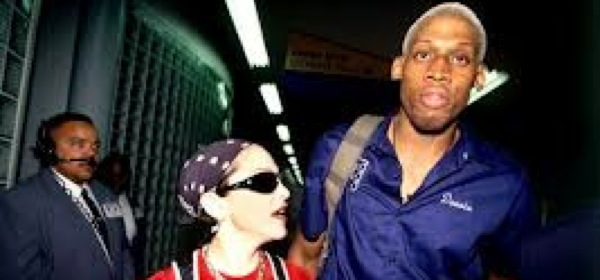
Madonna and Dennis Rodman

Gee, I wonder why this didn’t work out? The couple had a two-month fling back in the 90s, and I can only imagine how tumultuous those eight weeks were. On the bright side, at least they could swap outfits.

Madonna and Dennis Rodman dated


A Brief History of Donald Trump’s Unmitigated Anger

by Nic Ferguson on December 25, 2012

Last week, Donald Trump successfully sued Miss Pennsylvania Sheena Monnin for defamation. Apparently, he didn’t appreciate her saying awful things about him. Which is ironic, because he’s basically made a second career out of saying awful things about people.

From Rosie O’Donnell to Martha Stewart, here’s a brief history of Donald Trump’s most ridiculous celebrity feuds, most of which were one-sided.

Rosie O’Donnell—2006  

It started when O’Donnell accused Trump of being a “snake oil salesman.” She said it on The View, regarding a Miss USA controversy. After O’Donnell voiced her opinion, Trump fired back with a series of insults, calling her “disgusting,” “a fat pig,” and “unattractive both inside and out.”

Angelina Jolie—2007

What horrible thing did Angelina Jolie do to piss off Trump? She wasn’t good-looking enough for him. Gasp! In 2007, he  said of Jolie:

“I really understand beauty. And I will tell you, she’s not– I do own Miss Universe. I do own Miss USA. I mean I own a lot of different things. I do understand beauty, and she’s not.”

Martha Stewart—2008

When Donald’s friend Martha Stewart tried to launch her own version of the Celebrity Apprentice show, it didn’t do so well in the ratings. Instead of offering some encouragement about something that’s really none of his business anyway, Trump decided to rip into Martha in an open letter. He wrote:

“It’s about time you started taking responsibility for your failed version of The Apprentice. Your performance was terrible in that the show lacked mood, temperament and just about everything else a show needs for success. I knew it would fail as soon as I first saw it – and your low ratings bore me out.”

Even Martha was shocked. She responded: “The letter is so mean-spirited and reckless that I almost can’t believe my long-time friend Donald Trump wrote it.”

Donald Trump is not a politician

Barack Obama—2011

Who could forget Trump’s ongoing demand for President Obama to hand over all of his most private documents? I’m not sure if Trump’s statement regarding Obama’s birth certificate was more ignorant or offensive. At any rate, here’s what he had to say about it:

“I have a birth certificate. People have birth certificates. He doesn’t have a birth certificate. He may have one but there is something on that birth certificate — maybe religion, maybe it says he’s a Muslim, I don’t know. Maybe he doesn’t want that. Or, he may not have one,” and “I have a birth certificate. People have birth certificates. He doesn’t have a birth certificate. He may have one but there is something on that birth certificate — maybe religion, maybe it says he’s a Muslim, I don’t know. Maybe he doesn’t want that. Or, he may not have one.”

And just when you thought he couldn’t be any more entitled, in 2012, Trump would hold ransom $5 million in charitable donations unless Obama revealed his college transcripts.

Cher—2012

To be fair, Cher kind of started this one. But when you’re as big an idiot as Donald Trump is, it’s hard for people not to take potshots.  After realizing that Macy’s department store carried Donald Trump’s line, Cher announced via Twitter that she wouldn’t be visiting the store again, and then took a cheap shot at that bizarre hair thing Donald Trump’s got going on. Trump responded:

“I promise not to talk about your massive plastic surgeries that didn’t work.”

Cher followed up that she was wrong for taking a cheap shot at Trump’s hair, but the fact remained that he is, as she put it, “a flaming asshole.”

Good point.