UVA Forgotten Cemetery: Archaeological Survey Uncovers 67 Graves, Likely Black Slaves

The Daily Progress, Charlottesville, Va.  |  By
Posted: 12/04/2012 2:53 pm EST Updated: 12/05/2012 9:41 am EST

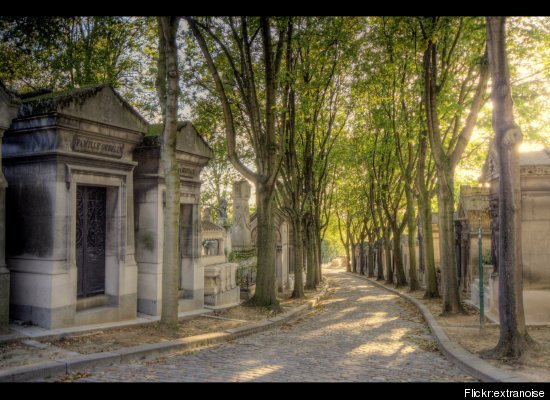
The nameless graves follow the line of a long-gone fence. They’re mostly marked with fieldstones, if they’re marked at all.

And though they sit just outside the stately stone wall of the University of Virginia Cemetery, it’s unlikely anyone today will know who was buried there generations ago.

Archeologists have found 67 graves in the forgotten cemetery. The dead are probably black and possibly slaves, officials have said, but it’s hard to know any more than that.

“I’m sure they will look as hard as they can to find definitive information, but it may be that we will never have a definitive answer,” University Landscape Architect Mary Hughes said.

She called the fieldwork that’s just wrapping up only the first part of the investigation. Researchers are hoping to use a camera on a balloon today to shoot aerial photos of the site discovered as researchers explored the area in preparation for an expansion of the university cemetery.

Soon, the search will turn to UVa’s “copious” collection, Hughes said.

Researchers will not excavate graves, both out of respect and because they said they don’t think it would be productive. The university will preserve and memorialize the gravesite, officials said.

This isn’t the first time the university has made a discovery like this one.

Hughes cited the Catherine “Kitty” Foster site, found in the early 1990s near Jefferson Park Avenue. Archeologists searching in advance of a parking lot expansion initially found 12 graves. At the time, researchers theorized the people buried there might be descendants of Foster, a free black woman, and her relatives.

“They thought they had some idea who the burials were,” Hughes said.

A few years later, a wider-ranging search ahead of a major construction project in the area turned up another 20 graves. Now, researchers say, it likely was a community cemetery, but specifics remain scarce.

Institutional records aren’t likely to turn up any more information about the recently discovered graves, said Rivanna Archaeological Services’ Benjamin Ford, who is helping oversee the dig. Personal papers might have indirect references to who’s buried there, he said.

Researchers will target their search toward UVa’s immense collection, searching indexes for papers from individuals at the university before and after the Civil War, Ford said.

For example, Ford said, there’s a reference in the 1830s to a professor making a coffin for a dead servant.

“We know they died, we know they were buried in coffins … but there’s no direct reference to burying them back of the existing university cemetery, and I do not think we will find a list or partial list recording individuals who were buried here,” Ford said.

Ford said that so many graves, so poorly marked indicates they almost certainly hold the remains of blacks.

Any other interpretation would be beyond his “understanding of the relationships between whites and blacks in life and in death in the 1800s,” he said.

“I just can’t imagine that we have this number of white individuals buried here without acknowledgement and marking,” he said.

In his assessment, Ford also cites the quote researchers uncovered, indicating that “servants” — probably meaning slaves — were buried north of the official cemetery “in old times” — probably meaning before the Civil War.

Hughes also said the graves could theoretically predate the university’s acquisition of the land in the early 19th century.

When officials announced the find at the beginning of November, researchers had uncovered 30 graves. By the time they’d found the cemetery’s northern and eastern edges, the total had more than doubled.

“I just think we’re all surprised at the number of individuals that are buried here,” Ford said.

And the quote about servant burials has another implication, Ford said: The burials could stretch all the way to the old border of the cemetery, far to the south.

While researchers want to know more, they won’t excavate. Leaving the graves alone is the more respectful course, said UVa’s chief facilities officer, Don Sundgren. And it’s not clear that digging up the remains would reveal much new information, Ford said.

Unearthing a grave can provide clues — based on the particular styles of objects such as buttons, buckles and coffin hardware — indicating broadly when a burial might have taken place, Ford said. But that’s unlikely to reveal who’s buried there or provide information about when other graves were created, he said.

M. Rick Turner, president of the Albemarle-Charlottesville NAACP, said officials should do everything possible — including excavating graves — to figure out whose resting places have been found.

“Our history at the university has been buried so much,” he said. “Oftentimes, we don’t want to find out.”

He criticized the way officials and researchers have spoken of the graves as callous.

Archeologists have asked university officials to permit sample excavations of some of the fenceposts.

“We might be recovering material culture, which would help us, of course, date the fence line,” Ford said. “All we believe now is that it dates to the 1800s, but it might help us date it tighter, closer and indirectly date the burials.”

Bricks and stones might have been used to help support the posts in the holes, and artifacts might have fallen into the holes, Ford said.

The graves have been found in short rows and groups. The mix of children and adults among the dead suggests there might be family groups, Ford said.

Archeologists have found two broken marble headstones in addition to the fieldstones, but no inscriptions, Ford said. That might be because it was illegal for slaves to learn to read and write, or it might have been deliberate, intended to make grave-robbing more difficult. That was common in the 19th century because medical students had no legal way to acquire cadavers, Ford said. Black graves were a frequent target, he said.

Workers will survey the location of each grave, and officials are debating how best to memorialize the unknowns buried there.

Dr. Marcus L. Martin, UVa’s vice president and chief officer for diversity and equity, said one key consideration is determining what should mark the edge of the burial ground. He said he wondered whether it is better to recreate history, with the black graves inside a wooden fence and the official cemetery ringed by a stone wall, or to give the black cemetery a new wall of its own?

Officials haven’t yet decided where the cemetery expansion will go.

The Virginia State Archaeologist could not be reached for comment for this story because he’d been called to Tangier Island to deal with erosion in a cemetery after Hurricane Sandy. ___

(c)2012 The Daily Progress (Charlottesville, Va.)

Visit The Daily Progress (Charlottesville, Va.) at www2.dailyprogress.com

Distributed by MCT Information Services

Richest Black Woman In The World, Folorunsho Alakija, Was A Major Fashion Designer In Africa

The Huffington Post  |  By
Posted: 12/05/2012 2:55 pm EST Updated: 12/05/2012 10:43 pm EST

We didn’t think it was possible, but Oprah Winfrey has been dethroned as the richest black woman in the world. The new leading lady is oil baroness Folorunsho Alakija from Nigeria.

While drilling oil has reportedly made the 61-year-old owner of FAMFA Oil Limited a very rich woman — she is estimated to be worth at least $3.2 billion — Alakija started her ascent to financial supremacy in fashion.

Born into a wealthy family, Alakija studied fashion design in England back in the ’80s and soon after founded the Nigerian clothing label Supreme Stitches. Her one-of-a-kind creations were worn by the who’s who of African society, quickly making her the premier fashion designer in the West African country. In fact, she has been called one of the “pioneers of Nigerian fashion” and stays connected to the industry through the Fashion Designers Association of Nigeria (FDAN).

The well-heeled businesswoman and philanthropist made the switch to oil in 1993 and the rest is history. From the images we were able to dig up of Alakija, she is quite the fashion plate (read: eccentric dresser). But when you’ve out-earned the Queen of All Media by approximately $500 million, you’re allowed to wear whatever you want.

Ventures Africa reports that Alakija owns at least $100 million in real estate and a $46 million private jet. And can you imagine what her closets look like? Move over, Imelda Marcos!

Check out Alakija looking very lovely (and rich) on the November 2012 cover of Geneieve magazine in a dress by Iconic Invanity.

The 2013 LA Art Show

The 2013 LA Art Show presents the art world¹s limitless range featuring exhibitors who appreciate the past, embrace the present and forecast the future. The LA Art Show is the West Coast¹s most comprehensive art experience, with 4 distinct sections: Modern & Contemporary, Historic & Traditional, Vintage Posters, and the IFPDA Los Angeles Fine Print Fair, showcasing the highest caliber galleries enhanced by exceptional programming and special exhibitions.

TICKET INFORMATION
General Admission One Day
Ticket price is $20 with $5 discount when purchased online

Four Day Pass (Admission for One Person) Good for one person: $40 with $5 discount whenpurchased online

OPENING NIGHT PREMIERE PARTY
Wednesday, January 23, 2013
Be the first to preview art from top galleries and enjoy culinary delights and specialty beverages courtesy of L.A.’s finest restaurants and support this year’s beneficiary.

LOCATION
Los Angeles Convention Center
South Hall, 1201 South Figueroa Street
Los Angeles, CA 90015

CONTACT
To contact us, please visit the Contact page here
Patron Level Ticket to Premiere Party $500.00 — 7pm – 8pm
Friend Level Ticket to Premiere Party $125.00  — 8pm -11pm
purchase tickets

Stanley Kubrick Art of the Americas Building, Level 2 November 1, 2012–June 30, 2013

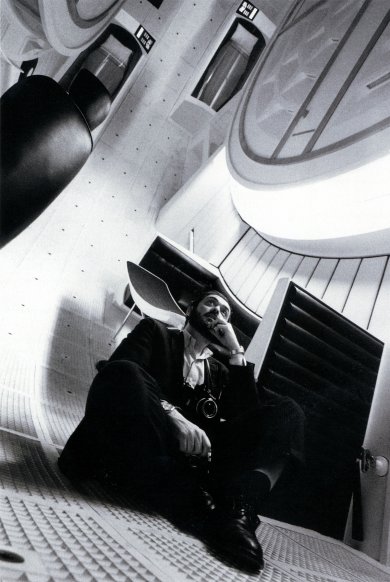
Stanley Kubrick was known for exerting complete artistic control over his projects; in doing so, he reconceived the genres in which he worked. The exhibition covers the breadth of Kubrick’s practice, beginning with his early photographs for Lookmagazine, taken in the 1940s, and continuing with his groundbreaking directorial achievements of the 1950s through the 1990s. His films are represented through a selection of annotated scripts, production photography, lenses and cameras, set models, costumes, and props. In addition, the exhibition explores Napoleon and The Aryan Papers, two projects that Kubrick never completed, as well as the technological advances developed and utilized by Kubrick and his team. By featuring this legendary film auteur and his oeuvre as the focus of his first retrospective in the context of an art museum, the exhibition reevaluates how we define the artist in the 21st century, and simultaneously expands upon LACMA’s commitment to exploring the intersection of art and film.

video platformvideo managementvideo solutionsvideo player

Museum to open balcony where U.S. civil rights leader Martin Luther King was shot More Information: http://www.artdaily.org/index.asp?int_sec=2&int_new=58711&b=african%20american#.UKjtBeQ73lc[/url] Copyright © artdaily.org

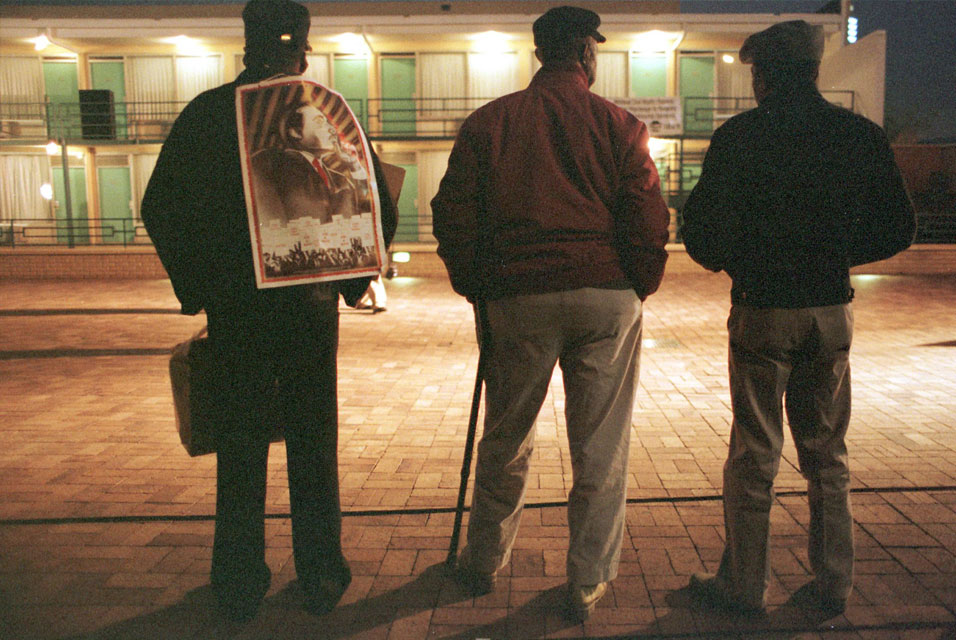
Picture dated April 4, 1998 shows former Memphis sanitation workers Eugene Brown (L), James Jones (C), and Lafayette Shields (R) standing in front of the National Civil Rights Museum, the site where Martin Luther King was assassinated, after a memorial service for the late civil rights leader in Memphis. The motel balcony in Memphis, Tennessee, where US civil rights leader Martin Luther King, Jr. was assassinated on April 4, 1968 is being opened to the public, a spokeswoman said on November 2, 2012. It is the first time that visitors to the erstwhile Lorraine Motel, now the National Civil Rights Museum, will be able to stand on the very spot outside Room 306 where King was gunned down by sniper James Earl Ray. AFP PHOTO/FILES/Andrew CUTRARO.

WASHINGTON (AFP).- The motel balcony in Memphis, Tennessee where US civil rights leader Martin Luther King, Jr. was assassinated on April 4, 1968 is being opened to the public, a spokeswoman said Friday.

It is the first time that visitors to the erstwhile Lorraine Motel, now the National Civil Rights Museum, will be able to stand on the very spot outside Room 306 where King was gunned down by sniper James Earl Ray.

Connie Dyson, the museum’s communications coordinator, said the upper-floor balcony will be open from November 19 as the historic landmark in downtown Memphis undergoes a $27 million facelift due to finish in early 2014.

“It is our most unique artifact, the balcony,” Dyson told AFP by telephone.

“But with the entire Lorraine building being closed during renovations, we wanted to offer the public an access to the balcony and the room where Dr King stayed, since that was one of the highlights of the (pre-renovation) tour.”

With its slightly disheveled bed, black dial-up telephone and unfinished cups of coffee, Room 306 has been left untouched since the evening when King, 39, was fatally shot at the height of the civil rights movement.

“Nobody’s ever stayed in the room (since King’s death). It’s been a shrine ever since,” Dyson said.

Visitors who until now could peer into Room 306 via a sealed glass window along the interior hallway will, during the renovations, “get a chance to peek… from the outside,” Dyson added.

Ray, a white drifter with a criminal record, was convicted of shooting King with a rifle from a building across the street from the Lorraine. Sentenced to 99 years in prison, he died in April 1998 at the age of 70.

In October 2011 King became the first African american to be honored with a monument along the National Mall in Washington, engraved with words from his stirring 1963 “I Have a Dream” speech for racial equality.

More Information: http://www.artdaily.org/index.asp?int_sec=2&int_new=58711&b=african%20american#.UKjtBeQ73lc[/url]
Copyright © artdaily.org

“WAR/PHOTOGRAPHY: Images of Armed Conflict and Its Aftermath” opens in Houston

Alfred Palmer, American (1906–1993), Women aircraft workers finishing transparent bomber noses for fighter and reconnaissance planes at Douglas Aircraft Co. Plant in Long Beach, California, 1942, gelatin silver print, The Museum of Fine Arts, Houston, gift of Will Michels in honor of his sister, Genevieve Namerow.

HOUSTON, TX.- On November 11, 2012, the Museum of Fine Arts, Houston, debuts an unprecedented exhibition exploring the experience of war through the eyes of photographers. WAR/PHOTOGRAPHY: Images of Armed Conflict and Its Aftermath features nearly 500 objects, including photographs, books, magazines, albums and photographic equipment. The photographs were made by more than 280 photographers, from 28 nations, who have covered conflict on six continents over 165 years, from the Mexican-American War of 1846 through present-day conflicts.

WAR/PHOTOGRAPHY: Images of Armed Conflict and Its Aftermath has been organized by the MFAH curatorial team of Anne Wilkes Tucker, the Gus and Lyndall Wortham Curator of Photography; Will Michels, photographer and Glassell School of Art instructor; and Natalie Zelt, curatorial assistant for photography. After the MFAH premiere, which runs November 11, 2012, to February 3, 2013, the presentation travels nationally to the Annenberg Space for Photography, Los Angeles; the Corcoran Gallery of Art, Washington, DC; and the Brooklyn Museum. Accompanying the exhibition is a 600-page catalogue of the same title, with interviews and essays by the curators, contributing scholars and military historians.

The exhibition takes a critical look at the relationship between war and photography, exploring what types of photographs are, and are not, made, and by whom and for whom. Rather than a chronological survey of wartime photographs or a survey of “greatest hits,” the exhibition presents types of photographs repeatedly made during the many phases of war—regardless of the size or cause of the conflict, the photographers’ or subjects’ culture or the era in which the pictures were recorded. The images in the exhibition are organized according to the progression of war: from the acts that instigate armed conflict, to “the fight,” to victory and defeat, and images that memorialize a war, its combatants and its victims. Both iconic images and previously unknown images are on view, taken by military photographers, commercial photographers (portrait and photojournalist), amateurs and artists.

“WAR/PHOTOGRAPHY promises to be another pioneering exhibition, following other landmark MFAH photography exhibitions such as Czech Modernism: 1900–1945 (1989) and The History of Japanese Photography (2003),” said Gary Tinterow, MFAH director. “Anne Tucker, along with her co-curators, Natalie Zelt and Will Michels, has spent a decade preparing this unprecedented exploration of the complex and profound relationship between war and photography.”

“Photographs serve the public as a collective memory of the experience of war, yet most presentations that deal with the material are organized chronologically,” commented Tucker. “We believe WAR/PHOTOGRAPHY is unique in its scope, exploring conflict and its consequences across the globe and over time, analyzing this complex and unrelenting phenomenon.”

The earliest work in the exhibition is from 1847, taken from the first photographed conflict: the Mexican-American War. Other early examples include photographs from the Crimean War, such as Roger Fenton’s iconic The Valley of the Shadow of Death (1855) and Felice Beato’s photograph of the devastated interior of Fort Taku in China during the Second Opium War (1860). Among the most recent images is a 2008 photograph of the Battle Company of the 173rd Airborne Brigade in the remote Korengal Valley of Eastern Afghanistan by Tim Hetherington, who was killed in April 2011 while covering the civil war in Libya. Also represented with two photographs in the exhibition is Chris Hondros, who was killed with Hetherington. While the exhibition is organized according to the phases of war, portraits of servicemen, military and political leaders and civilians are a consistent presence throughout, including Yousuf Karsh’s classic 1941 image of Winston Churchill, and the Marlboro Marine (2004), taken by embedded Los Angeles Times photographer Luis Sinco of soldier James Blake Miller after an assault in Fallujah, Iraq. Sinco’s image was published worldwide on the cover of 150 publications and became a 2005 Pulitzer Prize finalist.

The exhibition was initiated in 2002, when the MFAH acquired what is purported to be the first print made from Joe Rosenthal’s negative of Old Glory Goes Up on Mount Suribachi, Iwo Jima (1945). From this initial acquisition, the curators decided to organize an exhibition that would focus on war photography as a genre. During the evolution of the project, the museum acquired more than a third of the prints in the exhibition. The curators reviewed more than one million photographs in 17 countries, locating pictures in archives, military libraries, museums, private collections, historical societies and news agencies; in the personal files of photographers and service personnel; and at two annual photojournalism festivals: World Press Photo (Amsterdam) and Visa pour l’Image (Perpignan, France). The curators based their appraisals on the clarity of the photographers’ observation and capacity to make memorable and striking pictures that have lasting relevance. The pictures were recorded by some of the most celebrated conflict photographers, as well as by many who remain anonymous. Almost every photographic process is included, ranging from daguerreotypes to inkjet prints, digital captures and cell-phone shots.

The MFAH curators have been joined on this ambitious project by an international advisory committee: Hilary V. Roberts, head of collections management for the Imperial War Museum Photograph Archive in London; John Stauffer, chair of the history of American civilization and professor of English and African and african american studies at Harvard University; William Sheldon Dudley, former director of naval history for the U.S. Navy Department and retired director of the Naval Historical Center, Washington, DC; Jeffrey William Hunt, director of the Texas Military Forces Museum in Austin; Xavia Karner, chair of the Sociology Department at the University of Houston; and Paul J. Matthews, founder and chairman of the Buffalo Soldiers National Museum in Houston. Additionally, Bodo von Dewitz, senior chief curator of the Museum Ludwig in Cologne, Germany; and Liam Kennedy, director of the Clinton Institute for American Studies at University College Dublin, contributed essays to the catalogue.

Girl on Trail: Proper foot striking … is it really that important?

I’m becoming pretty familiar with my feet.

More specifically, I’m becoming familiar with how much abuse they’re getting while I’m training for this half-marathon. My ankles are covered in blisters, the sides of my pinky toes have never-ending peeling skin, and I get weird toe cramps after a long run.

It’s not that I’m wearing the wrong shoes, it’s just that I’m running like a maniac. All the time.

Which, recently, got me thinking about the whole concept of the “foot strike.” In running, this refers to how your feet land on the ground when you run. If you’ve never thought about it while on a run, you will now.

In recent years, the “Chi Running” method made the foot strike concept a little more popular, mostly because it advocates a mid-foot strike as opposed a heel strike—the one that most people use. Talk to 10 different running experts and you’ll probably come away with 10 different opinions about foot strikes. Some believe in toe, some mid-foot, some heel, and some just say to run “naturally.”

Here are the basics behind each type of foot strike. Try them all out and see if you notice a difference in your pace or how you feel after a run:

read more….

Coolest commutes on two wheels

Over the last 5 years, commuting by bike has risen 25%, according to the U.S. Census Bureau. Dozens of companies have sprung up to fill the demand.

Oakland-California based Xtraclycle is out to prove that bike commuting means more than just riding to work, but using pedal power for routine chores as well.

Its extended bikes are more like trucks — able to carry up to 300 pounds — making the bicycle a natural choice for all manner of errands.

“We’ve seen a huge spike in sales the last few months,” said Nate Byerley, the company’s chief operating officer, crediting the recovering economy.

This model starts at $1,099.

Word, Shout, Song: Lorenzo Dow Turner

Exhibit Details

Opening Date:

June 15, 2012

Closing Date:

December 31, 2012
DuSable Museum

Museum Hours

Tuesday—Saturday, 10:00 a.m.–5:00 p.m.
Sunday, Noon–5:00 p.m.
(Closed Mondays)
Closed Thanksgiving
Admission Information

Museum Location

740 East 56th Place
Chicago, Illinois 60637

Word, Shout, Song: Lorenzo Dow Turner Connecting Communities through Language

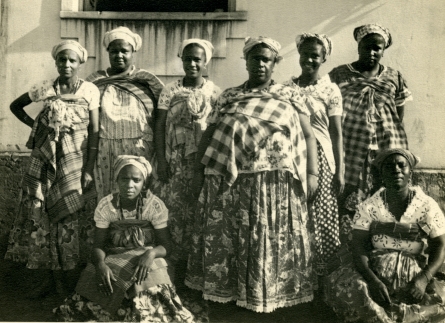
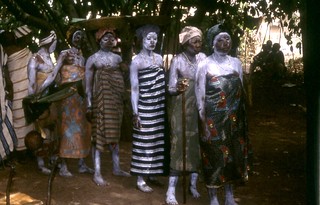
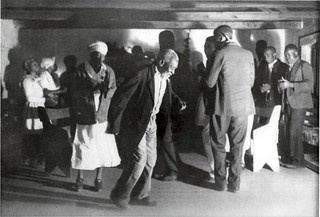
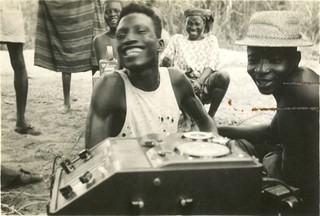
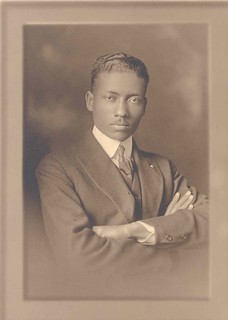
This exhibition documents the historical journey made by people from Africa to the Americas, along with their language and music. In the 1930s, Lorenzo Dow Turner discovered that the Gullah people of Georgia and South Carolina retained parts of the culture and language of their West African enslaved ancestors. Turner’s research produced a living treasury of previously unknown traditions, songs, and folkways that also uncovered and illuminated the connections with West African and Afro-Brazilian communities. On view are rare photographs, recordings, and artifacts collected by Turner from those Gullah communities in the United States, Brazil, and West Africa.

Sierra Leone Mende Wm funeral reenact
Mende women reenacting a Mende funeral ceremony.
Courtesy Anacostia Community Museum/Smithsonian Institution

Ring Shouters Georgia
Ring Shouters, 1930
Courtesy Anacostia Community Museum/Smithsonian Institution

Nigeria - 2  men & tape recorder
Two men with tape recorder.
Courtesy Anacostia Community Museum/Smithsonian Institution

Lorenzo Dow Turner portrait

Organized by Smithsonian Anacostia Community Museum

Researched, Designed and Presented by the Smithsonian Anacostia Community Museum. This traveling exhibition is made possible by the James E. & Emily E. Clyburn Endowment for Archives & History at South Carolina State University,

Cory Booker: Hurricane Sandy Delayed My Decision On Running For Governor Of New Jersey

Newark Mayor Cory Booker said Hurricane Sandy pushed back his decision on whether to run for governor of New Jersey in 2013.http://octobergallery.com/wp-content/uploads/2012/11/CORY-BOOKER-HURRICANE-SANDY-large570.jpg

“The reality is Sandy has pushed my timeline back,” Booker said on his monthly radio program, according to the New Jersey Star-Ledger.

Booker and current New Jersey Governor Chris Christie have both been helping with recovery since Hurricane Sandy ravaged the Garden State in late October.

“The devastation on the Jersey Shore is some of the worst we’ve ever seen,” Christie said after the storm. “The cost of the storm is incalculable at this point.”

Christie has surveyed the damage from Sandy and has focused heavily on recovery efforts, especially along the devastated Jersey Shore. Booker has been busy helping Newark residents affected by the storm, getting hundreds of free Hot Pockets for hungry residents and even letting neighbors into his home to charge electronic devices.

Booker could make a decision on a gubernatorial run by the end of this year. The New Jersey Star-Ledger reports:

Two sources familiar with Booker’s thinking told The Star-Ledger last week that he plans to decide whether to challenge Christie — who has indicated he plans to seek re-election — by mid-December, leaving plenty of time for other potential Democratic candidates to mount a campaign.

Booker said he has had numerous phone calls with state leaders over the past few days.

..

Happy 125th Birthday, Georgia O’Keeffe! (PHOTOS)

georgia okeeffe
This undated file photo released by the Baltimore Museum of Art shows the Georgia O’Keefe painting “Pink Tulip,” 1926. (AP Photo/Georgia O’Keefe Museum)
Today is the birthday of Georgia O’Keeffe, a painter known for her magnified blossoms and stunning southwestern landscapes. The American artist would turn 125 years old if she were still alive today.

O’Keeffe was born in Wisconsin in 1887, and began her career in 1905 at the School of the Art Institute of Chicago. After spending a year of study in the Midwest, she then left for the renown Art Students League in New York City, where she quickly gained recognition as a top student under Impressionist painter, William Merritt Chase. Despite her early successes in school, O’Keeffe would not break onto the New York art scene for several more years, instead spending the latter part of her 20s as an art teacher.

Throughout this period, O’Keeffe focused on painting and charcoal abstractions, relying on line and color manipulation introduced to her by American painter and printmaker Arthur Wesley Dow. In 1916, O’Keeffe delivered some of these charcoals to the then famous photographer Alfred Stieglitz, a decision that would spark not only her prolific art career but also her lifelong marriage. That year, Stieglitz exhibited 10 of O’Keeffe’s paintings followed by a solo exhibit a year later.

Together, Stieglitz and O’Keeffe embarked on a life spent partially in New York and partially in New Mexico, the latter representing a region prominently featured in the female artist’s famous oil paintings. While Stieglitz favored black and white photography, O’Keeffe turned to large-scale renderings of natural forms at close range, capturing the intricate textural details of flowers and desert objects which resembled the female form to many curious observers.

georgia okeeffe
Georgia O’Keeffe next to her original oil paintings during a press review of her 121 paintings, watercolors, and drawings on exhibit in New York. (AP Photo)

Though her paintings did not directly address feminism, O’Keeffe’s career was idolized by contemporary ideologues like Judy Chicago for her pioneering role as the lone female artist in a male-dominated field. She received a seat in the American Academy of Arts and Sciences and was the first female artist to have a retrospective at the Museum of Modern Art in Manhattan. Later in her life, O’Keeffe moved permanently to Santa Fe, continuing to practice watercolor and sculpture well into her 90s. In 1986, the legendary female artist died at the age of 98, two years shy of a century on this Earth.

In honor of Ms. O’Keeffe’s birthday, scroll through a slideshow of images from “Georgia O’Keeffe and The Faraway: Nature and Image,” an exhibit on display now until May 5th, 2013 at the Georgia O’Keeffe Museum. Let us know how you are celebrating the great female artist’s anniversary in the comment section.

In Living Color: An Interview with Artist Tamara Natalie Madden (Images)

Have you ever come across an amazing work of art and thought, “I wonder what the story is behind this piece?” Well, after looking through painter Tamara Natalie Madden’s collection, you will undoubtedly be asking yourself, “What’s the story behind this artist?” Madden’s self-taught gift for painting actually stemmed from a life-threatening kidney illness that she battled as a young girl. Thankfully, Madden conquered the illness thanks to her (at the time) long-lost brother who agreed to a kidney transplant. Painting continued to serve as an expressive tool long after her recovery. Madden may have come to the United States in her teenage years, but the large influence that Jamaica, her mother country, has had on her work can be found in the bright colors and organic textures that she uses. In honor of her astounding project “Never Forgotten,” Madden has recently received a grant from the Puffin Foundation. For more information on Tamara, please head to her website http://www.tamaranataliemadden.com/.

BLACK GIRLS ROCK: How did painting help you battle your illness? Do you consider painting a therapeutic art form?

Tamara: I suffered from a rare form of kidney disease called IGA Nephropathy, in my early twenties. It was a shock to my young mind. Illness is never expected at that age, but I didn’t seek relief until I really began to see the effects of the disease. I had always sketched, and done pastel work, but I really began to delve more deeply into it when I became ill. The dialysis treatments were the most challenging: physically and emotionally.

My saving grace was my sketchbook, and my headphones. They helped me to escape the reality of what I was dealing with, somewhat. Drawing and painting became my only means of freedom during those times. I know that creating art is therapeutic. It soothes the mind and soul, and that’s essential when people are troubled by their difficult realities. I’m not sure where I would be if I didn’t have art as an option.

BLACK GIRLS ROCK: As a young woman, who were some of your mentors and influences?

Tamara: My first influences were my Uncles. Both of the uncles that I interacted with were Rastafarians, and they were both highly creative. My uncle Carl was the most influential because he lived with us. He would make woodcarvings out of scraps, and I would sit and watch him in awe. I was completely fascinated by the process. He also drew pictures in pencil, and that was a source of inspiration, as well.

Many of my influences also came from the books that I read, and the images that I would see on the covers, and sometimes inside of the books. Not only would I study the words, but I also studied the images.  When I got older, and came to America my mother had a friend who was an artist, and her watercolors enthralled me. I have to say though, that one of my greatest mentors was an art teacher in summer school when I was 14. I don’t know his name, but I’ll never forget him. He taught me how to draw faces, albeit Caucasian faces, but faces nonetheless. At the end of the year, he told me that he could see my passion for art, and he encouraged me to keep at it. He gave me all of the left over art supplies. I never forgot that, or him because his encouragement made me believe that the possibility was there.

Black Girls Rock: What are some sources of inspiration for your paintings?

Tamara: Everyday people, hard working people who are often overlooked, inspire me. I began painting them in their literal form; many of them were working, cleaning, carrying baskets, and raising children. As I remembered these people from Jamaica, I remembered how beautiful many of them were internally. They were neighbors, and friends who would share a meal with you, even though they barely had enough to give. They would come by and help you clean, or sit and keep you company during trying times. Many had their own internal struggles that they were dealing with, but once they opened their mouths, they talked about their blessings, and they praised God relentlessly.

These people are often judged and looked down upon by society, and I found that when I painted them, the same thing happened; they were judged and looked down upon. I decided that it was important for them to be seen for who they were intrinsically. The kings and queens are my interpretation of those people and their internal & eternal beauty. The paintings make you stop and stare and wonder who these people are, when before, no one gave them a second look.  Beauty is so much more than physicality, and though my paintings may capture a beautiful essence, that essence belongs to the soul of the people that I’m inspired by. The birds are a personal symbol of my freedom from dialysis, and illness.

Black Girls Rock: What has been your greatest challenge in your career?

Tamara: The sacrifice. Being an artist requires a lot of sacrifice. It requires patience, and faith. It can be a challenging journey with lots of bumps along the way. Unfortunately, in the art world, I’m not just considered an artist; I am ‘black’, then ‘woman’, then ‘artist.’ All of those titles present there own unique set of obstacles. In addition, to trying to meander my way through the visual art world, while being taken seriously, and not loosing my integrity; I have to be an educator. It’s essential that the new generation of black children learn about the arts, and the value of the arts. They need to understand that art is an investment, which will benefit them for many generations. They also need to know that art is the keeper of history in many cases; it’s an essential doorway to their ancestors.

Black Girls Rock: Do you have any advice for young women of color interested in the arts?

Tamara: My advice is to never stop dreaming, never stop believing, and never stop challenging yourself. You have to strive to achieve your personal best. Don’t ever compare yourself or your work to others because no one in this world can do what you do. Each person is truly unique, so you must embrace that.
The other piece of advice is to throw your ego out of the window, and stomp on it! :) In order to grow, you have to take some level of criticism. It may hurt, but it makes you better at your craft. Art is not a business for the faint of heart, so if you feel like you’ve got the gift, the willpower, and the faith, then dive on in…and forget the life jacket, it’s sink or swim. My mantra: “The future belongs to those who believe in the beauty of their dreams.”

Killer street art by El Mac

April 3, 2012 | New Art | by  Highly recommended by the LAEM team. |

For everyone who is interested in street art and hasn’t heard about El Mac, it’s about time we take care of that. A Los Angeles-born artist, El Mac has traveled the world spreading his style and creativity into even the most unfamiliar of places. His graceful, elegant, and structured flow is a style unmatched. Growing up in Phoenix, I’ve seen his work evolve over the years, and it still boggles my mind each time I see a new piece. What’s even better is his interest in spreading awareness and love to other parts of the world. Check out this video below of his latest trip to Vietnam.
el mac streetart4 Killer street art by El Mac
el mac streetart5 Killer street art by El Mac
el mac streetart1 Killer street art by El Mac


Brazilian artist Raoni Marqs’s portraits of rap icons (Photos)

New Art/
April 12, 2012 | New Art | by  Mark Round |

As Jay-Z says in his book, Decoded: ‘Hip hop is the only art that I know that’s built on direct confrontation’. Based on that premise, rappers wrote some of the best lines of hip hop just saying ‘how dope they are’. These lines inspired Brazilian illustrator Raoni Marqs to create portraits of some of the most famous, legendary, and controversial figures rap has ever seen.
kanye Brazilian artist Raoni Marqss portraits of rap icons
biggie Brazilian artist Raoni Marqss portraits of rap icons
tyler Brazilian artist Raoni Marqss portraits of rap icons

Japanese art (Video)

Supakitch and Koralie started off as two street artists in France until they found each other and united. The artist couple creates work consisting of many different materials and layers, which are heavily influenced by Japanese art and animation.

Most of Supakitch & Koralie’s work can be seen on streets and on large indoor walls. Subjects in the work are most often from Japanese culture, such as geishas and dragons. The couple’s engagement was just as artistically creative as their work itself: Supakitch proposed to Koralie by first creating a mural of a male character standing next to a female character, a thought bubble above his head with a diamond ring and a question mark. Koralie was given her own thought bubble to past onto the mural to accept the offer. They have been together and creating work ever since.

Read more…..