Asian Teens Wearing Fake Braces As Status Symbol: Report

The Huffington Post  |  By
Posted: 01/02/2013 12:35 pm EST  |  Updated: 01/02/2013 1:14 pm EST

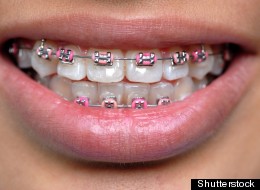
Defying Western stigma and school-age angst over wearing braces, some Asian teens are reportedly buying fake braces as a status symbol.

This orthodontia oddity has flourished in Thailand, Malaysia and Indonesia, according to outlets.

Kids are forking over $100 for the black-market fashion braces to fool observers into thinking they can afford the authentic — and expensive — mouthworks, AFP reports.

Mickey Mouse and Hello Kitty are among the popular designs, but whimsical themes aside, the braces can also be dangerous. As Vice.com notes, the faux braces have led to the deaths of two teens in Thailand, causing the government to crack down on vendors. Selling fashion braces now carries a punishment of up to six months in prison and a $1,300 fine, according to the report.

In 2009 — yes, this trend has some bite — CBS reported on the Thai government’s concern that parts could come loose and choke wearers, and that some of the braces contained lead.

A few outlets poked fun at the newly updated fad. MSN cracked that perhaps stick-on acne would be next. Jezebel wrote, “I’m sure brace-decoration-technology (?) has only improved since I was young, making them ripe for customization and bedazzling and conspicuous consumption.”

Humor site the Chive ran a pictorial, remarking that among all the supposedly crazy crazes, this one was, well, surprising.

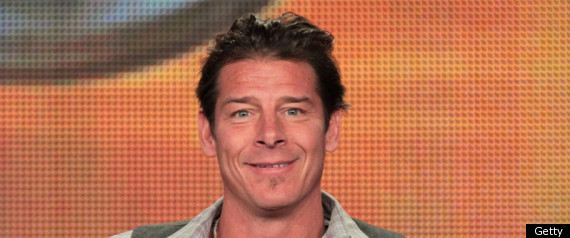
Ty Pennington To Host New HLN Series

NEW YORK — Ty Pennington is doing some traveling again, this time for the HLN television network.

HLN said Wednesday that Pennington, who stars in “Extreme Makeover: Home Edition,” will host a monthly series called “American Journey.” It will focus on people with unusual lifestyles, and debuts Saturday, Jan. 12. Each episode will air multiple times over the weekend on the network formerly known as CNN Headline News, with a new edition starting each month.

Early episodes will focus on lobstermen and Delta blues musicians.

Pennington said he wants to follow the growing subculture of entrepreneurs and creative thinkers trying to rebuild the country.

read more….

Health Trends 2013: What To Expect

No one can know exactly what the year ahead will bring. But those who work in and monitor the fitness industry can make some pretty good guesses.

If 2012 could be defined by juice cleanses, boutique spinning classes and CrossFit, the year ahead will take these trends to the next level, with Starbucks and other major chains getting into the juice game, boutique fitness studios for every discipline and the heavy lifting principles of CrossFit moving from the box to the mainstream gym.

What’s more? Gluten-free fast food, self-monitoring fitness apps and more themed races than you’ll be able to sign up for.

read more…..

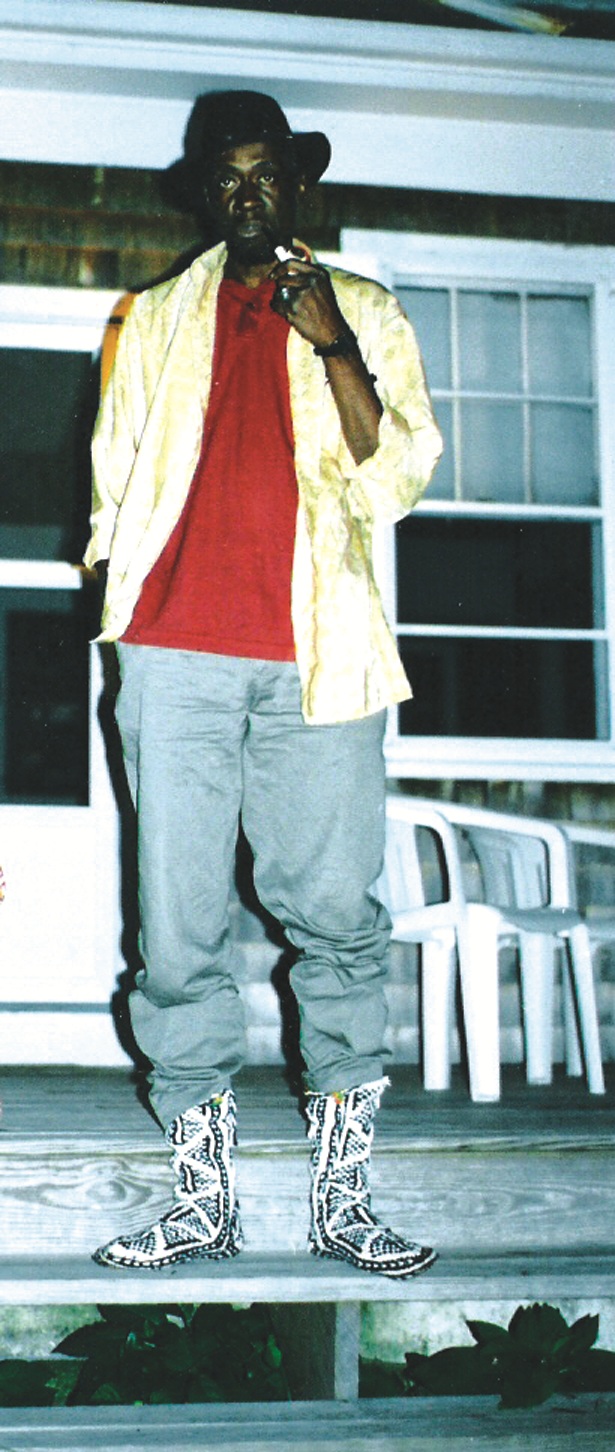
Bobby Womack Alzheimer’s: Soul Singer Reveals Battle With Degenerative Brain Disease

01/02/13 12:15 PM ET EST AP

NEW YORK — Bobby Womack has been diagnosed with Alzheimer’s disease.

The Rock and Roll Hall of Fame member told the BBC in a recent interview the diagnosis comes after he began having difficulty remembering his songs and the names of people he’s worked with.

A spokeswoman did not immediately reply to a message left by the Associated Press.

The soul singer has cut a wide path through the music business as a performer and songwriter in his 50-year career and recently launched another act with “The Bravest Man in the Universe,” the Damon Albarn-produced comeback album that recently made several best-of lists.

Alzheimer’s is a degenerative brain disease characterized by memory loss. It’s the latest health problem for the 68-year-old singer, who’s also been fighting cancer and other maladies.

___

Online:

http://bobbywomack.com

Councilwoman Cindy Bass at October Gallery

philly record


xmasbass
GATHERING TOYS for needy kids at Councilwoman Cindy Bass’s party in Mt. Airy
were, from left, Anuj Gupta, Bass, judicial aspirant Crystal Powell, Esq. and Mercer Redcross.

Andrew Turner Paints (Video) Digital Download

Price $10
Visual Artist Andrew Turner Paints a composition from beginning to end.
Video Time approx. 30 minutes

Purchase Video and Download

DOWNLOAD NOW


Biography of Andrew Turner (1944-2001)


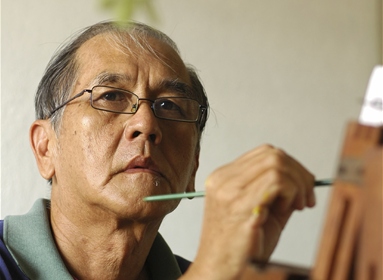
Andrew Turner was born in l944 in Chester, Pennsylvania. He was a graduate of Temple University’s Tyler School of Art. His work has been featured in numerous solo exhibitions and group exhibitions in the United States and abroad.  He taught art in grades K-12 in the Chester, Pennsylvania Public Schools and in correctional centers. His appointments include Artist-in-Residence and Curator, Deshong Museum, Chester, PA; Lecturer, Widener University; and Lecturer, Institute of Contemporary Art, University of Pennsylvania, Philadelphia, PA.  He also toured and lectured in The People’s Republic of China. Collectors who hold Turner’s paintings include Woody Allen, Dr. Maya Angelou, ARCO Chemical Company, Bell Telephone Company, Dr. Constance Clayton, Will Smith, Danny Glover, Mr. and Mrs. Bill Cosby, Edie Huggins, Eric Lindros, Mr. and Mrs. Louis Madonni, Moses Malone, Penn State University, the artist formerly known as Prince, Mr. and Mrs. Harold Sorgenti, Swarthmore College,  Mrs. Marilyn Wheaton, and Widener University’s Deshong Museum, just to name a few. His Philadelphia commissions include: WDAS FM (1996); Marco Solo, (written by J. Schwinn and G. Harlow, illustrated by Andrew Turner) Reverse Angle Productions, Inc.  (1995); and Robin Hood Dell, Fairmount Park (1985).


Back to Art for Sale

Soledad O’Brien: Who is black in America? I am (Video)

Editor’s Note: In today’s United States, is being black determined by the color of your skin, by your family, by what society says, or something else? Soledad O’Brien reports “Who Is Black in America?” on CNN at 8 p.m. ET/PT this Sunday, December 9. 

By Yaba Blay and Soledad O’Brien, CNN

(CNN) – Yaba Blay, Ph.D. created the (1)ne Drop Project, a multiplatform endeavor that hopes to challenge perceptions of black identity. Blay, a consulting producer for “Who Is Black in America?” spoke to hundreds of those who may not immediately be recognized as “black” based on how they look, including CNN Anchor Soledad O’Brien.  In this edited excerpt from her forthcoming book, Blay spoke to O’Brien about what makes a person black, and why the conversation is important.

Yaba Blay: How do you identify? Racially and culturally?

Soledad O’Brien: I’m black. I’m Latina. My mom is Cuban. Afro-Cuban. My dad is white and Australian. And I think because of my job, often a question like “How do you identify?” is really not about the question. It’s always “What side are you on?” “What perspective to you bring?”

Blay: I remember when “Black in America” first came out, and a lot of people being like “Who is she and why is SHE doing this?”

O’Brien: I think it’s a valid question. I think every question is valid. I just don’t think there should be a rule like “Oooh that is the question that shall not be asked.” I’m happy to answer any question. And I think also there is sometimes a hostility in that question. Especially around “Black in America.” You know, “Who are you that gets to tell our story?” And I understand that, too.

You know, white people really have a luxury in that they get a range of stories, that they’re not defined by five stories. So I think that the difference with “Black in America” was the filter did matter. That there are only going to be five stories and we want to know exactly who you are and what your credentials are to be telling our story. And I don’t think you can do documentaries and opt out of the conversation. You know, it’s not “Well you know that’s about them, not about me.”

I think what I love about the documentary process is that you bring yourself to the documentary. And hopefully that makes you ask good questions and hopefully that makes you reveal a little bit about yourself as well.

Blay: Have you had that experience of people asking you, “What are you?”

O’Brien: Oh my God yes! All the time. People tweet me that question. I used to take great offense – like immediately sort of get annoyed, partly because I don’t think that came from a very good place. I think I read it as sort of questioning my value and reasons for being wherever I was. But now I think it’s twofold: one, I think that because I’m a journalist, people are really just trying to understand – “You’re somebody I see on TV, but I don’t know you in person so who are you?” Then, two, I think that part of my job as a journalist is to educate people about stories in a way and some of these stories I’m part of that story.

I think I was part of “Black in America” even in the context of who is the filter of the story and so it became relevant, so I really stopped hating answering that question because I felt like my job is to elaborate and explain for people who I am. I think it’s relevant. I think because of the reporting that I do I sort of owe people that answer.

Blay: So why do you think the questions are coming? Why are there questions about why Soledad is doing “Black in America?”

O’Brien: Some of it is physical presentation. I think that some of it was that I’d been anchoring shows that weren’t dealing specifically with African-Americans so it was kind of like “What are your politics? What’s your perspective? Who are you?” I think sometimes it’s as straightforward as that.

At screenings for “Black in America” I’ve heard people say, “Well you know I never thought you were black until you did Katrina and then I thought you were black.” And I’d say, “That’s so fascinating. What was it that made you think I was black?” And then someone else would say, “Yeah, but she’s married to a white man.” And I’m like “OK, so does that make me less black and how in your mind does that math work? That there’s a certain number and if you get below that number because you get points for who you marry and you lose points for where you live and how you speak?”

But even just going back to the questions consistently, I thought it was just illuminating. I thought it was just so fascinating to really open up a conversation about race. Now we’re up to “Black in America 5” and we’re having that conversation.

Blay: So what makes a person black?

O’Brien: I certainly don’t think it’s skin color. And I certainly don’t think it’s how well you speak the language. And I’m not sure I can answer that question thoroughly because my consciousness about race was really implanted in me by my parents. I would say I’m black because my parents said I’m black. I’m black because my mother’s black. I’m black because I grew up in a family of all black people. I knew I was black because I grew up in an all-white neighborhood. And my parents, as part of their protective mechanisms that they were going to give to us made it very clear what we were.

My mother would say, “Do not let anybody tell you you’re not black. Do not let anybody tell you you’re not Latina.” And I remember thinking her comments were so weird, like “What is she talking about?” There weren’t people coming over to my house saying “You’re not black!” We stuck out!

But now I understand what she was going for. And I am very grateful for those conversations because I think it implants in your head sort of the perspective that my parents wanted us to have. We were raised that way in a place that was often not particularly hospitable and sometimes out and out hostile to people of color. I guess my parents taught me very early that how other people perceive me really was not my problem or my responsibility. It was much more based on how I perceived me.

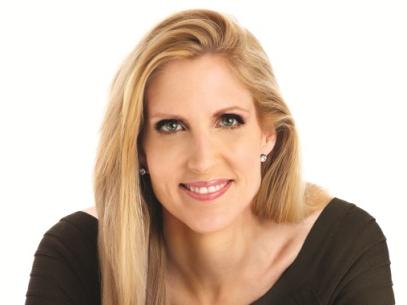
Ann Coulter Says GOP Should Give In To Obama On Taxes: ‘We Lost The Election’

Ann Coulter shocked Sean Hannity on Wednesday when she conceded that she thinks Republicans should let tax rates for the rich go up.

House Republicans are currently battling President Obama over whether or not to hike taxes on the top 2 percent of earners in the negotiations over the so-called “fiscal cliff.”

After Coulter started to say that Republicans should concede on taxes on the very rich, Hannity wondered why the House didn’t just pass a bill extending the Bush tax cuts for everyone.

“OK fine, let’s do that, but in the end, at some point, if the Bush tax cuts are repealed and everyone’s taxes go up, I promise you Republicans will get blamed for it,” she said. “It doesn’t mean you cave on everything, but there are some things Republicans do that feed into what the media is telling America about Republicans.”

“So are you saying that, for PR purposes, that they should give in to Obama on the tax rate?” Hannity asked.

“Not exactly, I–” Coulter said, before stopping herself and saying, “Well, yeah, I guess I am.”

“You’re saying capitulate to Obama?” Hannity stammered. “We don’t have a revenue problem, Ann.”

“We lost the election, Sean!” Coulter replied.

Other right-wing pundits, such as Bill Kristol, have echoed Coulter’s argument. Kristol famously said that it wouldn’t “kill the country” if taxes on millionaires went up.

Michelle Obama Illinois Senate Buzz Intensifes As Poll Shows FLOTUS Leading Mark Kirk

Illinois has voiced the “Obama For Senate” call before, but according to one poll, the Prairie State may want to repeat it — for Michelle.

In a Dec. 5 roundup of Illinois poll data, Public Policy Polling said Michelle Obama leads Sen. Mark Kirk in a hypothetical 2016 Senate matchup.

The polling firm said the first lady leads Kirk 51-40 in the could-be race. Kirk’s approval rating, according to voters polled, is 34 percent, with a disapproval rating of 19 percent. Meanwhile, Michelle Obama tops out with a 60 percent approval rating, with a 33 percent disapproval.

The first lady even surpasses her husband in popularity in their home state: President Obama’s approval rating is 57 percent positive among Illinois voters.

With her September speech at the Democratic National Convention, the first lady electrified the crowd much the way her husband did when delivering the keynote speech at the 2004 convention (and of course, we know what happened there).

Still, the first lady has insisted political ambitions are non-existent in her post-White House plans. During the White House’s “Take Your Daughters And Sons To Work Day” event in April, she answered “absolutely not” when a young attendee asked if she would ever run for president, reports ABC News.

Art Therapist

Overview

Art Therapist is one of the Top Ten Hot Jobs of 2007, according to AOL’s popular CareerBuilder.com website.

Art therapy is an established mental health profession that uses the creative process of art making to improve and enhance the physical, mental and emotional well-being of people at all ages. It is based on the belief that the creative process involved in artistic self-expression helps people to resolve conflicts and problems, develop interpersonal skills, manage behavior, reduce stress, increase self-esteem and self-awareness, and achieve insight.

Art therapy integrates the fields of human development, visual arts, and the creative process with models of counseling and psychotherapy. Art therapy is used with children, adolescents, adults, older adults, groups, and families to assess and treat:

  • anxiety, depression, and other mental/emotional problems
  • mental illness
  • substance abuse and other addictions
  • family and relationship issues
  • abuse and domestic violence
  • social/emotional difficulties related to disability or illness
  • personal trauma, post traumatic stress disorder and loss
  • physical, cognitive, and neurological problems
  • psychosocial difficulties related to medical illness

Some art therapists work as part of a healthcare team that includes physicians, psychologists, nurses, mental health counselors, marriage and family therapists, rehabilitation counselors, social workers, and teachers. Together, they determine and implement a client’s therapeutic goals and objectives. Other art therapists work independently and maintain private practices with children, adolescents, adults, groups, and/or families.

If you’re considering this career, keep in mind that an art therapist needs certain personal qualities – such as sensitivity, empathy, emotional stability, patience, interpersonal skills, insight into human behavior, and an understanding of artistic media. An art therapist must also be an attentive listener and a keen observer. Flexibility and a sense of humor are also invaluable.

You can download, save and print a PDF of this career profile:

Art Therapist September 30, 2010 [PDF 62KB]

For more information about pursuing this career, see the American Art Therapy Association (AATA) website.

Also, here is an additional link: Travel Nursing.org

Working Conditions

Art therapists work in a wide variety of settings — including, to name a few:

  • Hospitals and clinics, both medical and psychiatric
  • Out-patient mental health agencies and day treatment facilities
  • Residential treatment centers
  • Halfway houses
  • Domestic violence and homeless shelters
  • Community agencies and non-profit settings
  • Sheltered workshops
  • Schools, colleges, and universities
  • Correctional facilities
  • Elder care facilities
  • Art studios
  • Private practice

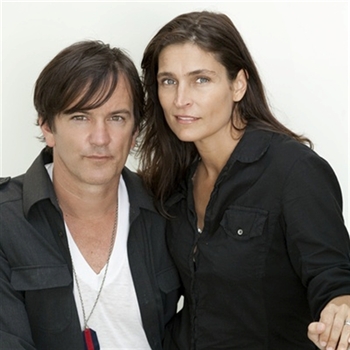
Husband and wife team Cortney and Robert Novogratz are The Novogratz

Inspiration:

We’re continually inspired by the power that art has to transform a space. A piece of art adds soul to any space and can directly affect people’s moods and emotions. Whether you’re the artist, or you’re selecting a piece of art for a room, the piece you choose is an expression of who you are. We’re constantly inspired by our travels and our children. From flea markets in Paris, to the vibrant colors of Brazil, to our own neighborhood in New York, inspiration is all around you.

About:

Husband and wife team Cortney and Robert Novogratz are The Novogratz. This hip and artsy couple have developed and designed many unique properties, rebuilt entire city blocks, created fabulous spaces and executed every detail with the utmost style. The Novogratz specialize in creating one-of-a-kind dwellings from wrecks and empty lots, crafting distinctive architectural details throughout, then decorating each room with rare collectibles. Their second book “Home By Novogatz” hits shelves this October. The second season of their hit TV show, “Home by Novogratz”, premiered on August 4th at 7PM(EST) on HGTV. The Novogratz (formerly Sixx Design) took shape in 1995. Robert and Cortney both hail from large families and had parents who were decorating enthusiasts. They are the parents of seven children and currently live and work in a townhouse that they designed and built on Manhattan’s West Side Highway.

Art Spotlight: Art Prize 2012, African American Artist

We Honor and Celebrate African American Artists at ArtPrize 2012

By George Bayard III

It is that time of year again. The annual ArtPrize competition is in full swing. ArtPrize, in it’s forth year, brings together 1,517 artists and performers from around the world to Grand Rapids to compete for the worlds largest art prize, $560,000 in total prize money. The public will decide the top 10 works in the first round (Sept. 19 – Sept. 29) then choose the winners in the second round (Sept. 30 – Oct. 4). Anyone over the age of 16 can register to vote.  Votes are cast on artprize.org, via text message and mobile application. The overall goal of this event is to initiate and continue a dialog about art.

That dialog has been somewhat successful as my colleagues and clients maintain the discussion about art and ask critical questions year round.” How do I locate art by African American artists?” “Why are there no venues in our community?” Do Black artists ever win prize money?” “Why is so hard to register?” These are but a few of the questions that I get every year when ArtPrize is concluded. The Grand Rapids Times has provided a list of African American artists each year if one wants to cast a vote. Derrick Hollowell’s L-Loft at 106 S.Division (second floor) has been one of the few Black-owned venues for ArtPrize located in the 3 mile, downtown area.

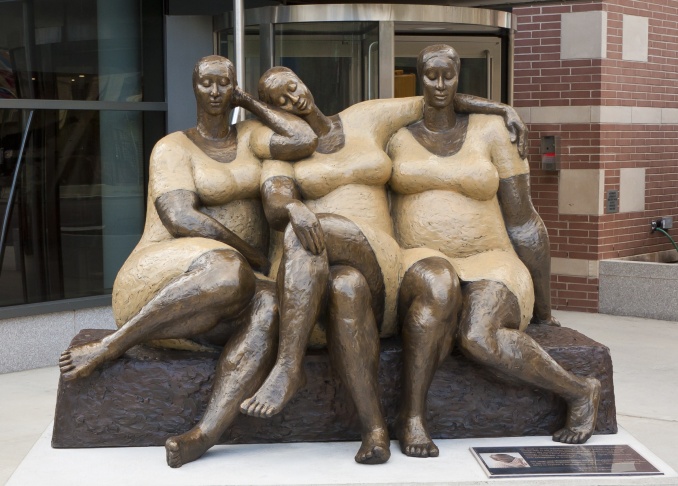
It really is not hard to register but could be a bit challenging for someone not “tech savvy”.   You can create an artprize.org account any time.  Then activate your voter account at any of the Registration Sites during ArtPrize 2012. You must be within the ArtPrize boundaries during the event to activate. Want to create an artprize.org account and activate your voter status all at the same time?  Visit any of the Registration Sites during the event with your email address and valid government ID in hand. Registrars will do the rest.  You can now sign up with Facebook, making it a one-click process. Well maybe it isn’t so easy to register. I encourage you to get out and visit the sites, enjoy the artwork and vote for your favorites.  We welcome nationally known artists Alison Saar, Steve Prince and Charles McGee into our community. Here is a partial list of African American artists and their works:

Together – never; except in an exhibit of their graphic designs at the Art Museum

Caroline Tiger, For The Inquirer

Posted: Friday, November 30, 2012, 2:53 PM

Reporters are always asking Paula Scher and Seymour Chwast when they’re going to collaborate. That’s what happens when you’re famous, married, and working in the same industry. Scher and Chwast are firm: Never. “It’s not so much our lack of interest than it would break up our marriage,” Chwast (pronounced Kwahst) tells me, because I can’t resist asking, either.

Later I ask Scher. “No,” she says. “We can’t collaborate. It’s impossible.”

Besides the relational politics, they work in different styles and on different scales. She communicates through typography, and he uses illustration. She works on buildings and multinational corporate identities. He does editorial illustrations for magazines and designs books and posters. But isn’t the exhibit “Double Portrait: Paula Scher and Seymour Chwast, Graphic Designers,” opening Sunday at the Philadelphia Museum of Art, a collaboration of sorts? The museum’s description declares this is the first time these designers, who happen to be married, have exhibited jointly. It turns out the day-to-day of Scher and Chwast’s intertwined creative lives is less about togetherness than it is about two individuals designing side by side.

The exhibit depicts that duality. Inside the gallery, two gigantic lowercase a’s face off on opposing walls. One, designed by Chwast in the 1960s for packaging for India ink, is curvaceous, funny, and suggestive of an ink drop. The other, designed by Scher for a Type Directors Club project, is aggressive and geometric. If the a’s are Chwast and Scher sitting at the heads of the dinner table, the perpendicular walls crowded with posters are the offspring of these two fertile minds. That noisy symphony of type and images displays another shared trait – these are not designers who hold back.

“There’s a commonality of interest,” says Kathy Hiesinger, the museum’s curator of European Decorative Arts after 1700. “They share a sense of humor, and both enjoy retrieving images from the past.” Steven Heller, the prolific design writer and longtime friend of the couple’s, says, “Both have invented more than one visual language that draws on other sources but can be discerned as their own.”

Scher, 64, and Chwast, 81, married for the first time in 1973, divorced five years later, and remarried in 1989. Being 17 years older than Scher, Chwast already had a reputation as an influential graphic designer when they first met. Scher showed up in his office with her portfolio, fresh from the Tyler School of Art. He had already influenced her – as he did an entire generation of graphic design students – in art school.

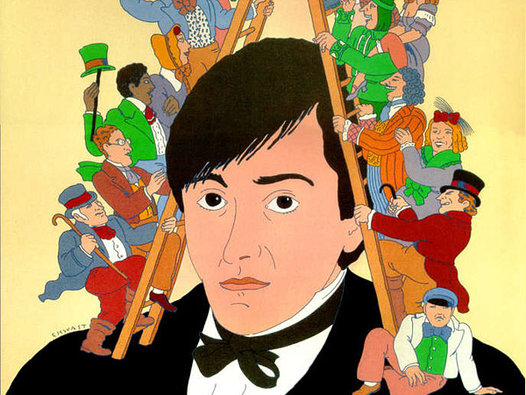
In 1954, Chwast cofounded Push Pin Studios with Edward Sorel, Reynold Ruffins, and Milton Glaser, classmates from Cooper Union. His allusions to 19th-century woodcuts and surrealism (a couch with human legs, a skyscraper culminating in a fountain pen nib) in posters, advertising, and in the Push Pin Graphic, a promotional magazine that disseminated the studio’s work, were an affront to Swiss modernism. That prevalent style at the time preached straight lines, grid systems, and a lack of imagery. Helvetica, the Swiss style’s favored font, stands as straight-backed as a soldier, but Chwast’s type and illustrations are kinetic, colorful, and loose.

Mixing historical styles is common today, but in the ’50s and ’60s, it was radical. “This was way before anyone was talking about postmodernism,” Hiesinger says. In art school and in the ’70s when Scher was designing album covers at CBS Records, she was influenced by Push Pin to similarly rebel against Swiss modernism. As she explained during a talk about her life in design, Helvetica felt fascist. She responded to art nouveau, pop art, and Victorian typography “not because I was being a postmodernist or historicist, but because I hated Helvetica.”

At Tyler, because her illustration was stronger than her typography, design professor Stanislaw Zagorski suggested illustrating with type to imbue it with the same spirit. “He said the type could function the same way that illustration does,” Scher says. “That’s when I became interested in what letter forms look like and mean in terms of communication.” Push Pin’s work was a shining example.

In 1991 Scher joined design consultancy Pentagram as a partner. The posters and identity she created there for New York’s Public Theatre, with words dancing alongside Savion Glover, became a much-copied style.

Scher famously sketched the logo for Citibank on the back of a napkin after an initial client meeting, but still had to sit through a year of process meetings. Her own process is a lightning strike, while Chwast’s is more deliberate. He gets up early and draws all day. That has affected her greatly. “I really have been influenced by his dedication to his work and the sort of time he puts into it,” Scher says. “Sometimes I was forced to work all the time because I didn’t have anything else to do. I was married to him and that’s what he would do. And then, ultimately, it became habit.”

Major museum shows of graphic design are relatively rare. There have been three in the United States since 1988: Cooper Hewitt’s “Graphic Design: Now in Production” (2012), Walker Art Center’s “Graphic Design in America” (1988), and the Cooper Hewitt’s “Mixing Messages” (1996). In conjunction with the Art Museum exhibit, Scher and Chwast will receive Collab’s 22d Design Excellence award. The award has been around since 1986, but this is only the second time it has gone to graphic designers. “It seemed like it was long overdue,” Heisinger says, adding, “It was an obvious twofer.” It was obvious because together the couple’s work makes up a profound slice of graphic design history, and reflects our country’s cultural and political history dating to the mid-20th century. Also, Seymour Chwast and Paula Scher are kind of like the Warren Beatty and Annette Bening of graphic design – except Beatty and Bening are less opposed to collaborating.

Part of the appeal of the exhibit, running through April 14, is the voyeuristic thrill of seeing, through the close juxtaposition of their bodies of groundbreaking work, how the two have influenced each other. There is something intimate about those images and type waving, chattering, and hollering at one another across the room. Underlying it all are open-ended questions that ultimately make these icons relatable: “If I had not been with him, would I have lived my life exactly this way,” Scher says, “or am I with him because I always wanted to do it this way? I don’t know. I ask myself this question all the time.”

Mariah Carey Improves Her Christmas Classic

By
Posted Wednesday, Dec. 5, 2012, at 10:21 AM ET

The man who books musical guests on Jimmy Fallon has said the show’s strategy for getting great acts is to have them leave saying, “Hey, maybe we had a bad experience on TV one time, but we came to Fallon and it was really fun and different and cool and it sounded great and the audience liked it.”


Dave Brubeck Dead: Legendary Jazz Pianist Dies At 91

AP  |  By PAT EATON-ROBB  |
Posted: 12/05/2012 11:55 am EST Updated: 12/05/2012 9:18 pm EST

HARTFORD, Conn. (AP) — Jazz composer and pianist Dave Brubeck, whose pioneering style in pieces such as “Take Five” caught listeners’ ears with exotic, challenging rhythms, has died. He was 91.

Brubeck died Wednesday morning at Norwalk Hospital of heart failure after being stricken while on his way to a cardiology appointment with his son Darius, said his manager Russell Gloyd. Brubeck would have turned 92 on Thursday.

Brubeck had a career that spanned almost all American jazz since World War II. He formed The Dave Brubeck Quartet in 1951 and was the first modern jazz musician to be pictured on the cover of Time magazine – on Nov. 8, 1954 – and he helped define the swinging, smoky rhythms of 1950s and `60s club jazz.

The seminal album “Time Out,” released by the quartet in 1959, was the first ever million-selling jazz LP, and is still among the best-selling jazz albums of all time. It opens with “Blue Rondo a la Turk” in 9/8 time – nine beats to the measure instead of the customary two, three or four beats.

A piano-and-saxophone whirlwind based loosely on a Mozart piece, “Blue Rondo” eventually intercuts between Brubeck’s piano and a more traditional 4/4 jazz rhythm.

The album also features “Take Five” – in 5/4 time – which became the Quartet’s signature theme and even made the Billboard singles chart in 1961. It was composed by Brubeck’s longtime saxophonist, Paul Desmond.

“When you start out with goals – mine were to play polytonally and polyrhythmically – you never exhaust that,” Brubeck told The Associated Press in 1995. “I started doing that in the 1940s. It’s still a challenge to discover what can be done with just those two elements.”

After service in World War II and study at Mills College in Oakland, Calif., Brubeck formed an octet including Desmond on alto sax and Dave van Kreidt on tenor, Cal Tjader on drums and Bill Smith on clarinet. The group played Brubeck originals and standards by other composers, including some early experimentation in unusual time signatures. Their groundbreaking album “Dave Brubeck Octet” was recorded in 1946.

The group evolved into the Quartet, which played colleges and universities. The Quartet’s first album, “Jazz at Oberlin,” was recorded live at Oberlin College in Ohio in 1953.

Ten years later, Joe Morello on drums and Eugene Wright on bass joined with Brubeck and Desmond to produce “Time Out.”

In later years Brubeck composed music for operas, ballet, even a contemporary Mass.

In 1988, he played for Mikhail Gorbachev, at a dinner in Moscow that then-President Ronald Reagan hosted for the Soviet leader.

“I can’t understand Russian, but I can understand body language,” said Brubeck, after seeing the general secretary tapping his foot.

In the late 1980s, Brubeck contributed music for one episode of an eight-part series of television specials, “This Is America, Charlie Brown.”

His music was for an episode involving NASA and the space station. He worked with three of his sons – Chris on bass trombone and electric bass, Dan on drums and Matthew on cello – and included excerpts from his Mass “To Hope! A Celebration,” his oratorio “A Light in the Wilderness,” and a piece he had composed but never recorded, “Quiet As the Moon.”

“That’s the beauty of music,” he told the AP in 1992. “You can take a theme from a Bach sacred chorale and improvise. It doesn’t make any difference where the theme comes from; the treatment of it can be jazz.”

In 2006, the University of Notre Dame gave Brubeck its Laetare Medal, awarded each year to a Roman Catholic “whose genius has ennobled the arts and sciences, illustrated the ideals of the church and enriched the heritage of humanity.”

At the age of 88, in 2009, Brubeck was still touring, in spite of a viral infection that threatened his heart and made him miss an April show at his alma mater, the University of the Pacific.

By June, though, he was playing in Chicago, where the Tribune critic wrote that “Brubeck was coaxing from the piano a high lyricism more typically encountered in the music of Chopin.”

In 1996, he won a lifetime achievement award from the Grammys and in 2009 he was a Kennedy Center Honors recipient.

Brubeck told the AP the Kennedy Center award would have delighted his late mother, Elizabeth Ivey Brubeck, a classical pianist who was initially disappointed by her youngest son’s interest in jazz. (He added that she had lived long enough to come to appreciate his music.)

Numerous jazz musicians were already on their way to Connecticut this week for a birthday concert in his Brubeck’s honor that had been scheduled for Thursday in Waterbury. The show will go on as a tribute concert. Darius, an acclaimed pianist, was among those scheduled to perform along with saxophonist Richie Cannata, and Bernie Williams, former New York Yankees star and a jazz guitarist.

Born in Concord, Calif., on Dec. 6, 1920, Brubeck actually had planned to become a rancher like his father. He attended the College of the Pacific (now the University of the Pacific) in 1938, intending to major in veterinary medicine and return to the family’s 45,000-acre spread.

But within a year Brubeck was drawn to music. He graduated in 1942 and was drafted by the Army, where he served – mostly as a musician – under Gen. George S. Patton in Europe. At the time, his Wolfpack Band was the only racially integrated unit in the military.

In an interview for Ken Burns’ PBS miniseries “Jazz,” Brubeck talked about playing for troops with his integrated band, only to return to the U.S. to see his black bandmates refused service in a restaurant in Texas.

Brubeck and his wife, Iola, had five sons and a daughter. Four of his sons – Chris on trombone and electric bass, Dan on drums, Darius on keyboards and Matthew on cello – played with the London Symphony Orchestra in a birthday tribute to Brubeck in December 2000.

“We never had a rift,” Chris Brubeck once said of living and playing with his father. “I think music has always been a good communication tool, so we didn’t have a rift. We’ve always had music in common.”