Claudia “Aziza” Gibson-Hunter Visual Artist

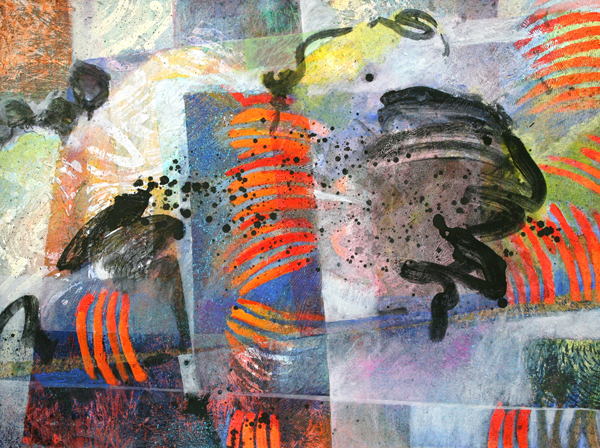
Jazz at the Arboretum 20" x 30" Mixed Media 2010


Claudia “Aziza” Gibson-Hunter attended Tyler College of Art, and graduated from Temple University. Claudia attended graduate school at Howard University and moved to Harlem New York. After completing her MFA in printmaking, she studied in Bob Blackburn’s Printmaking Studio and later received a fellowship from the Bronx Museum of Art. She joined “Where We At “, a noted Black women’s artists group in Harlem. In 1987 she returned to Washington, DC to raise her family. In 1999 she was invited to take an adjunct position at Howard University to teach printmaking. While at Howard University, she completed a residency with the Canadian School for Non Toxic Printmaking with Keith Howard. She was awarded two grants within the university, one to install non-toxic printmaking equipment. Howard University became one of the few Non-Toxic printmaking studios in the country.

In 2002 Aziza decided to pursue her art making full time. In 2003 her focus became painting.
By 2005 she was combining printmaking and assemblage with painting, moving into mixed media works. Since then she has exhibited in Washington DC, Maryland, New York, Illinois, Iowa, Pennsylvania, Virginia, Texas, Florida, Great Brittan, Argentina and Poland. She was one of the ten artists chosen to create a digital print portfolio with David Adamson for the DC Commission on the Arts. Ms. Gibson-Hunter completed a banner for the Washington DC Art Walk as part of a public art piece erected on the grounds of the former Washington DC Convention Center. A co-founder of Black Artists of DC, she represented BADC during Art Basel Miami 06, in the Design District. In the same year Ms. Gibson-Hunter was awarded the Artist Fellowship Program Grant, from the DC Commission of the Arts and Humanities. In 2010 she took a residency with Pyramid Atlantic where she studied papermaking. Her work is included in the Washington DC Art Bank, the John A. Wilson Building Permanent Art collection and other notable collections.

Art by Claudia “Aziza” Gibson-Hunter

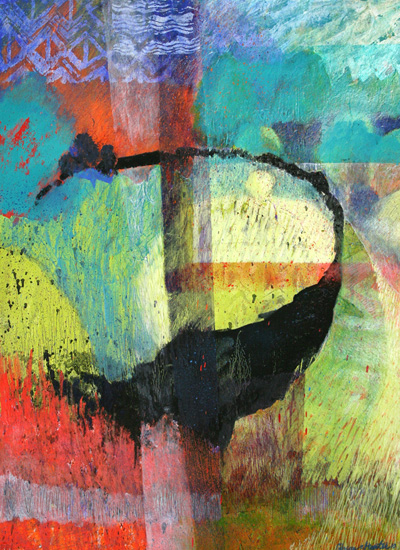
Grassland 30” x 20” Mixed Media 2010


Education

1985 Howard University, MFA Printmaking
1975 Temple University, BS Art Education

Post Graduate
1999 Canadian School for Non Toxic Printmaking Workshop-Certificate
Non- Toxic Printmaking

Professional Honors, Fellowships, and Residencies

2010 Pyramid Atlantic, Silver Spring MD
2006 Artist Fellowship Program Grant, DC Commission of the Arts and Humanities
1999 Howard University Academic Excellence Grant
1985 Bronx Museum of Art Fellowship
1978 J.D. Rockefeller Arts Administration Fellowship Arts-In –Education

Selective List of Exhibits

2011 Kreeger Museum, In Unison: 20 Washington, DC Printmakers, Group. Jurors: Sam Gilliam, Judy Goldberg, Director, Kreeger Museum, Marsha Mayteka, Marsha Mayteka Gallery, Claudia Roussiau, art critic, art historian
2011 No Commercial Potential, traveling exhibition; Galleria Terre Rare,
2010 Garage N.3 Gallery, Spazio espositivo “Barrique”, Italy, Curator Maurizio Follin
2010 Diversity, Museum of Fine Arts of Parana’, Parana, Argentina. Coordinated by Silivina Luchi and the Adrt Department of Inadi Entire Rios
2010 Boxed In/ Outside The Box, CCBC Catonsville Gallery, Catonsville, Md. Invitational, Group, Curator Peggy Fox
2009 BLACK, DC Art Center Gallery, Washington, DC
2008 Suspicious Activities, DC Art Center Gallery, Washington, DC, Solo
2008 Under Surveillance, Nevin Kelly Gallery, Washington, DC, Group Exhibition
2008 Gender Politics, University of Detroit at Mercy, Detroit, MI. Group Exhibition
2008 New Power Generation 2008, Hampton University Museum, Hampton Virginia, Group Exhibition
2008 Dark Matter, Zenith Gallery, Washington, DC, Group Exhibition
2008 Mid-Atlantic New Painting 2000, University of Mary Washington, Fredericksburg VA. Group Exhibition, Juror: John B. Ravenal
2008 Black Creativity, The Museum of Art and Science, Chicago, Illinois, Group Exhibition, 2nd Place cash award
2007 artDC, Washington Convention Center, Washington, DC, BADC (Black Artist’s of DC), Digital Gallery
2007 Face of Victory, Pen and Brush Gallery, New York, NY, Group Exhibition, Honorable Mention Award
2006 LOGLO, Miami Design District, Art Basel Miami, Miami Florida. Group Exhibition, Juror: Marvin Weeks
2006 Convergence of Vision: The Power of Art, Largo, MD. Group Exhibition, Jurors: James Phillips, Norman Parrish, Marisa Battle
2006 Small Wonders, International Gallery, Washington, D.C.
2006 Works by Women of African Descent, Pen and Brush, New York, NY . Group Exhibition, Juror: Barbara Minch 1st place
2006 AFRICA! Target Gallery, Alexandria, VA., Group Exhibit, Juror: Martha Jackson-Jarvis
2005 Women of The African Diaspora, Woman Made Gallery, Chicago Il. Group exhibition, Juror: Kymberly Pinder
2005 Hidden Treasures: Black Artists of DC, Graham Collection Gallery, Washington, D.C., group exhibit, Curator: Barbara Blanco
2005 A Proud Continuum: Eight Decades of Black Art at Howard University, Howard University Gallery, Washington, D.C., group exhibit, Curator: Tritobia Hayes Benjamin, PhD
2004 DC Portfolio 2004, Adamson Gallery, Washington, DC, group exhibit. Juried: D.C Commission on the Arts and Humanities.

Lectures/Moderator/Interviews

2010 Sam Gilliam ”More Than A Room: Effective Studio Practices’, interview Washington, DC
2006 Art, Artists and Activism: The Black Arts movement Revisited, Re-contextualized, The 16th Annual Porter Colloquium, Moderator, Washington, D.C.
2005 Empowering Black Artists, Lecturer, National Conference of Arts, Philadelphia, Pennsylvania
2005 The Power of Art in Transforming Lives, Panelist, Charles Sumner School Museum and Archives, Washington, DC.
2000 Converging Images, Printmaking and Photography, The 11th Annual James Porter Colloquium, Howard University, Moderator, Washington, DC

Media

2008 Washington Post Style Section, The Very Image of Affirmation, Nov. 21
2008 Washington Informer, Arts and Entertainment, Suspicious Activities, Nov. 2-12 2008
2006 Howard University Alumni News, Alumnus Judges Student Show, Web Publication
2006 Black Arts and Culture USA (Cable TV), Pen and Brush Exhibit
2005 A Proud Continuum: Eight Decades of Art at Howard University, Carolyn E. Shuttleworth , editor, Howard University, Polisher; Howard University Gallery, PG. 111
2004 Artline Plus, Artline Plus Mid-Atlantic Reviews, Web Publication

Teaching and Professional Experience

1999-2002 Howard University, Lecturer
2003 Art Instruction (Studio), undergraduate and graduate printmaking
Courses: Silkscreen Printing, Relief Printmaking, Printmaking I, Printmaking II, Independent Study in Printmaking, Graduate: Printmaking I, Printmaking II, Printmaking Workshop

Public Art

Artwalk, Washington DC
2005 Designed a 7’ x 24’ banner for an architectural structure in downtown
Washington

Collections

Embassy of Liberia, Permanent Collection
District of Columbia Art Bank,
District of Columbia Permanent Collection Wilson Building
Private Collection of Juliette Bethea

Volunteer Services/ Black Artists of DC, Washington, D.C.

1999-Present Co- Founder/ Education Committee: Black Artists of DC, a self help organization for artists from the African Diaspora who have lived, been educated , or employed in Washington DC at some point in their lives.

Bronzeville art galleries build on talent of past

By Naomi Nix, Chicago Tribune reporter

2:14 p.m. CDT, April 5, 2012

It’s not hard for Cliff Rome to rattle off the names of famous artists who once called Bronzeville home. The 40-year-old businessman eagerly touts the neighborhood’s connections to the likes of Gwendolyn Brooks, Louis Armstrong and Nat King Cole.

“Imagine a Saturday night here, what it must have sounded like,” says Rome as he points to the houses across from the Parkway Ballroom, once an entertainment hot spot for Chicago’s African-American elite. “Bronzeville was full of talent.”

It was this artistic legacy along with the changing demographics of Bronzeville that led Rome and his partner to found Blanc Gallery two years ago in the 4400 block of Martin Luther King Drive.

Bronzeville may no longer be the cultural mecca it was during the early 20th century, but in recent years the neighborhood has seen a number of new art galleries open, bringing attention to artists who might not get shown in other galleries or might not make it in more mainstream galleries.

“We’re not reinventing anything … it was a thriving community of intellectuals and entertainers,” Rome says. “It just made sense to be part of that cultural rise.”

Part of that rise is a tightknit group of collectors in Bronzeville who say South Side artists provide an aesthetic conversation found in few other places in the city.

Take for example, Daniel Parker, 71, who has amassed an art collection that includes more than 500 pieces, many from black artists in Chicago.

“I really don’t restrict myself, but I concentrate on artists (in) Bronzeville,” says Parker, who has been collecting art for more than 40 years. “I think the art represents the turbulence, the passion and all that is reflected in Bronzeville. … That is not reflected in (art from) any other part of the city.”

So 10 years ago, Parker and others founded Diasporal Rhythms, a nonprofit that promotes the collection of work from contemporary black artists. The group honors black artists in Chicago, hosts educational workshops and showcases its members’ personal collections through an annual home tour. Last summer, the group donated 300 frames and more than 100 art books to King College Prep in the North Kenwood neighborhood.

“Young people have to be exposed to the elements of their culture,” says Patric McCoy, 65, part of the group that founded Diasporal Rhythms. “They have to be shown through the adults that this is important. It wakes up inside of them the parts that make them critical thinkers.”

At Blanc, the featured artwork explores socially significant issues that might interest the Bronzeville community, like violence, media portrayal and gender identity in the black community. The gallery also works with nonprofits to focus on issues central to those organizations.

“We wanted to have something that was in the community for the community and feature artists that were in the community as well,” Rome says.

The current exhibit, “Kindred Visions,” showcases works of African-American artists in Chicago about the experiences of people of color.

The selected works span various mediums, but each offers a raw and sometimes jarring perspective on issues faced by racial minorities.

For example, a mixed-media collage called “Blindsided” by James Britt chronicles the life of a heavyset African-American man who is apparently adopted by Sandra Bullock and plays football, a reference to the actress’s Academy Award-winning turn in the movie “The Blind Side.”

In one image the man is sitting with the all-white family praying over a meal; in another he is a contestant on the reality TV show “The Biggest Loser.” Yet another features a magazine cover with the headline, “Sandra sends blind side son back to streets after he is cut from NFL.”

An installation piece by Frankie Brown features a wooden baby cradle. Covering it is a fleece blanket with “Rockabye Baby” in green lettering and a gun above the words. Underneath the blanket lies a mattress that reads “sleep.”

“It speaks to what happened this weekend: A 6-year-old girl got shot,” says Rome, referring to Aliyah Shell, who was slain in Little Village last month. Just as Little Village can be defined by more than just violence, Rome says a Bronzeville gallery can be much more. He says his ultimate goal is to promote fine art, not black art.

“Let it be good. Let the art be relevant, and it just happens to be in Bronzeville,” Rome says.

Harlem Renaissance – Aaron Douglas

Into Bondage (1936) African sculptures, jazz music, dance and geometric forms heavily influenced Douglas' patterned, hard-edged style.

In his 1925 essay, “The New Negro”, Howard University Professor of Philosophy Alain Locke encouraged African American artists to create a school of African American art with an identifiable style and aesthetic, and to look to African culture and African American folk life for subject matter and inspiration. Locke’s ideas, coupled with a new ethnic awareness that was occurring in urban areas, inspired up and coming African American artists. These artists rejected landscapes for the figurative, rural scenes for urban and focused on class, culture and Africa to bring ethnic consciousness into art and create a new black identity. The New Negro movement would later be known as the Harlem Renaissance.

Jacob Lawrence and Gwen Knight

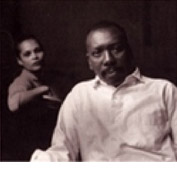
Jacob and Gwen Knight Lawrence, 1958. Photograph by Peter Fink. Courtesy of Jacob and Gwen Knight Lawrence.

My belief is that it is most important for an artist to develop an approach and philosophy about life — if he has developed this philosophy, he does not put paint on canvas, he puts himself on canvas.

—Jacob Lawrence, 1946

rom his early training as an artist in Central Harlem to his retirement from university teaching in Seattle, Jacob Lawrence approached the creative process the way he approached his life — with an honesty and emotional integrity matched by few artists of his generation. He believed firmly that art can affect change without being pedantic; and that beauty resides equally in form as in content. For him, harmony was both an aesthetic and a social concept.
Jacob Lawrence was the first American artist of African descent to receive sustained mainstream recognition in the United States. His success came early — at the age of twenty-four — but lasted almost uninterrupted until his death in June 2000. In the last ten years of his life, he received numerous awards, including the Presidential Medal of Arts and more than eighteen honorary post-doctorate degrees.

Jacob Lawrence’s wife Gwen Knight Lawrence was a full partner in all of his efforts, and an accomplished artist in her own right. Like Jacob, Gwen Knight Lawrence began a lifelong pursuit of art in Central Harlem in the early 1930s. Her work, which reflected her interests and training in portraiture, dance, and movement, received increasing attention from the late 1960s onward in venues around the country. She was honored with a major retrospective in 2003 at the Tacoma Art Museum and at DC Moore Gallery in New York City.

Jacob and Gwen Lawrence were both heirs and contributors to the cultural flowering of the Harlem Renaissance. Neither ever failed to give acknowledgement and thanks for their success to those who supported and mentored them in New York’s Harlem neighborhood during those early years, and both were strongly committed to helping others in turn, particularly young people. In their later life in Seattle, where Jacob Lawrence was a professor of art at the University of Washington, they were beloved members of Seattle’s cultural community who could be counted on to speak, appear, and support the arts whenever they were needed.

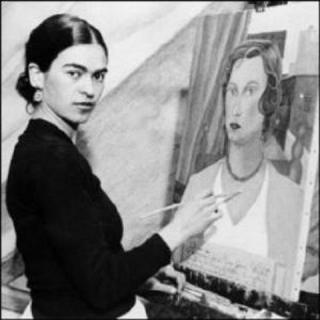
Frida Kahlo

Despite a life that was plagued by both physical and emotional pain, Frida Kahlo (1907-1954) is one of the most celebrated artists of the 20thCentury. The amazing woman is one of my favorite feminist icons and even mentors.

Frida had a childhood that likely influenced the type of woman she would become. She had a unique lineage, her mother was mostly Indigenous and her father German. It was a genealogical history that Frida celebrated and often highlighted in her paintings. She was born to a family of all girls, though remained close to her father, who aggressively encouraged Frida to follow her heart. Her parents enrolled her in an elite private school where she was one of only 35 girls. It was on her way home from this school that Frida was involved in the traffic accident that would affect the rest of her life.

Frida accomplished everything with disabilities and illness that cursed her entire life. While most people know about the train accident that resulted in over 35 surgeries and a lifetime of severe pain, Frida’s physical challenges actually started at age 6 when a polio infection left her right leg smaller than the left. It is also believed that she contracted spina bhifida as a child.

Frida is known as a woman that truly took matters into her own hands. As Frida reached adulthood she began to claim to have been born in 1910 so that people would associate her with the Mexican Revolution. When she determined to become a painter to help support her family, she approached Diego Rivera, then a stranger, and insisted he mentor her, a story that now lives in infamy. (The two eventually married, although the marriage was always rocky at best.)

Frida was definitely a woman that took charge of her own destiny. I think that is really what makes a woman a feminist, the belief that you have the power to chose and control your fate.

One aspect of Frida’s personality that caused her to be so successful was her self- confidence. Perhaps all the time spent alone bedridden caused Frida to develop a healthy and honest relationship with herself. 55 of her over 143 paintings were self-portraits: “I paint myself because I am often alone and I am the subject I know best.”

Typically, Frida’s talent was not fully recognized by the world until after her death. Despite this, she is now recognized world wide as one of the most innovative and influential artists of her time.

read more…..

WORLD OF BLACK ART – Documentary on African-American Artist

“World of Black Art” takes a mesmerizing journey into the past and present world of African-American artists. This riveting documentary features interviews and commentaries from actress Angela Bassett (How Stella Got Her Groove Back, Rosa Parks Story), Otis Williams (Temptations), renowned fine artists Charles Bibbs, Varnette Honeywood, Jameel Rasheed and Kathleen Wilson who speak on the business of art and the need to preserve black images.

New Art Show Explores African American Identity

A new exhibit at the Corcoran Gallery of Art in Washington is showcasing the work of African-American artists working over the past three decades. The exhibit of paintings, drawings, photographs and sculptures is called “30 Americans” and examines black identity in the United States. The idea is that African Americans are simply Americans.

The Corcoran Displays Contemporary African American Art in “30 Americans”

Washington DC.- The Corcoran Gallery of Art and College of Art + Design is proud to present “30 Americans”, a wide-ranging survey of works by many of the most important African-American contemporary artists of the last three decades. By bringing seminal artistic figures together with younger and emerging artists, the exhibition explores artistic influence across generations and sheds light on issues of racial, sexual and historical identity. Often provocative and challenging, “30 Americans” at the Corcoran explores ideas central to the American experience. “30 Americans” is on view at the gallery from October 1st through February 12th 2012.

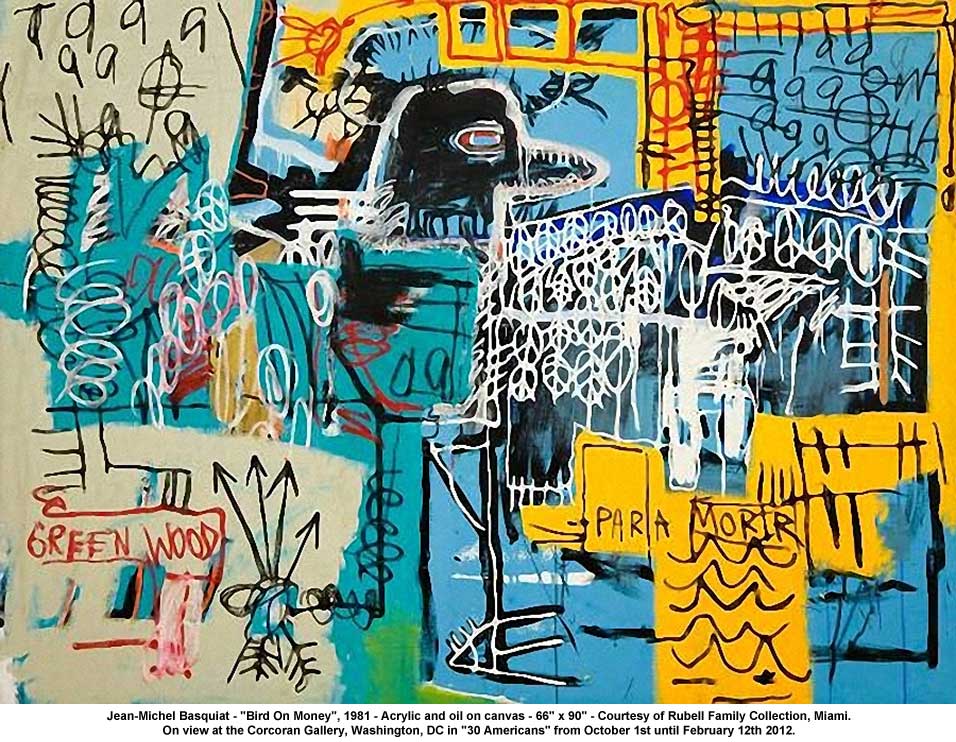
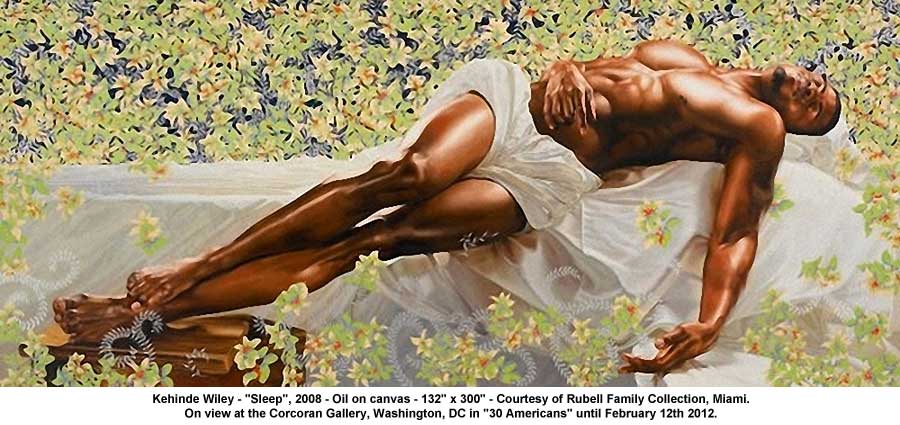
Artists included in “30 Americans” include Nina Chanel Abney, John Bankston, Jean-Michel Basquiat, Mark Bradford, iona rozeal brown, Nick Cave, Robert Colescott, Noah Davis, Leonardo Drew, Renée Green, David Hammons, Barkley L. Hendricks, Rashid Johnson, Glenn Ligon, Kalup Linzy, Kerry James Marshall, Rodney McMillian, Wangechi Mutu, William Pope.L, Gary Simmons, Xaviera Simmons, Lorna Simpson, Shinique Smith, Jeff Sonhouse, Henry Taylor, Hank Willis Thomas, Mickalene Thomas, Kara Walker, Carrie Mae Weems, Kehinde Wiley, and Purvis Young. First shown  at the Rubell Family Collection in Miami, Florida, “30 Americans” has been reconceived for its presentation in Washington. At the Corcoran, the exhibition is organized around ideas of identity as well as artistic community and legacy, highlighting relationships between artists across generations. The exhibition explores the ways in which a foundational figure‘s ideas and formal innovations ripple through contemporary practice: Robert Colescott‘s investigations of the narratives of art and history in relation to African-American culture echo through the grand portraits of Kehinde Wiley and the cut-paper silhouettes of Kara Walker; the innovations of  Jean-Michel Basquiat‘s graffiti-based paintings of the urban environment find current form in the work of Mark Bradford and Shinique Smith; while David Hammons‘s wry investigations of language, meaning, and race provide a starting point for  the conceptualism of Glenn Ligon and Lorna Simpson.

The Corcoran Gallery of Art stands as a major center of American art, both historic and contemporary. Founded “for the purpose of encouraging American Genius,” the Corcoran’s extensive collection of 18th, 19th, and 20th century American art represents most significant American artists. The Corcoran possesses a fine collection of European art as well. While continuing its efforts to represent historic American works, the gallery also encourages modern European and American artists by showing and purchasing their work, paying particular attention to artists in the Washington area. The permanent collection includes works by Rembrandt, Eugène Delacroix, Edgar Degas, Thomas Gainsborough, John Singer Sargent, Claude Monet, Pablo Picasso, Edward Hopper, Willem de Kooning, Joan Mitchell, Gene Davis, and many others. There are always several exhibitions on display, regularly featuring contemporary work on the second floor with modern and early American work on the first floor. The Corcoran is the oldest and largest non-federal art museum in the District of Columbia. Its mission is to be “dedicated to art and used solely for the purpose of encouraging the American genius”. Visit the museum’s website at … www.corcoran.org


Harlem Renaissance Artist Catlett Dies At 96

April 5, 2012

Sculptor Elizabeth Catlett was one of the most important African-American artists of the 20th century and one of the last living links to the Harlem Renaissance. She died Monday at the age of 96.

Copyright © 2012 National Public Radio®. For personal, noncommercial use only. See Terms of Use. For other uses, prior permission required.

RENEE MONTAGNE, HOST:

And we remember now an African-American artist whose sculptures helped defined the modernist style while offering pointed commentary on divisive issues like race. Elizabeth Catlett was 96 when she died. NPR’s Allison Keyes has this story.

ALLISON KEYES, BYLINE: Strength and power shout from the raised fist of the brown sculpted female figure in Elizabeth Catlett’s 1968 piece “Oh-Mage TO My Young Black Sisters.” Haunting Afro-centric eyes gaze compellingly from many of her creations. You can see them in her 1939 sculpture “Mother and Child,” and in her 2003 seated figure, a bronze of a woman, head tilted skyward as if to look at the sun.

ISOLDE BRIELMAIER: You can really see life and history unfold in her work.

KEYES: Isolde Brielmaier curated an exhibition of Catlett’s work last year at the Bronx Museum of the Arts. It was called “Stargazers,” after a striking 2007 Catlett sculpture.

BRIELMAIER: It was sort of inspired for Elizabeth after Harriet Tubman.

KEYES: The black marble reclining woman somehow exudes the same power as the raised fists in some of Catlett’s other works. Brielmaier thinks of the sculpture as looking toward the future.

BRIELMAIER: There’s something about this beautiful kind of languid female form that’s sort of firmly and boldly grounded gazing up at the stars, gazing up at the universe.

FRANCISO MORA CATLETT: The art form makes you feel something.

KEYES: Catlett’s oldest son, Franciso Mora Catlett.

CATLETT: It alerts or awakens something in you, that’s the important thing about it.

KEYES: Mora Catlett says when his mother was putting up an exhibition, she made sure to ask regular folk what her work made them feel.

CATLETT: She was very keen in watching people’s reaction on her work, because it was for people that she was working for.

KEYES: From work such as 1969’s “Negro Es Bello,” to her involvement in progressive education and social causes, Catlett’s love, compassion and work ethic come through in her art.

CATLETT: I believe it’s the reason why so much of her work is so powerful.

KEYES: Though much of her early career was ignored by the mainstream art world, Catlett’s work is now collected by museums all over the world. Still, the artist said it was too much when NPR told her last year that she had been described as the matriarch of modernist sculpture.

(SOUNDBITE OF ARCHIVED RECORDING)

ELIZABETH CATLETT: I’m not the matriarch. I don’t know who the matriarch is. I know it’s not me.

KEYES: Yet scholars and admirers alike say Elizabeth Catlett’s unique vision will influence artists concerned with the social issues that affect the world for years to come.

Allison Keyes, NPR News.

Art poised for eager crowds


It was not exactly a twist-and-shout moment when The Dance came off the wall at the Barnes Foundation in Merion.

Nearly two decades ago, amid incessant legal skirmishing, Matisse’s 34-foot-wide triptych mural on canvas was maneuvered from the wall it had been made to fill, and traveled to Washington, Paris, and the Philadelphia Museum of Art for exhibition.

It was a tense, court-approved voyage, but The Dance waltzed through it, finally returning to its newly renovated Merion home in 1995.

Last year, amid even more legal skirmishing over plans to move the entire Barnes collection, The Dance again came down from its perch, this time permanently, and it has been reinstalled in its new home at the soon-to-open Barnes gallery on the Benjamin Franklin Parkway. Foundation officials decline to discuss the moving or reinstallation of the collection, citing security concerns.

Timed tickets to see The Dance and the rest of the Barnes Foundation’s renowned collection of early modernist works go on sale Thursday to the general public.

The $150 million gallery officially opens May 19, and tickets have been moving briskly to Barnes members since Feb. 1. In fact, memberships, too, have been selling well, foundation officials say: In March 2009, membership totaled 390; today, there are about 15,000 members. Package prices begin at $90. Without membership, adult tickets are $18.

Because of the modest size of the foundation’s gallery spaces – the Philadelphia gallery interiors mimic those in Merion – timed tickets are necessary. Gallery hours will be 9:30 a.m. to 6 p.m. Wednesdays through Mondays, with Friday hours extended to 10. A maximum of 150 visitors will be admitted per hour.

During the last phase of its life in Merion, the Barnes was open six days a week, with a visitor limit of 450 per day (up from the previous limit of 400). Annual attendance never came close to 100,000, the foundation reported.

Barnes officials now expect a shade more than 200,000 visitors in 2012. In 2013, admissions should be roughly 350,000, said Peg Zminda, Barnes executive vice president and chief operating and financial officer.

Visitation will be driven, for a time, she said, by curiosity; numbers will likely dip in 2014.

The operating budget for 2013, the first full year at the new site, is projected at about $14 million, Zminda said. About 56 percent of that will come from earned income – admissions and other sales.