Key facts, figures and dates
Mauritania profile
Key facts, figures and dates

Connecting People with Art since 1985
Key facts, figures and dates

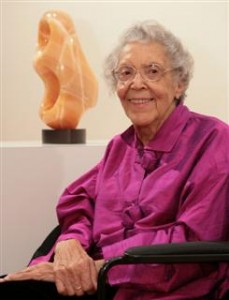
MEXICO CITY—Sculptor and printmaker Elizabeth Catlett, a U.S. expatriate renowned for her dignified portrayals of African-American and Mexican women and who was barred from her home country for political activism during the McCarthy era, has died. She was 96.
Maria Antonieta Alvarez, Catlett’s daughter-in-law, said the artist died Monday in a house in Cuernavaca, Mexico, where she had lived since 1976.
Born in Washington, D.C., Catlett moved to Mexico in 1946, became friends with great Mexican muralist Diego Rivera and others in his circle, and married Mexican artist Francisco Mora.
She became known for her commitment to winning greater rights for blacks, women and workers in the United States and her adopted country. Catlett witnessed almost every important artistic and social movement of the 20th century and traveled in some of the same illustrious circles as the great American artist Jacob Lawrence and poet Langston Hughes.
She was arrested during a railroad workers’ protest in Mexico City in 1958 and in 1962 the U.S. State Department banned her from returning to the United States for nearly a decade because of her political affiliations.
Working in wood, stone and other natural materials, she produced simple, flowing sculptures of women, children and laborers, and prints of Mexicans and black Americans that she used to promote social justice.
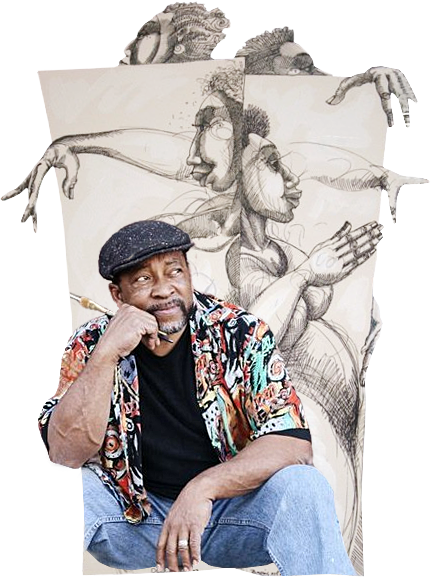
Internationally acclaimed artist Charles Bibbs, whose work is featured in museums, galleries, organizations, and homes of many collectors, displays a deep sense of Spirituality, Majesty, Dignity, Strength and Grace in his images, that is done in a combination of realistic and larger-than-life interpretations of contemporary subjects that are ethnically rooted.
Born in San Pedro, California, and raised in Harbor City, California, Bibbs managed to work an eight-hour job, and use his God-given talent in his spare time. But In 1991, Bibbs decided to leave his management position of 25 years, to form his own publishing and distribution company, B Graphics and Fine Arts, Inc. Today, Bibbs is one of the top-selling artists in the country, and his company has grown to be one of the leaders in the African American art print market.
Bibbs strongly believe that we are the “Keepers of our Culture,” and as such, have spent much of his time serving on boards of museums and art organizations to support the art community. He has lectured, and conducted panels and workshops in major cities, including the Charles Wright African American Museum in Detroit, Urban League of Pittsburg and the Riverside Metropolitan Museum. He has a sincere passion for supporting the youth, and as such, has mentored, taught and conducted numerous workshops for young aspiring artists.
In his quest to preserve and develop the visual arts, Bibbs founded Images Magazine, the first national publication dedicated to contemporary African American art, Art 2000 Visual Arts Association, Art on Tour, The Inland Empire Music and Arts Foundation, co-founder of the Creative Quarantine, an artist and residence program. In his professional artist career, Bibbs owned 6 art galleries, including the popular 626 Art Gallery at Studio B, located in the historic art district of Los Angeles downtown.
Bibbs continues to receive recognition and appreciation not only for his distinctive style images, but for his philanthropic spirit. Through his art, he has supported numerous scholarship fundraisers, and youth programs, and made substantial contributions to organizations nationwide, including the NAACP, United Negro College Fund, Associated Black Charities, Morehouse College, Howard University, PNC Bank, Tom Joyner HBC Scholarship Foundation, National Urban League, Alpha Phi Alpha and Delta Sigma Theta.
Bibbs is profiled in many publications, Ebony Jet, Upscale, Ebony Male, just to name a few, and has interviewed on numerous radio and television programs including the Tavis Smiley Show, Steve Harvey Radio Show, and TV One Studio. His work has been shown on the sets of many popular television sitcoms and movies. In 2008, Bibbs created the “Black Madonna” image for the Fox Searchlight film, “The Secret Life Of Bees,” and was the first visual artist to be hired to create for a Fox Searchlight film.
Bibbs’ work has been featured in several exhibitions at museums, galleries, schools and other art venues, including the California African American Museum in Los Angeles, The Metropolitan Art Museum in Riverside, The Museum of African American Art, The National Black Arts Festival, New York International
Art Expo, and the Tokyo, Japan International Fine Art Show.
He is the recipient of numerous awards and honors including the “Entrepreneur Of The Year” Award, presented by the African American Chamber of Commerce, United Negro College Fund “Honoree Award,” Hardy Brown Community Award, and has been presented the “Key to 6 cities within the United States.
Bibbs’ original works are featured in the homes of many collectors, businesses and organizations all over the country. His partial list of collectors includes Frankie Beverly, Najee, Steve Harvey, Bernard Kinsey, Marc Brown, Earl Graves, Queen Latifah, Drs. Frank and Marsha Glover, Dr. And Mrs. Charles Mitchell, University of Arizona and Fox Searchlight Pictures.
CHARLES BIBBS

Louis Delsarte artist Personal Information Born September 1, 1944, in Brooklyn, NY Education: New York University, Pratt Institute, B.F.A., 1967; Louis J. Delsarte (born September 1, 1944 in Brooklyn, New York) is an African American artist known for what has sometimes been called his “illusionistic” style. introduction Louis Delsarte was born in Brooklyn New York in 1944. Believing that experimentation is the essence of art, he wrote: I. Bibliography and Exhibitions MONOGRAPHS AND SOLO EXHIBITIONS: Atlanta (GA). Louis Delsarte’s work can be found in many public and private collections including The Metropolitan Museum of Art, The Cocoran Museum of Art, Fort Lauderdale Museum, Kanmsas.
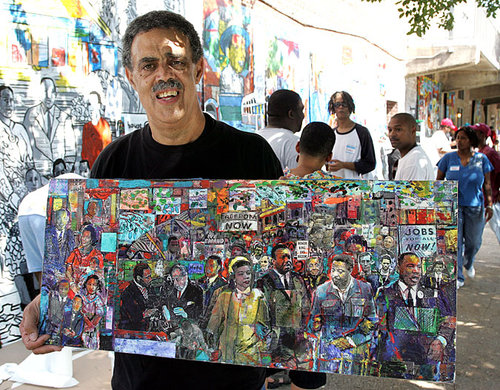
Louis Delsarte artist Personal Information Born September 1, 1944, in Brooklyn, NY Education: New York University, Pratt Institute, B.F.A., 1967; Louis J. Delsarte (born September 1, 1944 in Brooklyn, New York) is an African American artist known for what has sometimes been called his “illusionistic” style. introduction Louis Delsarte was born in Brooklyn New York in 1944. Believing that experimentation is the essence of art, he wrote: I. Bibliography and Exhibitions MONOGRAPHS AND SOLO EXHIBITIONS: Atlanta (GA). Louis Delsarte’s work can be found in many public and private collections including The Metropolitan Museum of Art, The Cocoran Museum of Art, Fort Lauderdale Museum, Kanmsas.
Louis Delsarte was a figurative artist whose work reflected a departure from the realist style that was predominant among many of the African-American artists. A Closing Glimpse – September 12th, 4-6 PM. Curator’s Statement. Spirit Chasing Rainbows The Art of The Art of Louis Delsarte. Transitions, Louis Delsarte (2001) Location: Church Avenue. Spirit Chasing Rainbows: The Art of LOUIS DELSARTE. Bronislaw (Bruno) Bak was a Polish immigrant who, with his wife Hedi, established a printmakers workshop. Louis Delsarte: AskART art price guide for Louis Delsarte and 96,000+ American artists – Louis Delsarte fine art prices, auction results, auction images, value art, art. Stained glass and glass mosaic murals depicting neighborhood and ethnic scenes.
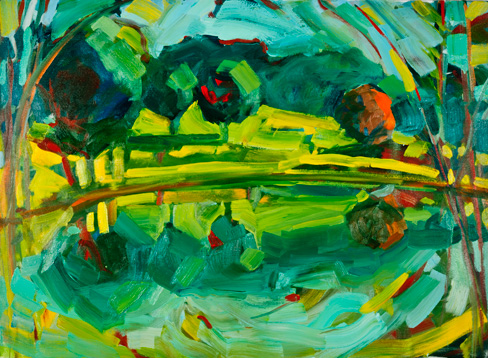
Landscape painting has always informed my eye about the natural patterns of light and dark, warm and cool, and balance of composition. These elements, found in all painting, are abundantly available for the artist to see in the world around us. Some artists are interested in recording exactly what they see, while others unpack the abstractions within the scene. My interest lies somewhere in between reality and the abstract.
To inquire about artwork displayed on this site, please contact us.
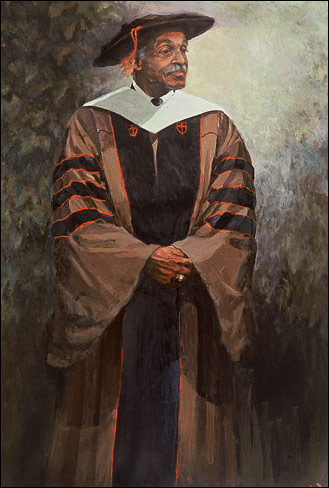
Robert Freeman has extensive experience in painting formal portraits that grace corporate and university boardrooms, as well as more personal portraits of family members.
To inquire about commissioning a portrait, please contact us.
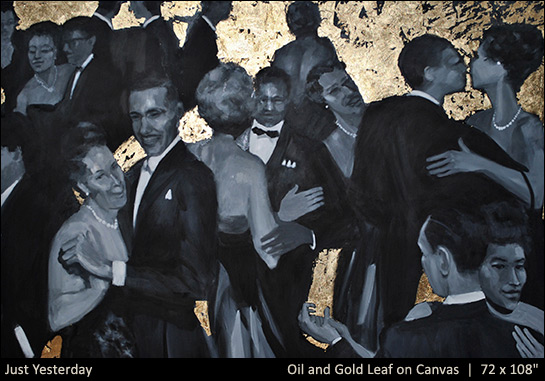
Robert Freeman has been showing nationally for over 20 years, and has been included in the collections of the Museum of Fine Arts, Boston, the National Center for African American Artists, Boston Public Library, Brown University and DeCordova Museum. His paintings have been featured in exhibitions at Rose Art Museum at Brandeis University, Museum of Fine Arts, Boston and Williams College Museum of Art, Williamstown, MA.
Known for his vivid and powerful figurative paintings, Robert Freeman has traditionally focused on the interactions between people in his work. Skillful, brave use of color and gesture are the trademark of Freeman’s work and make his figures nearly abstract.
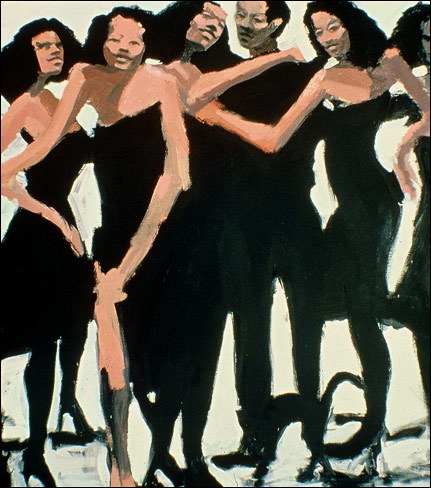
Robert Freeman has been showing nationally for over 20 years, and has been included in the collections of the Museum of Fine Arts, Boston, the National Center for African American Artists, Boston Public Library, Brown University and DeCordova Museum. His paintings have been featured in exhibitions at Rose Art Museum at Brandeis University, Museum of Fine Arts, Boston and Williams College Museum of Art, Williamstown, MA.
Known for his vivid and powerful figurative paintings, Robert Freeman has traditionally focused on the interactions between people in his work. Skillful, brave use of color and gesture are the trademark of Freeman’s work and make his figures nearly abstract.
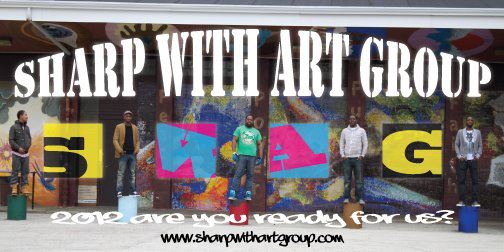
S.W.A.G. (sharp with art group)
Sharp With Art Group (SWAG) is an organization of visual artists dedicated to creative artistic expression, community service, and freedom of speech. Founded in the summer of 2009 by six friends from the Philadelphia and New York art scenes (Tone Casso, Shiz, Neef, Rell Stylez, and Jae Martin) SWAG was created out of the founding members awareness of the heightened interest in art throughout the country and the potential for a new artistic renaissance movement consisting of new young artists using their art to express themselves and their views of society. With all the social ills in our world today, SWAG aims to use art as a tool for spreading the message of peace and respect for all cultures across the globe to encourage a unified humanity.
Since its inception in 2009, SWAG has done a multiple number of art shows, live art appearances, professional art projects, TV appearances, and interviews. SWAG has grown into a movement that has expanded to include new members (The SWAG Family) and plans for a youth component called Young SWAG that will encourage urban youth to use their art to guide them in positive productive direction.
The World is our canvas says SWAG members, and there is more blank spaces to paint.
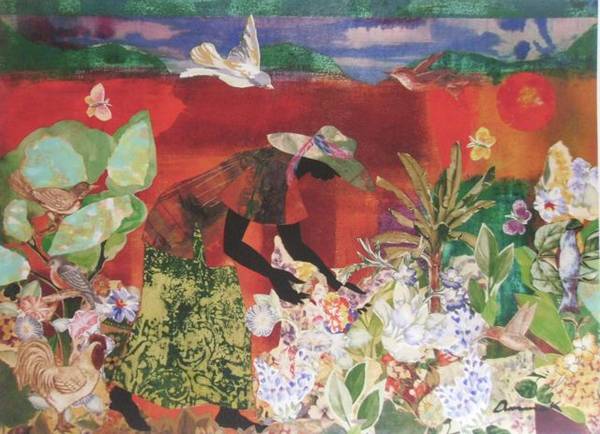
In his studio in Yemassee SC, using brightly hand colored papers and found materials, Denmark creates compositions that go beyond the superficial and transitory. He focuses, instead, on what is eternal and universal. Denmark’s work is consistently and eagerly sought after by galleries and collectors worldwide, most notably New York’s Metropolitan Museum of Art.
 “Trust and faith creates confidence, which allows me to move forward with my work,” stated Denmark. “I leave everything to the spirits. I step back every so often to peek at found collage materials, and to ponder new possibilities. I am a party to improvisation, found materials, and the impact of color.”
Born in 1935, Denmark was exposed to color and form at an early age by his grandmother, a wire sculptor and quilt artist, by his grandfather, a bricklayer noted for his unique custom design molds, and his mother who was gifted with an intuitive feeling for design and a fastidiousness for detail which she expressed in all aspects of her daily life. While attending Florida Agricultural and Mechanical University in Tallahassee, Florida on a sports scholarship, he came under the tutelage of the artist and acclaimed African-American art historian, Dr. Samella Lewis, who exposed him to great traditions and accomplishments of the African -American art movement.
Denmark moved to Brooklyn, New York and began a career as an art teacher in the public school system, and from 1973 to 1976, earned his Master of Fine Art Degree at the prestigious Pratt Institute of Fine Art. Denmark met and was nurtured by an immensely talented community of artists, including abstract expressionists as Jackson Pollack, Clifford Still, and William DeKooning. The African-American masters Norman Lewis, Romare Bearden, Jacob Lawrence, and Ernest Crichlow instilled in him an appreciation of his African-American artistic heritage, and he began experimenting with collage. Prior to this period, he worked primarily in watercolors and charcoal.
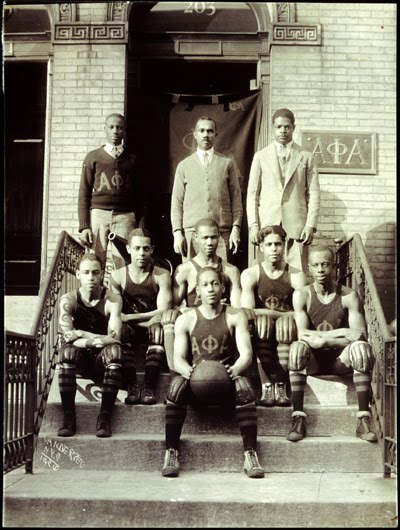
Born June 29, 1886 in Lenox, Massachusetts, the son of Ulysses S. Grant’s maid and butler. After attending schools in Lenox, he went to New York City in 1906 and held a series of jobs as a waiter and elevator operator. From 1909 to 1915 he played in Fletcher Henderson’s band and the John Wanamaker Orchestra (and in an orchestra that accompanied silent films).
Attracted to photography, Van Der Zee got a job as a darkroom assistant, and after learning the fundamentals of photography he opened his own studio in Harlem in 1916. On the upper end of Manhattan, Harlem was only then becoming a haven for African Americans and during the next five decades he would photograph African Americans of all social classes and occupations. He took thousands of pictures – mostly indoor portraits, though he occasionally went out and photographed the Harlem scene.
Although Van Der Zee photographed many of the African American celebrities who passed through Harlem, most of his work was of the straightforward commercial studio variety – weddings and funerals including pictures of the dead for grieving families, family groups, teams, lodges, clubs, or people simply wanting to have a record of themselves in fine clothes. He often supplied props or costumes and in his developing – which he did himself – he would add pictorial touches with an air brush or double-printed images.
Forgotten for many years, Van Der Zee had retired and was reduced to poverty when in 1969 the Metropolitan Museum of Art mounted an exhibition called Harlem on My Mind that brought him and his work renewed attention and rewards. He took up photography again in 1980 until his death.

The Original Renaissance man is one of his many titles.
The achievements of Gordon Parks alone, proves that any vision can become a reality if you take advantage of an opportunity, work hard and believe in yourself.
From birth, Parks went against all odds.
He came into this world as a fighter, still born and pronounced dead with no heartbeat. Parks was laid aside to be buried, a shocking technique that included putting his body in ice-cold water brought him back to life. And from then on, the legend continued to make his mark by reaching major milestones and going where others were afraid to explore.
Before his death he became an internationally-renowned photographer, filmmaker, poet, novelist and a composer. Parks was the co-founder of Essence magazine; he even wrote a ballet and dedicated it to the late Dr. Martin Luther King Jr.
Images of the graffiti castigating Kenya’s political leaders

…
The initial, and naturally most obvious aspect of Tiberino’s work, is her technique. Her people, and one can only think of them as the “people” in her work rather than the work’s “subjects,” seem beyond life-like: elongated figures; exaggerated, yet graceful and powerful hands; faces and heads emphasized, sometimes with little more than a suggestion of a body. Her people are strongly rendered, given a pulsating life-force through line, shape, and color. Her figurative style is unique, and her control over line and shape, hue and value is both complete and dramatic.