Rhapsody in Blue: The Work of Nannette Harris

Sargent Johnson Gallery (Sargent Johnson Gallery)
Thu, Aug 26 — Sun, Jan 2
Gallery Hours: Tues – Sat 12 Noon – 5 p.m.

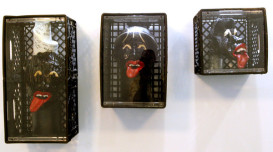
“Rhapsody in Blue” features some of Nannette Harris’s beloved and popular works like: James Brown, Carlos Santana, and Tina Turner. She will also unveil her new creations like: Jimi Hendrix, Marolyn Monroe, and the African American Art & Culture Complex’s own, Sargent Johnson – of whom our gallery is named after.

Nannette Harris is an African American artist born and raised in Oakland, California. She followed her passion for art and earned a Bachelor of Fine Arts Degree from the California College of Arts and Crafts. She has been painting for thirty-five years.

Nannette’s use of color in her paintings allows the colors to show the meaning of her work. The vision for her style came in a dream, using the primary colors, blue, red, and yellow. “Blue” represents the color of our blood before it is oxygenated, “Red” represents the color of our blood after oxygenation and “Yellow” represents the aura and energy of life. She believes “Black” radiates when used with color and enjoy using the negative space, creating a touch of cubism, texture and geometric shapes in her paintings.

It is of interest to note that Nannette has been very environmentally conscious of the materials she uses, being called the “Green artist” that paints “Blue People”. She paints and creates her artwork using recycled oil and acrylic metallic paints. She has been recycling her paints and old paint brushes that allows her to sculpt and give texture to the hair of the characters she paints. She never discards any left-over paint she uses. Therefore, her concern for the environment prompts her to be creative in re-using the materials.
read more>>>>>>>>>>>>>>>

Nigerian Ife Art on Display in Houston

A collection of more than 100 items of African art is now on display at the Museum of Fine Arts in Houston, the first stop in a U.S. tour of rare art works from Nigeria’s Ife region.

The exhibition is called Dynasty and Divinity: Ife Art in Ancient Nigeria and features many objects that museum visitors may find surprising. Curator Frances Marzio said, “Ife early on protected its patrimony and these objects have, for the most part, never even been outside of Nigeria.”

One of the biggest surprises, Marzio says, is the realistic portrayals of royalty and other subjects in terra cotta, stone and metal. “Most of what we think of as African art today are the types of abstract art and wooden art that really influenced 20th century artists like Picasso. So, to see these objects that are made in a very classical way, more like Greece and Rome, I think is a revelation and I think it changes your idea of what African art was,” said Marzio.

One example is this statue of a beaded woman called Idena. “This stone sculpture dates from the ninth century and it represents Idena, the gatekeeper, who presided over and protected the sacred grove at Ore. “The Idena statue is seen in a gatekeeper position and wearing a large beaded necklace and beaded bracelets. The wealth of Ife was due to a bead making tradition. They exported their glass beads to the north of Africa and made this area very prosperous,” she said.

Marzio says her favorite works in the exhibition are the metal sculptures of human heads. “From the ninth to the 14th century, this area created a number of copper-alloy heads that are unlike anything else we have seen in African art. They have wonderful naturalism. They look as if they could speak or communicate with you. Yet they have the realism of Roman portraits,” she said.

Most of these works date from a period a century before the art of metal sculpture returned to Europe during the Renaissance. Marzio says they show a level of skill similar to that attained by the ancient Greeks and Romans. “We know that there was a long metal-working tradition in Africa from very ancient times, but it is unknown what the origin of these particular heads was,” she said.

The exhibit of art from Ife will remain here in Houston through January 9 of next year.
read more>>>>>>>>>>>

17th Annual Holiday Glitz Benefit Gala

Charles A. Dana Discovery Center (Located inside Central Park on 110th Street between Fifth and Lenox Avenues)

Originating from the first harvest celebrations on the African continent, Kwanzaa is celebrated in December and honors the principles of family, community and culture.

Join the Museum for African Art and the Central Park Conservancy for a festive Harlem Meer Social Hour facilitated by choreographer Abdel Salaam and guests from Harlem’s Forces of Nature Dance Theatre. Celebrate this African-American and Pan-African holiday by enjoying complimentary refreshments, live music and dance, and songs in English and Swahili in the Kwanzaa tradition.

FREE. No advance registration required. For more information, call the Central Park Conservancy at 212-860-1370.

Museum for African Art education programs are supported, in part, by public funds from the New York City Department of Cultural Affairs in partnership with the City Council, the May and Samuel Rudin Family Foundation, Inc.

read more>>>>>>>>>>>>>>>>>>>>>

AFRICAN JUBILEE FILM FESTIVAL: ‘War/Dance’

Fifty years ago, 17 African countries won their independence from European colonial rule. Ever since that time, 1960 has been known as the Year of African Independence. With political independence came new struggles, like the struggles for economic justice, gender justice, cultural renewal and peace. African filmmakers and the African film industry have played a key role in representing these struggles, as well as comedy, romance and Afro-futurism.

The African Jubilee Film Festival, curated by Lynette Jackson and Floyd Webb, and co-sponsored by Portoluz, The DuSable Museum of African American History, the African American Studies and Gender and Women’s Studies departments at UIC and The Public Square, will mark this important milestone with films by African filmmakers, from founding fathers like Ousmane Sembene and Djibril Mambety of Senegal, to rising young women filmmakers like Jihan El Tahri and Wanuri Kahiu of Egypt and Kenya respectively. The African Jubilee Film Festival will hold film screenings and discussions on select Sundays, between June 27 to December 5, 2010.

December 5 – War/Dance

Director: Sean and Andrea Nix
Country: Uganda

This documentary is set against the backdrop of a 20-year long civil war in Northern Uganda in which 30,000 children have been abducted by the rebel army, and many of their parents killed. The documentary follows a group of school children in an internally displaced persons camp who are preparing to compete in Uganda’s National Music and Dance Festival in Kampala. The viewer
is taken on a deeply moving journey full of pain and loss innocence, resilience and hope. A true triumph of the human spirit.

Discussant: Ogenga Otunnu, Depaul University.

read more>>>>>>>>>>>>>>>

"Best in Show" awardee, at the 25th Annual October Gallery Art Festival in Philadelphia, PA


Michele Foster-Lucas is a Folk Artist that speaks of people and culture through her existing and creative artwork. Born in Philadelphia, Pennsylvania, Michele soon moved to southern New Jersey after high school years, she later attended Burlington County College where she earned an Associate Degree in Science.

Michele has always had the spirit of an artist. In 1993, at the urging of friends and family, and after visiting private exhibitions and museums, Michele began painting on canvases. After moving to soft pastels, Michele’s subjects evoke a spiritual grace and yearning, reflective of her God-given talents. She was soon invited to exhibit her talent at the Woodbine Exhibition in Philadelphia, Pennsylvania, Galleria in Manayunk and the Gallerie 500 in Washington, DC.

Michele was a featured artist at the and the highly prestigious, October Gallery held in Philadelphia. Her work has been displayed at the Remee Gallery,Washington DC, the Annual Tommy Gomillion Art in the Garden in Washington DC, Community Art in Atlanta, Georgia, General Electric Fine Art Gallery in Philadelphia, PA, Picture That Fine Art Gallery in Connecticut, Rittenhouse Square Fall Art Show in Philadelphia PA, African American Art Museum in Philadelphia, PA, Underground Railroad Museum in Burlington, New Jersey, Attitude Exact Gallery in Washington DC,100 Black Men Charity Event in, Philadelphia, PA,Vivant Art Collection Gallery, Philadelphia, PA ,and in 2010 was “Best in Show” awardee, at the 25th Annual October Gallery Art Festival in Philadelphia, PA.

As Michele’s artistic perspective expanded, she explored new mediums and modes of expression as in works titled The Watermelon,” “Couple and the Moon,” and a series Black stick figures, render a near abstractionist view of life’s moments.

To date, Michele has produced two photo-lithographs titled “One Love” (released nationally as an unlimited edition in 1992) and has currently produced over one hundred giclees. The names of some are titled Carnival, Growing In Grace, The Fan, Road Song, and Out of the Blue which was released in limited edition in 2007.

“Carnival” represents a powerful and colorful leap into a new dimension of creativity inspired by a famous New England artist that used acrylic. Michele combines that technique with soft charcoal pastels. The resulting is an image that conveys the frenzy, vibrancy, and sensuality contained in the spirit of a Carnival.


Her patrons include a wide array of persons ranging from the contemporary artists Paul Goodnight to Hershey Hawkins (a former Basketball player of the Philadelphia 76’s). Her works are for all people from all walks of life as evidenced by a near “sell out” of her exhibit at Gallerie 500. Versatile Michele creates pieces ranging from modest to complex.

It is Michele’s desire that people would glorify God when they are looking at her artwork.


As a new folk artist on the scene, her artistry has grown bolder of greater variety and with breathtaking emotional complexity. For your home or your office, her art work remains affordable but of a sophistication that speaks of museum quality.

read more>>>>>>>>>>>>>>>>

C E N T E R * P E A C E : A Reflection of The Inner Spirit, Or Not ?

Earth, Water, Fire and Air the elemental components of our natural existence, each a force

of kinetic power and tranquil peace. Mankind’s struggle continues, teetering on the brink of domination and surrender, the goal as always – control.

The artist Brenda Pinkston is a North Carolinian transplant from Trenton, New Jersey. Placing at the tip of her brush the essence of love, hurt, passion, fear, elation and other perceptions to provoke and evoke cognizance. Her brush strokes in such works as ‘American Influence’ harness the ‘kinetic energy’ of emotionalism, yet there
is a clear reflection of calm and hope in her work, ‘The Cure’. I find that her works preach to my eyes. Her sermon is short and sweet and proclaims… within the confinement of the line, there is intensity one must take time to feel what the image can barely contain.

Sculptor and painter, Crystal Pinkston is a New Jersey native who has been living in the Charlotte area for almost twenty years.
‘Or Not?’ represents this artist take on the whimsical elements of life. Her paintings and sculptures, unpredictable, define a playful use of abstract illusions, vibrant contrasting colors, unusual materials and these wonderful characters. Guaranteed enjoyment is destined viewing Pinkston’s works, which make light of the quirks in life that clearly identify what being human is all about,
‘Or Not?’.

Originating from Hickory, North Carolinian artistic force, Christopher Brown explores the meaning of ‘Kinetic Power’ in his many works. It is at the core of kinetic thought where you will experience Brown’s concern for humanity. Breaking through tradition and exploring truth is boldly showcased in such work as ‘School Days’. The combination of every day materials and intense strikes of pastels culminate his eclectic style of mix media.

Welcome to Brenda Pinkston & Crystal Pinkston’s First Annual ‘Open House’ Art Exhibit,
“C E N T E R * P E A C E : A Reflection of The Inner Spirit, Or Not ?” The show runs from July 1 through July 4, 2010, 12-8 PM, with a reception on Saturday, July 3, 12-8PM. The show will be available throughout July, August and September 2010 by appointment only by emailing brendapinkston@yahoo.com or
visit www.pinkstonsart.com for details.

This in house art exhibit showcases fine art works and prints from the artists, Brenda Pinkston, Crystal Pinkston along with their guest artist, Christopher Brown.

The G.R.E.A.T.E.S.T. Soul Journey


We were started by Tom Gregory, owner of the printing company, Professional Duplicating. Professional Duplicating, which has offices in Bryn Mawr and Media PA, has been in business since 1977.

In 1997, Buy Books on the web was unveiled as a book publishing company based on the publishing and printing technology already in use by the parent company.
We later changed the name of our book publishing operation to the more author-friendly, “Infinity Publishing” with “Buy Books on the web” continuing as our dedicated e-commerce website and retail sales operation.
Buy Books on the web can be found on the web at either http://www.buybooksontheweb.com/ or http://www.bbotw.com/. We only sell the books that we publish (with a few exceptions).
The books that we publish (from 2001 on) carry the Infinity Publishing imprint and are all trade paperback books. This means the books are all “perfect” bound with a full color, glossy laminated cover. All book interiors are printed with high quality black and white, toner based printing (digital printing). Older books that were published by us from 1997-2001 carry the Buy Books on the web imprint and are printed on 100% recycled paper and are bound with black and white covers.
Our books are either 5.5×8.5, 8.5×11, or 8×8.
We ship most book orders (small quantities) via First Class mail. Small quantities ship in less than 48 hours. Large orders are shipped via UPS Ground and ship in about a week, depending on quantity. We take great pride in providing hard to find books to the masses, printed with the most state of the art printing methods.
If you have any questions or problems, please contact us at info@buybooksontheweb.com. We will be happy to help you!

read more>>>>>>>>>>>>>>>>>>>

Kimora Lee Simmons, Baby Phat Part Ways….

It’s official: Kimora Lee Simmons has parted ways with Baby Phat, a fashion line that she launched with her ex-husband Russell Simmons.

Late last week, the former model broke news to her Twitter followers that she would be leaving the label behind, to instead focus on her other labels. But, the New York Post’s Page Six now reports that she was dumped by the label, which is owned by Kellwood Co.

“Kimora was going over budget. She’d pay herself a fee to be in the ads, plus she paid her children fees to appear in ads. It costs thousands of dollars to airbrush her because she’s a size 10. Plus, they spent a ton of money on body doubles. They would shoot another model in the clothes, and take Kimora’s head and put in on her body,” the gossip column writes, quoting an unnamed source.

“It’s time for me to move on and further expand my other businesses and create a new phenomenon. I adore all those who have faithfully been with me since the beginning,” Simmons says in a statement. “I’m forever dedicated to my family, fans and customers. My inspiration has always come from the fabulous women who have been with me through the years as we’ve grown from young party girls to power players! We’re ready for our next journey together and we’re taking a whole new generation of incredible young women with us. Girl power unite!”

Simmons, who divorced hip-hop music mogul Russell Simmons in 2008, served as creative director of the label, and her other business interests, include her clothing lines, KLS, Fabulosity and Kouture by Kimora Collection for Macys. Russell Simmons sold Phat Farm to Kellwood in 2004 for $140 million.

After the news broke, Simmons headed back to Twitter to tweet a few more updates to fans. She told them that there wouldn’t be a Baby Phat fashion show at this year’s Fashion week, tweeting “I will not b there. And corporate has decided not 2 do one!”

Simmons, who also is the star of her own reality show, “Kimora: Life in the Fab Lane,” tweeted that her daughters with Russell Simmons, Ming Lee and Aoki Lee, will cease modeling for the Baby Phat line as well.

Barbara Jones-Hogu and the Philosophy of AfriCOBRA

Barbara Jones-Hogu is currently getting a Master’s in film, and plans to create documentaries about the work of artists. But her history won’t let her be — she was one of the founders (and one of the few women), in the African American art group, AfriCOBRA.

The South Side Community Art Center brought together several of her older works and is introducing her first new print in thirty years.

We chatted on the phone about her past with AfriCOBRA, her current work, and the years in between. Jones-Hogu immediately clarified that the group is still active, and explained that her break from the group was due to logistics. “Most of them moved east in the early 70′s, that was my first disconnect with the group. And I had a child soon after that.”

She explained why the meetings were critical. “Part of ‘our thing’ was that we would meet and discuss our artwork, about our ideas, and things we wanted to create in our imagery. So the meetings were a part of being in the group, as we had a philosophy that we wanted to center on.”

Jones-Hogu was kind enough to send me the original AfriCOBRA philosophy. You can look for this on the web and find varieties of the AfriCOBRA philosophy, but her document is really the God’s-mouth-to-your-ear version, as Barbara directly contributed to the creation of the philosophy. She explained that when the group formed, they looked at each other’s artwork, and from each artist, they picked an aspect of their artwork to be a part of the AfricCOBRA philosophy. “I know the lettering came from my work. And from Wadsworth Jarrell – strong color. Someone else might have stressed form. We incorporated what we considered positive, formal elements.”

But here is the source of my fascination with AfriCOBRA. I love alternative systems. I love when people make a break from the mainstream and re-think core issues. What makes AfriCOBRA so famous is that it can be interpreted as the 60′s Black Power movement as it applied to visual art theory, a reflection of a larger cultural desire to not rely on the (white) establishment’s ideas about art, and instead create an Afro-centric paradigm.

As Jones-Hogu explains, “the mainstream art system wasn’t even considered; it was supposed to be from our African American base. It was, ‘looking at our people looking at our work’, and putting out positive images for them to view, and ideas for them to consider.”

Jones-Hogu says that although today’s AfriCOBRA artwork looks different, the core values are there, just expanded. “It’s more into design, or more abstraction. You have to blend whatever concepts are out there. Some of the topics would be different, and some of the works became more patterned, but it still picks up on the principal of the application of rhythm as a source for the pattern.”

At the end of our conversation I asked, “Why make a new print after all these years?”. Barbara laughed and said, “When I saw the exhibit of my older work at University of Chicago, I was inspired, I was enthused!”

Jones’ new print and her silkscreens from the early 70′s were on view at the South Side Community Art Center during her artist’s talk. For more great pictures of her work, visit the U of C exhibit link above.

To read more about this article, click here.

Fine art by, Stacy Brown…

Artist Stacey Brown, currently residing in Atlanta, Georgia offers an eclectic collection of original paintings for the contemporary art lover. Born and reared in Murfreesboro, North Carolina, his artistic journey of discovery began with aspirations for a career in graphic design. After graduating from the Art Institute of Atlanta, he embarked on a successful ten year career in his chosen field, but something was “missing” in his life.

That something “missing” drew him to his paint brush, and he decided to pursue his true love, fine art. His passion for the arts has led him to a successful career as a full-time artist, expressing himself through acrylic paintings on glass, and watercolor on paper. He remains visually aware of his surroundings by incorporating colors that correspond with current contemporary trends, as well as remaining in tune with his roots with traditional landscapes, and urban neighborhood scenes that exude keen observations of everyday life.

Stacey’s paintings have graced the walls of the mansion on the hit reality show BET College Hill, the Atlanta Street of Dreams Home Tour, and the 2008 Tom Joyner Fantastic Cruise. Just recently, he was commissioned by Verizon Wireless to create an original painting entitled, “Crowns of Praise” for the How Sweet the Sound 11 city national gospel tour. www.howsweetthesound.com His painting will represent ed the Atlanta market. Discriminating art lovers throughout the country and abroad collect his eclectic and contemporary creations, which has led him to emerge as a visionary artistic talent for the 21st century.

Romare Bearden Made a World

A startling vision greets visitors to “The Art of Romare Bearden,” the awe-inspiring retrospective at the National Gallery of Art in Washington, DC. At the airy mezzanine entrance to the show, a photograph of Bearden’s remarkable 1972 collage, “The Block,” has been blown up to the size of a mural, supersizing patchworked faces and Harlem tenements and illustrating, in a big way, Bearden’s making of a world.

“The Art of Romare Bearden” is on display at the National Gallery of Art, Fourth Street and Constitution Avenue, NW in Washington, DC until January 4, 2004. Information on all activities related to the show, including lectures, films, videos, concerts, children’s programs and the exhibition shop is online at www.nga.gov.

“The Art of Romare Bearden” is sched-uled to travel, with slight variation, to five cities: the San Francisco Museum of Modern Art, February 7 – May 16, 2004; the Dallas Museum of Art, June 20 – September 12, 2004; The Whitney Museum of American Art, New York, October 14, 2004 – January 9, 2005; and the High Museum of Art, Atlanta, January 29 – April 24, 2005.

A hardcover edition of the catalogue for The Art of Romare Bearden, as well as a smaller scale picture book, Romare Bearden: Collage of Memories, by Jan Greenberg, is published and distributed by Harry N. Abrams, Inc. A softcover edition of the exhibition catalogue is published by the National Gallery of Art.

A posthumously published children’s book by Romare Bearden, Lil Dan, the Drummer Boy, A Civil War Story, was recently published by Simon & Schuster in conjunction with the Romare Bearden Foundation.

The Romare Bearden Foundation, established by Bearden’s family to perpetuate the legacy of Romare Bearden and Nanette Rohan Bearden, contributed immensely to the current exhibit, catalogues and books. It is one of only a few foundations dedicated to a Black artist. More information about them can be found at www.beardenfoundation.org.

“Romare Bearden Revealed,” a new CD by the Branford Marsalis Quartet, with guests Harry Connick, Jr., Wynton Marsalis, Doug Wamble and the Marsalis Family, features jazz tunes that Bearden used as titles for his paintings, as well as works by jazz artists inspired by Bearden’s work. www.marsalismusic.com

“Showtime” by Romare Bearden
You see how Bearden takes scraps of assorted images and makes them into bigger and bigger images—a boy sitting on a stoop, a stylized mother and child, an entire altered cityscape, void of scale, that is very real. And you think you get it (and that you’ve gotten it first): Bearden’s technique of piecing together seemingly contradictory pieces of the world, and making them into a new whole, is nothing short of a metaphor for the African American experience.

But, on entering the show, you see that the writer Ralph Ellison had this same idea a long time ago. “Bearden’s combinations of technique is eloquent of the sharp breaks, leaps in consciousness, distortions, paradoxes, reversals, telescoping of time and surreal blending of styles, values, hopes and dreams which characterize much of the Negro American history,” Ellison wrote in 1968.

Oh well. So much for “getting,” in 2003, anything new about Bearden. Leaf through more than 300 pages of the exhibition’s catalogue, view the new 30-minute video or survey a list of the special programs associated with the show and it is obvious that few rocks have been unturned when it comes to this celebrated American artist and visionary. But what each visitor to this show can get that is new, in DC or in the five cities to which it will travel, is their own appreciation of Bearden’s grand metaphor, as well as seeing Bearden’s art as a story about his own remarkable life and vision. There are 130 works to see and maybe you will be taken by the artist’s repeated guitars and trains, the music and movement of African Americans in his era. Maybe you will be drawn to his references to traditional African religions. Maybe, knowing how we Black folks joke about the size and shape of the human cranium, you might laugh at his oft-repeated motif of half-melon shaped heads.

Romare Bearden was a husky, redbone man of many passions and joys. He was born Fred Romare Harry Bearden on Sept. 2, 1911 in Charlotte, North Carolina but, while still a toddler, moved to Harlem with his parents, Bessye Johnson Bearden and Howard Bearden. The family’s Harlem circle included artists and intellectuals of the day such as Paul Robeson, Charles Alston, Aaron Douglas and W.E.B. DuBois. His early roots in the South, in Harlem and at his maternal grandparent’s home in Pittsburgh, Pa., forever shaped his vision as an artist and man. He loved literature and loved to tell stories. He would eventually compose music and songs. While still in college, he pitched with the Boston Tigers from the old Negro baseball leagues and was offered a position on the Philadelphia Athletics baseball team—and a place in the major leagues—if he would pass for White. He declined. He took part in important movements of Black artists, including Harlem’s 306 group during the 1940’s and the Spiral group of the 1960’s. At the age of 43 he married Nanette Rohan, who was his partner and confidant until he died of bone cancer in 1988 at the age of 76. “The function of the artist,” he said, “is to organize the facets of life according to his imagination.”

The curator of the show, Ruth Fine, has organized it into nine manageable sections that naturally fit the flow of Bearden’s life. The first, “Origins,” begins with Bearden’s work in the 1940’s. Omitted from display, and only briefly referenced in the catalogue, are his social-realist paintings from the Depression, which covered subject matter such as soup kitchens. In the 1930’s, he also published political illustrations and cartoons in periodicals such as the Baltimore Afro-American, The Crisis and Opportunity: A Journal of Negro Life. By the 40’s, his work was less “realist” and moved closer to his signature style that married abstraction and representation. The influence of cubism, Picasso and African art is obvious but his subject matter and inspiration are rooted in the Black church of both the South and North. Most of the paintings in this section, including “The Visitation,” “The Family,” “They That are Delivered from the Noise of the Archers” and “Presage” have biblical references and, with their cubist influence, could easily be re-imagined as stained glass windows in a church.

Special attention is given in the next section, “Circa 1964,” to the small-scale collages Bearden created while with the Spiral group, to comment on the Civil Rights movement and struggles of African Americans. Using cut-outs from magazines like Ebony and Jet, and combining them with other paper and materials such as paint, graphite and ink, he created a signature style that would evolve with ever-more complexity to include assorted papers, original photographs, photostats and manipulations of scale, proportion and color.

His collages grew in size after this period as he reconnected, as he would throughout his life, with his Mecklenburg County roots in North Carolina. Dedicated to the county, the show’s next section includes large-scale collages such as the warm and welcoming “Old Couple,’ rhythmic, complex works such as “Three Men” and “Three Folk Musicians” and the well-known “Palm Sunday Procession.” The exhibit is housed on two floors at the gallery and as your climb the stairs from one to the next, you sense a blossoming of ambition and confidence in his approach. In the next sections, “The City and its Music” and “Stories,” the emphasis has moved away from printed images in magazines and toward the creation of images with various vividly colored papers. He also began to intersperse images of African masks with Black faces, referencing both our African roots and the root that modern art has in African sculpture.

There are still fewer “found” images in the sections “Women,” “Monotypes” and “Collaborations” By the time the show winds up with his late work, completed primarily when he and his wife relocated to St. Martin, the canvases of water-colored fragments are brilliantly alive with a dense, breath-taking landscape. Bearden worked up until the last months of his life. In this final section, the works “In a Green Shade,” a glorious rendering of the earth’s splendor, and “Mecklenburg Autumn,” which references again his place of birth, are like the artist closing the circle on his vision and world, which this exhibit captures for us all to see.

This article first appeared on www.BET.com.

— October 20, 2003

The Harlem Renaissance: George Schuyler Argues against “Black Art”

Negro art “made in America” is as non-existent as the widely advertised profundity of Cal Coolidge, the “seven years of progress” of Mayor Hylan, or the reported sophistication of New Yorkers. Negro art there has been, is, and will be among the numerous black nations of Africa; but to suggest the possibility of any such development among the ten million colored people in this republic is self-evident foolishness. Eager apostles from Greenwich Village, Harlem, and environs proclaimed a great renaissance of Negro art just around the corner waiting to be ushered on the scene by those whose hobby is taking races, nations, peoples, and movements under their wing. New art forms expressing the “peculiar” psychology of the Negro were about to flood the market. In short, the art of Homo Africanus was about to electrify the waiting world. Skeptics patiently waited. They still wait.

True, from dark-skinned sources have come those slave songs based on Protestant hymns and Biblical texts known as the spirituals, work songs and secular songs of sorrow and tough luck known as the blues, that outgrowth of ragtime known as jazz (in the development of which whites have assisted), and the Charleston, an eccentric dance invented by the gamins around the public market-place in Charleston, S. C. No one can or does deny this. But these are contributions of a caste in a certain section of the country. They are foreign to Northern Negroes, West Indian Negroes, and African Negroes. They are no more expressive or characteristic of the Negro race than the music and dancing of the Appalachian highlanders or the Dalmatian peasantry are expressive or characteristic of the Caucasian race. If one wishes to speak of the musical contributions of the peasantry of the south, very well. Any group under similar circumstances would have produced something similar. It is merely a coincidence that this peasant class happens to be of a darker hue than the other inhabitants of the land. One recalls the remarkable likeness of the minor strains of the Russian mujiks to those of the Southern Negro.

As for the literature, painting, and sculpture of Aframericans—such as there is—it is identical in kind with the literature, painting, and sculpture of white Americans: that is, it shows more or less evidence of European influence. In the field of drama little of any merit has been written by and about Negroes that could not have been written by whites. The dean of the Aframerican literati written by and about Negroes that could not have been written by whites. The dean of the Aframerican literati is W. E. B. Du Bois, a product of Harvard and German universities; the foremost Aframerican sculptor is Meta Warwick Fuller, a graduate of leading American art schools and former student of Rodin; while the most noted Aframerican painter, Henry Ossawa Tanner, is dean of American painters in Paris and has been decorated by the French Government. Now the work of these artists is no more “expressive of the Negro soul”—as the gushers put it—than are the scribblings of Octavus Cohen or Hugh Wiley.

This, of course, is easily understood if one stops to realize that the Aframerican is merely a lampblacked Anglo-Saxon. If the European immigrant after two or three generations of exposure to our schools, politics, advertising, moral crusades, and restaurants becomes indistinguishable from the mass of Americans of the older stock (despite the influence of the foreign-language press), how much truer must it be of the sons of Ham who have been subjected to what the uplifters call Americanism for the last three hundred years. Aside from his color, which ranges from very dark brown to pink, your American Negro is just plain American. Negroes and whites from the same localities in this country talk, think, and act about the same. Because a few writers with a paucity of themes have seized upon imbecilities of the Negro rustics and clowns and palmed them off as authentic and characteristic Aframerican behavior, the common notion that the black American is so “different” from his white neighbor has gained wide currency. The mere mention of the word “Negro” conjures up in the average white American’s mind a composite stereotype of Bert Williams, Aunt Jemima, Uncle Tom, Jack Johnson, Florian Slappey, and the various monstrosities scrawled by the cartoonists. Your average Aframerican no more resembles this stereotype than the average American resembles a composite of Andy Gump, Jim Jeffries, and a cartoon by Rube Goldberg.

To read more about this article, Click Here.

ASKIA M. TOURE’, POET, ACTIVIST, AFRICANA STUDIES PIONEER

Askia M. Toure’ is one of the pioneers of the Black Arts/Black Aesthetics movement
and the Africana Studies movement. Toure’, a modern renaissance man, is also a
political activist, having served with the Student Non-violent Coordinating Committee’s
Atlanta Project; and is a co-author of SNCC’s “Black Power Position Paper” (featured
in the New York Times)s, which influenced the movement of the Civil Rights Movement
towards the Black Power revolution.

In 1967/68, in both the San Francisco Black community, and at San Francisco State
University, Mr. Toure’ taught African history in the first Africana Studies program
located at a majority university. Among his fellow professors were celebrated writers,
Amiri Baraka and Sonia Sanchez, guided by the eminent educator, Dr. Nathan Hare,
who later became department head, when a department was established. Additionally,
as an educational activist, Mr. Toure’ was an organizer of the historic Nile Valley
Conference (which spearheaded the movement to restore the Nile Valley as the source
of Western Civilization) at Morehouse College in 1984, and was a co-founder of the
Atlanta Chapter of the Assoc. for the Study of Classical African Civilizations in 1986.

In the field of literature, Mr. Toure’ is a co-founding Architect of the eminent Black Arts
Movement which revolutionized African-American literature with the creation of an
ethnic-based Aesthetic. An internationally published poet, he is featured in a host of
anthologies, and is the author of five books, including “From the Pyramids to the
Projects,” winner of the 1989 American Book Award for Literature. Internationally, his
work is published in reviews in France, Italy, India, and in the Peoples Republic of
China. In 1996, Askia Toure’ was awarded the prestigeous Gwendolyn Brooks Lifetime
Achievement award from the Gwendolyn Brooks Institute in Chicago. His most recent
volume, “Dawnsong!” was awarded the distinguished Stephen Henderson Poetry
award from the African-American Literature and Culture Society, an affiliate of the
American Literature Assoc. Currently, Mr. Toure’ is completing a number of projects
linked to his continuing in the above related fields, including an independent film,
“Double Dutch: A Gathering of Women,” whose director won “Best Director” at the
2003 Roxbury Film Festival (the screenplay was written by Mr. Toure’, based upon
his earlier play); and, working with Boston composers in creating a Libretto from his
epic poem, “From the Pyramids to the Projects, From the Projects to the Stars.”
Additionally, Askia Toure’ is appearing in a forthcoming BAM documentary.

CRITICAL COMMENTARY ON MR. TOURE’S LITERARY ACHIEVEMENTS

“Askia Toure’, the unsung poet laureate of cosmopolitan Black Nationalism, one-ups
Claude McKay’s and Countee Cullen’s ideas about Africa with his “Dawnsong!”
Unlike members of the Harlem Renaissance (with the possible exception of Langston
Hughes), whose knowledge of Africa was misty, and whose preferred destination was
Paris, the black writers of the 1960s wrote in African languages and visited Africa.”

Ishmael Reed, Editor, “From Totems to Hip-Hop”

“Toure’ was politically advanced. In the early days of the Umbra Workshop, he was deeply aware of the need to liberate African peoples everywhere in the world. At a time when most of us were much more concerned with what was passing in Alabama and with the contested rights of black people to participate in American Democracy, Toure’ had on his wall for ready reference a lecture hall-sized map of Africa…In the context of the Umbra group, Toure’ was an opener of directions and new fields of thought. African American popular culture, as vital expression of ancient traditions, was unself-consciously admitted to his poems… Nevertheless, Toure’s poetic tone begins with the Psalms and the manner of the gospel preacher who read them to us in church. In his rhythlmic language, Toure’ is always ” [limning] out” a better future. His major poetic figure has always been Apocalypse–sometimes in the image of fire, always in the sense of greater knowledge being awakened in us…His style of presentation (closely approximated by the Last Poets), like that of the Psalms, was never “dramatic reading” but very nearly song…”

Lorenzo Thomas, “Extraordinary Measures
Afrocentric Modernism and Twentieth
Century American Poetry”