Naomi Campbell, Nelson Mandela and War Criminals

Naomi Campbell’s testimony at the Special Court for Sierra Leone was the culmination of a decade-long exercise in vulgarity. How the British supermodel ended up in the trial of Charles Taylor, a warlord accused of 11 counts of war crimes and crimes against humanity, troubles me for a plethora of reasons.

This is not about demonizing a supermodel. Despite the maid beating and the driver hitting and the luggage tantrums, there are a lot of things I really like about Naomi Campbell. It’s not just that she was the first African-Caribbean woman to make the cover of French Vogue,but also that she’s been one of the few models to speak out about racism in the industry. Her humanitarian work with survivors of tragedy has gone well beyond the usual celebrity hype.

In February, Campbell staged a catwalk show during London Fashion Week to support the victims of the Haiti earthquake. She’s campaigned to combat AIDS and supported the people displaced from Hurricane Katrina. She has raised money to tackle global poverty and started clothing lines to support children in Brazil. I met her once briefly at a fashion shoot in New York and found her to be (believe it or not) both vulnerable and charming.

I’ve never met Charles Taylor, but I’ve been told that he, too, is quite charismatic. Despots are often amiable, even compelling — it is a useful tool when convincing others to commit atrocity. The difference is that as president of Liberia between 1994 and 2003, Taylor is alleged to have taken diamonds in exchange for arming the rebel Revolutionary United Front in Sierra Leone and in so doing fomenting and prolonging Sierra Leone’s bloody 11-year civil war. Taylor is accused of assisting the RUF in the recruitment of child soldiers, encouraging them — among other things — to hack off the arms of civilian prisoners. Some 200,000 men, women and children were killed in the conflict.

The supermodel and the despot came together the way celebrities and tyrants always seem to do: at a party. Prosecutors allege that Taylor attended a charity dinner at the home of Nelson Mandela (Campbell’s godfather), where other guests included Mia Farrow, actor Tony Leung, Campbell and others. Two witnesses say that later in the evening, men identifying themselves as Taylor’s representatives knocked on Campbell’s door and gave her “a large, rough-cut diamond that [Taylor] had obtained from the RUF/AFRC forces in Sierra Leone.”

What was a low-life like Taylor doing at the home of a man as noble as Mandela? Taylor had recently won an election in Liberia on the campaign slogan, “He killed my Ma, he killed my Pa, but I will vote for him.” Perhaps Mandela wanted to congratulate him or provide advice on the fundamentals of leadership. It is difficult to say, and who is anyone to question Mandela’s judgment — though his future wife, Graça Machel, was said to have disapproved of the invitation. Certainly the presence of the two men in the same room was a study in moral contrast.

Campbell admitted finally to having accepted blood diamonds in the middle of the night, something she has denied on several occasions. What could she possibly have been thinking? In her testimony, Campbell said that she received the “very small, dirty-looking stones” and went back to bed. “I had never heard of Charles Taylor before. I had never heard of the country Liberia before. I had never the term ‘blood diamonds’ before.” Ignorance, more than diamonds, appear to be Campbell’s best friend.

Later she decided to give the stones to a Jeremy Ratcliffe, director of Mandela’s children’s charity. According to Campbell, Ratcliffe did not seem troubled at the prospect of receiving the uncut diamonds.

What nauseates me about the entire affair — beyond Campbell’s lack of judgment — is that a man like Taylor had the kind of access and power to make an after-hours gift stained with death to a celebrity like Campbell. Even more sickening is the fact that this liaison could take place after a charity dinner hosted by Mandela himself.

And why, in any event, did Campbell resist providing testimony to the court for so long? Since May, prosecutors have been attempting to get her on the witness stand. Until recently, Campbell had refused their requests. In the end, her testimony appeared wildly incongruent. In contrast to the testimony of two witnesses, Campbell said the subject of diamonds never came up at the party. That when two men knocked on the door and gave Campbell a pouch with “dirty-looking stones,” she was not certain if they came from Taylor.

But this episode goes beyond the events of a single evening. It is an example of how despots and murderers of African children need third parties to make their death trade in diamonds profitable — people to move them, to appraise them, to store them in bank vaults and, ultimately, to buy them. It takes friends in high places to get the protection you need to keep the game going. And Campbell and Mandela weren’t the only people Taylor had access to.

Taylor unfortunately had plenty of that. Testifying in his own trial, Taylor said that evangelist Pat Robertson was awarded a Liberian gold-mining exploration concession in 1999 and later offered to lobby the White House to support Taylor’s regime. And when the Bush administration asked Taylor to step aside, Robertson defended the man who approved the gold deal. “It’s one thing to say, we will give you money if you step down and we will give you troops if you step down, but just to order him to step down? He doesn’t work for us,” Robertson said. “So we’re undermining a Christian, Baptist president to bring in Muslim rebels to take over the country,” he added.

The ease with which Taylor, a vulgar criminal with a bloodthirsty history, could move in all the right circles is something of which Naomi Campbell has absolute knowledge. If Taylor did indeed offer her blood diamonds, her words could seal Taylor’s fate. It’s good that she came forward with the truth. And it’s shameful that it took her so long to say so little. It’s even more shameful that we live in a world in which our worst elements have access to the highest levels of power and celebrity.

After Broadway, Obamas Turn to Washington Theater

Having shined a White House spotlight on Broadway over the last year, President Obama and First Lady Michelle Obama are turning their attentions to theater closer to home. Arena Stage, the 60-year-old theatrical company in Washington, announced Thursday that the Obamas would be the honorary chairpeople for its inaugural 2010-11 season at its new home, the Mead Center for American Theater, in Southwest Washington. The Obamas will also serve as honorary chairs for an Oct. 25 black-tie dinner to celebrate Arena’s move into the Mead Center.
A spokesman for Arena said on Thursday that it was not known if the Obamas would attend the Oct. 25 dinner, nor was it clear what if anything their honorary designation involved beyond the title itself. The dinner is to feature a performance by the Tony Award-winning actor Brian Stokes Mitchell (“Kiss Me Kate”) on his Monday night off from his new Broadway musical this fall, “Women on the Verge of a Nervous Breakdown.” The fund-raising dinner will celebrate and support Arena’s work at the Mead Center, which encompasses the newly renovated 683-seat Fichandler Stage and the 514-seat Kreeger Theater as well as a new third stage, the 200-seat Kogod Cradle. The inaugural season in the Mead Center will include an Edward Albee Festival featuring two productions, of “Who’s Afraid of Virginia Woolf?” and “At Home at the Zoo,” as well as readings of Albee’s other works, as well as a revival of the musical “Oklahoma!”

Be There or Be Squared: B2 Fine Art Gallery and Studios set to open in Tacoma

Gary and Deborah Boone could have dropped their new art gallery in the middle of Pioneer Square. But they chose Ledger Square instead. Ledger Square is in Tacoma, by the way. It will soon be home to B2 Fine Art Gallery and Studios. “B2” usually is pronounced “Bee Too”. But in this case, it’s “B-squared”. Like an exponential “B”, which stands for Boone. Two Boones. Got it?

A year in the making, B2 will fill 4,200 square feet of 711 St. Helens Ave. Listening to Gary Boone describe the array of artists, amenities and services soon to be available made me dizzy. Gary is a nice man. He gave me advice for treating the tail end of a cold. He knows about art too. In fact, these people seem to be professional artists. Originally from the East Coast, the Boones moved to Washington 20 years ago and fell in love. Then they fell in love with Tacoma.

“We heard about the work the city of Tacoma was doing relating to art and development,” says Gary Boone. “Living in Seattle and Olympia, we were always curious about Tacoma. We thought about opening our gallery in Pioneer Square. We thought long and hard about it, and decided to open it in Tacoma.”

Boone’s wife Deborah works with notable organizations such as the Pacific Northwest African American Quilters and the Northwest African American Fine Arts Group. Locals may remember some of her quilt work from a 2007 showing of works by Pacific Northwest African American Quilters at the Tacoma Art Museum. Both have worked as arts professionals for the past 25 years.

“I’ve been a collector for more than 25 years,” says Gary Boone. “My mother said that I could find art any place; that art is all around us. She said if you reach out to it, it will reach back to you. That left a big impression on me.”

The Boones also hope to leave an impression on Tacoma’s art scene. Their Tacoma gallery will be an “artist-run, contemporary art gallery and creative space dedicated to bringing an array of the most provocatively, relevant, emerging and established artisans throughout the Northwest, and around the globe.” That’s from the website. The gallery will host work in all media, including painting, drawing and printmaking, sculpture, photography, fiber, film and video. The space is ample, and will present an anticipated eight to 12 exhibitions per year, accompanied by periodic artisan lectures and workshops. By the way, the Boones use the words “artisan” and “artist” interchangeably.

Beyond traditional gallery showings, B2 will be churning out quite a bit of arts business. Want to know how to make money selling art? Copy everything the Boones do. For example, B2 will offer an arts lease and rental program, offering select works for short or long-term stays in select hallways and living rooms. Or offices. Or events. Art rental. Genius. B2 also will offer a full range of promotion and marketing services for local artists. For local corporate types, the Boones will help develop private collections and corporate collections. They’ll also offer framing, installation services, and a couple more things I can’t remember.

Like I said – the Boones’ excitement made me dizzy.

B2 will celebrate its grand opening Aug. 13 with a diverse showing of artists from the Pacific Northwest. Expressive Facets of Nature will display the natural beauty of the Pacific Northwest through the works of seven northwest artist working in mediums ranging from threads to leaves to Chinese brushwork. The one of a kind collaborative debut will be on exhibition for six weeks, closing Sept. 25.

Cops aim to sniff out art vandals

SALEM — Doggone it! Works of art displayed at a dog-friendly park last week were vandalized or stolen.

Salem State College art professor Ken Reker reported the crimes to police yesterday. Police are still investigating.

Budding artists created the works of art, following a week long intensive art course, specifically for Leslie’s Retreat Park, a large public park along the North River canal.

Artists chose the park as their canvas and created works that reflect a particular spot in the park, including a dog digging its way under the fence to the doggie park, three fishing poles dangling over the canal with trash on the lines and a 5-gallon water jug slowly dripping on a suspended metal flower in the park’s gazebo.

Reker told police some works of art were cut down on Wednesday, just one day after the exhibit opened on July 20.

The art was reinstalled but taken down again a day later and thrown in the trash.

On Saturday, half of the eight works were stolen.

The professor said he’s received only positive feedback about the project.

He said a woman at the park reported seeing an “older or retired professor-looking male along with a long-haired male” tamper with the artwork.

‘Art on the BeltLine’


“Art on the BeltLine,” Atlanta’s largest exhibition of temporary art, christens a new public space in the best possible way: with a wide-ranging display of works by a broad swath of Atlanta artists, supported by numerous volunteers and institutions.

The project, which includes performances scheduled throughout its five-month run, was conceived to lure the public to the Beltline (eight miles of it anyway) to discover its pleasures and potential.

To that end, “BeltLine” design director Fred Yalouris opened two very different sections. The East side, urban in character, backs up to old industrial buildings turned into lofts and restaurants and offers great views of the skyline.

The West section, which passes through residential neighborhoods, is densely wooded, in some spots with old-growth pecan trees and tulip poplars or patches of orange day lilies and blue spiderwort. You almost forget you’re in the city.

The project also exposes visitors to the work of 60-plus local artists. The work reflects the varied expertise of its makers — kids, art students, street artists and accomplished pros — and the limitations of time and funds. Most stand on good ideas, but many are rough around the edges.

Dodekapus, an ingenious collective of young artists, made the most of its $100 stipend to build playful tent structures with burlap, bamboo and kudzu. Their makeshift exuberance contrasts with the pristine elegance and meditative tone of Arturo Lindsay’s much bigger-budget structure, “Sanctuary.”

Like these pieces, many works are made to be used. Jeff Mather’s 70-foot-long serpentine picnic table doubles as prop/stage for the Beacon Dance Company. J.D. Koth and David Lougee constructed a domed hut using nearby twigs and branches, a la North Carolina artist Patrick Dougherty. It features an indoor swing and a skyline view.

Sanctuary is a running theme. The Cabbagetown Artists Tribe’s “Pardoned Eden” makes up for its lack of polish with its raucous spirit. It includes junked cars painted to reference dinosaurs (an allusion to the Beltline’s future as a transit corridor), a bevy of birds, some made by Cabbagetown children, and a giant kaleidoscope.

Like the Cabbagetown artists, Jeff Morrison and Staci Stone allude to the Beltline’s transformation. Both turn swords into plowshares, as it were. Morrison constructs his sculpture “Cribbing” with railroad cross ties. Stone planted wildflowers in wooden replicas of tracks for “Even Terrain.”

Katie Hall titled her graceful mosaics on a highway overpass “BeltLine Takes Flight.” For a puckish transformation of Atlanta, see Gregor Turk’s satiric information signs.

Quite a few of the artists made work that responded the Beltline’s history. “The Wanderers,” by the Paper Twins, is one of the show’s stand-outs. A series of painted wood figures evoke the railroad subculture of hobos, loners and other outsiders who might have haunted the area back in the day.

“Art on the BeltLine” is greater than the sum of its parts. The project gives lots of young artists a chance to show their work.

Though hardly a scientific sampling of the art scene, it certainly suggests its vitality. And it shows how broad the term “art” can be. (Lisa Tuttle’s insertion of poems along the trail is a lovely surprise.)

In addition, the show has engaged a broad cross-section of Atlantans. Clients of the Refugee Family Services helped make artwork. Historians did the research for historical markers. Volunteers, including families, spent hours cleaning up the path. And on it goes.

What better way to develop a sense of ownership for the place? Building community should always look, and feel, so good.

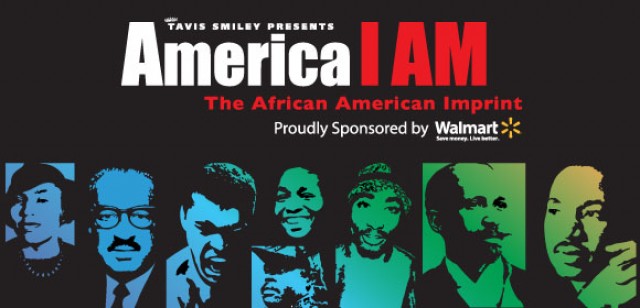
SmileyBooks To Host Free Journal Writing Teleclass Celebrating The Latest America I Am Release

Join us on Thursday, August 19, 2010 7:00–8:30 PM EST

New York, NY (BlackNews.com) — For too long, stories of the lives and journeys of African Americans have been told by others. With the publication of America I AM Journal, edited by Clarence Reynolds (SmileyBooks, Trade Paperback Original; $11.95) African Americans can now take pride in the creation of their own personal chronicles. The award-winning America I AM: The African American Imprint traveling exhibition, now on tour in Cincinnati, traces the indelible imprint African Americans have made on America over 500 years. This inspiring volume reflects the themes of the twelve exhibit galleries and presents over 200 historical and contemporary quotations from the minds of great leaders and everyday history makers, including W.E.B. Du Bois, Harriet Tubman, Frederick Douglass, Madame C.J. Walker, Mary McLeod Bethune, John Johnson, Tony Dungy, and Serena Williams. Each page features a powerful image, a stirring message, and an open invitation to readers to record their own unique life story. An avid journal keeper, Smiley believes that “journaling is a perfect place to develop and refine your vision.”

In celebration of the American I AM Journal, editor Clarence Reynolds and Cheryl Woodruff, president of SmileyBooks, invite aspiring and seasoned journal keepers to participate with them in a LIVE FREE 90-minute audio journal-writing workshop. The August 19th teleclass will offer pointers on the craft, as well as an introduction to the impact of journaling on personal reflection, political action, and family history.

Register here

About SmileyBooks
Founded by media pioneer Tavis Smiley in 2004, SmileyBooks is a general trade book publisher that specializes in quality nonfiction and is distributed by Hay House, Inc. A dynamic company dedicated to the new media landscape, SmileyBooks publishes books by authors ranging from established New York Times best sellers to exciting new voices on topics that appeal to a broad spectrum of readers. SmileyBooks titles are published in hardcover, trade paperback and digital media, offering the widest possible readership and exposure.

4th Annual Women of Color Conference: Empowering Our Future August 15 – 16, 2010 Mandalay Bay, Las Vegas NV


Who attended:

Women of all ethnicities, professions and social backgrounds were invited to participate.

Attendees included:

• Corporate executives

• Community Leaders
• Professionals

Benefits for attending the event:

Keynote speakers shared their knowledge and experiences, providing opportunities for deep personal growth and development. Each presenter was a catalyst for change, and were committed to advancing and empowering women leaders.

About the conference:

In 2007, Las Vegas was the site of the first-ever Women of Color Conference hosted by the four local ethnic chambers of commerce – American Indian, Asian, Latin and Urban. This historic event attracted more than 500 minority women and men who gathered to participate in workshops ranging from health and wellness to personal finance, beauty and self-esteem, career development and leadership skills.

Debra Nelson, MGM MIRAGE Vice President for Corporate Diversity, Communications and Community Affairs, saw a need for dialogue among minority women in the Las Vegas community. She approached the chambers of commerce with the idea, and they overwhelmingly agreed. From there, a day-long event was created to bring women together from across Southern Nevada and beyond. The goal of the event was to provide leadership, networking and learning opportunities through a variety of workshops. Additionally, event organizers hoped that the success of the event would lead to it becoming an annual event.

A planning committee, made up of representatives of the chambers and presenting sponsors, was formed to oversee the development and execution of the event. The committee included several sub-committees to focus on areas such as finances, logistics, media relations, sponsor relations, and speaker relations. Also, a website was created so participants could review conference information and register online.

The day-long program was developed and included a networking breakfast, morning and afternoon workshops, luncheon, roundtable discussion and a mixer. Panelists that participated in the conference included authors, executives, motivational speakers, community leaders and other various field experts.

The Women of Color Conference received a tremendous amount of positive response.

Surveys were filled out by conference attendees, rating the conference on quality of speakers, timing of events, relevance of discussion topics, etc. Overall, attendees felt informed, inspired and looked forward to future events. The conference attracted participants from around the country, and several attendees have expressed interest in hosting similar events in their local communities.

Women of all ethnicities, professions and social backgrounds from throughout Nevada and across the country participated in the Women of Color Conference. Conference attendees included students, young professionals, seasoned executives and business owners in numerous fields and industries. Perhaps the biggest beneficiary, however, was the Las Vegas community as the conference was a demonstration of the collective power of the local minority chambers of commerce to enact a program that benefited women across the city.

Quotes from participants:

“Thank you for a magical experience. You were so organized and everyone was united- it was a pleasure.”
— Nely Galan, Women of Color Conference Keynote Speaker

“Your breakfast speaker, Consuelo, was truly dynamic! She gave me chills as I watched tears stream from her eyes and made my heart full with her words. Thank you for having her.”
— Wendy Welch, Conference Attendee

“Superb! Fabulous! Insightful, informative and inspirational.”
— Conference Attendee

“I am wonderfully surprised how this conference has made an extreme impact on my life. This is a life changing experience.”
— Conference Attendee

“What an awesome experience! I had a chance to meet so many successful women that I didn’t even know existed. Thank you for the wonderful opportunity.”
— Conference Attendee

For more information click here.

The Journey of Hope in America: Quilts Inspired by Barack Obama, National Afro-American Museum & Cultural Center, Wilberforce, OH

The Journey of Hope in America: Quilts Inspired by Barack Obama
December 18, 2009 Through December 18, 2010
National Afro-American Museum and Cultural Center

The Journey of Hope in America: Quilts Inspired by President Barack Obama commemorates an historic milestone in American history – the election of an African American man as president. The show will open Dec. 18, 2009 and will run through Dec. 18, 2010 before touring the country.

This extraordinary quilt show is curated by internationally known quilt artist, author and historian Dr. Carolyn L. Mazloomi for the National Afro-American Museum and Cultural Center, a part of the Ohio Historical Society. She’s brought together a diverse group of 95 fiber artists representing a variety races, cultures, generations and religions.

The exhibition will explore Obama’s momentous 2008 election by bringing audiences a collection of powerful quilts from a wide range of styles, including art quilts, folk art and traditional quilts. The featured quilts illustrate a broad range of techniques and materials, including piecing, painting, appliqué, embroidery, dyeing, photography, beading and digital transfer, as well as inspirations.

Throughout The Journey of Hope in America, viewers will experience the narrative quilt as an avenue toward expanding understanding the impact of the electing of the first African American president.

Location
The National Afro-American Museum & Cultural Center
1350 Brush Row Road
Wilberforce, OH 45384
(937) 376-4944
(800) 752-2603

Hours
Wednesday-Saturday:
9 a.m.-4 p.m.
Sunday-Monday-Tuesday: CLOSED

Admission
Adults: $4
Seniors: $3.60
Youth, ages 6-18: $1.50
College Students (with student ID): $1.50
School Groups: $25.00 per bus (weekdays only by advance reservation)
Children 5 & under: FREE

*Membership offers unlimited visits to this exhibit and all Ohio Historical Society historic sites and museums.

To learn more about this exhibit, click here.

5th Annual Peachtree Village International Film Festival Atlanta, GA

August 19-22, 2010
Hyatt Regency Hotel
Downtown, Atlanta, GA

PVIFF is hosted by The African American Cinema Gallery (AACG) & Gipp. Museums, Inc. PVIFF attracts 5,000+ people each year from around the world. PVIFF was created in 2006 under the previous name (Sweet Auburn International Film Festival) and have served as the launching pad for many successful filmmakers and other artists alike in the film & entertainment industry. This dynamic international film festival showcases feature length films, shorts, music videos, documentaries, and screenplays from around the globe. PVIFF also feature celebrity attractions, innovative workshops, panels, parties, and much more. PVIFF is poised to become one of the most celebrated film events through dynamic programming and a dedication to helping filmmakers excel in their careers. PVIFF’s brand is entrenched in the old saying “It Takes A Village.”

Our vision allows us to create a village atmosphere that provide opportunities not only for filmmakers but for business owners and film enthusiasts. Artists such as Director/Writer Rob Hardy of Rain Forest Films, Producer, Roger Bobb of Tyler Perry Studios, Director, Leslie Small, Casting Director, Alpha Tyler of Tyler Perry Studios, Best Selling Author Omar Tyree, Actor, Bill Nunn, Director, Kenny Leon, Humanitarian, Afeni Shakur and more have all participated in various aspects of PVIFF over the years. In 2006 during PVIFF’s first year the winning short film “Binta & The Great Idea” was nominated for an Academy Award and numerous other projects have received phenomenal acclaim throughout the years as well. With increased exposure, the assistance from the film and business community PVIFF will continue to help ignite opportunities and make dreams to come true for decades to come.

For more information : Click here.

AAAM Annual Conference

African-American Museum Conference Held in Pittsburgh

For three days this week representatives from more than 200 African-American museums are in Pittsburgh for a conference. They are attending sessions on curating and archiving. There were also more specialized sessions on re-interpreting African-American food history and preserving Florida’s African-American civil war heritage.

A museum is defined as an institution that is open to the public, has a collection and does exhibitions. President of the Association of African-American museums Vernon Courtney said although there is a need for such museums, he hopes African-American history and art will work their way into all museums.

“Our history is unique in this country and we hope that at some point in time we work ourselves out of a job when mainstream museums treat African-American history and culture as it does the rest of the history of the nation,” he said.

This is the 32nd year the conference has been held. Pittsburgh was selected as the conference host because of the recent opening of the August Wilson Center for African-American Culture.

Visit AAAM website

Work of Art unveiled in a City Cemetery

SALEM, MA — Not all art is in museums.

In fact, you can find art in the strangest places. Take, for example, the huge mural on the side of the maintenance building in Greenlawn Cemetery.

The colorful painting of a cemetery angel and Celtic cross was completed a few days ago by Richie Martineau, who works at the city cemetery.

He started the project last summer, bought his own supplies and painted all on his own time, after work and often until dusk. The ancient statue and cross are from a photo he took in Harmony Grove Cemetery, which is noted for its statuary.

Martineau, 38, is not a professional artist, but he has been painting and drawing for years. He majored in graphic arts at North Shore Tech and took a few oil painting classes at Montserrat College of Art. This project was a labor of love.

“This is my first mural I’ve ever done,” he said. “I’ve always loved (painting), and this is the biggest piece I’ve ever done.”

The resourceful Martineau used everything at his disposal to complete the work.

“I was up there in a dump truck painting the sky,” he said. “It was just easier than moving a ladder around.”

Read more of this innovative artist, click here.

The Healing Power of Art


Photographs by Wadson Labrousse
Courtesy the government of the Republic of Haiti”>

n January 12, 2010, Haiti was hit by a 7.0 magnitude earthquake, which turned out to be the worst humanitarian disaster of modern times with the death toll reaching 300,000 people, another 250,000 wounded and 1,800,000 people in need of shelter. The children of Haiti lost their childhood as they woke up in the aftermath of the deadly earthquake. They are wounded in their bones and in their souls for having been the witnesses of an unimaginable human tragedy made of horrifying scenes of buildings collapsing on loved ones, people trapped under layers of concrete, countless bodies scattered on the streets . . . The education sector suffered dearly with 4,000 children dead in their schools (in addition to numerous other school-age children crushed in their homes), 90 percent of the school infrastructure destroyed and 1,200,000 children out of school. Children are in shock and many have gone into a state of post-traumatic syndrome as they strive to survive in precarious shelters located in public squares with inhuman conditions.

Plas Timoun (A Place for Kids) was born in the aftermath of the January 12th catastrophe to provide an immediate psychosocial response to the mental despair of these children. I created these activity centers to be recreational and informal learning places that offer programs aimed at freeing–relieving at least–a child’s mind from the horrors of the tragedy. The centers provide a friendly environment and offer children, ages six to ten, an opportunity to express themselves through painting, ceramics, music, theater, reading and sports, all within a psychosocial framework rooted in our national culture. The programs have a healing effect on the children’s minds as evidenced by their artworks, which have gradually moved from a gloomy to a brighter outlook. With the guidance of experienced trainers, the art activities at Plas Timoun can reflect, and in fact communicate, what is happening in the minds of the children: both their suffering and their dreams for a better future.


Photograph by Franko Khoury”>
The exhibition The Healing Power of Art: Works of art by Haitian children after the earthquake at the Smithsonian’s National Museum of African Art gives the children of Haiti a chance to present to the world their vision of themselves and of the reconstruction of their country. Their voices, so well expressed by colors and emotions, reflect our imaginary and social reality, encouraging you to think with us of solutions to the problems facing contemporary Haiti.

I express my deepest gratitude to the First Lady of the United States, Madame Michelle Obama, and to Madame Jill Biden, both of whom modestly sat with me next to the children of Plas Timoun and participated in a painting session.

Elisabeth D. Préval


For 35 terrifyingly long seconds this is what the children of Haiti experienced on January 12, 2010, as an earthquake forever changed the world they knew. Shortly after the devastation, the First Lady of Haiti, Madame Elisabeth D. Préval, called upon Haitian Philippe Dodard and his fellow artists to create a safe place for children to express how they had been touched by the earthquake. Plas Timoun (The Children’s Place), operating from converted buses at two sites in Port-au-Prince, uses the power of art–specifically the visual and performing arts–to bring healing to the children of Haiti.

The simple works on paper created immediately following the earthquake were dark in color and imagery. Soon, however, the drawings were revealing glimmers of hope and healing. The children of Plas Timoun were using brighter colors and depicting the innocence of childhood and their visions for a brighter future, attesting to the resilience of a nation and the power of art.

With the help of Plas Timoun, these children will move more confidently toward their future and the lasting reconstruction of Haiti.

To learn more information : click here.

Separate and Unequaled: Black Baseball in the District of Columbia


Separate and Unequaled:
Black Baseball in the District of Columbia
On view indefinitely

The Smithsonian’s Anacostia Community Museum
1901 Fort Place, SE
Washington, DC 20020

Main office: 202-633-4820

Back by popular demand after a recent successful run at the Historical Society of Washington, D.C., a condensed version of this exhibition is on view at the museum. From Reconstruction to the second half of the 20th century, baseball, the great American pastime, was played in Washington, D.C., on segregated fields. “Separate and Unequaled” looks at the phenomenal popularity and community draw of this sport when played by African Americans. Featured are such personalities as Josh Gibson and “Buck” Leonard, star players of the Negro Leagues most celebrated team, the Washington Homestead Grays. The show also highlights community teams that gave rise to the various amateur, collegiate and semi-pro black baseball teams and leagues. For special viewing hours and tours, call 202.633.4844.

Click here for more information.

Word, Shout, Song: Lorenzo Dow Turner at The Smithsonian’s Anacostia Community Museum


The Smithsonian’s Anacostia Community Museum
1901 Fort Place, SE
Washington, DC 20020

Main office: 202-633-4820

The hours of operation for the museum are 10am to 5pm daily except December 25 when the museum closes in observance of the Christmas holiday.

Connecting Communities through Language

August 9, 2010 – March 27, 2011

Word, Shout, Song documents the historical journey made by people from Africa, their language, and their music, to the Americas. Through words, music, and story, Lorenzo Dow Turner discovered in the 1930s that the Gullah people of Georgia and South Carolina still possessed parts of the culture and language of their enslaved ancestors, which had long been believed lost.

Click here for more information

Beyond the Harlem Renaissance


FEW aesthetic labels are as linked to a neighborhood as the Harlem Renaissance, the cultural movement of the 1920s and ’30s that created some of the most significant American art of the 20th century.

So when the gallery owner Averlyn Archer and the tourism professional Jacqueline Orange teamed up to create a trolley-bus tour of new art in Harlem called ArtCrawl, that invokes the Harlem Renaissance on its Web site (artcrawlharlem.com), the act had a touch of hubris.

Until they explained their inspiration in a recent interview.

“Art galleries in Harlem are suffering a little bit,” said Ms. Orange, who runs Taste Harlem tours. “And so we started to work together; we came together for this.”

Their common cause is to offer an entree into an art world that they say is generally unnoticed, brewing amid the brownstones abutted by multistory developments. Unlike the ground-floor galleries in walkable neighborhoods like Chelsea or SoHo, they say, many Harlem galleries are tucked into spots that don’t necessarily draw foot traffic.

“We’re just hidden — we are in a lot of private spaces,” Ms. Archer, of Canvas Paper and Stone gallery, said. “If you’re not a collector or in the art market, you wouldn’t know that we’re here.”

Ms. Archer and Ms. Orange, who began their tours in 2008, will expose Harlem’s hidden artistic gems on Saturday and Sunday with trolley-bus tours to seven stops, where gallery owners and artists will talk about, and create, their work. The tours end with a meal on the roof deck atop Rio II galleries.

One stop that exemplifies the gulf between the Harlem of old and new is Casa Frela, a gallery whose nervy exhibitions sit in an airy Stanford White brownstone.

In the 1990s and ’00s, “people used to talk about a new Harlem Renaissance, but that was really a real estate renaissance,” said Lawrence Rodriguez, Casa Frela’s director, who bought the space six years ago. The true renaissance begat a thriving scene whose artistic descendants still live and work in Harlem, he said, making it a multigenerational aesthetic haven unlike newer art enclaves in Williamsburg or Dumbo. “The old guard led the way for my generation,” he said.

Among the artists who defined the years between the renaissance and today’s gallery owners is the Weusi Collective, which was at the core of the black arts movement of the 1960s and ’70s. The work of that still-active collective is documented at another stop on the tour, the Dwyer Cultural Center. In a video accompanying an exhibition of the Weusi’s paintings, woodcuts and sculpture, Ademola Olugebefola, a member of the collective, says, “We set out to beautify the black woman, to regalize the black man.” Other members emphasize that theme, referring to themselves as “cultural warriors.”

Another stop suggests that the culture war has been fought and the victory decided: the Studio Museum in Harlem, in a gleaming building with three floors of exhibition space that is a far cry from the rented loft where the museum got its start in 1968. The main galleries feature photographs by Zwelethu Mthethwa, a South African. He is among the international figures on the ArtCrawl roster, which includes artists from the Dominican Republic, Japan and, well, Westchester. The tour suggests far more than the cradle of black culture that it first connotes.

That Harlem still draws a range of talent is notable, Ms. Orange said. “It is testimony to the fact that Harlem is still here, and we’re still the trendsetter.”

WHERE THE ART IS

WHAT ArtCrawl Harlem

WHEN From noon to 5:30 p.m. on Saturday or 1 to 6:30 p.m. on Sunday; includes after-tour reception.

STOPS include Casa Frela, 47 West 119th Street; Dwyer Cultural Center, 258 St. Nicholas Avenue, at 123rd Street; Studio Museum in Harlem, 144 West 125th Street; and Rio II, 583 Riverside Drive, at 135th Street, among others.

TICKETS $55 at (212) 866-7427, artcrawlharlem.com; the code “artcol” can be used to order $40 tickets online.