Black history, done eclectic

All across the Hudson Valley, Black History Month is being celebrated in the arts. From stage shows to art exhibits and jazz concerts, the legacy of African-American culture is out in full view this month in numerous venues. Here’s a look at a few events you can enjoy this month focused on African-American culture.

‘Made in Woodstock V: Artists of Color’

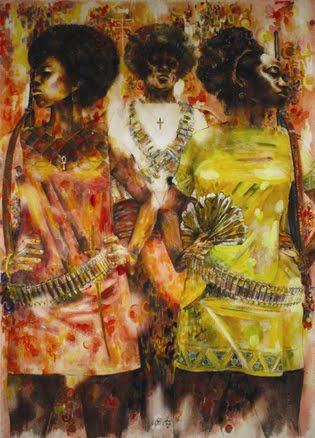
WOODSTOCK — There are no historical markers, and the sites have been destroyed over the years, but William Cordova’s photographic exploration of Mid-Hudson Black Panther and Young Lords chapters overlays activist history over modern life as a black or Latino man in America.

The photos of Timothy Portlock capture the effect of urban planning on the black community. The photographic work of these and 16 other artists from across the country draw from three years of work and participation in the Center for Photography of Woodstock’s Artist-in-Residency program.

“They’ve worked in traditional film capture, gelatin silver and computer techniques … really the full range of photographic options to express their art,” said Ariel Shanberg, CPW’s executive director.

“Made in Woodstock V: Artists of Color” is on display from noon-5 p.m. Wednesday-Sunday this month at the Center for Photography, 59 Tinker St., Woodstock. Call 679-9957 or visit www.cpw.org.

‘Sam Cooke: Where You Been Baby?’

BEACON — Passing the Torch Through the Arts lights up the Howland Cultural Center Saturday with a performance of “Sam Cooke: Where You Been Baby?” at 8 p.m., detailing the life of singer, composer and music entrepreneur Sam Cooke.

“Sam Cooke is a pop-American fable,” said the show’s producer Michael Monasterial. “It’s not a documentary. It’s the essence of the fall from grace of a genius. Given the same options, what would you do? Cooke had a sense of pride in his company and in himself as an African-American man.”

The play will also be performed Feb. 24 at SUNY Sullivan’s Seelig Theater and Feb. 26 at the Rosendale Theatre, Main St., Rosendale.

The evening also features a musical tribute to three generations of African-American musicians, including Cooke’s songs from the 1960s, R&B classics of the 1970s performed by Wendell Anderson and songs of the 1980s by Maya Monasterial.

The performance begins at 8 p.m. at the Howland Cultural Center, 477 Main St., Beacon. Tickets are $20, free for students. Monasterial said the same pricing will be in place for the Loch Sheldrake and Rosendale shows. Visit www.passingthetorchthroughthearts.com.

Read More >>>>>

African American groups excluded from county funding

The Erie County Executive’s decision to shut out dozens of cultural organizations from his budget has raised a host of concerns. Among them, some critics question why there weren’t any African American groups chosen to receive funding.

That’s the focus In the second part of the WBFO series, Culture in the Balance. Thrusday and Friday WBFO takes a look at how these groups – and the African American neighborhoods they serve – are especially vulnerable. That includes two of the largest groups.

You can stand outside and hear the drum class echoing deep within the walls of the plain, white cinder-block building on Masten Avenue. It’s almost like the heartbeat of an institution that’s kept on pumping for 53 years in this ailing, East Side neighborhood.

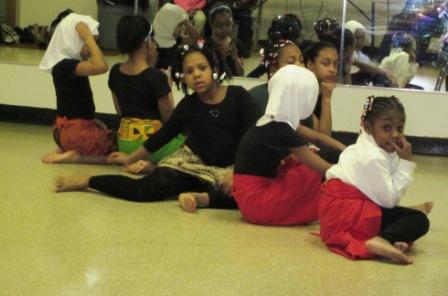
The African American Cultural Center provides dance and drum classes for children, theatre, festivals and events for people of color, and a host of after school programs that keep kids off the streets.

“What is going to happen to our children…it’s going to be a real sad situation if something isn’t done,” said Bain.

Agnes Bain has watched a couple generations of those children grow up at the Cultural Center. The Executive Director started here herself when she was just a teenager in 1976.

Bain leans forward with her body propped against her arms on a desk piled high with papers, grant proposals and a large calculator. She admits that years of roller coaster funding cuts have taken a toll on her. But she worries most about the Center. “If the current [public funding] trend continues, ther won’t be an African American Cultural Center,” said Bain.

When the county pulled out, the cultural center lost $132,000 for it and all of its umbrella programs – roughly a quarter of its budget. Bain said they especially count on that money to sustain the after school and cultural programs that teach kids to become good citizens.

Right now, these classes are free. Bain said parents in this neighborhood would have a tough time coming up with money for after school care. Bain says it is only fair that the county should assist them by helping to support an alternative.

“As we said to the county exec, there are African Americans who pay taxes,” said Bain.

The County Executive declined a request to comment on tape for this story. But his spokesman pointed out that the county did provide $300,000 of funding last year for an expansion project at the Colored Musicians Club.

But some county lawmakers said that one-shot funding decision was politically motivated. Still others have stronger words for why African American cultural groups are getting no operational funding.

“I would say it was racist, only because that’s what he’s showing me,” said Ghirmatzion. I’m going to call it like I see it. I think it’s just absolutely racist.”

Read More >>>>>

Obama on African American History Month

A proclamation by the President of the United States:

The great abolitionist and orator Frederick Douglass once told us, “If there is no struggle, there is no progress.” Progress in America has not come easily, but has resulted from the collective efforts of generations. For centuries, African American men and women have persevered to enrich our national life and bend the arc of history toward justice. From resolute Revolutionary War soldiers fighting for liberty to the hardworking students of today reaching for horizons their ancestors could only have imagined, African Americans have strengthened our Nation by leading reforms, overcoming obstacles, and breaking down barriers. During National African American History Month, we celebrate the vast contributions of African Americans to our Nation’s history and identity.

This year’s theme, “African Americans and the Civil War,” invites us to reflect on 150 years since the start of the Civil War and on the patriots of a young country who fought for the promises of justice and equality laid out by our forbearers. In the Emancipation Proclamation, President Abraham Lincoln not only extended freedom to those still enslaved within rebellious areas, he also opened the door for African Americans to join the Union effort.

Tens of thousands of African Americans enlisted in the United States Army and Navy, making extraordinary sacrifices to help unite a fractured country and free millions from slavery. These gallant soldiers, like those in the 54th Massachusetts Infantry Regiment, served with distinction, braving both intolerance and the perils of war to inspire a Nation and expand the domain of freedom. Beyond the battlefield, black men and women also supported the war effort by serving as surgeons, nurses, chaplains, spies, and in other essential roles. These brave Americans gave their energy, their spirit, and sometimes their lives for the noble cause of liberty.

Over the course of the next century, the United States struggled to deliver fundamental civil and human rights to African Americans, but African Americans would not let their dreams be denied. Though Jim Crow segregation slowed the onward march of history and expansion of the American dream, African Americans braved bigotry and violence to organize schools, churches, and neighborhood organizations. Bolstered by strong values of faith and community, black men and women have launched businesses, fueled scientific advances, served our Nation in the Armed Forces, sought public office, taught our children, and created groundbreaking works of art and entertainment. To perfect our Union and provide a better life for their children, tenacious civil rights pioneers have long demanded that America live up to its founding principles, and their efforts continue to inspire us.

Though we inherit the extraordinary progress won by the tears and toil of our predecessors, we know barriers still remain on the road to equal opportunity. Knowledge is our strongest tool against injustice, and it is our responsibility to empower every child in America with a world-class education from cradle to career. We must continue to build on our Nation’s foundation of freedom and ensure equal opportunity, economic security, and civil rights for all Americans. After a historic recession has devastated many American families, and particularly African Americans, we must continue to create jobs, support our middle class, and strengthen pathways for families to climb out of poverty.

Read More >>>>>

Dance group brings culture, art of Brazil to Phila.

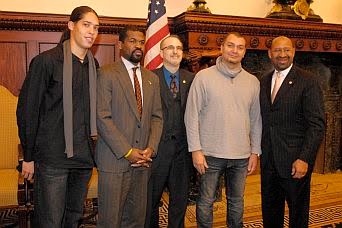
Brazil’s premiere professional folk dance company, Balé Folclórico da Bahia (BFB), was officially welcomed to the region on Thursday by Philadelphia Mayor Michael Nutter; Chief Cultural Officer, Gary Steuer; Councilwoman Jannie Blackwell and Stanley L. Straughter, chairman of the Mayor’s Commission on African and Caribbean Affairs.
The Brazilian state of Bahia is said to be the most African part of Brazil, a place where otherwise long forgotten gods are still remembered.

The 38-member troupe of dancers, musicians and singers performs a repertory based on “Bahian” folkloric dances of African origin, and includes slave dances, capoeira (a form of martial arts), samba and those that celebrate Carnival.

The company presents the region’s most important cultural manifestations under a contemporary theatrical vision that reflects its popular origins. Balé Folclórico has a well-earned, prestigious reputation performing internationally throughout Europe, Asia and North America.
Over the course of their weeklong visit, from Feb. 7-11, Balé Folclórico will seek to establish relationships with key stakeholders within the region’s artistic, cultural, academic and philanthropic communities.

“This week here, I am sure we are going to be able to show the African root left by the slaves in Bahia centuries ago,” said BFB co-founder Walson Botelho.
Balé Folclórico will present several unique opportunities for Greater Philadelphia to learn more about its work and the Afro-Brazilian cultural traditions that inform the company’s repertoire.

There will be various activities, including private Afro-Brazilian dance and drum master classes at both University of the Arts and Temple University, capoeira presentations at the International Capoeira Angola Foundation, lecture-demonstrations at Imhotep Institute Charter School, public workshops at the Performance Garage, meetings and other social gatherings. Balé Folclórico is keen to explore potential future collaborative opportunities with Philadelphia’s arts and cultural community and academic institutions.
“Our young people, and those who are young at heart, are going to enjoy the performances and the engagement of having you here for a little while,” Nutter said.

Destiny’s Child alum stars in ‘What My Husband Doesn’t Know’

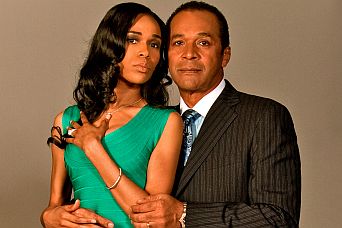
Michelle Williams, formerly a member of Destiny’s Child, widely recognized as the best-selling female group of all time, stars in David E. Talbert’s “What My Husband Doesn’t Know,” coming to the Merriam Theater, 250 S. Broad St., Feb. 8–13.
The talented cast also includes the multi-talented Clifton Davis, Grammy Award-winning gospel singer Ann Nesby (former lead singer of Sounds of Blackness) and Brian White, the son of NBA great Jojo White and one of the stars of the hit movie “Stomp the Yard.”
Williams stars as Lena Summer in “What My Husband Doesn’t Know,” and she recently spoke about her new role as she and Talbert were traveling together to promote the show’s upcoming national tour.

“Lena Summer [is] a wife and a mother,” Williams explained. “She [does] those things very well, but she married a man who had a very successful business, and he gets very busy — his job is very demanding, and he neglects some important things at home. People see women with rich husbands, big houses and cars and they think everything is peaches and cream, but they don’t realize that woman is longing just for her husband. She wants him.”

Clifton Davis stars in the role of Lena’s husband Franklin, while Brian White plays Paul, a top-notch plumber who is hired to lay some pipe — I mean, do some work on the couples’ home.
“Paul was highly recommended to my husband for this job, so my husband hired him as he was the best one — he got all these great referrals,” Williams says. “So [Paul] is just amazing at what he does, and then Lena finds out that he’s amazing at what he does!”
Talbert, a longtime friend to the Philadelphia Tribune, says that Williams, who made her theatrical debut in 2003 when she replaced Toni Braxton on Broadway in the title role of “Aida,” is perfect for the role of Lena.

“I’ve been trying to work with Michelle for a few years and her schedule
was all over the place, from ‘The Color Purple’ to ‘Chicago,’ said Talbert, as Williams sat nearby.

“So when it was time to cast this one, I sent her an email – you how sometimes big celebrities, they give you a fake email? I had to check and see if it was still working. She hit me back in about 30 seconds. She was in London finishing up ‘Chicago,’ and so we ended up getting on Skype and talking for two hours. I told her about the play and read her some of the scenes, and by the time it was over she said, ‘Okay. Let’s do it!’
“Not only do I think she’s elegant as a lady, but I love her voice, and what I did not know is that her comedy chops are like they are. The girl’s got crazy comedy chops! I mean, her comedy I.Q. is through the roof, so she’s just wearing the role out!”
Now a seasoned actress, Williams studies acting with Ivana Chubbuck, and is inspired by actors Halle Berry, Jack Nicholson, Angela Bassett, Nicole Kidman and Alfre Woodard.

She starred in the touring production of “The Color Purple,” and appeared in “Chicago” in London and on Broadway, but says that landing her first professional role in “Aida” was a defining moment.

Flint Public Library celebrates African authors with ‘Read-In’ this month

Children, teens, adults, families, groups and organizations are invited to join the Flint Public Library (FPL) in its celebration of African American History Month by reading works by African American authors.

FPL is hosting its third African American Read-In from 11 a.m. to 2 p.m. Feb. 12.

The celebration begins with African American tales for families and children from 11 a.m. to 12:30 p.m. There will be crafts, story time and the tell-a-tail therapy dog will there.

From 12:30 to 2 p.m. everyone is invited to hear stories by and about African American authors.

Guest presenter Rodney Creech, resident artist and instructor at the Flint Youth Theater will be performing works by James Baldwin at 12:30 p.m.

The Dr. Betty Shabazz Delta Academy girls youth group, sponsored by Delta Sigma Theta Sorority, Inc., will follow sharing poetry, literature and dance.

“This can also be a time of discovery,” Wanda Harden, public relations coordinator for the Library, said in a press release.

“The Flint Public Library’s Gloria Coles Black Life collection has over 1,000 titles and authors to explore. In addition, our children’s collection is full of books by and about African Americans. The Library is a host site for the Mott-Warsh Collection of fine art created by artists of the African diaspora and we currently have an exhibit through February 25 to meet The Divine Nine: Historically African American Fraternities and Sororities. Our February calendar is full of free events celebrating African American history.”

The African American Read-In is a national event which began in 1990, and was sponsored by the Black Caucus of the National Council of Teachers of English.

In 1991, the National Council of Teachers of English joined in the sponsorship. The Read-In has been endorsed by the International Reading Association.

Over a million readers of all ethnic groups, from 48 states, the District of Columbia, the West Indies, and African countries have participated. The goal is to make the celebration of African American literacy a traditional part of Black History Month activities.

Admission is free to all of these events at FPL.

The Library is located at 1026 E. Kearsley St., Flint.

For more information, call (810) 232-7111 or visit www.fpl.info.

Read More >>>>>

New Rochelle Library Hosts Annual African American Art Exhibition

The African American Art & Cultural Appreciation Council held its 18th annual art exhibit Sunday afternoon, featuring works by artist Carolyn Maitland and her stunning array of abstract paintings and visual representation of African culture and history.

“These events do take a great deal of work and I’m happy if I can get a few exhibitions a year,” said Maitland, whose work has been featured around the world over the past five decades.

“My first painting I did out of college in 1953, my husband bought me some supplies and I went to work,” recalled Maitland.

Each year, the council selects an artist and artistic theme to highlight. One of last year’s honorees was George Patterson, who also has been an artist for most of his life. “Once I retired I was happy that I could focus on my art full time and being honored by the council is a very satisfiying accomplishment,” said Patterson.

The spotlight on Sunday belonged to Carolyn Maitland, who was born and raised in New York.

“Later in life I became interested in African history and the arts and when I studied everything I could about the subject, I saw so many similarities from hundreds of years ago to today, such as the hairstyles and even their dress,” said Maitland, who recently began painting with oils.

“Her work is very interesting, some being very abstract while her metal work shows such realism,” said Bernard Raymond of Mammaroneck while gazing at a print portrait of Malcolm X from the 1960s.

Read More >>>>>

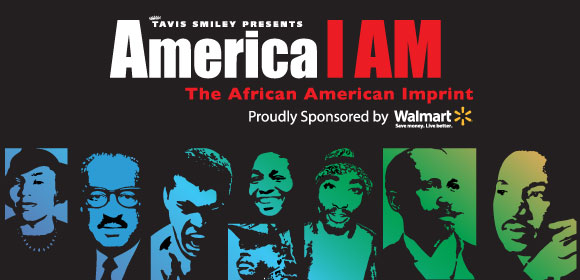
NATIONAL GEOGRAPHIC MUSEUM TO HOST ‘AMERICA I AM: THE AFRICAN AMERICAN IMPRINT’ EXHIBITION

America I AM: The African American Imprint,” an award-winning touring exhibition conceived and presented by broadcaster Tavis Smiley, opens at the National Geographic Museum in Washington, D.C., this week. With more than 200 artifacts, the exhibition celebrates nearly 500 years of African American contributions to the United States. The museum’s presentation, opening Wednesday, Feb. 2, 2011, during Black History Month, and continuing through Sunday, May 1, 2011, is the fifth stop on the exhibition’s 10-city, four-year tour.

“We are pleased to host this exhibition highlighting the contributions of African Americans and furthering a dialogue about our collective experience,” said Susan Norton, director of the National Geographic Museum. “We look forward to sharing the stories — some familiar, some surprising — of the influential African Americans featured in the exhibition. Our hope is that visitors leave with a richer understanding of the diverse culture and history of the United States.”

Through 12 galleries, this ticketed exhibition offers an in-depth look at the pivotal role African Americans have played and continue to play in the development of America.

“America I AM: The African American Imprint” is developed in partnership with Tavis Smiley and is organized by Cincinnati Museum Center and Arts and Exhibitions International, a division of AEG Live.

The exhibition is made possible by presenting sponsor Walmart Stores Inc. Educational partner Northern Trust has provided free tickets and transportation to underserved school groups in the D.C. area one day a week for the first month of the exhibition. Local sponsors include GEICO; The Madison, the museum’s Official Hotel Partner; and Amtrak.

“Walmart is proud to sponsor the ‘America I AM’ exhibition as the nation embarks upon its annual celebration of black culture and contributions in the United States,” said Alex Barron, regional general manager, Mid Atlantic States, Walmart U.S. “To help give all families access to this rich collection of history and culture, we are making tickets available for purchase in select Washington, D.C., area stores.”

“Northern Trust is proud to be the educational partner of this inspiring exhibition portraying some of the many significant contributions African Americans have made to our society,” said Northern Trust Chairman and CEO Frederick H. Waddell. “We are deeply committed to promoting cultural understanding and inclusion among our employees, clients and the communities we serve. We hope many people in the Washington, D.C., area and around the world will experience ‘America I AM’ and its celebration of African American history and culture.”

African American Museum in Philadelphia


by: aampmuseums


Founded in 1976 in celebration of the nation’s Bicentennial, the African American Museum in Philadelphia (AAMP) is the first institution funded and built by a major municipality to preserve, interpret and exhibit the heritage of African Americans. Throughout its evolution, the museum has objectively interpreted and presented the achievements and aspirations of African Americans from pre-colonial times to the current day.

The museum is committed to telling the story of African Americans in all its permutations: family life, the Civil Rights movement, arts and entertainment, sports, medicine, architecture, politics, religion, law and technology. The AAMP currently houses four galleries and an auditorium, each of which offer exhibitions anchored by one of our three dominant themes: the African Diaspora, the Philadelphia Story, and the Contemporary Narrative.

African American Museum is located at:

701 Arch Street

Philadelphia, PA 19106


Earthquake hits Haiti


by: Carolyn Cole

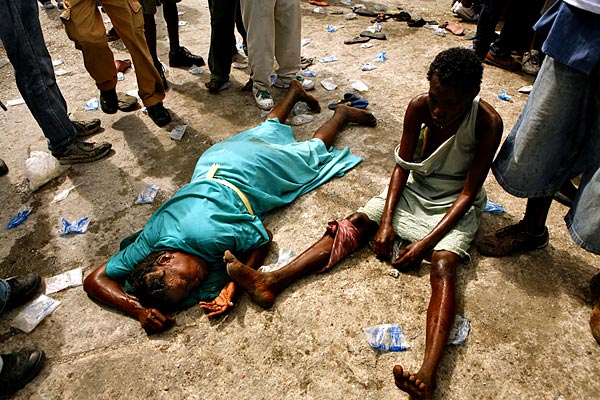
One year after the 12 January earthquake struck Haiti, PAHO/WHO continues to support the response through initiatives aimed at rebuilding a devastated health system and improving the health of the Haitian population.

The human impact of the 7.0 magnitude earthquake had an unimaginable impact in a country marked by a high incidence of poverty. Prior to the earthquake, around 67% of the population was living on less than US$ 2 a day. An estimated 220,000 people lost their lives and over 300,000 were injured. Roughly 2.8 million people were affected and nearly 1.5 million found themselves without a home. A year later, one million people remain in temporary settlement sites throughout Port-au-Prince and other affected areas.

In the immediate aftermath of the earthquake, a complex humanitarian response was launched to save lives and assist the affected population. Four days after the disaster, PAHO/WHO began holding daily coordinating meetings as Health Cluster lead. Hundreds of NGOs and bi-lateral agencies offered support to the Government of Haiti – pouring human and material resources into the country. Ensuring the intentions of partners were appropriately aligned with the priorities of Haiti’s Ministry of Health and Population (MSPP) was a key function of the Health Cluster in the initial weeks following the earthquake. The Cluster was the sole mechanism by which priorities could be outlined with MSPP and synchronized among implementing partners.

In the months that followed the earthquake, far reaching interventions saved lives and reduced the health consequences of the disaster. Key accomplishments include:

• Rapid establishment of 17 field hospitals in the most devastated areas which provided emergency medical care to thousands of patients

• Uninterrupted management of the cold chain • Distribution of 345,000 boxes of emergency medical supplies between January and March through PROMESS, the medical warehouse managed by PAHO/WHO

• Coordination by the PAHO/WHO Health Cluster of over 400 health partners in the four months following the earthquake

• Implementation of the first phase of the PAHO/ WHO, UNICEF and MSPP’s post-disaster vaccination program, resulting in the delivery of over 900,000 vaccine doses to the most vulnerable children and adults

• Establishment of three distinct disease surveillance systems to track illness, share information, and alert personnel to emergency situations

• Comprehensive mapping of all health facilities in Haiti, providing the foundation for a referral system

• Coordination of the response to the cholera outbreak, and support to CTCs (Cholera Treatment Centers) and CTUs (Cholera Treatment Units)

• Provision of essential medicines and medical equipment for the treatment of cholera patients

• Organization and management of teams to investigate and control cholera outbreaks in all 10 Departments

Relief and early recovery actions have been complicated by severe weather, a cholera epidemic, and civil unrest. As efforts continue in 2011, PAHO/WHO remains committed to ensuring greater access to health care for the Haitian population and building a decentralized system for health service delivery.

read more>>>>>>>>>>>>>>>>>>>>>>>>>>>>

Historic African-American Art Exhibit Coming to South Florida


by: ShirleyKinsey

The Norton Museum of Art will present an exhibition drawn from the artistic and historical treasures collected by Bernard and Shirley Kinsey of Los Angeles, California. The exhibition, “In The Hands Of African American Collectors: The Personal Treasures of Bernard and Shirley Kinsey,”includes some 90 paintings, sculptures, prints, books, documents, manuscripts and vintage photographs the couple has loaned to the Norton Museum from their personal collection. This is the first time that some of these rare artifacts and documents have been made available for public viewing. The exhibition will open on April 19, 2008 and continue through July 20, 2008, at the Museum, which is located at 1451 S. Olive Avenue in West Palm Beach.

Kinsey, the former Xerox Vice President who became Co-Chairman of RLA (Rebuild Los Angeles) in Los Angeles in 1992, and his wife have been collecting for more than 35 years. They started collecting as a way to savor and share their travels, but their art soon became a repository for African American intellectual, historic and artistic works. A vast array of art, artifacts and historical documents fill their home and reinforce the Kinsey’s philosophy that tangible objects are evidence of history. “Shirley and I have a thing. I buy the dead artists, she buys the living artists,” Kinsey says. “Because I’m looking at the historical part of the thing and she’s looking at what she likes and to support emerging artists.”

Included in the exhibition are outstanding works of art by leading African American artists that depict the Transatlantic Slave Trade, American Slavery, Civil War and Reconstruction, Nineteenth Century Landscapes, the Harlem Renaissance, The Next Generation and Post Modernism, as well as historical documents and books. The exhibition originated at the California African American Museum (CAAM) in Los Angeles and is designed to bring attention to the diverse aesthetic interests and collections held by African Americans.

Both Kinsey’s are native Floridians who met while they were attending Florida A&M University. Shirley was arrested for her participation in a protest and both were active in marches and sit-ins. They have been married for 40 years and have a son, Khalil. When Bernard Kinsey left Xerox in 1991 after 20 years, the Xerox Black Employee Organization commissioned a portrait of the Kinseys’ son by Artis Lane as a retirement gift. (Lane is a painter, sculptor and printmaker known for her portrait of Rosa Parks commissioned by the Smithsonian National Portrait Gallery). There is also an Artis Lane portrait of Bernard and Shirley Kinsey commissioned as a gift by several of their friends.

The collection includes important historical documents as well as artistic works. “Art is precious, but historical documents are rare,” says Bernard Kinsey. Their collection isn’t only African American, but mostly. It contains paintings and sculpture by artists such as Ernie Barnes, Artis Lane, Richard Mayhew, John Biggers, Elizabeth Catlett, Robert Scott Duncanson, Jacob Lawrence, Romare Bearden, Henry Tanner, Jonathan Green, Phoebe Beasley, Sam Gilliam and others. Books including an 1632 edition of the extremely rare Leo Africanus, September 1773 publication of poems by Phillis Wheatley; rare tintypes and even letters like one from Malcolm X to Alex Haley and some from the distant and not-so-distant past. Kinsey’s motivation to collect comes from a simple question to learn who we are and where we came from. And to explore his people’s history in the United States history that the couple actively participated in during the Civil Rights Movement of the 1960s.

As the Kinsey’s evolved as collectors, they began to identify and collect the work of artists who make up and define African American art and culture. Moreover, they collect documents that illuminate historical moments. They see themselves as caretakers of their collection, their ownership temporary. They say, Bernard Kinsey continues, “We are really more keepers of this art and historical documents, rather than owners, because frankly, no one can really own this in a sense.”

The Kinseys are at a stage in life where they can afford to indulge their passions—one even greater than collecting: sharing. Together they have raised more than $22 million for community based organizations, churches and scholarships for historically Black colleges.

Bernard Kinsey currently serves as president of KBK Enterprises, a management consulting firm. He is a recognized expert and leader in the field of urban revitalization and economic development and has counseled the governments of South Africa, Germany, England, and France.

“In The Hands of African American Collectors: The Personal Treasures of Bernard and Shirley Kinsey” was organized by the California African American Museum. This exhibition and its associated catalogue were made possible by funding from the State of California and Friends, The Foundation of the California African American Museum and lead sponsors Northern Trust and Toyota Motor Sales. The Palm Beach presentation of the exhibit is funded in part by Northern Trust, Melvin and Claire Levine and Starbucks Coffee Company.

Saturday, April 19 is FAMU Alumni Day at the Norton Museum of Art and all Florida A&M University alumni have been invited to attend. A conversation with Bernard and Shirley Kinsey is scheduled for 3 p.m. with a tour of the exhibition at 4 p.m. and a private reception for FAMU Alumni at 5 p.m.

read more>>>>>>>>>>>>>>>>>>>>>


The Center for African American History


by Dr. Jeff Donaldson


Dr. Jeff Donaldson, was a founding member of Organization of Black American Culture (OBAC) and African Commune of Bad Relevant Artists (AfriCobra). He was born December 15, 1932 in Pine Bluffs, Arkansas. He has studied at the University of Arkansas, where he received a B.A. degree in studio art. He later earned a M.S. degree in art education from the Illinois Institute of Technoloy (1963), and a Ph.D. degree in art history from Northwestern University (1973).

Donaldson was a key figure in the establishment of the Black arts movement of the 1960s and 1970s. Its 1967 outdoor mural, Wall of Respect, featured Black historical figures and launched a new trend of mural painting in urban communities across the country. After serving as guest lecturer at Northwestern University form 1968-1970, Donaldson became the chairman of the art department at Howard University. He was the dean of the College of Fine Arts at Howard.

read more>>>>>>>>>>>>>>>>>>

The Center for African American History


by Dr. Murry DePillars


Dr. Murry N. DePillars was born in Chicago in 1938. He earned a B.A. in art education and an M.A. in urban studies from Roosevelt University and a Ph.D. in art education from Pennsylvania State University. His paintings and drawings are empowered by a rich intellect, a consciousness of his African heritage, and a recognition of the potentials of art as an instrument of cultural education and social change.


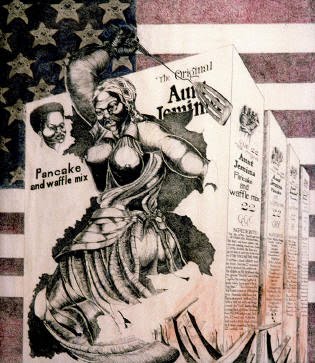
He became known in the 1960s and 1970s for reversing, through a series of naturalistic, cartoon-like drawings, stereotypical images of African Americans in the public imagination. For instance, in Aunt Jemima (1968) he transformed the image of a docile mammy into a black Amazon conscious of her rights and ready to fight for social justice by using her trademark pancake spatula as a weapon.

In 1976, Dr. DePillars was named Dean of the School of the Arts at VCU, where he served until he retired in 1995, earning the title Professor Emeritus. Under his leadership, the School of the Arts grew to become one of the largest art schools in the U. S., and attained both national and international recognition.


read more>>>>>>>>>>>>>>>>>>>


Art, Artists and Art Criticism


by: Emmanuel Jegede


This article is focused on some issues concerning contemporary art and its practitioners and art critics as it relates to Nigeria from 1950 to date. In any way the article may not be able to discuss in minute detail due to space constraint. At the same time the theoretical framework of the paper will be historical and also analytical in order to be able to state the author’s views on some issues raised here.


The history of contemporary art in Nigeria cannot be complete without referring to the instrumental figures who through their solo efforts brought Nigerian modern art into the world art history. The history started with Aina Onabolu 1881-1963 as a leading figure who did not only start the art of drawing and painting but also fought single handedly to put art in the school curriculum in 1927. Onabolu consciously went into art of figure drawing and painting to prove and disabuse the minds of the then Europeans who thought no African can dabble into the art of figure drawing and painting. With the help of some European art teachers such as Kenneth Murray who came in 1927, H.E Duckwork and Dennis Duerden who later joined, they later discovered of other talented indigenous artists who did not only continue from Onabolu, they equally made their distinct landmark in the propagation of visual art. Such notable artists include Akinola Lasekan 1921-1972, Justus Akeredolu1915-, Ben Enwonwu 1921 – 1994, Etsu Ngbodaga and others.
These notable Nigerian academically trained, or partially trained or self trained artists started what was later christened Natural Synthesis by the “Zarianist”. For example, Enwonwu’s paintings and sculptures reflect naturalistic and stylized forms which he called “African Style”. As it is argued, Enwonwu’s spirit of synthesis later became the compass upon which the Zarianists members of Zaria Art Society based their popular theory of “Natural Synthesis”. Ademuleya,2003.
The events starting from 1950 have been very topical and have also dictated the trends in contemporary Art in Nigeria. Also events since then have been properly classified by some scholars who wrote on contemporary Nigerian art. These scholars include Dele Jegede 1983, Adepegba 1995, Akatakpo, 1995 Kunle Filani 1998.
Late 1950s and early 1960s witnessed in Nigeria art history the beginning of radical revolution in visual art. The periods consciously witnessed the change of art style from ancient traditions and also jettisoning of western – style realistic approach to execution of artwork. The new consciousness ushered in what was referred to by Filani as “New African” concept which simply means an admixture of traditions and modernism, the philosophy which was later developed as “Natural Synthesis”. This philosophy in the first formal Art School in Nigeria. That is, the college of Art, Science and Technology, Zaria which was later renamed Ahmadu Bello University ABU Zaria. The key actors of this great African philosophy in visual art, who started as students and later spread into various art schools after their graduation are Yusuf Grillo, Uche Okeke, Bruce Onobrakpeya, Demas Nwoko, Emmanuel Odita, Jimoh Akolo, Solomon Wangboje and a host of others. They formed what was known as Zaria Art Society. .
The artists mentioned above influencee other followers and students who have some common and unique characteristics which reflect in their individual works. For decades they dictated the trends in Nigerian contemporary art. Their ideologies according to Filani were carried to other formal schools or workshops to create vibrant artistic revolution Filani 1998:35. Some of these pioneer artists are still in contention in the country.
Another generation of Artists who were later discovered after the 1950s and 1960s progenitors are 1970s graduates of mostly the Zaria Art School. Among them are Shina Yusuf – painter now dead, Joshua Akande – painter, Nelson Cole – painter now dead, Dele Jegede – painter, cartoonist and critic, David Dale – painter and mosacist, Kolade Oshinowo – painter and Gani Odutokun- painter now dead. Their works have been described as characterized by elongation of forms, with elegant northern architecture, and human figures while some depict northern grassland in their landscapes. Most of these artists’ works are in the collection of National Gallery of Modern Art. It is worth mentioning that artist like Late Professor Adepegba 1941 – 2002 who graduated in 1971 with 1st class degree in sculpture consciously went into art history and criticism. He made his mark as one of the distinguished, outstanding and foremost Africanist Art Historians/Critic the Continent has ever produced.
Most contemporary Nigerian artists are classified along the school in which they graduated from. There are also cases of few artists having other distinct styles or deviating from the usual school styles.
Of large number of contemporary artists in the practice today are the 1980s graduates of various formal art schools in Nigeria. The term “school” is also used to describe the philosophy, styles, themes and forms that are peculiarly distinguishing of these schools. The schools that have distinguished themselves with some unique characteristics include Zaria School, Yaba School, Nsukka School, Ife School and Auchi School
The distinguishing characteristics of each school will be briefly mentioned as well as some of their outstanding products or artists. The name of the school represents the location of each art school or may some time bear the name of the founder.
Some Agents of Contemporary art in Nigeria
Zaria Art School
The works of the school are characterized by elongation of forms, with elegant northern architecture and human figures. Their landscapes, most times reflect the grassland and savannah vegetation of the North. Other later graduates of the Zaria School who have made their marks from 1950s till date as artists, teachers and historians include Prof. Yomi Adetoro, Dr. Tunde Akinwumi, Jerry Buhari, Jacob Jari, Tonie Okpe, Rukeme Noserime, Nse-Abasi Inyang, Tunde Balogun, Tunde Oniyide, Tony Emordi, Victoria Ukpera, Chinwe Abara, Abraham Uyobusere, Akeem Balogun, Wunmi Busuyi, Betty Bassey, Duke Asidere, Emmanuel Irokanumo, Ade Odun, Taiwo Oyejide0 and Abiola Idowu among others. Their contributions have been in the sustenance of the art tempo which the pioneers started through their constant practice. While some of the listed artists are household names among the art historians, critic, collectors and the art audience, some talents are just emerging.
Yaba School
The Yaba School employs realistic art form that are done in narrative, and descriptive style mostly done in accurate photo-graphic-realism. The initial notable artists who graduated in the 50s and 60s and went for higher studies in Europe include Agbo Folarin, Isiaka Osunde, and Abayomi Barber. The later artists of the School, who were taught by the former graduates of the Zaria School, belong to the 1980s generation. These include Mike Omoighe, Biodun Olaku, Phemi Adeniran, Lara Ige, Felix Osieme, Edosa Oguigo , Joe Amenechi, Ato Arinze, Sam Ebohan among others.
Nsukka School
The calligraphic nature of ‘Uli’ art body painting/decoration influenced the products’, works. The philosophy of application of Uli art form as espoused by Uche Okeke and later supported by Chuka Amefuna, Chike Aniakor and El-Anasui was to intensify the search for Igbo–identity, thereby using the Uli linear forms to depict radical socio-political and cultural subject matters. Their linearity of drawing and modeling according to Filani, became the hall mark of Nsukka’s contribution to modern Nigerian art. The graduates are conceptually rich and fecund in imagination thereby making their themes to penetrate into the social situations of the people. Filani, 1998:36. Notable of late 1970s and 1980s artists of the school include Tayo Adenaike, Olu Oguibe, Ndidi Dike, Chijioke Onuora, Ernest Okoli etc. Of 1990s graduates are Chika Okeke, Krydz Ikwuemesi, Ozioma Onuzulike among others.
Ife School
The school is noted with intellectualization of its works with vigorous emphasis on theoretical content in art form. Noted with cultural inspiration drawn from the Ife location, the school explores a rather diversity of creative exploration in the use of local materials, symbols and images which later developed into the exploration of Yoruba traditional symbols, motifs, structure and concepts termed Ona by some of the 1980s graduates. The lecturers of the Ife School who are not graduates of the school include Babatunde Lawal, J.R.O Ojo, Abiodun Rowland, Ige Ibigbami, Agbo Folarin and PSO Aremu among others.
The late1970s and 1980s graduate artists of the school who have made their marks in art practice, writing and teaching include Moyo Ogundipe, Nkiru Uwechi-Nzegwu, Moyo Okediji, Don Akatakpo, Sherinat Fafunwa-Ndibe, Kunle Filani, Idowu Otun, CSA Akran, Osi-Audu, Tola Wewe, Eben Sheba among others. The emerging 1990s graduates of the school include Segun Ajiboye, Stephen Folaranmi, Mufu Onifade, Ademola Ogunajo, among others. These artists exhibit often and some also participate in the yearly exhibition of the school graduates tagged “The Best of Ife” which started in 1993.
Auchi School and Its Artists
Auchi Art School is noted with expressionistic naturalism. The use of vibrant and sweet colours are attributed to the graduates of the school. Some of the outstanding artists of the school who have made their impact on the audience and collectors include Ben Osaghae, Sam Ovraiti, Olu Ajayi, Pita Ohiweri, Edwin Debebs, Alex Nwokolo, Toni Oshiame and Olu Amoda metal sculptor among others.
The Informal Schools and Their Artists
These are art locations where artists are informally trained without following rigid rules of formal art syllabus. The training is acquired through apprenticeship system or workshop experience. Within the informal school, some of them do not obey the rules of accurate proportion, and perspective.
Mbari Mbayo–Osogbo and Ori-Olokun-Ife schools explored the workshop system. Notable artists that emerged from the Osogbo School include Twin Seven Seven, Jimoh Buraimoh, Muraina Oyelami, Tijani Mayakiri, Rufus Ogundele, Ademola Onibonokuta, Asiru Olatunde, Nike Davies. Their contributions to art history in Nigeria is their deviation from the known western–style realistic form. These artists’ forms are original, spontaneous and naively created with utter disregard for the depth, space or any expected relationship of motif. Their themes are most times derived from folktales, myths and religious stories. The characteristics of which was classified as “Naive Vision encouraged and fossilized” Adepegba, 1995. They hardly follow the cannon of verisimilitude which is common with Western Art. Ori Olokun workshop is seen as an extension of the Osogbo but the style of execution tilts greatly towards naturalism. Prominent artists of Ori-Olokun experiment include Wale Olajide, Rufus Orisayomi, Fela Odaranile, Adeniji Adeyemi, and Ademola Williams. Other important informal school is “Abayomi Barber School” which started in 1973 by Abayomi Barber . Although the founder was formally trained, the trainees of the school are informally trained. There is no curriculum to operate as in formal art school and no specific entry requirements. Emphasis was always placed on importance of drawing as the basis of it all, also the need to see correctly, measure accurately and observe very keenly, the rules that are borrowed from formal school system. Its prominent artists include Muri Adejimi, Olu Spencer, Busari Agbolade, Toyin Alade, Kent Ideh, Bunmi Lasaki, and Bayo Akinwole among others. Their works are widely collected in Nigeria and abroad and have also been documented by researchers in art history Azeez 2002. Many of them have been in active practice from 1980s till date.
Aka Group
Aka Group based in Enugu and Nsukka in the Eastern part of Nigeria, formed in 1989 as a circle of exhibiting artists. It has close affinity to Nsukka School. As reported by Filani, the Aka group and Uli artists are philosophically inclined in thematic choice with clairvoyance in social vision Filani,1998:41. The founding members of Aka include Obiora Udechukwu, Tayo Adenaike, El-Anatsui, Nsikak Essien, Samson Uchendu and Chris Echeta among others.
Eye Society
The Eye society is based in Zaria Ahmadu Bello University. It was formed in 1992. The membership comprises mainly some artist staff of the Department of Fine Arts of the University who also graduated from the Department. Some of the founding members include Gani Odutokun died in 1994, Jerry Buhari, Jacob Jari, Matt Ehizele and Tonie Okpe. The group’s contributions have been in the areas of propagation of visual arts as an instrument of development of the society, publishing of journal called “The Eye”, mounting of exhibitions, organizing workshops conferences and symposia etc.
Uli Movement
It is Nsukka-based. The membership is for an artist who believes in the philosophy of Uli Art as a stylistic expression using its linear and spiral motifs in terms of forms and using themes that have socio-cultural content and advantage. The members of the movement who are both Igbo and non-Igbo include Obiora Udechukwu, Tayo Adenaike, Chris Afuba, Chris Echeta, El-Anasui the famous and prolific Ghana born artist, working in Nsukka University. Chijoke Onuwa, Chika Okeke, Olu Oguibe, Victor Ecoma, Ndidi Dike, Krydz Ikwuemesi, Ozioma Onuzulike and others.
Ona Movement
This was formed in 1990 by the five graduates of “Ife Art School”. The five pioneering founding members include Kunle Filani, Moyo Okediji, Tola Wewe, Bolaji Campbell and Tunde Nasiru. The movement explores the decorative motifs, ornaments, patterns and design peculiar to the rich artistic culture of the Yoruba Filani 1998. One advantage of Ona approach to artistic expression according to Filani is the rich visual grammar it affords the artist to employ, resulting to melody of tones, forms and structure and also enriching the aesthetic sensibilities of the viewers Filani 1997. Some of the other exponents of Ona philosophy as an art include Don Akatakpo, C.S.A Akran, Ojo Bankole, Akin Onipede, Ademola Azeez, Sehinde Ademuleya, Rasheed Amodu, Mufu Onifade ,Kunle Adeyemi and others. One of the major contributions of Ona movement to contemporary art is its enriching the visual aesthetic and appreciation of Art.
Pan-African Circle of Artists PACA
It is an artists’ organisation formed in 1995. Its focus is to provide fora or avenues for African artists within and outside the Continent. It also works “at engineering an indigenous voice for the propagation of African Art”. Ikwuemesi, 2000. Its founding members include Krydz Ikwuemesi, Ayo Adewumi, Nnaemeka Egwuibe, Jerry Buhari etc. One other contribution to art history in Nigeria and African continent is its regular publications that border on African and global issues. Its headquarters is located in Enugu, Nigeria.
Culture and Creative Art Forum CCAF
This organisation was formed in July, 2001. Its objectives among others include intervening and promoting the creative and artistic education of Africans through cultural means in order to encourage their economic and creative independence. It is also to maintain and sustain the rich cultural heritage of Africa and her people. Its headquarters is located in Lagos, Nigeria. Its founding members include Dr. Kunle Filani, Ademola Azeez, Dr Ademuleya Sehinde, Akin Onipede, Mike Omoighe, and Austin Emifoniye. It has organised two National Conferences with the themes “Culture and Creativity” in 2002 and Contemporary Challenges in Nigerian Arts” in 2003 . CCAF has published two major books.
Artistic Trends in Nigeria
The artistic trends in the country are still being dictated most times by the mode of training and styles adopted by each school discussed earlier. The artistic trends are as varied as number of art schools formal and informal movements we have. For instance, some artists of formal school orientation still engage in naturalistic art form with the synthesis of tradition and modernity to express their concepts. One other current artistic trend that is prevalent among the workshop trained artists especially of Osogbo and Ife Ori-Olokun is the depiction of their forms in the traditional culture, folklore and myths in a figurative and narrative way. Another artistic trend is the expressionistic expression that is prevalent among the Auchi School graduates.
Exponents of Ulism those who adopt Uli art forms of expression mostly graduates of Nsukka School and Onaists those who adopt Ona art form and concept as found in Yoruba decorative pattern, design and ornament to express their messages also constitute a strong trend in contemporary Nigerian art. The “surrealist-naturalists” of the Abayomi Barber School is equally an artistic trend. The common thing to most of these artists is their thematic expression depicting socio-religious beliefs, socio-economic conditions and social lives of the people.
The Front liners of the Artistic Scene
The frontliners of the artistic scenes today in Nigeria include established artists pf 1950s those referred to as “Zarianists”, such as Bruce Onobrakpeya, Yussuf Grillo, established artists of the 1970s, 1980s of formal school and some of the 1990s. The graduates of Informal School system discussed earlier are still in active practice and these are Osogbo and Ori-Olokun artists, and products of Abayomi Barber School the surrealists. Most of these artists’ works are still being collected and exhibited. They are classified as front liners because they exhibit from time to time and not only that, some of them exhibit yearly in solo exhibitions.
Representing 1950s graduates is Bruce Onobrakpeya who exhibits regularly with new works produced in the exhibiting year on display. Of the 1970s graduates is Kolade Oshinowo who apart from exhibiting regularly, also showcases new works. He is arguably the most prolific artist of his generation. Notable among the 1980s graduates who are front liners are Kunle Filani, Tola Wewe Ife School, Mike Omoighe, Olu Amoda, Abiodun Olaku Yaba School, Ndidi Dike female painter Nsukka School, Ben Osaghae, Olu Ajayi, Sam Ovraiti, Alex Nwokolo Auchi School, Duke Asidere Zaria School, Muri Adejimi and Olu Spencer, Informal school. Most of them have been listed in “Who is who” in Nigerian Art. The remarkable thing about these artists’ works is that each artist style of painting or sculpting or modeling is very unique and experimental and their artistic developmental stages can easily be traced by critics.
Art Writing and Criticism
Very few writers are engaged in critical writing on art. Among the few are visual artists and artist academic intellectuals. Their writings can be categorized into articles in art journals, newspaper art reviews , and reviews in exhibition brochures Critics of the 1970s include Ayo Ajayi, Ben Enwonwu, Cyprian Ewensi, Okpu Eze, Uche Okeke and Demas Nwoko and Obiora Udechukwu late70s. Art journalists/writers/critics of the 1980s include Ben Tomoloju, Tam Fiofori, Elsy Obasi, Taiwo Ogundipe and Toyin Akinosho, Jahman Anikulapo, Shola Balogun, Lanre Idowu, Wale Aina and Gbile Oshadipe and Dili Ezughan among others. Oloidi, 1996. The academic intellectuals who went into art writing and criticism from the early 1980s-1990s include Adepegba, C.O., Dele Jegede, Ola Oloidi, Olu Oguibe, Sylvester Ogbechie, Kunle Filani, Mike Omoighe, Chika Okeke and Krydz Ikwuemesi.
The art writers/critics who stand at the front line of the artistic scene today include Kunle Filani , Toyin Akinosho, and Jahman Anikulapo,and Krydz Ikwuemesi Their writings are remarkable due to the issues their critical writings generate. These issues range from art policy, art administration, status of the artists in Nigeria and Africa, art practice and theory to collection and appreciation of art among other topical issues. There are also up coming and promising art critics not mentioned here. The front liners listed here have contributed a lot of reviews in exhibition brochures, newspaper articles and reviews, academic art journals and even comments on socio-cultural issues in the country. Some have even curated national exhibitions. The limitation of their writings especially on artists’ works is their inaccessibility to the stages and processes involved in artists’ works before the final exhibition.
National Collection of Contemporary Art
There are collections of contemporary works by both government’s culture institutions and private collectors. The institution charged with the national collection of contemporary art is the National Gallery of Art NGA. It has the largest collection of artists’ works among the other culture institutions created. Its collection was first documented in 1981 in a publication titled “The Nucleus”. There are also private galleries and collectors who have in their keeps works of prominent contemporary artists. Among the private galleries in Lagos are Signature gallery, Treasure House, Nimbus gallery, Mydrim gallery, Galleria Romania, Nike Okundaye gallery, Quintessence and others. Private collectors are few Nigerians and foreigners mostly Europeans and Americans who have in their collections works of most artists mentioned in this article. Of special note among the Nigerian collectors, is Engineer Yemisi Shyllon, an avid art collector who arguably has the largest private collections of contemporary artists’ works both Nigerian and non-Nigerian artists.
Conclusion
It is the view of this writer that art and culture matters such as status of the artist, consistent implementation of art policy, administration of art and artists, production and practice of art, criticism and writing on art have not been given the adequate attention they deserve by the Government. There are many problems confronting contemporary art and artists in Nigeria some of which the artists themselves have attempted to solve but due to financial constraint and lack of political powers, those problems are still there. As individual artists and writers, they have tried to draw attention to some of the topical issues either through their art works or writings. There are a lot of benefits Nigerian Government can derive from artists and other culture activists if they are genuinely involved in the administration and implementation of art and culture matters that directly affect artists and citizens at large. Nigeria as the most populous Black African nation in the world can utilize the capabilities and potentials of her artists and culture activists if the artists are also allowed to put their ideas and skills into fruition as stated in the Cultural Policy for Nigeria. Nigerian artists are looking forward to a day when an established and a seasoned visual artist/administrator would be appointed to head for example, “The National Gallery of Art”. One believes that if this is done critical discourses of issues on art and culture could be widened and more articulated. On a final note, this article does not pretend to discuss and raise all issues on contemporary art and artists due to space constraint. The issues and artists cannot be exhausted in just one article.


Contemporary Visual Art from Ghana


by George Hughes


Museums and galleries all over the world regard traditional African art of high aesthetic value. A reputation ignited by the overwhelming influence African art had on modernist European artists at the beginning of the twentieth century. This impact and positive status of traditional African art has over decades resulted in laudable exhibitions, acquisition and documentation of such antiques. Nevertheless, not much favorable interest and documentation is offered most contemporary art of Africa. It is being criticized for being universal and failing to meet the stereotypical African art tradition. This is also the case for contemporary art in Ghana.

Contemporary art in Ghana

The idea of grouping Ghanaian artists is an anomaly because of its complexity. The artistic climate of Ghana is made up of a variety of styles. This stylistic pluralism may be due to several factors and influences such as ethnicity, religion, education, westernization, globalization and aesthetic preferences of the individual artist under consideration. The complex social structure of the Ghanaian society is due in part to the fact that there are about 79 languages spoken in a country whose population is about 19 million in the year 2000. The Ghanaian cultural melting pot is compounded by the fact that several religions are being practiced. It is within this social fabric that most Ghanaian artists coexist and evolve their aesthetic ideas.

Stylistic groupings create problems such as marginalization, especially when such divisions reference the hierarchy of what is, and what is not art – a barrier that pushes some artists to the periphery and favors a few others.

The intent, purpose and dynamics of ongoing African art has changed to become much more eclectic because of the continent`s experience with proselytism, slavery, and colonialism. Art of any historic era is a direct reflection of the circumstantial ambience past and present within that very setting. Culture is dynamic and susceptible to influence and change. Current art created in Africa is a fabric of the cosmopolitan melting pot, a protean of its past, a reality of its present and a determinant of its future. To this effect, therefore contemporary Ghanaian visual art is a direct offspring of the poly-traumatic African chronicle.

From a general perspective, one may be tempted to categorize Ghanaian visual artists into groups due to which generation they belong to, or the stylistic similarities and differences, within their work. I am much more interested in looking at the Ghanaian art scene from a panoramic viewpoint of the various artistic modes of expression. I am also compelled to concentrate only on those fine artists who have gone beyond formative years, attained a personal stylistic consistency, allowed progressive experimentation, and have been working. This is by no means a complete representation of all the Professional visual artists working in Ghana today.

General characteristics

Contemporary Ghanaian visual artists are usually unaffiliated to any artistic movements. They are open to a tremendous exploration of indigenous and universal ideas, formal or informal, and are poised to exhibit their works to both local and international audience. In addition some of these independent fine artists create work that shows evidence of experimentation, of research, and an openness that seeks to break the barriers of cultural stagnation through the combination of emotional and intellectual acuity. Ghanaian artists receive art training from varied sources. Some are self-taught and the majority of them receive formal training in Ghana and abroad. They either receive tertiary education at the College of Art, Kwame Nkrumah University of Science and Technology, Kumasi, training from private institutions such as Ghanatta or Ankle School of Art, both located in Accra apprenticeship from private sign writing workshops, or are self-taught. There are evidently aesthetic differences in the works of artists who receive training at academic institutions and those who go through apprenticeship at sign writing workshops. These differences are not necessarily qualitative but rather stylistic alternatives made by the artists as a result of the opportunities and circumstances they encounter, a conclusion that may displease two schools of thought – firstly, those who believe that College education absolutely yields art of the highest caliber, and secondly those who deride formal training as adulteration and derivative of Western ideas, hence inauthentic. I am compelled to state that artists whose works are often described derogatory as naïve, folk, derivative, grotesque, universal, or academic, and therefore inauthentic may actually be making tremendous inroads and breaking the barriers of the status quo beyond reason, and tradition. After all what do artists need, but an irresistible amount of tenacity beyond hurdles. Influence, either conscious or subliminal is a powerful experience that grips thirsty minds. The concept of borrowing aesthetic ideas from other cultures has been instrumental in the development of art in various societies. Roman artists borrowed ideas from Greek art. European cubists` fascination with and adaptation of the treatment of form in traditional African sculpture is credible and commendable. It is with the same curiosity and empathy that some contemporary Ghanaian visual artists embrace African and Western art forms.

Symbolism and tradition

A distinguishable group of Ghanaian independent artists are those who are conceptually inspired by African symbols and traditional forms such as adinkra motifs, traditional stools, sculptures, and also ideas about African identity. Oku Ampofo and Vincent Kofi are earlier Ghanaian sculptors who borrowed extensively from traditional African concepts of stylization, emphasis, distortion and symbolism. Public commissions of relief panel murals and busts and monuments of Saka Acquaye, resonate the traditional African practice of the artist`s duty to State. Owusu Ankomah uses in his prints and paintings colossal male figures superimposed on ideograms and symbols. Through an acute reductive system of visual selection Ankomah attains profundity with suspended shapes that defy gravity and attain a metaphysical significance. Martin Dartey, greatly influenced by traditional African art, uses his knowledge in African history as leverage to deliver sociopolitical themes in his paintings.

Figuration

Artists under this group create work by perceiving and interpreting forms, structures and activities within their immediate environment. The human figure, groups and crowd scenes become the central themes with the figurative artists. Generally the figures, draped in traditional costumes, are in action and either idealized, stylized and/or abstracted. These artists do work that celebrates the everyday realities of Ghanaians such as scenes at the congested open markets, crowded beaches, dancers, musicians, horse riders, lorry stations, bustling beaches and all the paraphernalia that comes with crowd scenes. The pioneer of figuration in Ghana who worked before and around the 1950s and 60s was the late Kofi Antobam. Antobam`s work features natural proportions of humans in complex compositions with content set on royalty, and scenes from the everyday lives of Ghanaians. Since independence forty-five years ago, great transformations in the Art of Ghana have taken place. Several artists have developed alongside one another, with mutual, overlapping influence and juxtaposed parallelisms. Veteran artists within the figurative group are sculptors like Oku Ampofo, Saka Acquaye, Vincent Kofi. and painters like Ablade Glover, Ato Delaquis and Amon Kotei. Color orchestration appears in the work of Amon Kotei through the use of the female model going through her daily chores. Whereas Ablade Glover`s impasto surfaces metaphorically exhume the elegance within the female form, Ato Delaquis creates detailed, color-modulated panoramic scenes of Ashanti warriors and vehicular scenes. Abstracted and condensed color fields act as a delicate veil in Wiz Kudowor`s pointillist figuration of idealized forms. Robert Aryeetey uses subtle colors and creative lines to evoke figures poetically. Evidently there is the rarity of politically fuelled work being done in Ghana. However Kofi Setordji defies the clichés within the everyday festive subject matter and engages the viewer with his succinct socio-politically charged themes. In addition Godfried Donkor`s bold and graphic references to Slavery, the Diaspora, and the plight of minorities encroaches on an avoided content. Donkor is based in London and works in digital and painting media.

Transcendence

The transcendental artists create work that eludes direct representation because these works are symbolically encased within intangible percepts and constructs. In other words what you see on the surface is color and form yet underneath is immense meaning that can only be hinted at either by the title or in dialogue with the artist. The transcendental artists distance their selves from direct communication of meaning and rely deeply on the subliminal, masking and camouflage. In essence the quality of their work is gold foiled in dust. An exponent of this group of Ghanaian artists is Atta Kwami who through his paintings and installations makes intellectual references to familiar Ghanaian local structures such as kiosks, stalls, and suburbs. Kwami creates the transformation of the familiar and often ignored subject matter into an elevated aesthetic, through concise color and shapes. Nanart J.D. Agyeman interprets Ghanaian proverbs in detailed and colorful linear shapes at once mystical and visually organic.

Vocational Designers

In the last two decades some creative Vocational designers such as carpenters, seamstresses, tailors, and hairdressers have attracted the attention of Western historians. A notable achiever within this group of designers is Samuel Kane Kwei and his custom- made coffins that replicate in sculpture recognizable forms such as cars and boats. Caroline Monda Dartey, wife of the Painter Martin Dartey designs African beads and bags from an intellectual perspective. Hopefully her example will inspire female artists in Ghana to pursue professional careers in art.

This recognition of Ghanaian artisans and designers as fine artists has widened the parameters of what is art, and poses the question – who determines the fine art of a people, and upon what qualitative criteria is the measure of fine art based upon? The most crucial question to pose however at this juncture is whether the functional intent of the designers disqualifies them as fine artists? It is however reasonable to state that if most fine artists, who create art for its intrinsic value are seeking recognition in the mainstream, so too some may argue designers would not disallow the respect of galleries, and museums, should the opportunity arise. If the idea of art as a universal language still holds, then it is not harmful to allow all art to be tested and to undergo study and scrutiny, within relative knowledge, empathy and expertise of connoisseurs without recourse to suspicion. The above may seem almost impossible because of the magnitude of art produced by humans all over the world. The closest one can get to this ideal of an open exposure will still require a clear distinction of quality in terms of differences between excellence and mediocrity, between formative and mature and between kitsch and the classic.

Works of art emerge from diverse sources with varied intent and therefore it is wiser to keep an open mind, slow to judgment. If art can thrive on convergent and divergent ideas, of influence and tradition, of the rejection of conventions, and by borrowing from unprecedented sources across board, then the idea of a pure art devoid of influence does not exist and cannot be used as a measure to qualify the authentic in art. Thanks to primitivism, postmodernism, modernism, tradition and academism. Above all thanks to the freedom of expression. This is not a blind wholesale concert that allows every piper to horn along. Rather it is an epiphany of reality that within various times and settings there happens to be multiple alternatives and applications of various qualities of Art. Within these diverse settings is the bitter hierarchy of what is acceptable and unacceptable, a phenomena instituted by those in authority, by society, by institutions, by trends, factions, artists and finally by posterity. In the end Art is the victor.