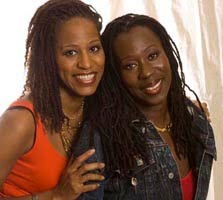
AAAM Annual Conference

African-American Museum Conference Held in Pittsburgh
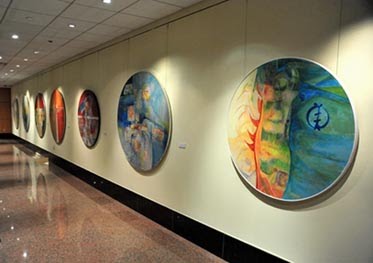
For three days this week representatives from more than 200 African-American museums are in Pittsburgh for a conference. They are attending sessions on curating and archiving. There were also more specialized sessions on re-interpreting African-American food history and preserving Florida’s African-American civil war heritage.

A museum is defined as an institution that is open to the public, has a collection and does exhibitions. President of the Association of African-American museums Vernon Courtney said although there is a need for such museums, he hopes African-American history and art will work their way into all museums.

“Our history is unique in this country and we hope that at some point in time we work ourselves out of a job when mainstream museums treat African-American history and culture as it does the rest of the history of the nation,” he said.

This is the 32nd year the conference has been held. Pittsburgh was selected as the conference host because of the recent opening of the August Wilson Center for African-American Culture.

Visit AAAM website

Work of Art unveiled in a City Cemetery

SALEM, MA — Not all art is in museums.

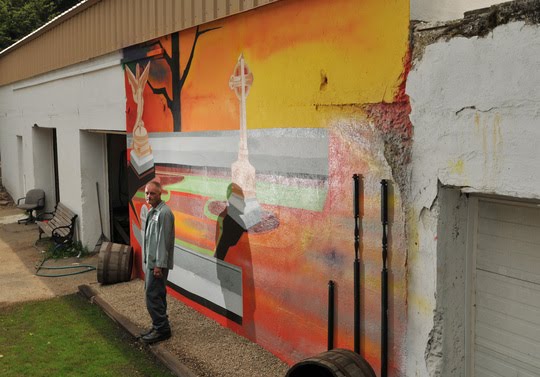
In fact, you can find art in the strangest places. Take, for example, the huge mural on the side of the maintenance building in Greenlawn Cemetery.

The colorful painting of a cemetery angel and Celtic cross was completed a few days ago by Richie Martineau, who works at the city cemetery.

He started the project last summer, bought his own supplies and painted all on his own time, after work and often until dusk. The ancient statue and cross are from a photo he took in Harmony Grove Cemetery, which is noted for its statuary.

Martineau, 38, is not a professional artist, but he has been painting and drawing for years. He majored in graphic arts at North Shore Tech and took a few oil painting classes at Montserrat College of Art. This project was a labor of love.

“This is my first mural I’ve ever done,” he said. “I’ve always loved (painting), and this is the biggest piece I’ve ever done.”

The resourceful Martineau used everything at his disposal to complete the work.

“I was up there in a dump truck painting the sky,” he said. “It was just easier than moving a ladder around.”

Read more of this innovative artist, click here.

The Healing Power of Art


Photographs by Wadson Labrousse
Courtesy the government of the Republic of Haiti”>

n January 12, 2010, Haiti was hit by a 7.0 magnitude earthquake, which turned out to be the worst humanitarian disaster of modern times with the death toll reaching 300,000 people, another 250,000 wounded and 1,800,000 people in need of shelter. The children of Haiti lost their childhood as they woke up in the aftermath of the deadly earthquake. They are wounded in their bones and in their souls for having been the witnesses of an unimaginable human tragedy made of horrifying scenes of buildings collapsing on loved ones, people trapped under layers of concrete, countless bodies scattered on the streets . . . The education sector suffered dearly with 4,000 children dead in their schools (in addition to numerous other school-age children crushed in their homes), 90 percent of the school infrastructure destroyed and 1,200,000 children out of school. Children are in shock and many have gone into a state of post-traumatic syndrome as they strive to survive in precarious shelters located in public squares with inhuman conditions.
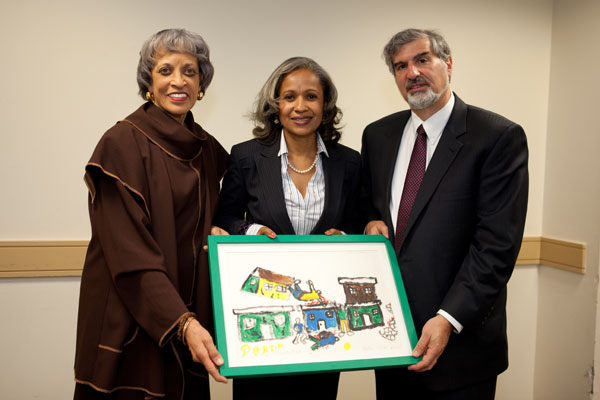
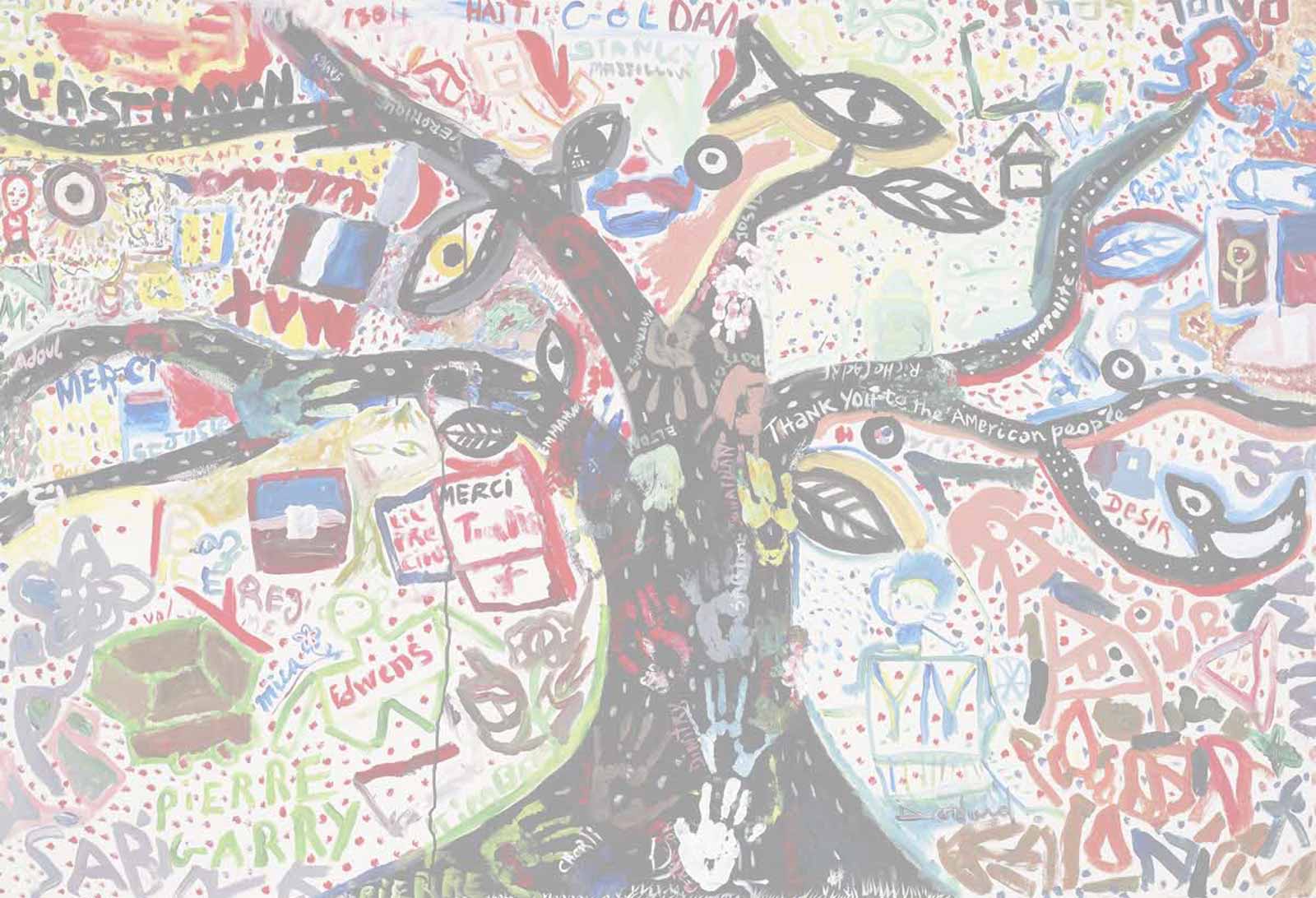
Plas Timoun (A Place for Kids) was born in the aftermath of the January 12th catastrophe to provide an immediate psychosocial response to the mental despair of these children. I created these activity centers to be recreational and informal learning places that offer programs aimed at freeing–relieving at least–a child’s mind from the horrors of the tragedy. The centers provide a friendly environment and offer children, ages six to ten, an opportunity to express themselves through painting, ceramics, music, theater, reading and sports, all within a psychosocial framework rooted in our national culture. The programs have a healing effect on the children’s minds as evidenced by their artworks, which have gradually moved from a gloomy to a brighter outlook. With the guidance of experienced trainers, the art activities at Plas Timoun can reflect, and in fact communicate, what is happening in the minds of the children: both their suffering and their dreams for a better future.


Photograph by Franko Khoury”>
The exhibition The Healing Power of Art: Works of art by Haitian children after the earthquake at the Smithsonian’s National Museum of African Art gives the children of Haiti a chance to present to the world their vision of themselves and of the reconstruction of their country. Their voices, so well expressed by colors and emotions, reflect our imaginary and social reality, encouraging you to think with us of solutions to the problems facing contemporary Haiti.

I express my deepest gratitude to the First Lady of the United States, Madame Michelle Obama, and to Madame Jill Biden, both of whom modestly sat with me next to the children of Plas Timoun and participated in a painting session.

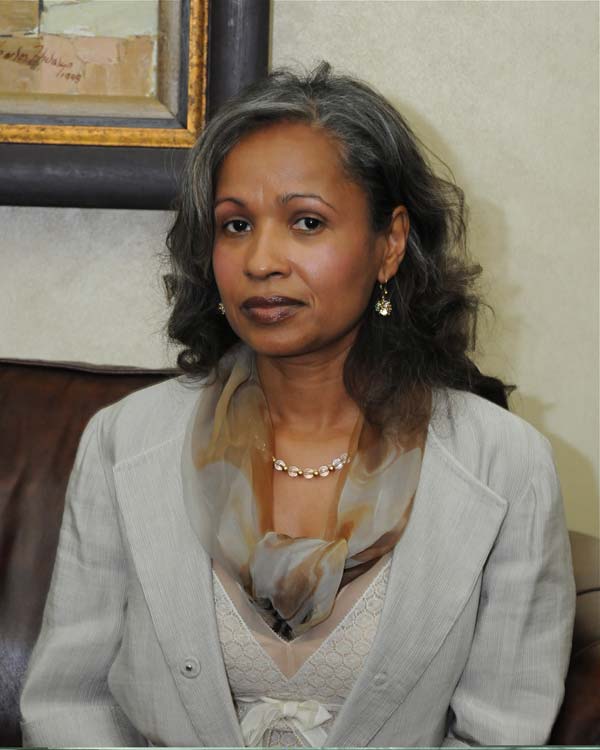
Elisabeth D. Préval


For 35 terrifyingly long seconds this is what the children of Haiti experienced on January 12, 2010, as an earthquake forever changed the world they knew. Shortly after the devastation, the First Lady of Haiti, Madame Elisabeth D. Préval, called upon Haitian Philippe Dodard and his fellow artists to create a safe place for children to express how they had been touched by the earthquake. Plas Timoun (The Children’s Place), operating from converted buses at two sites in Port-au-Prince, uses the power of art–specifically the visual and performing arts–to bring healing to the children of Haiti.

The simple works on paper created immediately following the earthquake were dark in color and imagery. Soon, however, the drawings were revealing glimmers of hope and healing. The children of Plas Timoun were using brighter colors and depicting the innocence of childhood and their visions for a brighter future, attesting to the resilience of a nation and the power of art.

With the help of Plas Timoun, these children will move more confidently toward their future and the lasting reconstruction of Haiti.

To learn more information : click here.

Separate and Unequaled: Black Baseball in the District of Columbia


Separate and Unequaled:
Black Baseball in the District of Columbia
On view indefinitely

The Smithsonian’s Anacostia Community Museum
1901 Fort Place, SE
Washington, DC 20020

Main office: 202-633-4820

Back by popular demand after a recent successful run at the Historical Society of Washington, D.C., a condensed version of this exhibition is on view at the museum. From Reconstruction to the second half of the 20th century, baseball, the great American pastime, was played in Washington, D.C., on segregated fields. “Separate and Unequaled” looks at the phenomenal popularity and community draw of this sport when played by African Americans. Featured are such personalities as Josh Gibson and “Buck” Leonard, star players of the Negro Leagues most celebrated team, the Washington Homestead Grays. The show also highlights community teams that gave rise to the various amateur, collegiate and semi-pro black baseball teams and leagues. For special viewing hours and tours, call 202.633.4844.

Click here for more information.

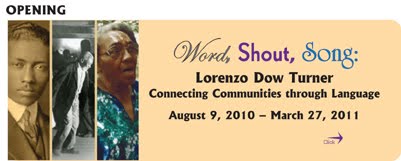
Word, Shout, Song: Lorenzo Dow Turner at The Smithsonian’s Anacostia Community Museum


The Smithsonian’s Anacostia Community Museum
1901 Fort Place, SE
Washington, DC 20020

Main office: 202-633-4820

The hours of operation for the museum are 10am to 5pm daily except December 25 when the museum closes in observance of the Christmas holiday.

Connecting Communities through Language

August 9, 2010 – March 27, 2011

Word, Shout, Song documents the historical journey made by people from Africa, their language, and their music, to the Americas. Through words, music, and story, Lorenzo Dow Turner discovered in the 1930s that the Gullah people of Georgia and South Carolina still possessed parts of the culture and language of their enslaved ancestors, which had long been believed lost.

Click here for more information

Beyond the Harlem Renaissance


FEW aesthetic labels are as linked to a neighborhood as the Harlem Renaissance, the cultural movement of the 1920s and ’30s that created some of the most significant American art of the 20th century.

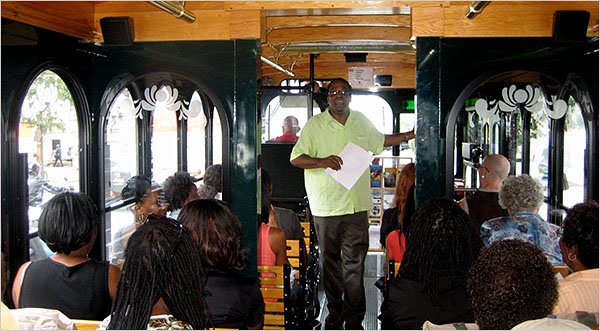
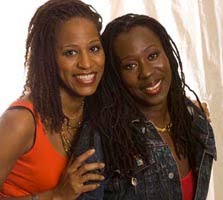
So when the gallery owner Averlyn Archer and the tourism professional Jacqueline Orange teamed up to create a trolley-bus tour of new art in Harlem called ArtCrawl, that invokes the Harlem Renaissance on its Web site (artcrawlharlem.com), the act had a touch of hubris.

Until they explained their inspiration in a recent interview.

“Art galleries in Harlem are suffering a little bit,” said Ms. Orange, who runs Taste Harlem tours. “And so we started to work together; we came together for this.”

Their common cause is to offer an entree into an art world that they say is generally unnoticed, brewing amid the brownstones abutted by multistory developments. Unlike the ground-floor galleries in walkable neighborhoods like Chelsea or SoHo, they say, many Harlem galleries are tucked into spots that don’t necessarily draw foot traffic.

“We’re just hidden — we are in a lot of private spaces,” Ms. Archer, of Canvas Paper and Stone gallery, said. “If you’re not a collector or in the art market, you wouldn’t know that we’re here.”

Ms. Archer and Ms. Orange, who began their tours in 2008, will expose Harlem’s hidden artistic gems on Saturday and Sunday with trolley-bus tours to seven stops, where gallery owners and artists will talk about, and create, their work. The tours end with a meal on the roof deck atop Rio II galleries.

One stop that exemplifies the gulf between the Harlem of old and new is Casa Frela, a gallery whose nervy exhibitions sit in an airy Stanford White brownstone.

In the 1990s and ’00s, “people used to talk about a new Harlem Renaissance, but that was really a real estate renaissance,” said Lawrence Rodriguez, Casa Frela’s director, who bought the space six years ago. The true renaissance begat a thriving scene whose artistic descendants still live and work in Harlem, he said, making it a multigenerational aesthetic haven unlike newer art enclaves in Williamsburg or Dumbo. “The old guard led the way for my generation,” he said.

Among the artists who defined the years between the renaissance and today’s gallery owners is the Weusi Collective, which was at the core of the black arts movement of the 1960s and ’70s. The work of that still-active collective is documented at another stop on the tour, the Dwyer Cultural Center. In a video accompanying an exhibition of the Weusi’s paintings, woodcuts and sculpture, Ademola Olugebefola, a member of the collective, says, “We set out to beautify the black woman, to regalize the black man.” Other members emphasize that theme, referring to themselves as “cultural warriors.”

Another stop suggests that the culture war has been fought and the victory decided: the Studio Museum in Harlem, in a gleaming building with three floors of exhibition space that is a far cry from the rented loft where the museum got its start in 1968. The main galleries feature photographs by Zwelethu Mthethwa, a South African. He is among the international figures on the ArtCrawl roster, which includes artists from the Dominican Republic, Japan and, well, Westchester. The tour suggests far more than the cradle of black culture that it first connotes.

That Harlem still draws a range of talent is notable, Ms. Orange said. “It is testimony to the fact that Harlem is still here, and we’re still the trendsetter.”

WHERE THE ART IS

WHAT ArtCrawl Harlem

WHEN From noon to 5:30 p.m. on Saturday or 1 to 6:30 p.m. on Sunday; includes after-tour reception.

STOPS include Casa Frela, 47 West 119th Street; Dwyer Cultural Center, 258 St. Nicholas Avenue, at 123rd Street; Studio Museum in Harlem, 144 West 125th Street; and Rio II, 583 Riverside Drive, at 135th Street, among others.

TICKETS $55 at (212) 866-7427, artcrawlharlem.com; the code “artcol” can be used to order $40 tickets online.

Explore, Experience, Appreciate Art! ArtCrawl Harlem


Explore, Experience, Appreciate Art! ArtCrawl HarlemTM

Saturday, August 7 and Sunday, August 8, 2010

Fee: $55; Limited Number of Tickets, $40 so Book Early!


ArtCrawl HarlemTM
is a guided trolley tour of local galleries. Participants visit seven Harlem art galleries and receive a 20- 30 minute “tour within a tour” at each site. The participants receive a tote bag with a bottle of water and refreshments throughout the day.


This August’s tour schedule is


Saturday, August 7
Trolley tour 12:00PM to 4PM; Reception following until 5:30PM

OR

Sunday, August 8
Trolley tour 1:00PM to 5PM; Reception following until 6:30PM

Galleries will include: Casa Frela Gallery, Dwyer Culture Center, LeRoy Neiman Art Center, Renaissance Fine Art, Rio II Gallery and Studio Museum in Harlem.

Each ArtCrawl Harlem™ tour culminates in a reception with food, wine, and music.

This is the first major guided tour involving art galleries in Harlem. For more information, please call 212 866-7427.

Click here to purchase tickets.

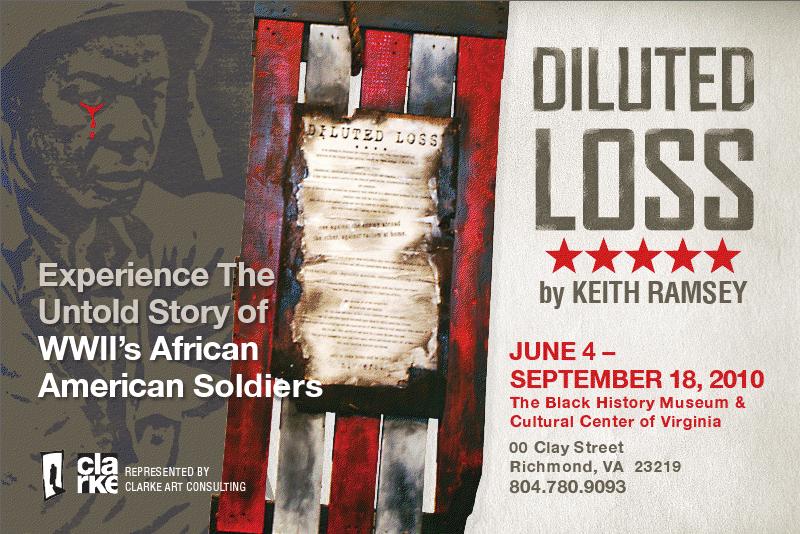
The Black History Museum and Cultural Center of Virginia Presents:


On View through September 18, 2010:
“Diluted Loss” by Keith Ramsey

Artist gallery talks:
Saturday, July 24 at 1:00 p.m.
Saturday, August 21 at 1:00 p.m.
Saturday, September 11 at 1:00 p.m.
Free with admission

The Black History Museum and Cultural Center of Virginia
00 Clay Street
Richmond, VA 23219

phone: (804) 780-9093
fax: (804) 780-9107

email:information.bhm@gmail.com

BIGGEST NETWORKING EVENT OF THE SUMMER August 28 at 9:00pm 7165 GERMANTOWN AVE, MT AIRY

BIGGEST NETWORKING EVENT OF THE SUMMER August 28 at 9:00pm 7165 GERMANTOWN AVE, MT AIRY

BOOK SIGNING BY AUTHOR BARRY FLETCHER OF HIS NEW BOOK “LEARN A MAN EARN A MAN”, ART & GIFT BAG GIVE AWAYS BY OCTOBER GALLERY, GIVE-AWYS BY JAGUAR, PHILA SUN MAGAZINE WILL BE SHOOTING FOR THIER NEXT ISSUE, VARIOUS FALVORS OF WATER ICE TO CREATE PHAT TUESDAY STYLE COCTAIL SPECIALS WITH USING SEVERAL FLAVORS OF SMIRNOFF FLAVORED VODKAS. BLACK CARPET INTERVIEWS FOR POSTING ON U-TUBE, CIROC VIP BOTTLE GIVE AWAYS. THIS EVENT IS FOR PROFESSIONALS OF EVERY WALK OF LIFE SUCH AS ATTORNEYS, AGENTS, THEATRE PROFESSIONALS, MUSCIANS, ACTORS, PHOTOGRAPHERS, MODELS, ENTREPRENEURS, HIGH-END CAR DEALERSHIPS, TECHNOLOGY & COMMUNICATIONS, PROMOTERS, ALL PROFESSIONS WELCOME!

more>>>>>>>>>>>>>>>>>>>>>

Alvin Ailey American Dance Theater Returns to New York City Center 12/1-1/2/2011

Alvin Ailey American Dance Theater returns to New York City Center from December 1, 2010 – January 2, 2011 with exciting performances that have become a joyous holiday tradition. New York City Center is located at 131 West 55th Street, between Sixth and Seventh Avenues.

Led by the renowned Judith Jamison in her final year as Artistic Director, and joined by Artistic Director Designate Robert Battle, Ailey’s extraordinary artists will move audiences with their brilliant artistry and passionate spirit in a series of 9 premieres and new productions, along with a variety of repertory favorites and special programs.

The December 1st Opening Night Gala Benefit, with all proceeds going to support Ailey’s innovative educational and training programs for young people, will kick off a year-long tribute to 5 decades of Alvin Ailey’s Revelations, an American classic called a must-see for all people. The celebration will continue with live music, specially staged performances and other activities to be announced at a later date.

For one extraordinary week, Jazz at Lincoln Center Orchestra with Wynton Marsalis will join the Ailey dancers for Ailey/Jazz, a joyous live music celebration of America’s two great art forms – modern dance and jazz music – and two great jazz artists – Duke Ellington and Dizzy Gillespie. The program features the first full production in over 30 years of Three Black Kings, resulting from Alvin Ailey’s legendary collaboration with the great Duke Ellington, and The Winter In Lisbon, Billy Wilson’s tribute to Dizzy Gillespie and the four-decade career of this consummate jazz musician.

Among the premieres, former Company Member Christopher Huggins pays tribute to Ailey’s past, present and future with Anointed, featuring the music of Moby and Sean Clements. Alvin Ailey American Dance Theater will also debut The Hunt, Robert Battle’s explosive tour-de-force for six men, and The Evolution of a Secured Feminine, Camille A. Brown’s witty exploration of the notions of femininity. Ailey’s performances mark the first time anyone other than Ms. Brown will perform the solo.

New Productions of significant works from the Ailey repertory will be shared with today’s audiences, including: Forgotten Time, Judith Jamison’s quietly uplifting work set to the haunting, otherworldly sounds of Le Mystere des Voix Bulgares; and Prodigal Prince, a colorful and lavish depiction of real and imagined events in the life of the renowned Haitian painter Hector Hyppolite that was choreographed, composed and designed by Geoffrey Holder. In addition to Three Black Kings, other major Alvin Ailey works will be performed: Cry, Ailey’s birthday gift for his mother, created on his muse Judith Jamison, and taught by her to subsequent generations of Ailey women; and Mary Lou’s Mass, a celebration of life, jazz and gospel that was recently revived for the centennial of the birth of composer Mary Lou Williams.

Throughout the season, Ailey’s extraordinary artists will move audiences with a diverse repertory that represents 23 ballets by 15 choreographers, including favorites such as Ulysses Dove’s Vespers, George Faison’s Suite Otis and Alvin Ailey’s Memoria, which will feature performances by some of the most talented students from The Ailey School.

In an exciting finish to the season, a special finale program on January 2nd will celebrate Judith Jamison with a one-night-only performance tribute featuring special guest artists.

Alvin Ailey American Dance Theater inspires all in a universal celebration of the human spirit, using the African-American cultural experience and the American modern dance tradition. Share in the incomparable sense of joy, freedom, and spirit that bring audiences around the globe to their feet night after night – you don’t just see an Ailey performance, you feel it.

Tickets starting at $25 go on sale September 7th. For further information, visit: www.alvinailey.org

Charile "Bird" Parker Memorial


About the Charlie Parker Memorial

”Music is your own experience, your own thoughts, your wisdom. If you don’t live it, it won’t come out your horn. They teach you there’s a boundary line to music. But, man, there’s no boundary line to art.”

The words and influence of Charlie “Bird” Parker have echoed through generations of musicians. The legendary saxophonist’s electrifying sound took the jazz world by storm in the 1940s and carried on until his death in 1955. Bird’s musical ideas and instrumental prowess provided the foundation for the sound that became known as “bebop.”

In 1997, internationally renowned sculptor Robert Graham was commissioned to begin work on the Charlie “Bird” Parker Memorial sculpture. With the support of former Mayor Rev. Emanuel Cleaver II, the project gained momentum and the Charlie “Bird” Parker Plaza was dedicated on March 27, 1999.

Located adjacent to the Jay McShann Outdoor Pavilion on the north side of the American Jazz Museum, the Charlie “Bird” Parker Memorial faces east towards the Historic 18th & Vine Jazz District where Parker cultivated his craft and perfected his art.

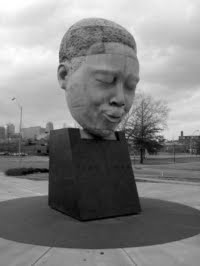
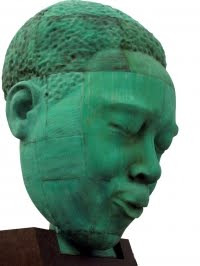
By presenting Parker’s head in isolation from his body, the sculptor sought to capture the man’s inner essence rather than his external appearance. The jazz legend’s facial features are treated in a generalized fashion so that he appears ageless. The downward tilt of the head, the closed eyes, and the rapt expression suggest that Parker is completely absorbed in music.

The artist sacrificed anatomical completeness in order to create a more visually appealing sculptural shape. Coincidentally, this cropping also transforms Parker’s profile, when seen from the south, into the rough shape of the continent of Africa.

The phrase “Bird Lives”, inscribed in the base of the sculpture, rings true today. Recordings of his performances still sound immediate and fresh, and many of his challenging compositions have become standards in jazz repertoire.

Charlie “Bird” Parker is an integral part of the Kansas City community and its Historic 18th & Vine Jazz District. He is considered to be one of the most gifted and original performers in jazz. In the same way, the Charlie “Bird” Parker Memorial sculpture is truly an original work of art, and a gift to all who have seen
To learn more information about Charlie Parker Memorial click here:

1616 E.18th St. Kansas City, Missouri 64108 816.474.8463

info@kcjazz.org

African Digital Art

As wave after wave of new technological innovations continue to wash over the world, I’ve become aware of both the intended consequences of access to digital tools, as well as those ramifications which might come as a surprise. Earlier this year I wrote an article entitled “Electronic Apartheid” which spoke to some certain consequences, where in the piece I quoted one of the world’s most venerated elders, Nelson Mandela as saying:

In the twenty-first century, the capacity to communicate will almost certainly be a key human right. Eliminating the distinction between the information-rich and information-poor is also critical to eliminating economic and other inequalities between North and South, and to improve the life of all humanity.

20 years ago, who would have thought of the “capacity to communicate” as being a key human right? And yet, it makes perfect sense today, because in writing that article, I discovered that there is a direct correlation between access to digital technology and high school graduation rates; as outlined in the research of University of California professor — Robert Fairlie.

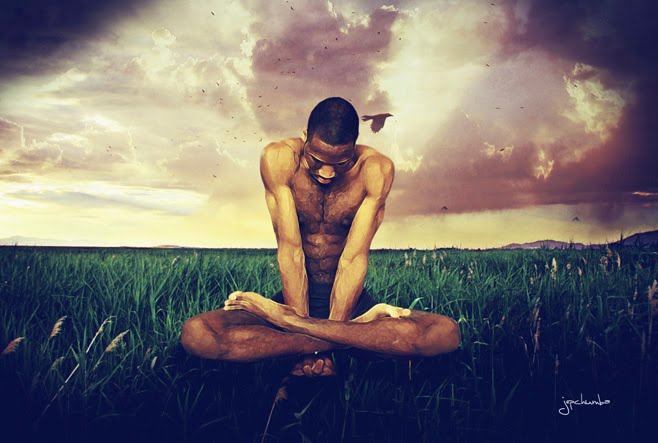
Someone else who’s hip to all this, and dedicated to do something about it, is Jepchumba, the founder of African Digital Art — an online collective of digital artists and enthusiasts. And last month, while the World Cup was in full swing in South Africa, Jepchumba and I had a roving email exchange as she made the rounds in her native land.

She’s a spunky young Kenyan living in Chicago, creating digital art and inspiring others to do the same.

Read the full interview with this innovative artist here.

Local artist paints an important reminder of N.C.’s black history

Fifty years ago, four young African-American men sat at a lunch counter and helped spark a civil rights revolution.

Ezell Blair, Jr., David Richmond, Joseph McNeil, and Franklin McCain took seats reserved exclusively for whites. They were supposed to stand and eat. They didn’t get served, but they were soon watched over by police who had been called by the manager. The next day, they returned with 27 other protesters. The resistance spread even further, with similar actions taking place across the South. It wasn’t the first sit-in of its kind, but it was an important link in the chain of events that led to desegregation.

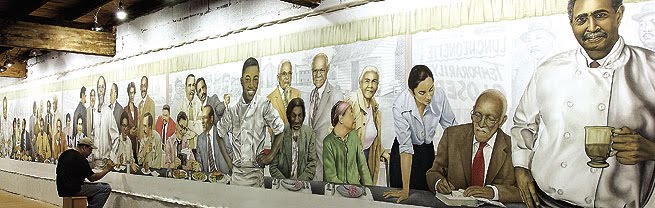
That Woolworth’s lunch counter in Greensboro, N.C., recently became the International Civil Rights Center and Museum. The sit-in is the inspiration for Charleston artist Colin Quashie’s enormous new painting, “Service,” which was unveiled last week at the University of North Carolina’s School of Government at Chapel Hill in an event that coincided with the 50th anniversary of the desegregation of the Greensboro Woolworth’s.

Quashie is best known for art that questions the cross-cultural status quo. His collection includes the “O.J. Simpson Coloring & Activity Book,” with a police pursuit maze and cut-out bloody gloves; a Black American Gothic Series with Oprah remarketed as Aunt Jemima; and the hanging sculpture “Black People Love Pork Because Africa is Shaped Like a Pork Chop.” His new painting includes none of his trademark biting criticism, but its development was not without challenges.

The painting itself is a bold attempt to address an inequity at the School of Government. When the establishment was built in the 1950s, 12 large pieces of art were hung to celebrate North Carolinian history, and the series had a conspicuous absence of non-white people. In 2007, a commission was created to find new art, a modest mea culpa half a century too late. One of the selecting artists was Juan Logan, best known here for last year’s Prop Master show at the Gibbes. Logan has known Quashie for 15 years, thought he’d be a perfect fit, and added his name to the hat.

According to Associate Dean for Development Ann Simpson, out of the 13 artists who sent proposals, the field was narrowed to three, including Quashie. When he heard he was in the top three, the artist’s initial reaction was, “Oh shit, what am I going to do now?” Quashie never pursues commissions, preferring to do his own thing unhindered by corporate hand-wringing. Yet the idea of filling in this “missing history” intrigued him. The school had only one major concern about his concept — they didn’t want to see lynchings or other scenes that would cause discomfort. Quashie agreed, becoming increasingly passionate about the subject as he learned more about the Greensboro Four and their fellow North Carolinians.

“I thought I’d get bored, but the subject matter sucked me in. It was stunning what they’d done,” says Quashie of the Four and the dozens of other figures he’s included in his artwork. “It was inspiring. I feel like I’ve led a wasted life compared to the circumstances in which these people achieved what they did.”

Quashie had to make it clear to the committee that he wouldn’t be lampooning his subject. Simpson says that his contentious rep made the committee nervous. “We talked quite a bit with him about the spirit of this work,” she says, “and what we hoped it would convey. He understood that.”

The artist’s reply was direct: “I know the work you’ve seen is controversial, but I understand what this piece needs to do — show people how far we’ve come and hopefully get people interested in learning more about others who contributed to African-American history.”

That was enough to satisfy the committee., but they had another concern: Quashie’s choice of venue. Instead of hanging the painting beside the 50-year-old art in the school’s high-profile atrium, he wanted it tucked away in a first floor hallway.

“A lot of people asked about that,” says Simpson. “It’s not a well-traveled hallway at first glance.” The school didn’t want to be accused of hiding their $45,000 African-American painting off the beaten path.

“They were disappointed,” says the artist. “I had to convince them of the location.” He told them he’d “take the hit” if there was any criticism, arguing that he hadn’t chosen the space lightly. The long, white wall is perfect for his artwork, and it’s across from the dining hall where thousands of students actually have time to stop and sample his work. Plus the art is site specific — the main subjects gather at a lunch counter, interacting with each other in life-sized proportions, discussing larger-than-life matters.

The completed painting justifies Logan’s recommendation and the committee’s faith in Quashie. It’s a breathtaking reminder of the contributions African Americans have made to North Carolina’s history, from activists to teachers and businessmen, escaped slaves and abolitionists. The artist realistically depicts more than 40 notable figures with unfussy brushstrokes.

“Service” doesn’t just add to the art already at the school; it will undoubtedly get people talking. It’s a perfect example of an artist becoming enthralled by his topic and making it reach out to others in a vivid, stimulating way.