8th Annual Community Festival & Walk For Peace Philly

Friday, Aug 6th 1pm-9pm

J&R GRASSROOTS YOUTH SUCCESSFEST
All Children Eat Free 1pm – 5pm College App Fee Waived for 100 Students sponsored by EduIncOnline Zakee Z. Abdur Rahman Scholarship Award Ceremony: in honor of the life of Nicetown businessman and entrepreneur, Zakee Z. Abdur Rahman. Though his life was taken by senseless violence, his legacy lives on to honor and recognize youth who have accomplished outstanding achievements despite facing extraordinary life challenges.
(For more info see flyer or call (215) 726-7178)

August 7th 1pm-9pm
A SOULFUL SATURDAY

11AM – Line up for Walk For Peace; 11:45AM Walk For Peace begins
1PM – Mainstage Opens
Patti LaBelle accepts the Vision of Life Award – Blaqmel Ushers In Jeane CCarne & Miki Howard

more>>>>>>>>>>>>>>>>>>

Jennie C. Jones Works

NEW YORK, NY.- Sikkema Jenkins & Co presents Electric, an exhibition of new works by Jennie C. Jones, on view from July 8 through August 13, 2010.

Jennie C. Jones works at the intersection of art history and black history. She layers the formal language of modern art—abstraction, minimalism—over the conceptual and technical strategies of avant-garde jazz. Jones’ work in audio, sculpture and drawing extends the parallel legacies of experimentation, wit and riff of these radical cultural forms. The new work brought together in Electric continues the artist’s exploration of cultural confluence, hybridization, and a more complicated and historically inclusive form of modernism.

In her new audio work Slowly, In a Silent Way—Caged Jones digitally slows a section of Miles Davis’ In a Silent Way (using tempo changes and cross-fading) to match the length of John Cage’s pivotal work 4’33”. In Jones’ edit, the time frame Cage set aside for ‘silence’ is filled by Davis’ measured hypnotic instrumental score (his characteristic trumpet is absent from the edited section). The result is a meeting of two notions of silence.

The installation of this work is carefully integrated with the architecture of the gallery: it is set for playback on a loop that alternates between the side front galleries. When its speaker is ‘dead’ the Cage piece is recreated as the sound of its listeners, the space itself filling the rest of the void. This is a mediated version of Cage’s work: the speaker has replaced the live musicians.

In the main space, Jones presents a new series of collage and ink drawings based on the packaging of music. The “Song Container” series focuses on the compact disc box, transforming the commonplace collateral of listening into a minimalist art form. We are clearly still in the territory of the formal language of analogue but a new metaphor emerges in the reference to the ‘emptiness’ of the digital realm. Jones’ reconfigured containers—shells that once held something as ephemeral as sound—are shown with display racks and other objects that evoke the formal language of minimalism.

In the same space, a series of sculptural ‘drawings’ made from instrument cable are plugged directly into the gallery wall. The medium of these works—instrument cable—is part of the electrical apparatus used in the capture and editing of the music featured in this exhibition. Miles Davis’ performance of In a Silent Way featured a full-blown electric set-up and is regarded as the first of his fusion recordings. John Cage was a well-known electronic music pioneer. But by plugging into the non-conductor surface of the gallery wall these wall works bring us back to the idea of silence. In the same way, the artist playfully questions the title of the exhibition.

Jones attended Rutgers University, Mason Gross School of the Arts where she received her MFA in 1996. Prior to that she attended The School of the Art Institute of Chicago, receiving a BFA in 1991. Over the past decade she has participated in numerous prestigious artists residency and fellowship programs, both nationally and international. In 2008 she was a fellow at the Rockefeller Foundation’s Bellagio Study Center as well as a Visiting Artist at The American Academy in Rome, Italy. Her awards include a Creative Capital grant in 2008, The Rema Hort Mann Foundation Award, in 2006, and a Pollock-Krasner in 2000. Jones was the 2008 recipient of the William H. Johnson Prize awarded to one emerging african american artist a year. Upcoming exhibitions include a major solo shows at The Yerba Buena Center for the Arts, San Francisco and LAXArt, Los Angeles in early 2011.

more>>>>>>>>>>>>>>>>>>>

Galleries: An artist doing edgy, exhilarating things with color

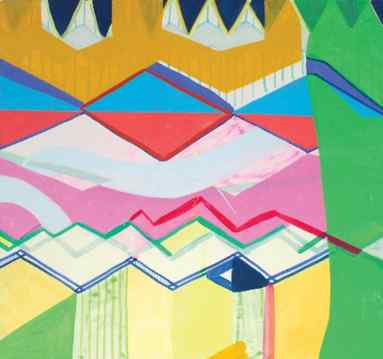
Since his last show at Bridgette Mayer Gallery, Mark Brosseau seems to have thrown caution to the wind and the results are mostly exhilarating. His paintings of four years ago – eccentric, charming compositions that brought distant views of old-fashioned amusement parks to mind – have given way to more expansive, fluid, and abstracted visions of the scenes that catch his eye.

The window composition, a staple of Sir Howard Hodgkin’s paintings, is a framework in several of Brosseau’s recent paintings. But while the British artist’s windows seem to frame a lingering appreciation of something seen or experienced, and offer a powerful whiff of the exotic, Brosseau’s appear to catch a view of architecture – and unexpectedly at that, in a snapshot, drive-by fashion. At times, different sections of his abstracted views seem to zoom out and in. Merging (2010) looks like apartment buildings as glimpsed by the driver of a car, a quick impression that captures the essence of fast seeing, but thoughtfully reimagined in paint.

Brosseau’s obvious affection and eye for vivid color stood out before this show, but his juxtapositions of colors have become edgier.

Somehow, he’s managed to make hot pinks, life-jacket oranges, parrot greens, and sunny yellows straight out of Lilly Pulitzer fabrics look a little ominous together in Parading (2010). (I can remember some scary Lilly moments, come to think of it.)

A group of small, entirely abstract paintings in the back gallery seems tangential to Brosseau’s show, but I liked this indulgence and the deliberate untidiness of these works. Here, in similar palettes of Chinese red, ultramarine blue, and lemon yellow, Brosseau communes with Kandinsky, Gorky, Stuart Davis, and maybe even our own Arthur B. Carles. You sense he is enjoying a fling with these uncharacteristic (for him) strokes and colors.

As with a few other shows at Mayer, when an artist has been given the entire gallery and the Vault space to fill, the latter’s gloomy environs are not made the most of. Two of Brosseau’s long, accordion-style notebooks are mounted on the wall parallel to each other, and although they provide an interesting insight into his working process, they don’t command the space. And they would have been easier to see in good light, on a table in one of the two galleries.


Bridgette Mayer Gallery, 709 Walnut St., 10 a.m. to 6 p.m. Tuesdays through Saturdays. 215-413-8893 or www.bridgettemayergallery.com. Though July 31.

Philadelphia’s Third Street Gallery offers ‘Building Violence,’ a photo exhibition by Michael J. Dalton II

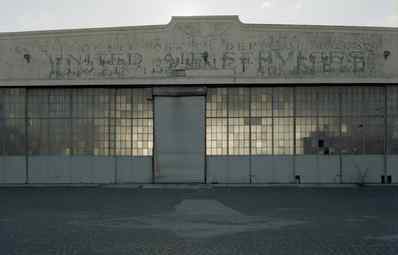
Building Violence,” an exhibition of work by Michael J. Dalton II at Third Street Gallery, reveals the unfolding of this young Brooklyn photographer’s artistic vocabulary and vision.

Two years before his 2008 graduation from New York’s School of Visual Arts, Dalton already had embarked on chronicling the theme he cares so deeply about: how, as a landscape evolves, a certain violence must occur, whether through destruction, construction, or just letting it lie fallow. His childhood experience, shuttling back and forth between his separated parents, prompted him to begin documenting the constant change taking place in the industrial and commercial Northeast Corridor.

Those early memories of seeing dockyards and factories being demolished by developers stayed with him. So, as an art-school grad needing a job that would support his work as a photographer, he became a construction-site laborer and joined Laborers’ Union 731 in New York. He now works at some of the same locations he photographs.

Reflecting the dramatic changes he has seen around him are 13 featured images of landscapes, buildings, and people, chosen from 40 photos he has made so far in the series with his 8×10 camera. These he prints himself on 30-by-40-inch chromographic photographic paper, then mounts on Plexiglas.

Everything here is imbued with a curious air of anxiety, except Dalton’s fellow construction crew members and his shop steward, Ray. And oh yes, the odd concrete “tree brace” at Brooklyn Botanic Gardens’ subway stop, which looks menacing but actually rescued a threatened tree.

Finally, it’s left up to viewers to decide whether the “evolution” of land Dalton pictures is good or bad for the community.


Third Street Gallery, 58 N. Second St. To Aug. 4. Wednesday through Saturday, noon-5 p.m. Free. 215-625-0993.

The ‘new Caravaggio’ probably not one at all

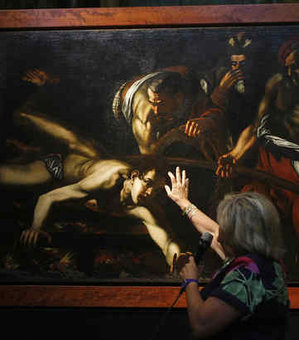
ROME – It seemed too good to be true: the discovery of a new painting by Caravaggio during celebrations marking the 400th anniversary of his death. It turns out, it probably was.

Scholars unveiling the painting Tuesday concurred that Martyrdom of St. Lawrence did not look like a Caravaggio, but rather like the work of one or more of his followers. This week, the Vatican newspaper, which first suggested the canvas could be the work of Caravaggio, shot down its own report and retracted the claim.

The work will still be subjected to analyses to ascertain its attribution. But experts held out little hope of its authenticity.

“It’s a very interesting painting but I believe we can rule out . . . that it’s a Caravaggio,” said Italy’s art superintendent, Rossella Vodret, moments before unveiling the painting in the Jesuit church where it has been for years.

The 72-by-51-inch oil on canvas is dominated by the figure of St. Lawrence being grilled to death before his three executioners. The painting features the dramatic chiaroscuro – high-contrast light and dark – typical of Caravaggio and his school.

The Vatican newspaper L’Osservatore Romano set the art world aflutter last week with a front-page article headlined “A New Caravaggio.” The article made clear that no certain attribution had been made and that further tests were required. But the definitive-sounding headline and the fact that the claim was made on the day marking the 400th anniversary of the master’s death had raised expectations.

The newspaper reversed itself Monday with an article by the Vatican’s top art historian shooting down the claim. Under the headline “A New Caravaggio? Not really,” museums chief Antonio Paolucci wrote that the work was not of Caravaggio’s quality and termed it “modest” at best.

Scholars said the painting is uneven artistically, with some beautiful elements and some parts they didn’t hesitate to call “very poor” and even “embarrassing.” This suggested that two different people may have worked at it, though it is not certain.

Experts believed the work may have been done by a follower, likely in Naples, Sicily or Malta – places where the painter, who rarely signed his paintings, spent time during his tumultuous life. A notorious brawler, he died at 38 in a Tuscan coast town in 1610, in mysterious circumstances

Artists in residence

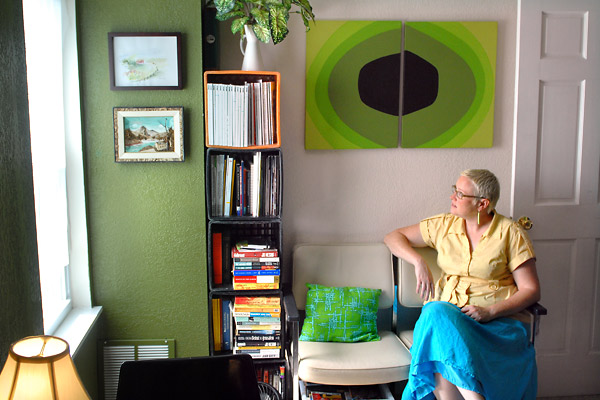
Krista Peel and Zak Starer live what they call “the perfect life.” Until eight months ago, that meant handing over their West Philadelphia apartment to complete strangers every two weeks while they stayed with friends. These days, the young married couple still share their space with others – only now, they don’t have to leave home to do so. As founders and codirectors of the Philadelphia Art Hotel, Peel and Starer run a rent-free artist studio and residency out of their spacious East Kensington rowhouse. In return for two to six weeks of housing and studio space, the artists need only donate some of their work to the house, making an already vivid interior color scheme abundantly rich. (The bright yellow window frames of the Art Hotel already stand out on the city block.) But during the six months of the year when they host their carefully chosen pool of 12 to 16 national and international artists, Peel and Starer also reap other, intangible benefits. “When I think about my perfect day, it includes making art a part of my lifestyle,” said Peel, 36. “Zak and I are both artists, so we wanted to be connected to other artists and talk about artwork on a regular basis. But we didn’t want to run a gallery – we wanted a more private space.” Hoping to model the program after residencies in which they had both participated, Peel and Starer started looking for property in 2007 near where they were living in San Francisco, but couldn’t afford the square footage they wanted. They moved to Philadelphia two years ago and found what they call “a thriving undercurrent of people in the local art scene.” In that West Philadelphia apartment, the couple still didn’t have the space they needed to comfortably host other artists. But they did it anyway. “We’re definitely of the mind-set of just finding some way to start rather than wait for the situation to be perfect,” said Starer, 28, originally from Philadelphia. “There’s never going to be enough money, time, space, or any of those luxuries, so we decided to just dive right in and get started.” After a year of providing residencies in West Philadelphia (and having to camp out elsewhere every time they did), Starer and Peel were able to buy their house, aided by the first-time homebuyers tax credit, for about $151,500, according to Philadelphia tax records. Today, the house is divided into separate living areas – the upstairs holds a kitchen and three living and studio spaces, each named after the color of the brightly painted walls. Peel and Starer live in a modest first-floor area. The couple use their own funds to sustain the Art Hotel (they clean in between visits and provide sheets and towels), while artists pay for transportation and food. Peel teaches jewelry-making classes part time at a senior-care facility in West Philadelphia and sells artwork on the handmade-sales website Etsy, while Starer works at Moore College of Art & Design as a photo, video, and printmaking tech. They don’t receive any grants or other funding, which necessitates “being resourceful, reusing materials, and keeping things simple,” Starer says. Both are fairly handy, and the utility bills during the warm months – when artists stay – are not significant. For visiting artists, the opportunity to change scenery for next to nothing is enticing. That was one of the things that attracted Caleb Lyons, 28, who works in painting, sculpture, video, and performance art, and found out about the Art Hotel from a friend who attended Temple University’s Tyler School of Art. “It’s hard for me to picture paying to go to another studio – that could be gratifying if you’re making enough money to afford that, but that hasn’t been the situation I’ve been in so far,” said Lyons, of Des Plaines, Ill., who lived at the Hotel until July 17. “But it’s important to get out of your studio and see things differently. “There’s a saying that ‘the true artist is never on vacation,’ although,” he says, grinning, “it can easily be flipped to say that ‘the true artist is always on vacation.’ ” Peel and Starer also encourage artists to interact with the Kensington community through lectures and collaborations. Lyons and Kathryn Scanlan, a writer and video artist, along with the Art Hotel’s other July artist, Elana Mann, presented a collaborative video screening in mid-July in a vacant lot. But while Scanlan prepared, she was approached by neighbors who were curious about what she was doing. “This has been a really interesting neighborhood to stay in,” Scanlan said. (Next up is an artist talk with the newest artist-in-residence, Danielle Rante from Dayton, Ohio, at 7 p.m. Aug. 5 at Coral Street Arts House, a nearby exhibition and event space.) All are committed to a full-time artist’s lifestyle. Mann, 29, of Los Angeles, a video and performance artist, teaches part time and has received several grants to fund her collaborative art-making. Scanlan, 30, and Lyons used to run a gallery out of the basement of their Chicago apartment. “We’re pretty poor and we just kind of scrape by, but we do what we need to,” Scanlan said. She and Lyons currently run an informal conceptual-art residency program from their house in Des Plaines, and say they dream of someday starting a commercial gallery and running it “as artists, not as typical gallery owners or dealers.” Other programs in Philadelphia offer some combination of residency and studio space for free, but few are as flexible as the Art Hotel. The 40th Street Artist-in-Residence program in University City offers five artists free studio space for one year, but does not provide living quarters (and artists must live west of the Schuylkill). Others, like Kensington-based gallery collaborative FLUXspace, provide limited artist-in-residency options on an as-needed basis, but don’t yet have a formal program set up. The Art Hotel provides the widest range of options for artists who want to combine living and studio space. “We’re kind of the middleman,” said Starer. “We don’t do this for money and will probably be doing something like it ad-hoc for the rest of our lives, so I guess you could say it’s a romanticized notion of providing a place for pure art-making.” An Art Hotel residency can also result in new connections and a new outlook on art as a lifestyle. “In art school, you learn about the gallery track, but that’s very different than living an artist’s lifestyle,” Peel said. “I just hope through this residency program I can help make it known that there are other options for doing art.” Starer says their 10-year plan is constantly evolving as they carve out their own niche in the local art scene. “You can’t ask much more than that from an art practice.”

“Past Forward: African Spirituality in Contemporary Black Art”

The Sargent Johnson Gallery in San Francisco, CA, is showcasing a special exhibit, entitled “Past Forward: African Spirituality in Contemporary Black Art.”

This exhibit is a shout out to African rituals and magic, through contemporary art. Says one of the artists, “Through my art, I want to be a shaman… that shows others how to reach the other side of emotional and psychological pain.”

That’s deep. So is the visual art which is multifaceted and inspires the admirer’s contemplation.

Admission is $2-$5 and the exhibit shows until Thursday, August 19th.

Oprah and Bernie Mac’s Favorite Black Artist

If pictures are worth a thousand words, then self-taught artist Kevin A. Williams has created enough elements of love, intimacy and passion on canvas to write a book. The sensual art that he creates is among the most contemporary African-American art of our time. Williams combines acrylic and air brush techniques to speak to different generations of people. He enjoys expressing love, community and the family through his paint and brushes. Williams, thirty-something, and best known by his reversed initials, WAK, stays busy creating mixed-medium pieces inspired by his coming of age during the ‘70s and ‘80s (a time when music inspired major cultural shifts in fashion and art). While still in high school, he was very much aware of the cultural shift.

Williams’ artistic talent was recognized early. At age 15, he realized that painting was what he would spend the rest of his life doing. He was truly fascinated by painting, and stayed long hours in his studio to polish his talent. He then launched his career as a commercial artist. His talent earned him numerous honors including three National Scholastic Awards, and a coveted ACT-SO Gold Metal. His debut print, “Taking Her Back,” the first in a five-part series, pays homage to the beauty of black love with muted, natural tones and an emotionally charged scene. This piece conveys the respect and honor that the black man should hold for black women. “We are powerful people and there are certain messages I try to portray,” says Williams. “I try to capture the elements of love.” He reminisced about the ‘70s: The romanticism, music, culture and black folks making a statement. “I paint my music,” he says, referring to Marvin Gaye, Earth Wind & Fire, and Maxwell. His paintings reflect the process of a relationship (a man meeting a woman, to magnificent love, to having a family).

Black Women’s Art Festival


The kick off of the 7th Annual Black Women’s Art Festival (BWAF) will take place July 29th-August 1 @ The Rotunda, 4014 Walnut Street, Philadelphia, PA 19104 For more info check out their website

Art After 5

Friday evenings take on a whole new groove with Art After 5, at the Philadelphia Art Museum, located at 2600 Benjamin Franklin Pkwy, Philadelphia, Pennsylvania. A unique blend of entertainment from 5:00–8:45 p.m.** in the Great Stair Hall. With an eclectic mix of international music on the first Friday of each month, and recognized and emerging jazz artists performing all other Fridays, it’s a stylish way to start your weekend. This Friday Toni Miceli Tribute to Modern Jazz Quartet. For more information, please contact Evening Programs/Art After 5 by phone at (215) 684-7506 or by e-mail at artafter5@philamuseum.org

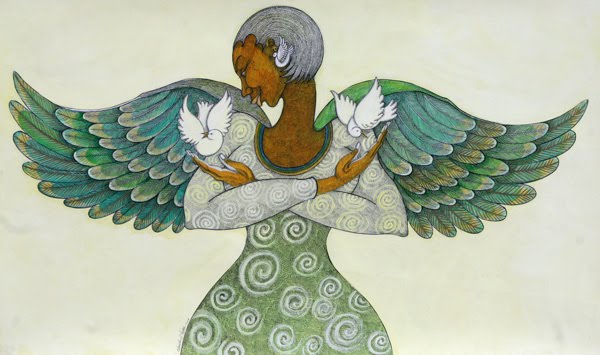
The Angel of peace – Angelic Collection by Charles Bibbs

The fifth in“Angelic Collection” series
Giclee on Paper
Limited edition size=100
Remarque edition=25

Image size=20.5″h x 34″w

Charles Bibbs

An artistic genius educated in and a native of Los Angeles Bay Area, Charles Bibbs creates his special brand of stylized art capturing the attention of art enthusiasts around the world. Charles Bibbs noble compositions and signature technique fuses acrylic paint and ink coupled with African and contemporary African American themes. The art of Charles Bibbs is born through a creative process which comes from a level of spirituality and commitment to empowerment in the African American community.

Back to Art for Sale

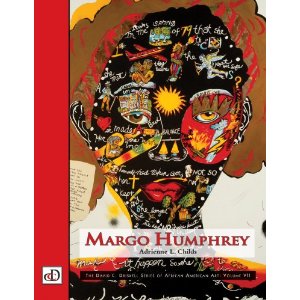
Margo Humphrey (The David C. Driskell Series of African American Art)

In Margo Humphrey, Adrienne L. Childs explores the career of one of the most inspiring artists and printmakers of our time. Best known for her “sophisticated naïve” style, Margo Humphrey (b. 1942) transforms personal experiences into narratives that speak to the human spirit. Bold colors and flat planes intertwine using the artist’s unique iconography to address issues of race, gender, spirituality, and relationships. Part autobiography and part fantasy, Humphrey’s work alludes to the correlation between the temporal and the spiritual as they coexist in her world.

Humphrey employs visual metaphors to channel her experience growing up as an African American woman. Everyday objects become recurring symbols in her prints: zebras embody the strength of her heritage; a plate of yams represents nourishment or survival. Whether celebrating her childhood or confronting her personal fears, Humphrey’s artwork navigates her life story to convey hope, possibility, and love.

Margo Humphrey presents over forty-five color plates, from the artist’s early abstract art through her groundbreaking lithographs in the figurative narrative style. The text by Adrienne L. Childs considers the memories and events that inspired Humphrey’s powerful oeuvre, and the foreword by David C. Driskell places Humphrey in the forefront of contemporary printmaking.

Since Humphrey’s first solo exhibition in 1965, her art has been exhibited and collected worldwide and now resides in the collections of the Museum of Modern Art, the Smithsonian American Art Museum, the National Museum of Women in the Arts, and the Victoria and Albert Museum. Humphrey has lectured and taught across the world and is currently a tenured professor of art at the University of Maryland, College Park.

ADRIENNE L. CHILDS is curator-in-residence at the David C. Driskell Center for the Study of the Visual Arts and Culture of African Americans and the African Diaspora at the University of Maryland, College Park. She received her PhD in nineteenth-century European art from the University of Maryland, College Park, as well as an MBA from Howard University and a BA from Georgetown University. Dr. Childs specializes in twentieth-century African American art, as well as race and representation in eighteenth- and nineteenth-century European art. She teaches African American and European art history and is the author of Evolution: Five Decades of Printmaking by David C. Driskell (Pomegranate, 2007).

DAVID C. DRISKELL is Distinguished University Professor of Art Emeritus, University of Maryland. A noted artist, curator, scholar, and lecturer, Driskell received the National Humanities Medal from President Bill Clinton in 2000. His paintings were exhibited in 1993 at the American Academy of Arts and Letters and are in many public and private collections worldwide.

more>>>>>>>>>>>>>>>>>

Connecting People With Art : African American Art by October Gallery

“The book is amazing,” said Walter Shannon, who owns The Famous E&S Gallery, 108 S. 10th St., with his wife, Cathy. “I think it does a great job of researching black art into the 21st century, and helps expose a lot of newer artists, and a lot of dealers who have made these artists successful. It gets into Alonzo Adams and William Tolliver and Paul Goodnight but also has Joshua Johnson, Romare Bearden and Jacob Lawrence.” –Courier Journal, Louisville, KY

This book is a written account of what October Gallery (OG) means to us. We attempted to unfold the saga of how OG evolved over time. In addition we queried patrons and artists alike: “What is the value of African American art to you?” Their personal responses, interesting and insightful, are included throughout our story. Both our national and international patrons and artists have witnessed (first hand) the creation and development of the African American art industry, which prior to the 1970s was almost non-existent. This group of patrons and artists are part of what we call “BlackStream Renaissance”. Most African American artists market and exhibit in the African American community. Successful African American art festivals and expos, where artists sell and exhibit, recognize the importance of marketing to this special community. It is in this community where the strength and the value of African American art begins. It is this community that has provided the foundation for Blackstream Renaissance. It is this community that has given us the content, the material, the stories for “Connecting People with Art”. This book recognizes the pioneers of Blackstream Renaissance.


more>>>>>>>>>>>>>>>>>>>>>>

The Other Side of Color: African American Art in the Collection of Camille O. and William H. Cosby, Jr.

David C. Driskell’s easy-to-read and thorough critique of the African American art experience—the other side of color—breaks new ground in presenting almost one hundred selections from a unique art collection that provides the context for this book.

First is an overview of the history of African American art–which in this country predates the Civil War–and a detailed explanation of the raison d’etre behind the Cosby collection. Part 2 discusses five prominent postcolonial African American artists who lead the way for future black artists and the struggles they overcame to promote cultural emancipation and acceptance in the American mainstream.

Subsequent parts reveal how African American artists continued the quest for recognition, culminating in the turning point of black culture in the twentieth century in the United States: The Harlem Renaissance. Throughout the discussions within each of the book’s six parts, beautiful full-color artworks from the Cosby collection highlight and validate Driskell’s writing. Rene Hanks’s biographies add even more information about the featured artists as well as indicate the locations of the major collections of their works.

more>>>>>>>>>>>>>>>>>>>>

Is Blackface Racist, Bad Taste or Art?

Pundits are asking whether some folks may be taking this post-racial thing a little too far.

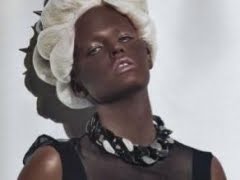
A year after Vogue Italia published an edition featuring all-black models to draw attention to the lack of opportunity for black women on high-fashion runways, the French edition of Vogue put a model in blackface.

An episode of “America’s Next Top Model” took the contestants to a sugar cane field in Hawaii and, after a short explanation of immigrants coming to work in the fields, race mixing and the resulting mixed-raced children, the models were assigned mixed heritages and colorized with makeup to create the images and ethnicities that Banks admitted may not necessarily have been culturally accurate, but were a fashion “interpretation” of what their blends could look like.

An Asian, for example, was dressed as half-Botswanan and half Polynesian.

You get the picture.

Last month, Harry Connick Jr. nearly walked off the set of an Australian TV show he was guest-judging when a group parodying the Jackson Five came onstage in blackface. Two months ago, a lead character in the hit, 1960s-set drama “Mad Men” performed a song in blackface.

Is it racist, bad taste or a bit of artistic license?

Gazelle Emami, writing on The Huffington Post, said Banks went from over the top to offensive with the lastest stunt.

“Call it what you want, but that’s basically a euphemism for putting them in blackface,” Emami wrote.

But others disagreed.

“I don’t see this as blackface,” cultural critic Michaela Angela Davis told BlackAmericaWeb.com in an e-mail. “Perhaps a little lacking in substance, like why didn’t each model have to research the cultures or at the very least have a ‘mood board’ of images of the cultures they are interpreting, which most seasoned photographers and editors do? But, alas, this is reality TV and a new photographer, though not new in fashion.”

Davis, in an opinion piece for Essence.com, said the real post-racial news is in the power that First Lady Michelle Obama exhibits as a fashion icon and how it turns the table on how black women can now be viewed.

“Much of white mainstream identity has benefited from and counted on black women being portrayed as sick, poor, ignorant, abused and sexually deviant or just a loud, hot ghetto mess. Our pitiful position secured, and in some ways created, their position on the pedestal. What now? Is it really time for the white standard of beauty to step off?” Davis wrote.

“When the identity of an entire culture and industry is dependent upon the negation or the degradation of the beauty or even existence of another, (there was not one featured black model in Vogue‘s historic September 2007 issue, its biggest ever) what happens when that very image is dominating media all over the world? What happens when a society addicted to the image of white women is faced with the inevitable existence of Michelle Obama representing many other women like her?”

And while Mrs. Obama no doubt is helping change many folks’ definition of black womanhood, there are still images out there making it hard for black women to be seen at all.

“I feel like we’ve gone backwards,” Susan Gordon Akkad, senior vice president for corporate marketing for Estee Lauder Companies, Inc., said of Vogue’s decision to put Dutch model Lara Stone in blackface.

There are fewer black models on the runways and in fashion magazine spreads, yet, Akkad said, there was a time when black models were designers’ muses.

“There was Naomi (Campbell) front and center; there was Veronica Webb,” Akkad told BlackAmericaWeb.com.

“Part of it is the way models are cast is different. They are chosen by casting …..

more>>>>>>>>>>>>>>>