Tell Us what you’re thinking.
Comment on our site. Like / Dislike?
What would you like to see us add or subtract from the site?
Are there events we need to cover?
Are there artists we need to include?
Sound OFF
Thanks
October Gallery
The Color We See But Don’t Speak: How Race Impacts Our Kids
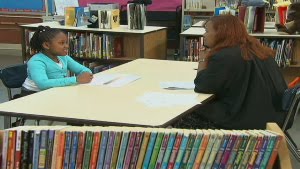
This week Anderson Cooper 360 is airing a four-part series on a CNN commissioned study that examines how children view skin color. The results of the study, led by University of Chicago professor Margaret Beale Spencer, show that white children show a high bias towards white skin, and black children show a less, but still significant bias toward white skin as well. The children who were subjects of the research were in two age groups, 4-5 and 9-10.
I must say that the study, while heartbreaking, is not surprising. I am the mother of two African American boys, ages 4 and 6. In our household we talk about race frequently, we celebrate African American literature, music, and art. We teach appreciation for our culture and other cultures. We immerse them in the beauty of our ethnic tradition. However, even with all of this deliberate effort, it is a serious uphill battle to work against the image of race they are exposed to on a daily basis.
My elder son repeatedly comments on the marginality or complete absence of Black characters in virtually all children’s television programming except what he, of his own accord, calls “black shows.” He already knows that he is designated as the sidekick in this society. So do his classmates.
But more than that, he knows that for Black characters, lighter skin is valued, particularly on programming for tweens. It is even more dramatic for girls. I cannot recall the last time I saw a brown or dark skinned black girl on a mainstream children’s television show besides that lone wolf of racial inclusion Sesame Street. Even when the parents are dark skinned, the girls are significantly lighter. The same issue exists in advertising in children’s magazines and catalogs.
When Harry Reid’s comment about Obama’s light skin and absence of “Negro dialect” hit the media, my first thought was of children and how they probably also knew that Obama’s lighter skin made a difference to many of the adults around them. After all, it clearly matters when it comes to the celebrities we teach them to admire, and even for the cartoon characters we entertain them with.
What happens on television and in print media gets repeated out in the world. I recently took my boys to the beauty supply store one day because I needed to buy some barrettes. They marveled at the rows and rows of long flowing wigs and weaves in this store catering to Black women. In that moment they learned that for many Black women hair that looks and feels like something completely different from what grows out of their heads is vastly preferred. And they were being taught something about what the world considers beautiful. How much will it matter, I wondered, that I model a celebration of our hair and skin, with a world speaking against me?
There are times when, at the bookstore, we have opened children’s books dedicated to some hero in African American history, and found the troubling phrase “a good slave master” as in “Henry Box Brown had a good master” as though there wasn’t a fundamental evil to holding people in life long inherited bondage. What does it mean to a Black child when we soft pedal the most inhumane feature of the Black experience in the United States?
My children are often witnesses when we (parents, grandparents, other adult caretakers) experience racist micro-aggressions: the change that is dropped on the counter instead of returned to the hand, the failure of retail sales people to make eye contact, the clutched purses, the rude responses, the greetings that we offer that are not returned, the clerks who follow us in stores. They see the adults who love and care for them, who diligently teach them to be kind and respectful and hard working, treated unfairly on the basis of race. This experience is normal for children of color in the United States.
All of our children see race. They see the differences in the way we are depicted and treated. They see the gaps in our socioeconomic conditions that are so highly influenced by race. When we don’t talk to them about race and inequality, the only way they have to make sense of it all is to assume that there is a greater human value for those who by accident of birth are white.
I am a professor in the Center for African American Studies at Princeton University. By the time I get to talk to young people about race they are on the brink of adulthood. They are formed in many ways. But each day in the classroom with them yields so much. My students are bubbling over with the desire to learn, understand and make sense of race: this taboo subject that has been around then every single day. I immerse them in a great deal of scholarly research and analysis of race, to allow them to develop deep understandings of how it has operated and how it continues to matter. I am appreciative that these conversations are a central part of my life’s work. However, I hope that this CNN series will encourage parents, schools and community organizations to begin these conversations with young people sooner, to demand better from our media and our communities, and to continue to educate ourselves along with our children, about race.
source: Huffington Post & CNN
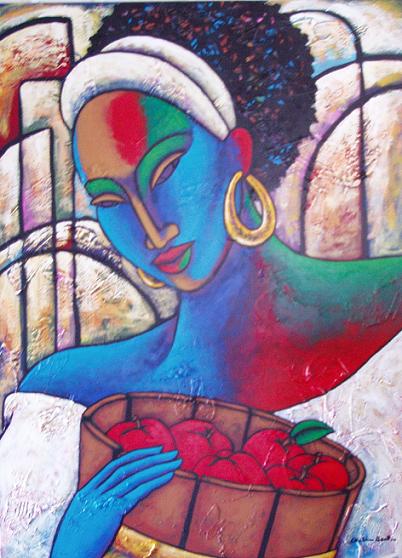
New Art from LaShun Beal
Basket of Apples
Giclee on Paper or Canvas
Edition size= 50
Image size=18″w x 24″h
$150
LaShun Beal, born in 1962, is a native of Detroit. He now resides in the Houston, TX area. Although he’s taken a few classess, he has no formal art training and really considers himself to be a self-taught artist. Beal was adventurous in his youth and wanted to see the world. Joining the United States Marines gave him a great opportunity to do so.
Beal’s subject matter revolves around female subjects. His style depicts the many differences of African American women. Over the last few years he’s developed his signature Universal Women character which has came to be associated with his name.
more…
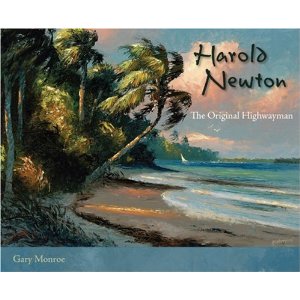
The Florida Highwaymen Artists were the beginning of Florida’s contemporary art tradition, and are credited for the beginning of the “Indian River School” art movement. They developed their own individual techniques and captured waterscapes, backcountry marshes, and inlets the way they were before recent tourism develpments. From the beginning, there were people who collected Florida Highwayman art and paintings. However only in recent years has the recognition of their skill and their story caused their paintings to skyrocket in value. In 2004, twenty-six individuals were inducted into the Florida Artists Hall of Fame as “Florida Highwaymen.”
The following is a list of the Florida Highwaymen Artists:
Curtis Arnett
†deceased
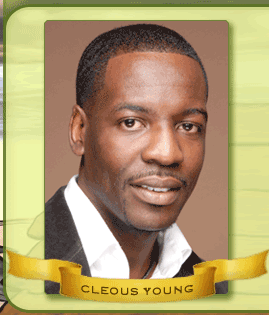
Cleous Young, aka CY, is the creative thinker behind the brand The Mountain of Miracles. Young has not only introduced the market to an interactive CD-ROM, but also one that is Eco-Friendly. Young’s new vision is to produce books and other products that are friendly to our environment. Cleous Young has a new love and passion for the Earth, Education and the act of Faith. Therefore, he is creatively adding these three impactful elements in his products and endeavors, which correlates to the God given Purpose of his life.
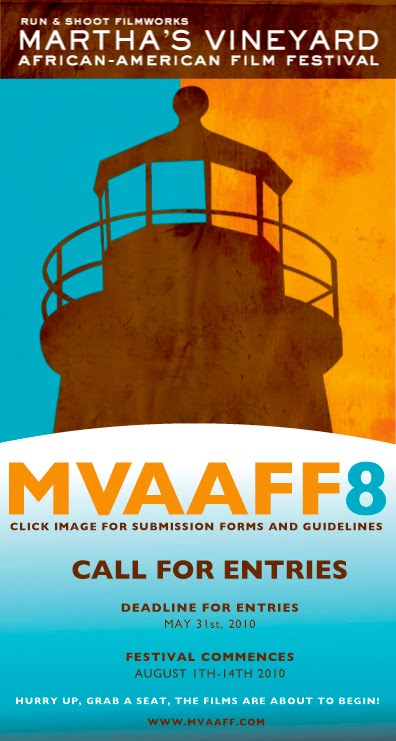
The Martha’s Vineyard African American Film Festival
The film festival is August 11th – 14th
Stephanie’s enthusiasm for event planning combined with Floyd’s passion for filmmaking was the foundation for Run and Shoot Filmwork’s Martha’s Vineyard African-American Film Festival. Founded in 2001, the festival is one of the fastest growing film festivals in the country.
In 1999, Stephanie became the Marketing Director at Larry Flynt’s CODE Magazine, a short lived lifestyle magazine for men of color. Her marketing impact was immediate as she created strategic alliances with top-notch celebrities and luxury brands. It was there that she realized that her calling was in event planning.
She eventually formed her own pr/event planning company (Crescendo) and worked extensively with such clients as Martell Cognac, Biz Markie, HBO, Showtime and Vangaurd Media.
Upon graduating from Howard University, Floyd immediately began working in the camera department of acclaimed director Spike Lee on the film “Mo’Better Blues”.
After working on the 1st season of the award winning television drama “Law and Order”, Floyd continued working with ASC Cinematographer/Director, Ernest Dickerson and Spike Lee on features including “Jungle Fever”, “Malcolm X” and “Clocker”.
Mr. Lee began to use Floyd as his cinematographer on special projects and music videos such as Gangstarr’s/ “Loungin” and Sony Music’s State of Art / “Beating Heart” music video which was photographed in Paris, France. Floyd is also credited on feature films Malcolm X and Get on the Bus, having shot additional footage.
Additionally, he photographed comedian Chris Rock’s short film and directorial debut entitled “Too Nice” and a Anti-Violence PSA for HBO featuring Academy Award Nominee Queen Latifah.
Having worked on several feature films, award winning music videos and episodic television, Floyd segued into the television commercial arena.
After several years of study, Floyd has begun to flourish as a Commercial Director/Cinematographer. An avid sports fan, he photographed and directed several spots for the NBA Playoffs for NBC Sports.
Since establishing his creative outlet, RUN AND SHOOT FILMWORKS, INC., Floyd Rance has proceeded to produce outstanding visual work for several clients including, HBO, Martell Cognac, Reebok (Allen Iverson and NY Giants) and Footlocker.
For more information click here!!
This personal look at the New Orleans artist’s life, art work, journey and private reflections examines both John Scott’s art practice and the people he influenced. Included are artist Bill Pajaud (who corresponded with Scott on napkins;) good friend and musical influence, Ellis Marsalis; artist Dewey Crumpler; artist Richard Wyatt, and other contemporaries who shared journeys together through notes, film clips, letters, intimate photographs and videos. The music he listened to in his studio resonates throughout the exhibition. This prolific artist worked in a wide variety of media and the exhibition includes lyrical sculptures, paintings and four by-six-foot woodcut blocks used to make large-scale prints.
This exhibition has been made possible through the generous support of Roosevelt and Paula Madison.

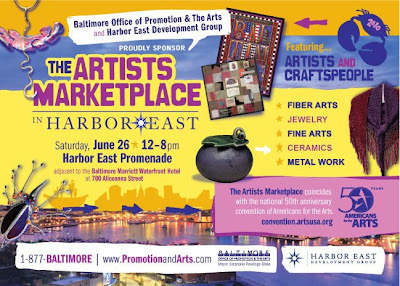
Baltimore Events and Festivals 2010
Baltimore Farmers’ Market & Bazaar
Fresh fruits, vegetables, breads, smoked meats, cheeses, arts & crafts, and more fill the state’s largest producers-only market, Sundays, May 2-December 19, 7am-sell out (usually noon).
All events for 2010 more…………….
As a complement to Road to Freedom, The Bronx Museum will also present AFTER 1968: Contemporary Artists and the Civil Rights Legacy. This smaller exhibition includes works from seven African-American, emerging artists and collectives—all born on or after 1968—who have created new work examining the heritage of the Civil Rights Movement and its affect on the lives of this new generation. Using the movement as inspiration, context or critique, these artists address their own personal understanding of race, identity, American violence, and political activism providing new perspectives on and discourse about this critical time in history.
This was a video conference at the Philadelphia International Art Expo. October Gallery. In 2000 October Gallery produced a video conference with artists Dr. John Biggers and Dr. Samella Lewis. This video conference was part of the annual Philadelphia International Art Expo.
Watch Video
Is Black Art Still Relevant?
Watch Video
Informal discussion on, Is Black Art Still Relevant in 2010.
African American Art.
Participants include: Gaille Hunter, John Williams, Elizabeth Nelson McCorkle, Evelyn Redcross, Aria Jones, Stan Burwell, Thaddeus Govan, Jr., Martina Johnson-Allen and Tanya Murphy.
Filmed at October Gallery Germantown, PA. May 9, 2010
Watch Video

Ghana High Fashion Madonna by Cal Massey
Original on Canvas
Size: 30 x 48 Approx
About the Artist:
MOORESTOWN-Cal Massey said that the wonderful images that appear on his canvases come to him during his daily meditations. He jots them on notecards and stores them in a filing cabinet that stands near the easel in his studio. “Everything in my work is spiritual,” the 80-year-old artist said. Entering the artist’s home/gallery studio on Dawson Street is almost a spiritual experience in itself. Messiah, a rendition of a black Christ as one with the earth, standing between the galaxies and the oceans, is the first painting a visitor notices. Near it hangs “Angel Heart”, which Massey considers one of his most popular works, inspired in part by the lack of black angels in traditional artwork. The angel’s hair, styled in a full Afro, is a tribute to the natural beauty of the black woman, Massey said. For years, Massey’s work has represented the black community in the art world. Now the artist, whose work already hangs on the walls of Congress members and rock stars, will see his work hang from the necks of Olympians. Massey was one of 13 artists from around the world chosen to design a commemorative medal for the 1996 ,Summer Olympics in Atlanta.

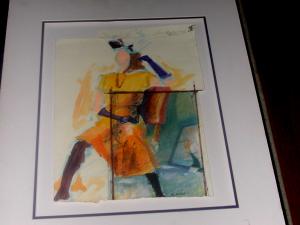
Untitled Study by Lois M. Jones
Lois Mailou Jones (November 3, 1905 – June 9, 1998) was a prize winning artist who lived into her nineties and who painted and influenced others during the Harlem Renaissance and beyond during her long teaching career. She was born in Boston, Massachusetts and is buried on her beloved Martha’s Vineyard in the Oak Bluffs Cemetery.
Dr. Jones began painting as a child and had shows of her work when she was in high school. “Every summer of my childhood, my mother took me and my brother to Martha’s Vineyard island. I began painting in watercolor which even today is my pet medium.”