S.W.A.G. (sharp with art group)

S.W.A.G. (sharp with art group)

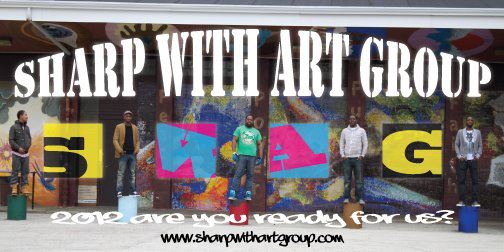
Sharp With Art Group (SWAG) is an organization of visual artists dedicated to creative artistic expression, community service, and freedom of speech. Founded in the summer of 2009 by six friends from the Philadelphia and New York art scenes (Tone Casso, Shiz, Neef, Rell Stylez, and Jae Martin)  SWAG was created out of the founding members awareness of the heightened interest in art throughout the country and the potential for a new artistic renaissance movement consisting of new young artists using their art to express themselves and their views of society. With all the  social ills in our world today, SWAG aims to use art as a tool for spreading the message of peace and respect for all cultures across the globe  to encourage a unified humanity.

Since its inception in 2009, SWAG has done a multiple number of art shows, live art appearances, professional art projects, TV appearances, and interviews. SWAG has grown into a movement that has expanded to include new members (The SWAG Family) and plans for a youth component called  Young SWAG that will encourage urban youth to use their art to guide them in positive productive direction.
The World is our canvas says SWAG members, and there is more blank spaces to paint.
read more…..

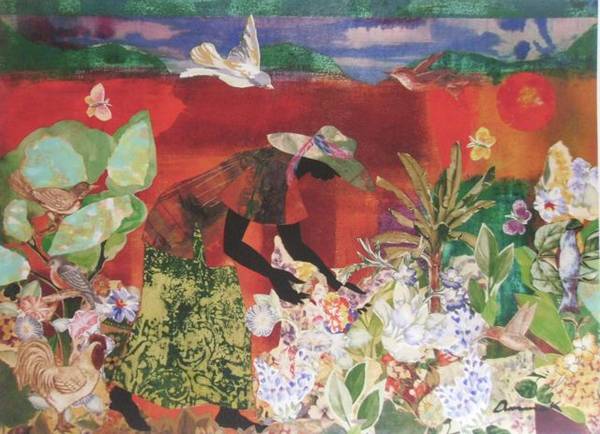
Glorious Mornings by James Denmark


In his studio in Yemassee SC, using brightly hand colored papers and found materials, Denmark creates compositions that go beyond the superficial and transitory. He focuses, instead, on what is eternal and universal. Denmark’s work is consistently and eagerly sought after by galleries and collectors worldwide, most notably New York’s Metropolitan Museum of Art.

     “Trust and faith creates confidence, which allows me to move forward with my work,” stated Denmark. “I leave everything to the spirits. I step back every so often to peek at found collage materials, and to ponder new possibilities. I am a party to improvisation, found materials, and the impact of color.”
Born in 1935, Denmark was exposed to color and form at an early age by his grandmother, a wire sculptor and quilt artist, by his grandfather, a bricklayer noted for his unique custom design molds, and his mother who was gifted with an intuitive feeling for design and a fastidiousness for detail which she expressed in all aspects of her daily life. While attending Florida Agricultural and Mechanical University in Tallahassee, Florida on a sports scholarship, he came under the tutelage of the artist and acclaimed African-American art historian, Dr. Samella Lewis, who exposed him to great traditions and accomplishments of the African -American art movement.

Denmark moved to Brooklyn, New York and began a career as an art teacher in the public school system, and from 1973 to 1976, earned his Master of Fine Art Degree at the prestigious Pratt Institute of Fine Art. Denmark met and was nurtured by an immensely talented community of artists, including abstract expressionists as Jackson Pollack, Clifford Still, and William DeKooning. The African-American masters Norman Lewis, Romare Bearden, Jacob Lawrence, and Ernest Crichlow instilled in him an appreciation of his African-American artistic heritage, and he began experimenting with collage. Prior to this period, he worked primarily in watercolors and charcoal.

James Van Der Zee (1886-1983)


Born June 29, 1886 in Lenox, Massachusetts, the son of Ulysses S. Grant’s maid and butler. After attending schools in Lenox, he went to New York City in 1906 and held a series of jobs as a waiter and elevator operator. From 1909 to 1915 he played in Fletcher Henderson’s band and the John Wanamaker Orchestra (and in an orchestra that accompanied silent films).
Attracted to photography, Van Der Zee got a job as a darkroom assistant, and after learning the fundamentals of photography he opened his own studio in Harlem in 1916. On the upper end of Manhattan, Harlem was only then becoming a haven for African Americans and during the next five decades he would photograph African Americans of all social classes and occupations. He took thousands of pictures – mostly indoor portraits, though he occasionally went out and photographed the Harlem scene.
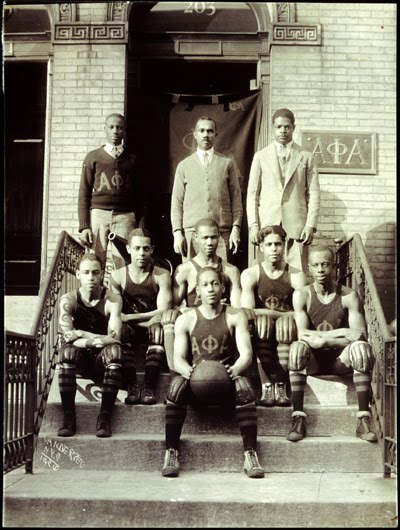
Although Van Der Zee photographed many of the African American celebrities who passed through Harlem, most of his work was of the straightforward commercial studio variety – weddings and funerals including pictures of the dead for grieving families, family groups, teams, lodges, clubs, or people simply wanting to have a record of themselves in fine clothes. He often supplied props or costumes and in his developing – which he did himself – he would add pictorial touches with an air brush or double-printed images.
Forgotten for many years, Van Der Zee had retired and was reduced to poverty when in 1969 the Metropolitan Museum of Art mounted an exhibition called Harlem on My Mind that brought him and his work renewed attention and rewards. He took up photography again in 1980 until his death.

The Renaissance Man (Gordon Parks)

The Original Renaissance man is one of his many titles.

The achievements of Gordon Parks alone, proves that any vision can become a reality if you take advantage of an opportunity, work hard and believe in yourself.

From birth, Parks went against all odds.

He came into this world as a fighter, still born and pronounced dead with no heartbeat. Parks was laid aside to be buried,  a shocking technique that included putting his body in ice-cold water brought him back to life.  And from then on, the legend continued to make his mark by reaching major milestones and going where others were afraid to explore.

Before his death he became an internationally-renowned photographer, filmmaker, poet, novelist and a composer. Parks was the co-founder of Essence magazine; he even wrote a ballet and dedicated it to the late Dr. Martin Luther King Jr.

read more……

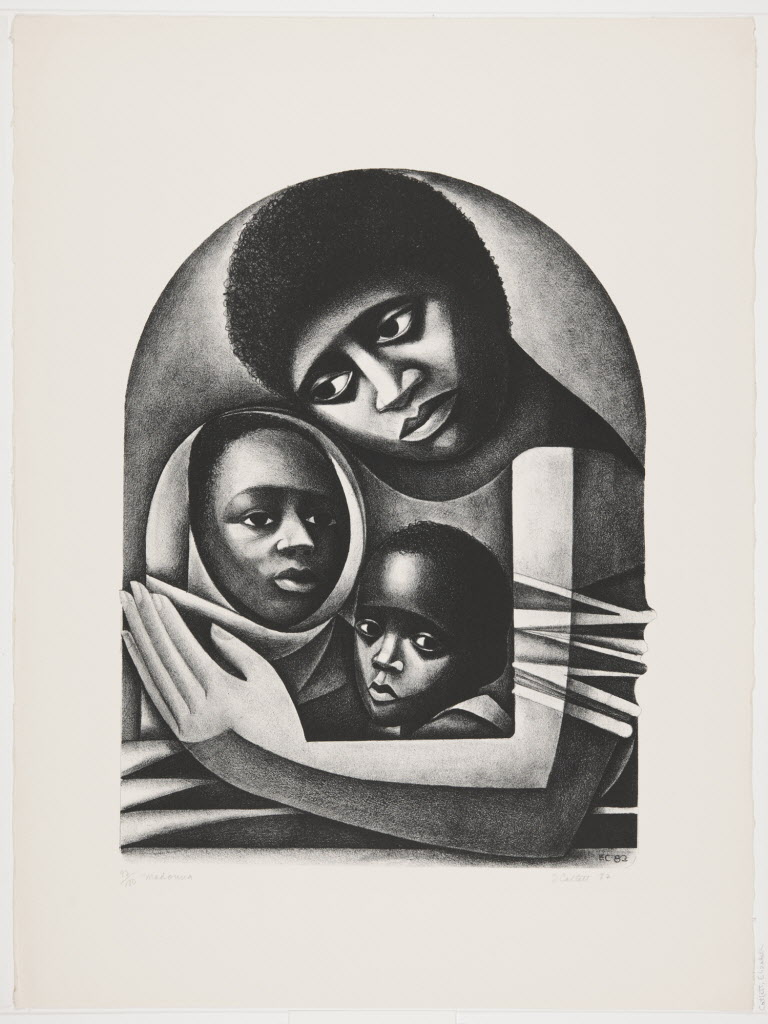
Three Friends by Ellen Powell Tiberino


The initial, and naturally most obvious aspect of Tiberino’s work, is her technique. Her people, and one can only think of them as the “people” in her work rather than the work’s “subjects,” seem beyond life-like: elongated figures; exaggerated, yet graceful and powerful hands; faces and heads emphasized, sometimes with little more than a suggestion of a body. Her people are strongly rendered, given a pulsating life-force through line, shape, and color. Her figurative style is unique, and her control over line and shape, hue and value is both complete and dramatic.

“KANDY” by Lorraine Daley is a POSTER. The original medium is a Photograph.


$40.00

“KANDY” by Lorraine Daley is a POSTER. The original medium is a Photograph.

It was created for “The Kandy Project” which happen in 2006 of a model living in Philadelphia who was a muse for 21 Different Photographers. This image is [1] of [56] images chosen for exhibition at three different galleries in Philadelphia: Lemuria Gallery (Manayunk), Sande Websters Gallery (Center City-Rittenhouse) and Sol Gallery (Old City). The model: “Kandy” was featured on the cover of the magazine section of the Philadelphia Inquirer and many other media outlets. To own this poster is to own a Treasure! ~ [Original prints are available. If Interested email: tkpcreativegroup@gmail.com]

read more…..

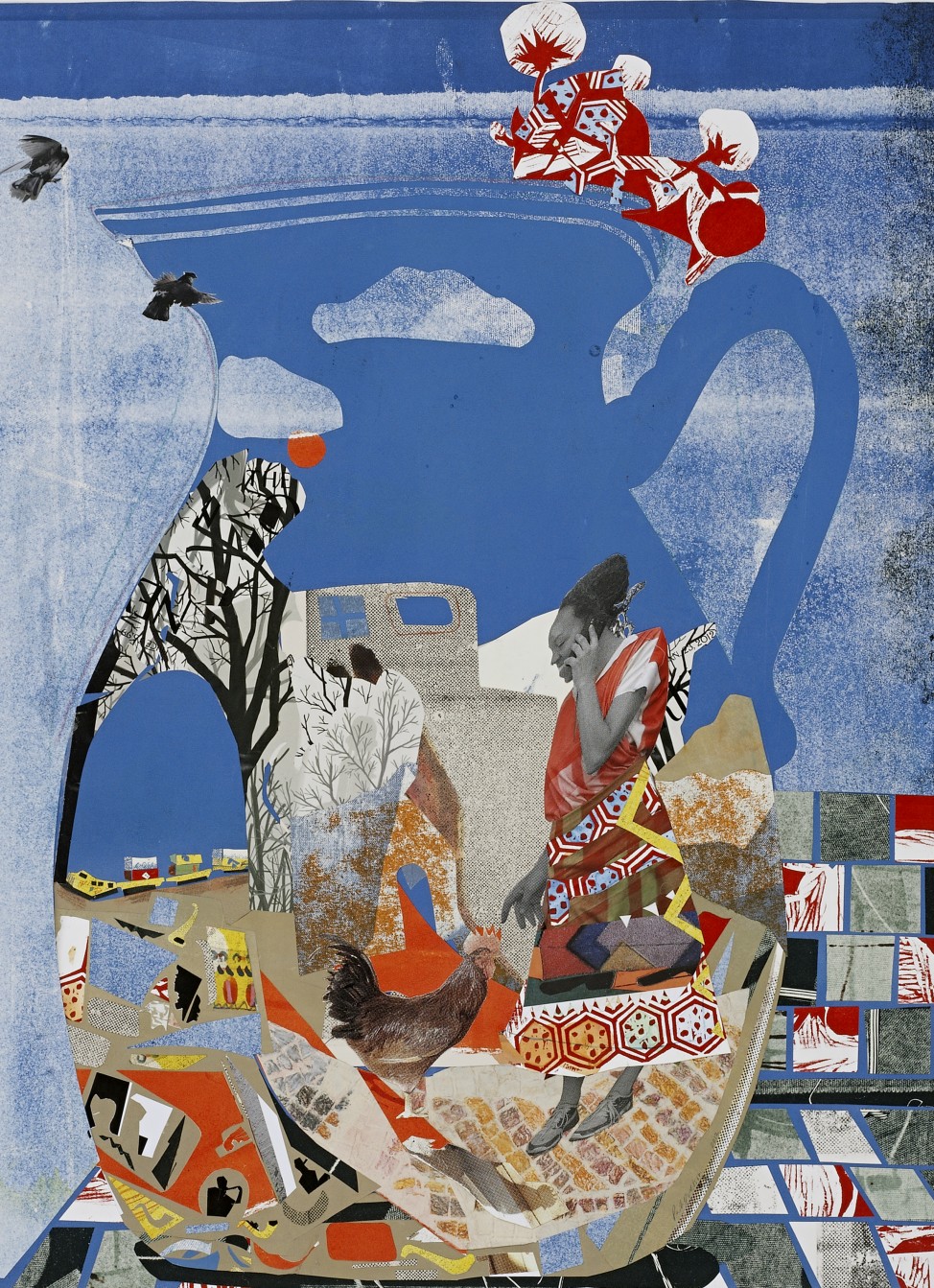
Pepper Jelly Lady Remixed, 2012 by Paula Wilson


I saw my first Romare Bearden collage at Washington University in St. Louis’s Kemper Art Museum. There was BlackVenus (c. 1968) sprawled on a patchwork couch in a room full of color, music and booze. I was transfixed not only by Bearden’s masterful design, but also by the world he depicts. Looking at a Bearden makes me dream of being inside one: I want to dance to his music and walk down his streets, I want to be the ladies bathing by the fire or lounging in the garden. I find even his most downtrodden and base representations of life alluring. There is a palpable energy bursting from Bearden’s oeuvre that renders all life exciting and vital.

When The Studio Museum in Harlem asked me to participate in The Bearden Project, I saw the opportunity to enter his world. In fact, this wasn’t much of a stretch. His depictions of the African-American rural Southern experience in many ways match my life in Carrizozo, New Mexico (in particular ThePepperJellyLady (c. 1980). Bearden’s iconic vocabulary is tangible to me—chickens and a rooster, a wood-burning stove, two fan-tailed pigeons, jazz on demand and a train blasting through town. In 2012, I, a modern black woman, can choose a life profoundly removed from the servitude of the past, yet still be closely connected to its visual exuberance.

read more….

John Bankston The Inventor, 2012


Organized as a group of autonomous installations, Shift presents work in thematic groupings, series of works by individual artists and focused looks at single works of art. Drawn from the Studio Museum’s permanent collection as well as special loans, the exhibition provides contemporary reflections on ongoing artistic ideas, themes and visions related to our mission. Highlights include work by artists Nayland Blake, Jennie C. Jones, Lorraine O’Grady, John Outterbridge and Jacolby Satterwhite, as well as recent contributions to The Bearden Project.

read more….