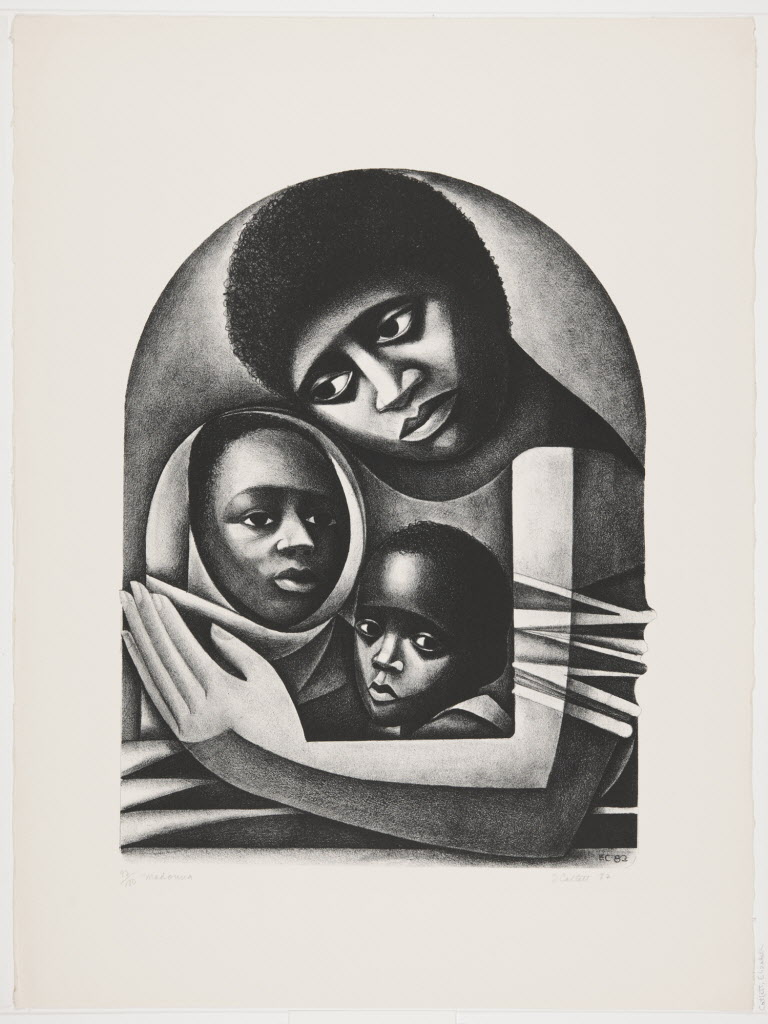
Three Friends by Ellen Powell Tiberino


The initial, and naturally most obvious aspect of Tiberino’s work, is her technique. Her people, and one can only think of them as the “people” in her work rather than the work’s “subjects,” seem beyond life-like: elongated figures; exaggerated, yet graceful and powerful hands; faces and heads emphasized, sometimes with little more than a suggestion of a body. Her people are strongly rendered, given a pulsating life-force through line, shape, and color. Her figurative style is unique, and her control over line and shape, hue and value is both complete and dramatic.

“KANDY” by Lorraine Daley is a POSTER. The original medium is a Photograph.


$40.00

“KANDY” by Lorraine Daley is a POSTER. The original medium is a Photograph.

It was created for “The Kandy Project” which happen in 2006 of a model living in Philadelphia who was a muse for 21 Different Photographers. This image is [1] of [56] images chosen for exhibition at three different galleries in Philadelphia: Lemuria Gallery (Manayunk), Sande Websters Gallery (Center City-Rittenhouse) and Sol Gallery (Old City). The model: “Kandy” was featured on the cover of the magazine section of the Philadelphia Inquirer and many other media outlets. To own this poster is to own a Treasure! ~ [Original prints are available. If Interested email: tkpcreativegroup@gmail.com]

read more…..

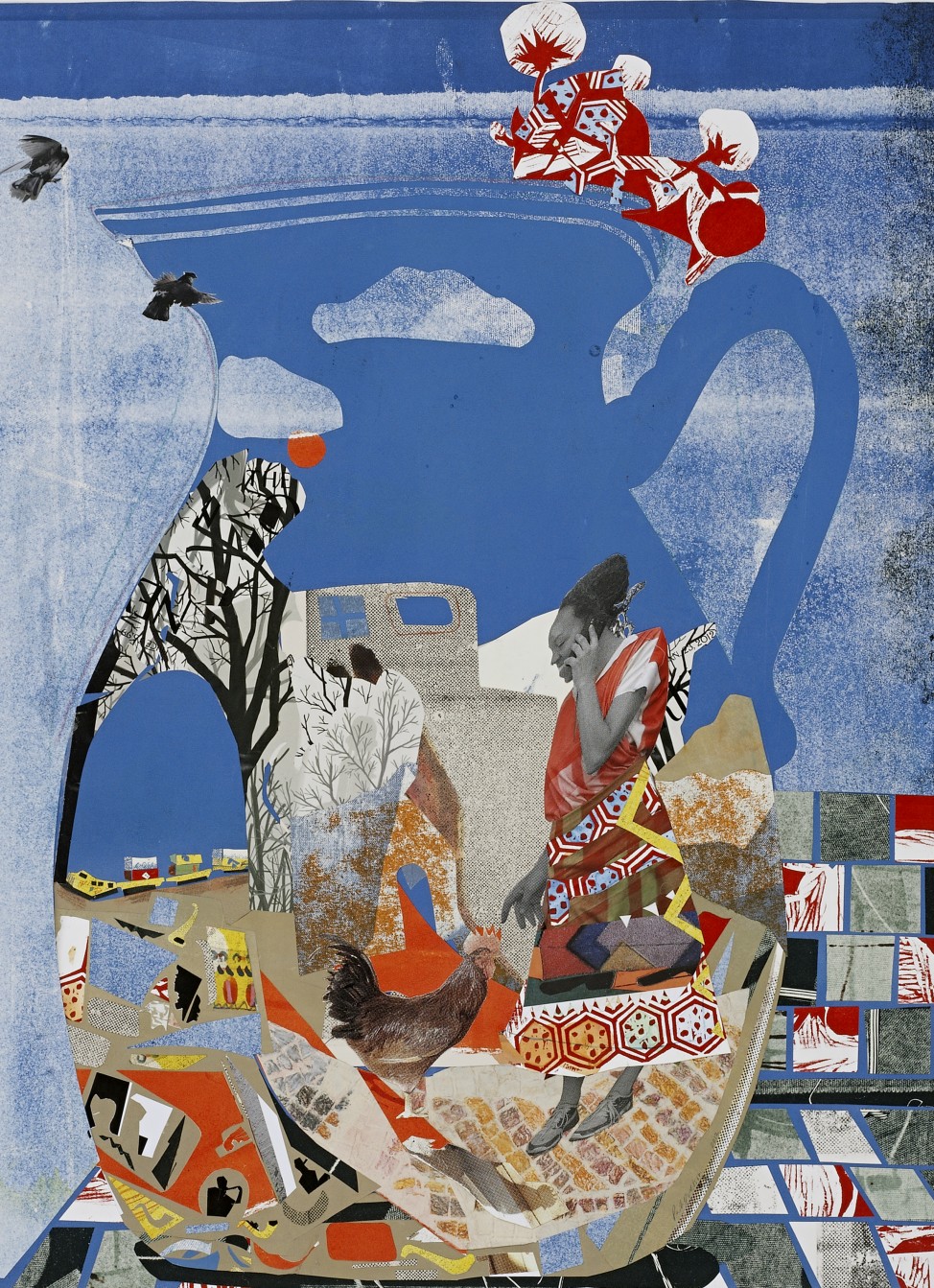
Pepper Jelly Lady Remixed, 2012 by Paula Wilson


I saw my first Romare Bearden collage at Washington University in St. Louis’s Kemper Art Museum. There was BlackVenus (c. 1968) sprawled on a patchwork couch in a room full of color, music and booze. I was transfixed not only by Bearden’s masterful design, but also by the world he depicts. Looking at a Bearden makes me dream of being inside one: I want to dance to his music and walk down his streets, I want to be the ladies bathing by the fire or lounging in the garden. I find even his most downtrodden and base representations of life alluring. There is a palpable energy bursting from Bearden’s oeuvre that renders all life exciting and vital.

When The Studio Museum in Harlem asked me to participate in The Bearden Project, I saw the opportunity to enter his world. In fact, this wasn’t much of a stretch. His depictions of the African-American rural Southern experience in many ways match my life in Carrizozo, New Mexico (in particular ThePepperJellyLady (c. 1980). Bearden’s iconic vocabulary is tangible to me—chickens and a rooster, a wood-burning stove, two fan-tailed pigeons, jazz on demand and a train blasting through town. In 2012, I, a modern black woman, can choose a life profoundly removed from the servitude of the past, yet still be closely connected to its visual exuberance.

read more….

John Bankston The Inventor, 2012


Organized as a group of autonomous installations, Shift presents work in thematic groupings, series of works by individual artists and focused looks at single works of art. Drawn from the Studio Museum’s permanent collection as well as special loans, the exhibition provides contemporary reflections on ongoing artistic ideas, themes and visions related to our mission. Highlights include work by artists Nayland Blake, Jennie C. Jones, Lorraine O’Grady, John Outterbridge and Jacolby Satterwhite, as well as recent contributions to The Bearden Project.

read more….

Heritage City, Africa

Africa’s First And Only African History Theme Park


The  African Kingdoms and Empires Theme Park and Holiday Resort is designed to showcase Africa’s rich history, enhanced with modern technology to produce a total experience in learning, entertainment and relaxation for tourists and visitors.

The African Kingdoms and Empires Theme Park or “Heritage City” project represents the best initiative to date to present all of Africa’s diverse culture and history to tourists and visitors in one sport. By its existence, it is hoped that Heritage City will attract wide range of tourists from all over the world.

read more….

Connecting Cultures

Children’s Stories from Across the World

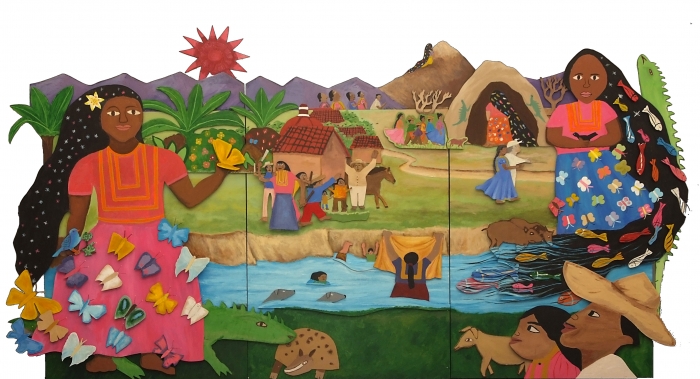
In 2010, the Frist Center for the Visual Arts partnered with ten Nashville organizations that represent cultures from around the world. The goal was to create an exhibition of artworks depicting the children’s stories of different traditions. Ten artists and the Frist Center’s community outreach team led workshops in which the artworks on view in this gallery were created. Connecting Cultures: Children’s Stories from Across the World begins with the premise that the stories of children simultaneously reflect unique cultural values as well as perspectives that are shared by people worldwide.
All the artworks were created by an intergenerational group of more than two hundred participants. With the guidance of the lead artists, participants acquired and developed skills relating to composition, visual storytelling, and ways of using visual art techniques as a way of reflecting and interpreting narrative stories. It was interesting to discover that even within the same culture there were often diverse interpretations of a single story, often leading to strong discussions amongst the participants. The artworks created for this exhibition are as diverse as the communities, participants, and stories themselves.
Our purpose in partnering with cultural organizations in Nashville was to give voice to the city’s growing and diverse population with the strong belief that we can, through art, look at our world in new ways.

Continue Reading »


Harlem Rose Print by Justin Bua at Art.com

Harlem Rose Print by Justin Bua at Art.com

 ON SALE AT Art.com 15% OFF

An offset lithography printing press gives this fine art print its vivid and sharp appearance. The standardized printing plates and proofing process guarantee that each print displays colors precisely as the artist or publisher intended. Produced on medium weight cover stock, this high-quality reproduction is coated with a silken finish that protects the inks and creates an elegant look. The versatile art print strikes a balance between quality and affordability. 

An Eye For Art – Learning to View and Appreciate Art

An Eye For Art – Learning to View and Appreciate Art

Learning to View and Appreciate Art
Here is a checklist with some key components for An Eye For Art.


Describe the Work of Art.

  • Try to determine what you see.
  • Is this a portrait, landscape, abstraction?
  • What is the subject matter?
  • Look at the artist’s work of art and determine approximately how many colors he or she applied in the art.
  • Try to ascertain what medium was used – brush, palette knife, pencil, collage, pastels, etc.
  • Is the art flat or do you see texture or relief in the art?
  • How would you describe the lines and shapes in the art?
  • Imagine trying to describe the art to someone who could not see it.

Analyze the Work of Art.

  • Does any particular part of the art interest you more so than other parts of the art?
  • Any dramatic areas that jump out at you?
  • Does this work of art remind you of anything in particular?
  • What would you say to the artist regarding the art if he or she were present?
  • Does the composition of the art seem balance?
  • What can be said about the objects, shapes or people in the art?
  • Is there movement in the art and if so how do you think the artist rendered that movement?
  • How is this art dissimilar from real life?
  • Interpret the Work of Art.
  • If you could name the art, what name or title would you give it?
  • What made you choose that title?
  • Describe the vibe or mood the art gives you.
  • Visualize yourself inside the art.
  • What do you feel? If possible, what sound would the art make?
  • What piece of this art do you believe for the most part fascinated the artist?
  • Why do you think the artist created this art?

Evaluate the Work of Art

  • What do you like or dislike about the work?
  • Did the artist accomplish what he or she set out to do in this work of art?
  • Did the artist do a good or bad job painting this piece of art?
  • Why do you think others should see this work of art?
  • Give the work of art a grade.
  • How did you determine that grade?
  • Would you purchase this art?
  • How much would you pay?
  • What is worth remembering about this art?

To really understand a work of art, one might want to observe it as not as a solo, stand alone creation. There ought to be perspective and context. Each work of art is produced
within a specific situation, atmosphere and environment, and if one does not fully comprehend those situations and that background, one might never be able to truly understand what the artist is bringing to that canvas. It is recommended that you learn something about an artist’s life and the culture in which he or she lives or lived to truly appreciate a work of art.
The more you look … the more you will see.