Celebrate African American History

7th Annual BLACK HISTORY S H O W C A S E

Featuring: Real People * Real Artifacts * Real Stories

Take this journey through history

April 23th & 24th, 2011

Pennsylvania Convention Center Philadelphia, PA, 13th & Arch Streets • 11am – 7pm

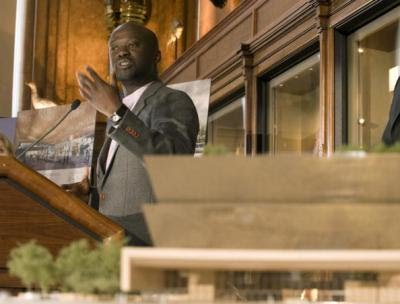
David Adjaye, the designer of the upcoming national museum, shrugs off his fame and focuses on adding West African themes to his work.

David Adjaye is the most famous black architect in the world. In fact, he may be the only famous black architect in the world. The tall, slim, ebony-handsome Londoner shrugs off his celebrity status and prefers to talk about his work. But big wins create big stars.

Adjaye teamed up with New York firm Davis Brody Bond Aedas to beat out a slew of big names, including fellow Brit Norman Foster, for the commission to build the $500 million National Museum of African American History and Culture, which will rise on the National Mall next to the Washington Monument between now and 2015. His team stood out, not just for its heavily African-influenced design for the new museum, Adjaye believes, but because he pitched the museum as a celebration of black achievement rather than as a lamentation on slavery.

Adjaye has had a meteoric rise in a business that is often called “an old man’s profession.” Conquering the complex bouillon of art history, design, structural engineering and human behavior — and, most, important, the connections and schmoozing that it takes to put up a building — can take a lifetime. Frank Gehry and Foster are 82; Moshe Safdie is 77. Yet at age 45, Adjaye has already earned a designation that puts him in a category that he dislikes: “starchitect.”

Adjaye is quintessentially what the late documentary filmmaker St. Clair Bourne used to call “an international Negro.” The son of Ghanaian diplomats, he was born in Tanzania in 1966 and lived in Jeddah, Saudi Arabia; Beirut, Lebanon; and Cairo, Egypt, with his family before settling in London. He has offices in Berlin and above a 1927 bank building on the ragged edge of New York City’s hip TriBeCa neighborhood. Now he’s back to leaving a trail of achievement in cities across several continents: Moscow; Denver; New York; Oslo, Norway; Abu Dhabi, United Arab Emirates; and, of course, Washington, D.C.

Ralph Cook to serve as chairman of Birmingham Museum of Art board of directors

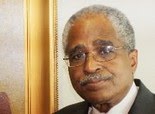
Ralph Cook will be­come chairman of the board of directors of The Birming­ham Museum of Art in Sep­tember, the first African-American to hold that post in the museum’s 60-year his­tory. Cook, an attorney and former asso­ciate justice of the Ala­bama Su­preme Court, will serve a three­-year term, succeeding Thomas L. Hamby.

“I am personally excited about my upcoming role as chairman of the museum board,” Cook said in a re­lease from the museum. “I look forward to working with the board, the City of Birmingham and groups across our region to main­tain the high quality that ex­ists at the museum and to continue to work for exhibi­tions and programs that will appeal to citizens of our city and state.”

Since 2001, Cook has been an attorney with the law firm of Hare, Wynn, Newell, and Newton. From 1993 until 2001, he was an associate justice on the Ala­bama Supreme Court. His extensive background in law also includes a stint as dean of the Miles College Law School.

Seven African-American women cited as Living Portraits

As the founder of Celebrate Your History, social scientist Bianka Emerson has worked diligently — and quietly — to organize a yearly award ceremony and soul-food dinner that recognize Denver’s forgotten heroes.

The spotlight was turned, though, when the Denver section of the National Council of Negro Women included Emerson as one of the seven Living Portraits of African American Women for 2011.

The others were Denver Clerk and Recorder Stephanie O’Malley; historian Jacqueline Benton; community engagement specialist Leslie Juniel; social justice advocate Gladys Brown Jones; educator Wanda Beauman; and Smoky Hill High School sophomore Salina Trahan.

Artists accomplish cultural mission with Art X Detroit

During a Saturday panel discussion at Art X Detroit, cultural critic Vince Carducci, a recipient of a no-strings, $25,000 Kresge fellowship, reminded everyone just how extraordinary the cash and marching orders were that the Troy foundation gave to three dozen local artists: “Here’s a check, go do something cool.”

Mission accomplished.

The results were the core of the inaugural Art X Detroit, the vibrant five-day free festival in Midtown that ended Sunday evening. It included more than 40 events at 21 locations while showcasing the 36 Kresge artist fellows and two $50,000 eminent artists, sculptor Charles McGee and jazz trumpeter Marcus Belgrave.

A sweeping diversity of art, music, poetry, dance, theater and more was on display, produced by some of the region’s most creative personalities, and all of it bred from the soul of Detroit.

Borrowing a term from the world of French wine, National Endowment for the Arts Chairman Rocco Landesman said Sunday at the Hilberry Theatre that the best art reflects “terroir” — a profound expression of specific soil and tradition. This was the triumph of Art X Detroit: The art was produced by us, for us and about us.

From the Museum of Contemporary Art Detroit to Leopold’s Books, audiences poured into Midtown for the festival, and overflow crowds were turned away in some instances.

A few highlights:

• Tyree Guyton’s “Street Folk” — thousands of pairs of colorfully painted shoes strewn about an entire block of Edmund Street — meditated on homelessness. Like much of Guyton’s work, it merged whimsy with sagacity, and singular moments like a toddler’s shoe jolted the emotions. • Bassist and composer Joel Peterson is best known as a free jazz improviser, but he also works in notated idioms. His “String Quartet for a pair of 45s,” which premiered Thursday at MOCAD, blended open, Americana harmony with tricky Eastern European rhythms and affectionate lyricism.

• The young rapper Invincible was on fire Thursday at the Detroit Science Center, crafting messages of social justice in savvy rhyme schemes and musically rewarding settings. Her theme: The people united will never be divided.

• The ongoing group show by the Kresge visual arts fellows at MOCAD offered terrific diversity and superlative works. Two faves: Hartmut Austen’s beguiling abstract paintings displayed within a towering architectural frame, and Sioux Trujillo’s quiet and exquisite installation of milky-colored felt cones spread on the floor like a school of fish, accompanied by elegant webs of colored thread reaching for the heavens.

• Standing atop a chair before an elbow-to-elbow crowd at Midtown shop Leopold’s Books on Saturday night, writer Steve Hughes read scruffy and wryly humorous tales from his new collection, “Stupor: A Treasury of True Stories.”

• R&B/soul dynamo Monica Blaire and a crackerjack backing band had the audience moving, grooving and responding to slinky, upbeat originals and covers like Prince’s “Controversy” and Michael Jackson’s “Don’t Stop ‘Til You Get Enough” in a Saturday evening showcase at the Magic Stick.

• Belgrave’s “Tribe” reunion soared far beyond jazz fans’ high expectations Sunday evening at the Charles H. Wright Museum of African American History. Original members of the ‘70s collective – Belgrave , tenor saxophonist Wendell Harrison and trombonist Phil Ranelin – mixed it up with the trumpeter’s world-class protégées, pianist Geri Allen, bassists Bob Hurst and Ralphe Armstrong and drummer Karriem Riggins. The music ranged from love-and-peace grooves and funk to swinging post-bop, and Belgrave, who rode the aggressively interactive rhythm section to some of his finest solos in recent memory, assumed the role of philosopher-king.

Staff writer Steve Byrne contributed to this report.

Arthur Primas, art collector and manager of entertainer Tyler Perry, teaches Flint native a lesson in art

When Louis Hawkins met revered art collector Arthur Primas at the Flint Institute of Arts (FIA) in February, he heard something he’ll never forget.

“He said, ‘I’m not really an expert in art.’ But that he was drawn to pieces and would go home and research the artist and that time period and that’s how it all started for him,” said Hawkins, 56, of Flint.

Primas, a Texas resident and the well-known manager of entertainer Tyler Perry, often shows his collection. In fact, it’s one of the world’s most prominent displays of African-American art. Now, “Promises of Freedom: Selections from the Arthur Primas Collection” is heading into its final week on display at the FIA.

Sixty pieces are on display, each embedded with historical, cultural and social messages, from artists such as Jacob Lawrence, Hughey Lee-Smith, Romare Bearden and Bob Thompson. For Hawkins, who has worked with the FIA more than 14 years, it’s the stories and lessons behind the exhibit that make it stand out for him.

“There are so many works that speak to you, and I just love the title; that the artists themselves have the opportunity to have their work shown. This is freedom for them, when their work is on display, no longer imprisoned, hidden or isolated,” he said.

“I went and looked up great African-American artists and pieces online and the same names I found searching on the Internet are the same ones that are right here in the ‘Promises’ collection. This is definitely a collection worth going to see while it’s right here in our own backyards.”

Primas’ encouragement was simple enough for this longtime FIA board member — and it’s a challenge everyone can get in on.

“Just check it out and go with that curiosity to learn more,” Hawkins said.

He believes that the selections from Primas’ collection are a way for locals to dive into something new, whether it’s an artist, a piece of art, or a historical reference from one of the works.

“No matter what the race, religion, ethnic background or culture is, I encourage everyone to go there to just check out the work of the artists are being represented,” he said. “It’s an institute that everyone should be welcome to take a part of, and I hope no one will let this exhibit get away without checking it out.”

“Promises of Freedom: Selections from the Arthur Primas Collection” runs through April 17 at the FIA, 1120 E. Kearsley St., Flint.

Gallery hours are noon to 5 p.m. Monday through Wednesday and on Friday; noon to 9 p.m. Thursday; 10 a.m. to 5 p.m. Saturday; and 1 to 5 p.m. Sunday.

Admission is $7 for adults; $5 for seniors and college students with ID; free for FIA members and children younger than 12. Everyone is granted free admission with the FIA’s Target Free Saturdays each week.

For information, call 810-234-1695 or visit flintarts.org.

An abolitionist’s papers attract worldwide attention for Savannah

Dr. Walter O. Evans shares collection with a Frederick Douglass descendant, a British film crew and a leading American scholar

The Frederick Douglass papers of Savannah art collector Dr. Walter O. Evans will come to life tonight as the great-great-great grandson of the famed abolitionist reads from them during a National Geographic Channel special that commemorates the 150th anniversary of the start of the Civil War.

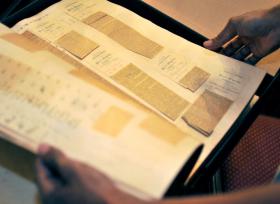
Kenneth B. Morris Jr., the president of the Frederick Douglass Family Foundation, said he “was quite surprised by the extent” of Evans’ holdings; a carefully conserved accumulation, which includes stacks of letters, speeches, scrapbooks and photographs.

The focal point of the Savannah segment of the special, filmed in Evans’ house, is the wartime correspondence of Frederick Douglass’ oldest son Lewis, who was an NCO in the famed 54th Massachusetts.

Before this episode, said Morris, he knew “very little” about Lewis Douglass, who was seriously wounded in the 1863 attack on Fort Wagner, a brutally fought battle in South Carolina that was immortalized by the movie “Glory.”

During the visit to Evans’ house, the cameras capture Morris reading from Lewis Douglass’ letters to his fiancée, Amelia Loguen.

In one of the letters, dated in April of 1863, Lewis wrote to Amelia that “I may be wounded, and that is not so bad you know, it will be an honor.” Building a collection

A Savannah native, Evans began buying works by such famous artists as Jacob Lawrence and Romare Bearden in the 1970s when he was a surgeon in Detroit. Since then, he has amassed one of the nation’s largest collections of African-American art.

He retired and returned to his hometown some 10 years ago. He bought and restored a number of buildings along Martin Luther King Jr. Boulevard. And then, in 2006, he made a massive contribution to that corridor’s future when he decided to donate 70 works of art worth an estimated $10 million to the Savannah College of Art and Design.

SCAD will establish the Walter O. Evans Center for African-American Studies in a state-of-the-art museum inside a renovated antebellum railway depot on MLK, a project that’s expected to be completed later this year.

Along with his artwork, Evans put together an impressive collection of rare books and documents, including many belonging to and associated with Frederick Douglass, the escaped slave who became a fiery soldier in the lengthy fight for African-American freedom and equality.

It was those acquisitions that brought him to the attention of Wide-Eyed Entertainment, a London-based media-production company that put together “Civil Warriors,” the three-hour National Geographic Channel special that will air from 8 p.m.-11 p.m. tonight.

Capital Portraits, Grazia Toderi, and Nature’s Best Photography: April Art Preview

This month, a show opens at the National Portrait Gallery that required a little sleuthing. “Capital Portraits: Treasures From Washington Private Collections” runs through September 5, offering a glimpse at works that are rarely (if ever) seen by members of the public. Big names (Andy Warhol, Chuck Close, John Singer Sargent, Salvador Dalí) are on display, as well as smaller works of historical interest, such as a portrait of Alonzo J. Aden, one of the country’s first African-American art dealers. Free. See the National Portrait Gallery’s Web site for more details.

DC’s Kreeger Museum hosts an intriguing exhibition of drawings by American pop artist Tom Wesselmann April 8 through July 30. Wesselmann is primarily famous for his collages, but “Tom Wesselmann Draws” offers some insight into his artistic process, including his attempts to expand drawing beyond pencil and paper with his large-scale, sculptural studies. $10. Visit the Kreeger’s Web site for more information.

Opening April 10 in the National Gallery’s East Building is “Gabriel Metsu 1629-1677,” the first show in the U.S. ever solely dedicated to the Dutch genre painter. Presented in association with the Rijksmuseum in Amsterdam, the exhibition includes more than 30 works, depicting religious scenes, city landscapes, and portraits, and runs until July 24. Free. For more information, visit the National Gallery’s Web site.

The annual Nature’s Best Photography finalists go on display at the Museum of Natural History April 16 through September 25. Named after wildlife photographer Windland Smith Rice, the competition recognizes the best in nature photography, from both professionals and amateurs. Free. For more information, visit naturesbestphotograpy.com, or the Museum of Natural History’s Web site.

“Directions: Grazia Toderi” opens at the Hirshhorn Museum April 21. Toderi, an Italian artist based in Milan, creates large-scale video installations from satellite, military, and night-surveillance footage, altered to “visualize the infinite.” She compares her works, frequently recognized by the Venice Bienniale, to “frescoes of light.” Free. See the Hirshhorn’s Web site for more details.

The Whitney, Metropolitan Museum of Art, Museum of Modern Art

When President and Mrs. Obama decorated the White House, they selected an artwork by Glenn Ligon, the New York artist whose retrospective is currently at the Whitney Museum of American Art. The 1992 canvas, borrowed from the Smithsonian’s Hirshhorn Museum, is titled “Black Like Me #2,” and like a lot of Ligon’s work, it’s a painting with a racially charged text. This one’s a sentence pulled from the 1961 memoir “Black Like Me” by John Howard Griffin, a white journalist who artificially darkened his skin to experience the segregated South as a black man. “All traces of the Griffin I had been were wiped from existence” is stenciled in black letters across the top of the canvas, and repeats line after line until the words at the bottom dissolve into murky blackness.

Ligon, 50, is a Bronx-born African American who has devoted his career to making word-based art that elegizes his reflections on being gay and black in America.

Glenn Ligon: America” begins with expressionistically brushed oil paintings into which he scrawls phrases alluding to his homoerotic self-awakening. Then come series of word paintings with capital letters stenciled in black oil stick, some with coal dust and black backgrounds that render them more or less illegible. We are told they quote passages from Ralph Ellison, James Baldwin and other writers, mainly African American. “I remember the very day that I became colored,” for example, is from an essay by Zora Neale Hurston.

More stenciled words, now in hot colors, recite racially loaded jokes by Richard Pryor. On another wall are Robert Mapplethorpe’s erotic photographs of black men accompanied by excerpts from critical and theoretical texts about the once-controversial series. Billie Holiday laments emanate faintly from packing crates that, according to the wall text, represent the way a slave once famously shipped himself to freedom.

Ligon’s most famous series, from 1993, adapts 19th-century runaway slave ads that substitute descriptions of himself supplied by friends: “Ran away, Glenn, a young black man twenty-eight years old, about five feet six inches high. Dressed in blue jeans. . . . ” In the Whitney’s Madison Avenue window is a neon sign Ligon recently made that reads, “Negro Sunshine,” an ambiguous phrase coined by Gertrude Stein.

In the past few decades, legions of visual artists have made paintings of words — canvases covered with dictionary definitions, synonyms, rebuses, jokes and admonitions. In general, they don’t do much for me. But Ligon’s lettered homages to writers amplify the borrowed words with a quivering sensitivity, and their repetition transforms the phrases into meditations on the plight of being black and gay in the United States.

Imagining himself as a runaway slave suggests a touching vault of imagination that — like Toni Morrison’s first-person slave novels — underlines the horror of the toxic erstwhile normalcy of slavery. The murmuring crates are a similarly doleful reminder of the lengths to which slaves sought freedom. And his reflections on the social perception of the black male, and on his own sexuality, add complexity to the artist’s examination of his identity.

These are grand themes hinging on the black and gay experience in America. Yet I have reservations about Ligon’s work. His technical range is severely limited, and for all the inarguable righteousness of his project, I cannot help but feel his work is overly self-referential, lacking the universality of great art.

Glenn Ligon: America Through June 5 at the Whitney Museum of American Art, 945 Madison Ave. at 75th Street. 212-570-3600. http://www.blogger.com/.

Picasso: Guitars 1912-1914

This exhibit at the Museum of Modern Art meticulously chronicles Picasso’s daily progress as he put the guitar motif through its cubist paces in a profusion of drawings, collages and paintings. Scores of graphic works and paintings are bracketed by two groundbreaking sculptural constructions: a cut-paper guitar and a sheet-metal version, both of which belong to the museum.

The constructions were groundbreaking because they are the first sculptures made by combining components rather than by the traditional methods of carving, modeling or casting. They represent a kind of three-dimensional extension of cubist imagemaking.

Cubism holds such iconic status in the history of art because it was a wholly new approach to visual representation. Until then, artists represented objects as they appear to the eye as seen from one angle. Picasso represented things as they appear from multiple angles, and also as they are known to the mind, a combination of aspects — seen and intuited — that include what lies behind surfaces.

In other words, a cubist guitar is represented as an accumulation of its visual and material attributes — the pattern of the instrument’s wood, the curving silhouette of its side, the cylindrical recess of the sound hole, the vertical of its stringed fret board, the boxlike depth of its body. It was a rethinking of perception and epistemology expressed through innovative and often beautiful visual representation of mass and space.

It’s wonderful to have so many of the guitars together, but the curators are so involved with sequencing Picasso’s works that they never step back to articulate what was so innovative about cubism itself. That’s a problem because many viewers don’t understand what’s significant about these somewhat difficult works. But here’s a chance to look over Picasso’s shoulder as he writes that new artistic philosophy.

Picasso: Guitars 1912-1914

Through June 6 at the Museum of Modern Art, 11 W. 53rd St. 212-708-9400. http://www.blogger.com/.

Three shows at the Met

The guitar theme continues at the Metropolitan Museum of Art with an exhibition about stringed-instrument-making through the ages, with special attention to a family of luthiers from Italy who migrated to New York and continue to craft fine instruments today. Another show gathers together several versions of Cezanne’s paintings of peasants sitting around a table playing cards, as well as studies of the individual sitters.

In the Asian wing is furniture, decorative screens and architectural elements from a part of the Forbidden City in Beijing created by 18th-century emperor Qianlong as a retirement retreat. He never moved in, and the long-vacant buildings were only recently restored, prompting this traveling show of exquisite woodcarvings inlaid with mother-of-pearl and intricate enamels, paintings on glass, thrones and other luxury goods that illustrate the cost-is-no-object opulence of the powerful imperial court. Look for the recurring motifs of pine, plum blossoms and bamboo, three plants that flourish in winter and represent hope for the emperor’s productive life in retirement.

Guitar Heroes; Cezanne’s Card Players; The Emperor’s Private Paradise Through July 4, May 8 and May 1, respectively, at the Metropolitan Museum of Art, 1000 Fifth Ave. at 82nd Street. 212-535-7710. http://www.metmuseum.org/.

African American Women and ‘Passing’ As a Film Genre

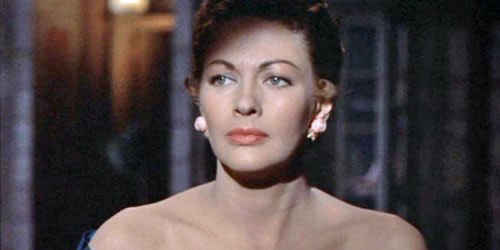
“Life is but a walking shadow,” wrote William Shakespeare in Macbeth. In film studies, we frequently consider the extreme contrast of light and dark, of noirish chiaroscuro designs that were born from the severe German expressionist lines. These are the “shadows” that highlight the pronounced differences between black and white, between coruscation and silhouette, between good and evil. The complex interplay between these two diametrically-opposing forces is one of the most essential technical elements of a film’s design, illuminating, reflecting and projecting the subconscious and highlighting implicit narrative themes in a visual language that aids the spectator’s understanding of the art as they read it. Nowhere is this essential cinematic contrast more apparent than upon the skins of characters in films about passing – a trope in which (usually female, usually biracial African American/Caucasian) pass for white, abandoning their black heritage and otherness to reap the benefits of whiteness. The light is the positive signifier, while the dark is the negative.

Until recently, this particular leitmotif was refracted bluntly in the way race dynamics were depicted in film in general. There were “black” films and “white” films, but rarely did any movie dare to highlight what life was like for any realistic scope of biracial characters who existed in true Jungian shadow-self, caught between these two worlds, standing on a near-literal precipice with one foot in African American experience, the other firmly in majority white culture, confronted with an impossible choice: live in truth as a person of color, be marginalized and treated like dirt, or risk “passing” for white to gain societal advantage. This concept was, from post-Reconstruction through the ‘60s, a much-discussed, weighty social issue, evidenced in the presence of the passing narrative in black and white art of the time, and it was brought most to social awareness in cinematic depictions, many of which proved to be financial and critical successes.

While racial passing seems outdated by today’s standards, and the very thought of a black person needing to pass for white actually smacks of racism, this essay repositions the importance of passing as a genre by looking at four key Hollywood films from the early-‘30s through the late-‘50s: two versions of Imitation of Life (John M. Stahl in 1934 and Douglas Sirk in 1959), Pinky (Elia Kazan, 1949), and Band of Angels (Raoul Walsh, 1957). We examine how race passing has become supplanted by other more socially acceptable sub-modes of the passing narrative (for example: the quintessential passing model now largely excludes race but focuses instead on gender and sexuality), but also how the distant ancestors of race passing can still somewhat insidiously found lurking unnamed in the world of contemporary film, from the extreme popularity of a biracial actress like Halle Berry (who has been nicknamed a “black Barbie” because of the way she conforms to standards of white female beauty) to the teasing, exoticized, and even sexually-festishized presence of the racially-ambiguous Mariah Carey in films such as Glitter (Vondie Curtis-Hall, 2001) and Precious: Based on the Novel Push by Sapphire (Lee Daniels, 2009).

By the time the concept of passing —which playwright Ntzozake Shange calls “that which ‘they’ can’t ascertain on ‘their’ own” [“Introduction”, Passing, (2002): xi]—was first used as a primary plot in a film in director John M. Stahl’s Imitation of Life (1934), it was evident that racial passing was becoming a gendered genre, mostly with female protagonists, as well as a quintessentially American phenomenon. Nella Larsen, one of only two non-white, American female novelists working during the Harlem Renaissance (Henderson, xix), and the most prominent author to deploy the racial passing convention in popular works such as Quicksand (1928) and the aptly-titled Passing (1929), made it a point to highlight the racial fluidity and cultural hybridity of people of biracial descent living abroad in the latter story. Centering on the lead characters of Clare Kendry and Irene Redfield, Passing depicts the struggles of Kendry, a light-skinned black woman who passes for white full-time and is married to a white racist, and Redfield, the darker-skinned of the two who occasionally passes as a hobby while living a privileged bourgeois life with her physician husband, Brian.

Dr. Redfield longs to transplant the family to the multi-cultural Brazil where “he imagines color is of no import” [Shange, “Introduction”, Passing, (2002): xiv]. With a diverse population that draws from a hearty mixing of Portuguese, African, Eastern European and indigenous peoples, race – specifically racial ambiguity—isn’t really as big a problem in this society. The idea of a black person passing for white today in a place like Brazil, where ethnic diversity, multiraciality, and cultural hybridity are embraced, is nonsensical. Even in the United States, where people who are not white, moneyed, or heterosexual (or some variation) are almost always oppressed, the policing and privileging of skin tones varying like an chocolate silk ombre from espresso to caramel is a reality for dark-skinned people, who are marginalized, while the fairer-complexioned are praised as beautiful because of their ostensibly closer proximity to whiteness (American culture’s dominant idea of “beautiful”).

All you can eat in an ARTFUL environment

THIS SUNDAY, APRIL 10….Sunday Brunch and Art ….11 to 5 pm Special $8

Art, music, fellowship, network and relax.

Brunch Served NOW ONLY $8 with coupon

Hours 11am – 5pm

VISIT http://www.octobergallery.com/ PRINT OUR PAGE OF THE HOME PAGE BRING TO BRUNCH FOR DISCOUNT.

Coupon Valid April 10, 2011 (only)

For more info call October Gallery 215 629-3939

Host Your Next Event At October Gallery

Wireless available

Jazzy ‘Twelfth Night’ set in San Francisco

There was a celebratory mood at opening night of the African-American Shakespeare Co.’s new production of “Twelfth Night” last weekend.

It wasn’t just the high spirits radiating from the stage as the company performed Shakespeare’s rollicking comedy, there was a lot to celebrate offstage as well.

The company has weathered its share of ups and downs, but now boasts a new artistic director, a handsome new home in the Buriel Clay Theatre at the African-American Art and Culture Complex, a revitalized acting company and a rising profile throughout the Bay Area and beyond.

The combination of these elements is clearly working its magic — and fostering the company’s continuing mission of reimagining the classics for contemporary audiences. As artistic director, L. Peter Callender said in his preshow remarks, “African-American Shakespeare Co. is always in the black.”

Callender’s production, which brings the company’s 2010-11 season to an upbeat conclusion, serves that mission in nearly every particular.

The director sets Shakespeare’s comedy of shipwrecks, mistaken identities and blossoming love in 1940s San Francisco.

When the heroine, Viola (the lovely Renée Wilson), and her brother, Sebastian (an agile Romulo Torres), wash ashore, it’s to a jazz- and blues-fueled score written and performed by acclaimed composer Marcus Shelby.

Sets by Kemit Amenophis and costumes by Kristen Lowe recall the vibrant heyday of The City’s own Fillmore jazz district.

Callender directs at a snappy pace, and the cast is fully committed. Wilson’s Viola, who spends most of the play disguised as the page Cesario, weathers the pangs of first love with grace and wit.

Rebecca Frank’s Olivia registers her attraction to Cesario with a winning mix of elegance and sensuality. Matt Jones’ Orsino is aptly imperious as he delivers his opening speech, “If music be the food of love.”

The comedic scenes are broadly played by J. “Darryl” Williams’ expansive Toby Belch, Martin Grizzell’s foppish Andrew Aguecheek, Charles Branklyn’s jive-talking Feste and Chris Dewey’s crisply articulate Fabian.

Lauren Spencer adds spice as the mastermind Maria, and Armando McClain brings urgency to the role of Antonio. Erik Banks, Percival Arcibal and Unique Jenkins contribute in supporting roles, and Leslie Ivy joins Shelby in a couple of torchy songs.

If the pivotal scene in which the others entrap the servant Malvolio (Michael Uy Kelly) doesn’t quite deliver its customary sting, the play’s final moment of reconciliation is cause for jubilation.

Panoramic Poetry The October Lounge A seamless blend of art, rhythm, prose and music.

Friday at 7:00pm

6353 Greene Street, Philadelphia, PA 19144

Panoramic Poetry The October Lounge A seamless blend of art, rhythm, prose and music.

Showcasing the area’s artists, poets, vocalist and musicians.

Spots are going quickly !!!To get on the list to read at upcoming Panoramic Poetry : http://www.panoramicpoetry.com/

More Info: 215 629-3939

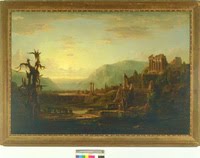
The Spiritual Striving of the Freedman’s Son Exhibition Highlights Work of Ohio Landscape Artist

On May 1, 2011, the Thomas Cole National Historic Site opens Robert S. Duncanson: The Spiritual Striving of the Freedman’s Son, the first exhibition featuring the work of the nineteenth-century African-American landscape painter Robert S. Duncanson in many years, and, the first exhibition of his work to appear on the east coast, even in his lifetime. The exhibition will bring the work of this Ohio artist to the home of Thomas Cole, the founder of the Hudson River School and major influence on Duncanson. This exhibition is the 8th annual presentation of 19th Century landscape paintings at the Thomas Cole site, fostering a discussion of the influence of Thomas Cole on American culture through a generation of artists known as the Hudson River School. The Thomas Cole Historic Site is located at 218 Spring Street in Catskill, New York. For information call 518-943-7465 or visit http://www.thomascole.org/.

Robert S. Duncanson was the first American landscape painter of African descent to gain international renown and occupies a critical position in the history of art. Widely celebrated for his landscape paintings, Duncanson began his career in the family trades of house painting and carpentry, before teaching himself art by painting portraits, genre scenes, and still-lifes. His success is remarkable as a “free colored person” who descended from generations of mulatto tradesmen, to graduate from skilled trades and participate in the Anglo-American art community. Duncanson’s turn to landscape as his subject was influenced by Thomas Cole in the late 1840s. Based in Cincinnati, Ohio, then the largest and most prosperous city in the western United States, Duncanson became the cornerstone of the Ohio River Valley regional landscape painting school and, according to the Cincinnati Gazette declared that he “enjoyed the enviable reputation of being the best landscape painter in the West.” Duncanson achieved his artistic success despite the oppressive restrictions that Anglo-American society placed on him as an African-American, a “free colored person.” His paintings earned him international attention with especially high esteem bestowed on him by the art press in Canada and England. Canadians acknowledged Duncanson’s seminal role as “one of the earliest of our professional cultivators of the fine arts.” And, the critics of the London Art Journal praised him as possessing “the skill of a master,” whose paintings “may compete with any of the modern British school.” Duncanson adopted the style and metaphors of east coast landscape painting that depicted the “natural paradise” of the New World as a romantic symbol for the European settlers’ perceived covenant with God. But in so doing he also appropriated the art of landscape painting–both in subject and content–for African-American culture. In some of his paintings he subtly expressed the perspective of an African-American through his works. A careful reading of his landscapes, reveals how Duncanson expressed his particular perspective. The grandson of a freedman, Duncanson’s artistic ambitions and the content of his paintings epitomize W.E.B. Du Bois’ statement that “the spiritual striving of the freedmen’s son is the travail of souls.” Robert S. Duncanson: The Spiritual Striving of the Freeman’s Son is curated by Joseph D. Ketner. Ketner is the Henry and Lois Foster Chair in Contemporary Art and the Distinguished Curator-in-Residence at Emerson College in Boston. He is the author of a definitive book about the artist, The Emergence of the African-American Artist: Robert S. Duncanson 1821-1872. The catalogue for this exhibition will contain an essay by Ketner including new information on the artist and color illustrations of many new paintings discovered over the past fifteen years. “We are honored to have Joseph Ketner, the authority on this fascinating Hudson River School artist, curate our 8th annual exhibition,” said Elizabeth Jacks, Executive Director of the Thomas Cole Site. “The artist’s work, which can be found in the permanent collections of major museums across the country, stands alone in its beauty. What makes this exhibition even more powerful, however, is the fact that Duncanson achieved his success under the oppressive conditions of being a ‘free colored person’ in antebellum United States.” Robert S. Duncanson: The Spiritual Striving of the Freeman’s Son is on-view through October 30, 2011 Read More >>>>>