
What should be your motivation for collecting African American Art.
Tips on Investing in Art African American – October Gallery
Tips on Investing in Art African American – October Gallery
Six tips for better art collecting.
What is a Gallery Wrap?
BlackStream Renaissance
October Gallery is Celebrating 27 Years in the African American Art Industry and has operated a physical art gallery in Philadelphia, PA since 1985.

We have been connecting people with art for 27 years. We deliver magic and romance to the art experience.
October Gallery believes that art is for everyone. We like to compare ourselves to the Marriott Hotel chain. The Marriott is neither the Ritz Carlton nor Motel 6. It is a mid-range hotel. The company’s Web site states that the hotel offers packages of “fun filled days and wild nights that will fit any family’s budget without breaking the bank.” At the Marriott one can get an expensive or an inexpensive room depending on availability. October Gallery’s marketing philosophy is similar to that of the Marriott. We offer an art experience that will fit anyone’s budget, that does not have to break the bank. October Gallery’s average sale is between $400 and $800. The Gallery’s prices range from $25 to $25,000.
October Gallery opened for business in July of 1985, at 3805 Lancaster Avenue, Philadelphia, Pennsylvania. It operated from this location for nine years. During the 1990s October Gallery operated six locations: two in Philadelphia; one in Cherry Hill, New Jersey; one in Echelon, New Jersey; one in Burlington, New Jersey; and one in Washington, DC.
October Gallery also presents the Philadelphia International Art Expo in November of every year. This event, now in its 23rd year, is the nation’s largest African American Art expo.
People often ask, “Where did the name ‘October Gallery’ come from?” We tell them there is a relation-ship between the tenth month of the year and October Gallery. Think about it! The month of October and October Gallery both exhibit the magnificence of beauty and color, one through nature’s multicolored autumnal arrays, the other through artists’ eyes. October comes in the fall, when the colors of nature change. Leaves on the trees change from variations of green to combinations of orange, red, purple, yellow and brown. These variegated arrays are similar to the many colors on an artist’s palate; hence, the name October Gallery.
October Gallery has always supported the communities it serves. Over a span of twenty three years, we have donated hundreds of thousands of dollars in art, services and other gifts. This is no small feat considering we are a small gallery. There are community groups and organizations that, like clockwork each year, request from us a donation of art, which they then use for a raffle or a door prize so as to promote a cause. Other beneficiaries include politicians, civic leaders, heads of corporations, and other individuals to whom we give original art (valued in the thousands of dollars) in an effort to promote the art and the artists. October Gallery has also donated cash to a number of groups. We believe our type of gifts enable the public to make a “conscience connection” to Black art. We understand that if we want people to consider making art a part of their daily lives, we have to get the art “in their faces.”
Our national and international patrons and artists have witnessed firsthand the creation and development of the African-American art industry, which prior to the 1970s was almost nonexistent. This group of patrons and artists are part of what we call the BlackStream Renaissance.
The term “blackstream” was used by Black artists in the 1900s who were denied admission to the art mainstream. More recently, fine art appraiser Edward S. Spriggs of Atlanta, Georgia brought the term “blackstream” to our attention. Feeling there was a need to identify this important time of formative awareness of, belief in and commitment to African-American art, we coined the phrase BlackStream Renaissance.
We further define this growth period as being marked by a collective community conscientiousness that recognizes the creative, cultural and financial viability of African-American visual expression.
The interplay between artists, community members and available resources has created a fabric-like cohesion characterized by:
• Artists willing to create
• A community that can inspire its artists
• A community that accepts its own cultural
creations as having value
• Sufficient community resources to sustain the
exchange of value
The patrons and artists of the BlackStream Renaissance purchased and sold art, displayed it at home and at work and shared it with friends, family, co-workers and the general public. In short, they have made African-American art an indispensable part of their everyday lives. The African-American community is effectively supporting and building an art industry, perpetuated primarily by its own members.
Artists, galleries, museums and others in the art business realize that because of proper education, focused marketing and love of culture, African-Americans have shifted their habits and allocated to the visual arts a portion of the more than 750 billion dollars they spend each year. This group has invested precious time and valuable resources in African-American art and has thereby continued to give it value.
To be clear, the BlackStream Renaissance welcomes the mainstream but does not have to rely on it for content, aesthetic validation or financial continuance.
Educator and curator David C. Driskell said, “The boom in Black art has come about not in the market of galleries of the auctions at Sotheby’s and Christie’s, but from ordinary Black people.”
Most African-American artists market and exhibit in the African-American community. Successful Black art festivals and expos, where artists sell and exhibit, recognize the importance of marketing to this special community. It is in this community where the strength and the value of African-American art begins. It is this community that has provided the foundation for the Blackstream Renaissance.
What is a Silkscreen Print?
Making Giclee or Art Prints
Is it worth creating art or Giclee prints of your work and what does it involve?
From Denise Macgregor
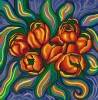
Think about all the time and effort you put into a painting. And then the joy of selling it. Trouble is, when it is gone, it is gone. And you have to start all over again. Now imagine selling it over and over again, at a reduced price so that many others can share your work, with minimum effort and high long-term returns. That is what can happen if you make prints your paintings. The methods available today are very sophisticated, and easy, with minimum outlay.
Why should I buy an art or Giclee print rather than an original?
As an artist, I thought that the only thing to spend my hard-earned cash on would be an original work. After all, they are often available for reasonable amounts if you look for them. And, I must admit to being a bit snobbish about it really. Someone once said that when you buy an art print, all you are really buying is the frame… the print is not worth much, and will not usually appreciate in value, as could a painting. But then I remembered when I first began to collect art for my walls. I certainly could not afford originals, and art prints were my only option. In that way I could look at really great works of art for a minimum amount of money. It’s a bit like writing a song, you don’t sell the song, you sell records.
How did you decide to make Giclee prints?
First of all, I thought it necessary to see if people liked my work and if there might be a market for art prints. Yes, I had exhibitions and sold quite a few pieces in them. But many of my friends said they liked my work, but could not afford it. So I tested the market and made greetings cards of my paintings on my computer at home. I displayed these at my exhibitions, and to my surprise they all sold. They cost me about 50p each to make, taking into account the card stock, envelopes, cellophane wrappers etc and I sold them for £1.50 each. Selling them all led me to believe that my work was well liked, and that there might be a market for prints.
How did you find a printer who makes Giclee prints?
By accident, really. I requested information from a number of specialist printers who advertised in artist’s magazines, and found this to be very helpful. Then, at a networking meeting I casually mentioned to a friend that I was thinking about having art prints made of my paintings. Shortly afterwards I received a call from a local printer who had just seen my friend, who gave him my name. Since he had recently invested in the latest equipment for producing high-quality Giclee prints but had never used it for fine art prints, he asked if he could quote on my printing needs. We met shortly afterwards. I found it useful to use a local printer, as I could easily drop by to review progress, but I don’t think this is totally necessary, as they will always send a proof prior to printing.
source: http://painting.about.com/cs/printing/a/gilceeprints.htm
Natural Makeup for Black Women
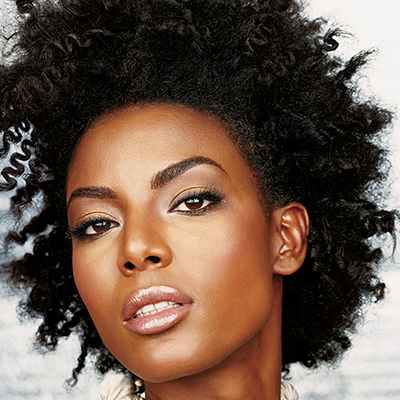
Women of color are naturally beautiful. That is why makeupexperts recommend that they use natural makeup for black women. Although you can easily rock bold colors with your ebony skin, you should give natural makeup for black women. So, if you want to try it out, here is what you should do with each of your facial features:
Your Skin
The most important thing in natural makeup for black women is your skin. Choosing the right foundation shade will make sure that you get the best results. If your foundation is too light, your skin will look chalky, whereas it will look artificial if you choose dark foundation.
Your Eyes
You first need to prepare your eyes for the natural makeup for black women. Get rid of your dark circles by applying concealer. However, to prevent it from appearing prominently, make sure to blend it with your foundation by using your fingers.
For your eye shadow, use neutral shades such as pinks and browns, or choose bolder colors such as purple and orange. The latter may sound strange, but you should know that natural makeup for black women doesn’t mean choosing plain colors. It basically means choosing shades which make you look perfectly natural. Finally, remember that blending eye shades with fingers (not brushes) is an important aspect of natural makeup for black women.
Once you’re done with your eye shadow, add eyeliner and apply mascara. For the natural look, use less of both.
Your Cheeks
Most women neglect their cheeks, thus they keep them void of blush. The rules for natural makeup for black women clearly state that blush is necessary. However, rather than applying pink or shades of orange on your cheeks, you’re better off with brown or copper. Brushing a bronzer on your cheeks will also give you excellent results.
Your Lips
If you choose natural makeup for black women, you should use lip gloss, especially if it’s clear or pinkish. However, if you don’t have those in your makeup kit, you can choose peach or brownish lipstick and similar lip color.
Following these recommendations will give you the best results from natural makeup for black women. However, remember to use makeup for black women while implementing these. That was you can rest assured that you have the right shades for your skin.
Till next time, keep on experimenting with shades and colors until you find out what suits you best!
William Henry Johnson (American, 1901-1970), Self-Portrait
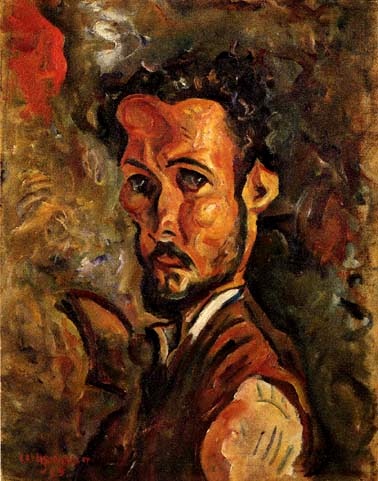
William H. Johnson
After he became ill, Johnson’s work was stored in a warehouse in New York and nearly destroyed. The Harmon Foundation, an organization which supported black artists and promoted their work, saved the paintings in the mid-1950s. More than 1300 pieces were given to the Smithsonian’s National Museum of American Art in 1967. (You can view a sample of his paintings by going to the National Museum of American Art and typing in his name under the browse feature.) After the Museum exhibited his paintings, the importance of Johnson’s work was recognized. Johnson’s work has been exhibited in South Carolina, at the Greenville County Museum of Art in 1993 and the State Museum in Columbia in 1995.
William Johnson was born in 1901 in Florence, South Carolina. He grew up in poverty and like many of his generation had little education. His father, who supposedly was a prominent member of the white community, did nothing to help. His mother later married and had four more children. The stepfather was a hard worker and all was well for a time, until he was injured in an accident and unable to work. Johnson’s mother cooked, washed and ironed for white families to feed her children. The oldest child, William, did fieldwork during the season, helped out at home, and looked after his younger brothers and sisters.
William began copying comic strips at an early age. A teacher who saw him drawing pictures in the dirt gave him some art supplies–pencils and paper. By the time he reached his teens, William had left school to help support his family, but had decided to become an artist and go to New York to study.
Johnson left South Carolina around 1919 for New York with his uncle who was seeking work. He worked for several years before he could afford to study art. He enrolled at the National Academy of Design, known for its high standards and rigorous training. He did well there, winning several prizes and coming to the attention of Charles Hawthorne, a teacher who took him under his wing. Hawthorne helped him financially by providing summer work and arranging for free tuition. Although Johnson won other awards over the next several years, he did not receive the most highly-prized award–to study in Europe for a year. Blaming it on prejudice, Hawthorne helped to raise enough money for Johnson to go to Europe.
In 1926 William Johnson left for Paris. Johnson was influenced by the work of the prominent artists of the day, including Gaugin and the Expressionist Chaim Soutine. Painting in the Expressionist style, Johnson began to exhibit his work in the late 1920s. Like other Expressionists, his work was intense and emotional. During this period he met and impressed the African-American expatriote artist Henry Tanner. However, Johnson’s work did not receive the recognition and the public interest for which he had hoped. In 1929 he met his future wife, a fellow artist fifteen years his senior who specialized in weaving and ceramics. Traveling with Holcha Krake, he had the opportunity to visit museums throughout Europe, which must have been both an exhilarating and a depressing experience. He became aware of just how difficult success would be as an artist in Europe, where he was just one talent among many. Moreover, he faced the additional handicap of prejudice as an African-American artist. Hoping that winning recognition in America would be a step forward, he returned to the U.S. late in 1929. Another black artist he had met in Paris had told him that winning an award from the Harmon Foundation would be easy, so he entered six pictures in their competition. The Harmon judges were greatly impressed by his work, awarding him a gold medal and picking four pictures to exhibit in a show.
The excited Johnson headed back to Florence, South Carolina, to visit family and show his paintings to his mother. His work was exhibited locally and a story appeared in the local newspaper. However, several days later, he was arrested and jailed by the police while he was painting a local building. Johnson’s anger at his unjust arrest led him to return to Europe. He did not return to Florence again for fourteen years.
William Johnson and Holcha Krake were married in 1930 in Denmark. During the next few years they lived in Denmark. The they studied weaving and pottery in Tunisia before returning back to Denmark. Making a living was difficult in the 1930s, but Johnson continued to paint. However, few of his works were sold. In 1938 the couple moved to New York, fearing the impact that Nazism would have on a black artist and his white wife. But life was difficult. Johnson could not find work, and the interracial couple experienced prejudice. It was impossible to find a sponsor in Depression-era America, and Johnson had to stand in line behind other, more successful artists to get a position with the Works Progress Administration (the WPA). Finally, he was hired to teach art at a local community center.
During this period, Johnson began to change his style of painting. Previously he had painted landscapes and people in what is referred to as a “full brush” style based on the influence of the Expressionists. Now he began to paint in what he termed a “primitive” style, using bright and contrasting colors and two dimensional figures and objects. His paintings of the African-American experience, focused at first around religious themes. They projected a sense of peace not found in his earlier work. As time went on, Johnson began to paint scenes of the everyday life of African-Americans. However, he continued to experience bad luck. First a fire destroyed much of his work and possessions. Then his work was shown in two exhibits. It seemed that success must follow, but with the coming of World War II, public attention turned elsewhere. Like many other artists, Johnson began to paint patriotic pictures of soldiers. In early 1943 at about the time his work began to be noticed, Holcha died of breast cancer. Johnson had already begun to exhibit odd behavior before his wife’s death; now the grief stricken man began a gradual descent into mental illness.
Johnson returned home to Florence to visit his mother in 1944, painting a number of portraits of her and of other relatives. Still grieving for his wife, he planned to return to Denmark. He thought that perhaps he would marry Holcha’s widowed sister. He worked and saved for the next few years, doing a historical series on African-Americans. However, by the time he left for Denmark in 1946, his mental illness had begun to worsen. Arriving in Denmark, he stayed for awhile with his late wife’s family. Traveling to Norway for an exhibit, he became confused and was found lost in the streets. He was sent back to New York and never painted again. He was hospitalized until his death in 1970.
- Carol Sears Botsch, U.S.C. Aiken, carolb@aiken.sc.edu
Smithsonian launches new website for teaching African American Civil Rights through American art
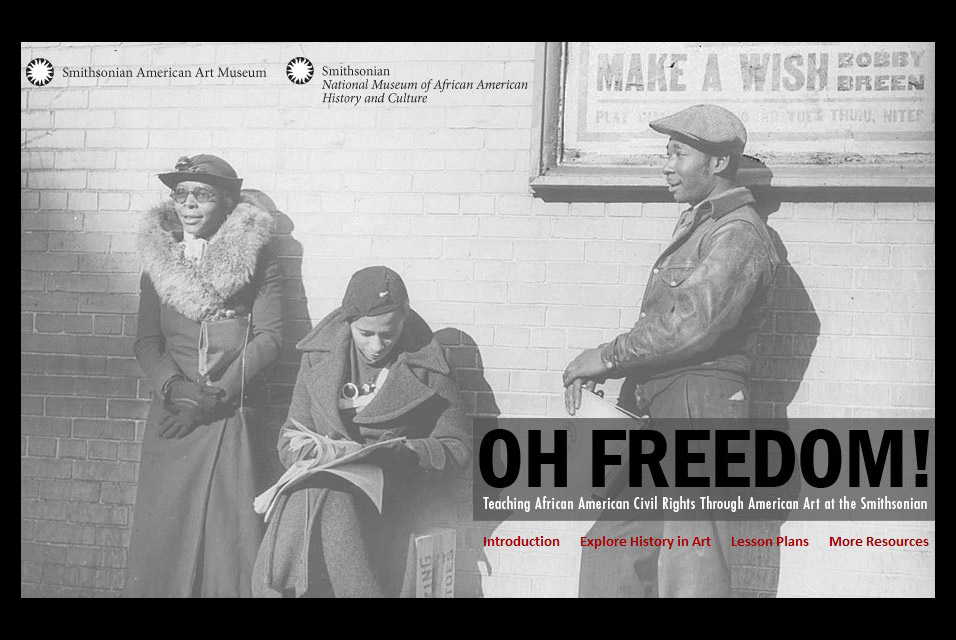
WASNGTON, DC.- Oh Freedom! Teaching African American Civil Rights through American Art at the Smithsonian is a new Web-based project developed jointly by the Smithsonian American Art Museum and the Smithsonian’s National Museum of African American History and Culture. It offers teachers an introduction to the civil rights movement through the unique lens of the Smithsonian’s collections. Drawing connections between art and history, Oh Freedom! gives educators tools to help students interpret the long struggle for civil rights. Oh Freedom! broadens the definition of the civil rights movement beyond the 1950s and 1960s, presenting it as a longer and more complex quest for freedom, justice and equality throughout the course of the 20th century and into the present.
Oh Freedom! brings together more than three dozen featured artworks from the collections of the National Museum of African American History and Culture and the Smithsonian American Art Museum, from early 20th-century photographs by James VanDerZee and Cornelius M. Battey to Shepard Fairey’s iconic “HOPE” (from the series “Obama”). An interactive timeline, “Explore History in Art,” frames these artworks with artist biographies and secondary sources from the wider collections of the Smithsonian, such as historical artifacts, additional artworks, musical and vocal recordings, photographs and more. The Archives of American Art, the Hirshhorn Museum and Sculpture Garden, the National Museum of American History and the National Portrait Gallery also contributed to the site. These sources, along with a glossary and other materials, help students and teachers contextualize the stories revealed by each artwork.
“The momentous events of the civil rights era were the culmination of a long struggle for justice that is still inspiring us today,” said Elizabeth Broun, The Margaret and Terry Stent Director of the Smithsonian American Art Museum. “We are proud to use our rich collections to present this essential history in a new way in classrooms nationwide.
” The site offers lesson plans for teachers to download that were prepared by a national committee of teachers. Interactive features allow teachers to share new lesson plans using a prepared template, provide activities and reactions to the site, and discuss how artworks suit their particular classroom needs. Additional resources, such as teacher and student bibliographies, also are available online. The site is designed primarily for teachers of middle and high school students, especially those who teach social studies. “As a middle school social studies teacher, the Oh Freedom! website is easy to use with its lesson plans and abundant teacher resources about civil rights,” said Penny Prado, a seventh- and eighth-grade social studies teacher at Riverdale Middle School in Jefferson, La. “It is important for a teacher to spark student interest in a topic, and the Oh Freedom! website definitely sparked the interest of my students.
” Oh Freedom! is the first Smithsonian Institution-wide collaboration that focuses specifically on civil rights. It was created jointly by members of the education, curatorial and new media departments of both museums. A national Content Advisory Council helped guide the site’s framework, artwork selection and the interpretation of art and history. A national Teacher Advisory Council consulted about the site’s usability, provided feedback on activities and developed lesson plans. To explore Oh Freedom!, visit http://africanamericanart.si.edu.More Information: http://www.artdaily.org/index.asp?int_sec=11&int_new=53696[/url]
Copyright © artdaily.org
Copyright © artdaily.org
Leslie Hindman African-American Art Auction Sells Out
2 March 2012 – by ArtfixDaily Staff
Robert Scott Duncanson, The Apennines, Italy Estimate: $30,000-$50,000
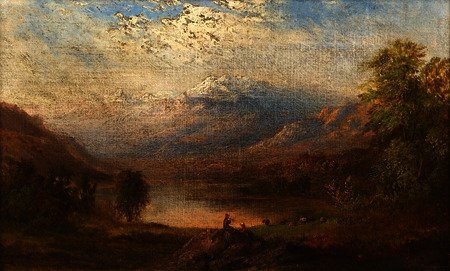
Duncanson’s “The Apennines, Italy,” sold for $26,840 at Leslie Hindman Auctioneers.
(Leslie Hindman Auctioneers)
Leslie Hindman Auctioneers’ inaugural auction featuring Works by African American artists was completely sold out, making it a “white glove” sale.
Aggressive phone and internet bidding brought strong prices overall for the March 1 sale in Chicago.
Among the highlights were historic paintings such as Robert Scott Duncanson’s The Appenines, Italy, which realized $26,840, and Hughie Lee Smith’s The Acropolis which brought $23,180.
Contemporary works also fared well. Notably, Alma Thomas’ Abstract Composition commanded $21,960.
An artist record was set for Charles McGee whose Ring around the Rosy fetched $18,300, from an estimate of $1,500-2,500.
Another Works by African American Artists sale is being organized by Leslie Hindman Auctioneers for Sept. 20, 2012.
How the West was Won by Unknown Poet
Is Black Art Still Relevant in 2010 – African American Art – October Gallery
http://www.octobergallery.com -Informal discussion on, Is Black Art Still Relevant in 2010.
African American Art.
Participants include:
Gaille Hunter, John Williams, Elizabeth Nelson McCorkle, Evelyn Redcross, Aria Jones, Stan Burwell, Thaddeus Govan, Jr., Martina Johnson-Allen and Tanya Murphy.
Filmed at October Gallery Germantown, PA. May 9, 2010
The Art of Being Well – Wellness Evolution
http://www.octobergallery.com The Art of Being Well – Wellness Evolution. Saturday, February 12, 2011 at October Gallery
SalsaCrazy Advanced Salsa Dancing Mastery System Salsa Dance
Salsa Dance Mastery System: The Advanced Version. http://www.SalsaCrazyAdvanced.com
SalsaCrazy presents the six dvd salsacrazy advanced salsa dance mastery system, featuring Evan Margolin, Tianne Frias, Alison Hurwitz, Seaon Stylist (Seaon Bristol), Jesus Ortiz, and more fantastic dance instructors over six fantastic DVDs.
30 Americans Surveys African-American Artists Over Three Decades

click to enlarge |
|
Kehinde Wiley, Equestrian Portrait of the Count Duke Olivares, 2005. Oil on canvas, 108 x 108 in. (274.3 x 274.3 cm) Rubell Family Collection, Miami .
|
The Chrysler Museum presents 30 Americans, an exhibition of contemporary African-American art of the past three decades. From Robert Colescott and Jean-Michel Basquiat to Kehinde Wiley and Iona Rozeal Brown, works by some of the most important African-American artists of our time will take over the Chrysler Museum this spring. The provocative—and at times controversial—exhibition goes on view March 16 to July 15, 2012. Admission is free.
Drawn from the Rubell Family Collection in Miami, 30 Americans brings together 75 works by 31 emerging and established artists who work within a variety of mediums including painting, sculpture, photography, video, and installation. While some works probe the notion of racial and social difference in a candid manner, others evoke universal concepts and emotions using a sophisticated blend of visual beauty, humor, and irony.
The Chrysler puts a new perspective on this critically acclaimed exhibition with a dramatic, interwoven installation that focuses on six intriguing themes—Street Aesthetics, Aspects of the Body, Performing Identity, Material Messages, Art and Language, and Toward a Post-Black Art—and incorporates work from our own outstanding collection. A selection of paintings and sculptures from 30 Americans will be strategically situated within our European and American galleries of works dating from the Renaissance to the 19th century. And the Museum’s presentation features an entire room dedicated to the bright, satirical paintings of Robert Colescott, whose work was an enormous influence on the generations that followed. The Museum pairs three of the Rubells’ paintings with the Chrysler’s two monumental works by the artist in order to capture the full breadth of Colescott’s vibrant, edgy work. The result is a unique layout that draws connections between artists and works within the exhibition itself and across centuries of artistic practice.
As our installation will demonstrate, 30 Americans brings together artists from different generations in unique and thought-provoking ways. Robert Colescott and Barkley Hendricks, for example, grew up during the Civil Rights and Black Power movements of the 1960s and ’70s, and paved the way for David Hammons, Mickalene Thomas, and Jeff Sonhouse. Hendricks’ powerful portrayals of African-American subjects merge the long-standing tradition of portraiture with a striking sense of urban realism. The dignity of his subjects carries over into Thomas’ glitzy and alluring portraits that speak to women’s roles in today’s world. Jean-Michel Basquiat’s 1981 graffiti-inspired portrait, Bird on Money, pays homage to the great jazz musician Charlie “Bird” Parker. Mark Bradford continues Basquiat’s street-culture aesthetic in his large-scale collages, in which bits of advertisements, scraps of billboards, and perm foils from his mother’s beauty parlor come together in a new way that evokes maps of the urban landscape.
Several of the artists rework and manipulate history in interesting and thought-provoking ways. In his photographs, 34-year-old Rashid Johnson mines the past in search of his own self-identity, portraying himself as abolitionist Frederick Douglass. Kara Walker also looks to the antebellum period in her large-scale wall installation that blends historical fact and fantasy. Walker relies on Victorian silhouettes to comment on slavery, race relations and power structures.
“30 Americans is an exciting exhibition that brings world-class, cutting-edge art to the Hampton Roads community,” says Amy Brandt, Ph.D., the Chrysler’s McKinnon Curator of Modern and Contemporary Art. “These are some of the most important artists of our time, and with this show we hope to reach out to broader and more diverse audiences, to engage them with art in ways they haven’t considered before. We see the potential to touch the lives of many people and to create interesting dialogues and discussions that will be remembered for years to come.”
Since its inception in 1961, the Rubell Family Collection has included African-American art. As the show evolved, the Rubells decided to call the exhibition “30 Americans rather than African-Americans or Black Americans because nationality is a statement of fact, while racial identity is a question each artist answers in his or her own way, or not at all. And the number 30 because we acknowledge, even as it is happening, that this show does not include everyone who could be in it. The truth is, because we do collect right up to the last minute before a show, there are actually 31 artists in 30 Americans.”
Because the exhibition is one of the largest the Museum ever has hosted—filling gallery spaces upstairs and downstairs throughout the building—the Chrysler’s Members invite the community to celebrate the exhibition with them at a free preview on the evening of March 15. Party details, as well as programming related to 30 Americans, are available at chrysler.org.