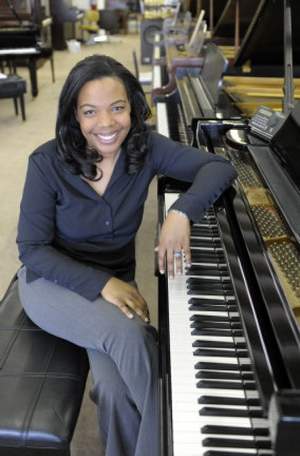
Pianist Kimberly Cann, 29, makes a musical mark on Asheville

How does a young classical pianist new to Asheville find a place in this area’s flourishing, some would say crowded, music scene?
For 29-year-old Kimberly Cann, who moved here two years ago, the answer might be, “Ask not what your community can do for you, ask what you can do for your community.”
With an impressive background that includes winning an important national competition at age 18 and a graduate degree from one of the nation’s top conservatories, the Eastman School of Music, Cann has been quietly making a name for herself by using her considerable musical talents to help local organizations.
“It was not my intention to be at the forefront of musical performance in Asheville,” Cann said with a laugh. “I wasn’t sure where I wanted to make my little niche. I was careful to get to know the community.”
She played a solo recital in Asheville as a benefit for Habitat for Humanity at St. Mark’s Lutheran Church in 2009.
Then she dazzled the audience last September at an Asheville Area Piano Forum benefit at Diana Wortham Theatre. She and her younger sister, Michelle, a student at the Cleveland Institute of Music and herself a rising piano star, played Rachmaninoff’s famously difficult Suite No. 2 for Two Pianos to an enthusiastic crowd.
In December, Cann became volunteer music coordinator for the YMI Cultural Center and began planning an ambitious series of events with Darin Waters, a historian of Asheville’s African-American community.
She wants to highlight the contributions of African-Americans to classical music. One of her concert pieces — which she’ll play Sunday at a sold-out show at the Asheville Art Museum — is “Troubled Waters” by Margaret Allison Bonds, a pianist and composer who in 1933 was the first African-American to solo with Chicago Symphony.
‘Rich heritage’
“For this generation (of African-American classical musicians), I think it’s really important that more of us continue to do what we do,” she said. “We forget what a rich heritage we all have in this wonderful music.”

In graduate school, Cann was encouraged to pursue a concert career. She performed a sold-out concert at the Bermuda Festival in 2006, which was hailed as a “triumphal return” to the island where her father was born and later was the musical director of the Bermuda Institute.

“I strongly considered going the route of international competitions,” she said, as a way to become known as a soloist. But “that takes 110 percent, eight to 12 hours of practice a day. Countless hours of music have to be at the tips of your fingers.”
Did she have to choose between a performing career and a teaching career?
“I am going to try to do it all,” Cann said with another laugh. “I cannot devote my life to full-time performance, I cannot devote my life to full-time teaching.”
For now Cann teaches 25 students from her studio in Weaverville and is ramping up her local visibility as a performer. In addition to Sunday’s concert at the museum, she’ll play dates in April and an August concert at the Diana Wortham with her sister.
‘A world-class pianist’
As a newcomer to Asheville’s music scene, Cann had a head start. She spent part of her childhood in Fletcher, where her father was music director for Fletcher Academy. She attended the academy’s Captain Gilmer Elementary School until the family moved to Florida when she was 13.
She then returned for three summers to study at the Brevard Music Center.
After graduate school and a teaching and performing gig at Northern Caribbean University in Jamaica, Cann decided to settle in Western North Carolina. “I’ve done a lot of world traveling,” she said, “and this is one of the best places in the world.”
Polly Feitzinger, one of the founders of what began as the Asheville Piano Teachers Forum, first heard Cann play as an 11-year-old.
“She was a star student and an amazing child prodigy,” Feitzinger said. “I will never forget her performance of the famous Rachmaninoff prelude in C-sharp minor. She had the understanding and incredible musicality to play this work, which usually is not taught to students who are that age.”
Feitzinger was delighted to discover that Cann had moved back to Western North Carolina. “She is a world-class pianist,” she said.
Bill Clark, co-president of the Piano Forum, invited Cann to play last fall’s benefit before he had heard her, something he doesn’t like to do with a new pianist. Based on Feitzinger’s recommendation, he took what he calls “a calculated risk.”
He was sitting at the rehearsal in front of Feitzinger.
“After the first movement, I looked back at Polly with a huge smile on my face,” he said. “I could not believe what I was hearing. They just nailed it. They were really inside the music. They understood the architecture of it, in addition to having fabulous technique.”
As the closing number of the concert, Clark says, the Cann sisters had the audience members on their feet. “It was extremely exciting,” he said.
Asheville writer Arnold Wengrow is a contributing editor of Theatre Design and Technology magazine.
Ala. Amistad Murals to go on nationwide tour

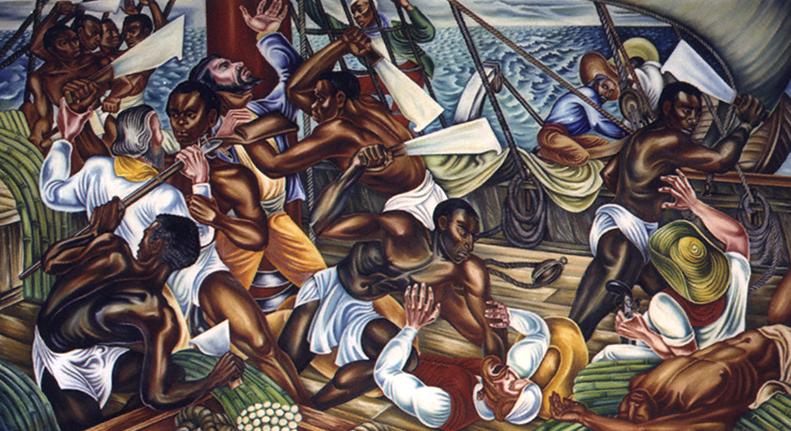
Ala. Murals depicting the famed slave revolt aboard the trading ship Amistad, which have hung on the campus of Talladega College for more than 70 years, are soon going on a nationwide museum tour.

Now valued around $40 million, the paintings by artist Hale Aspacio Woodruff were commissioned in 1938 and the first three panels have hung at the historically black school since the 1939 dedication of a library. Others were added later.

The murals were being taken down piece by piece Monday and will be restored before beginning a tour of several museums around the country. College President Billy C. Hawkins said the restoration and tour will help bring the school more revenue and attention. “We believe it’s a national treasure,” he said.

Upon arrival at the Atlanta Art Conservation Center, the murals will be adhered to another piece of fabric and then onto enormous wooden stretchers where they will be cleaned and restored.

“Once they are cleaned, any areas of damage will be restored,” said Larry Shutts, an associate conservator at the center. After almost 70 years of dirt and dust build-up in the library, Shutts said the paintings are in very good shape for their age.

After the restoration process, the murals will be presented next year at the High Museum of Art in Atlanta in an exhibit titled “Rising Up: Hale Woodruff’s Murals at Talladega College.” Exhibits also are scheduled at the National Museum of African-American History and Culture in Washington, D.C., and the Indianapolis Museum of Art in Indianapolis, Ind.
The restoration of all six murals comes with a $116,000 price tag that has been fully paid for by the High Art Museum, along with an insurance plan that fully covers the murals for the entire exhibition tour. According to a contract, each museum that hosts the Amistad murals exhibit will make a $25,000 contribution directly to Talladega College.

Keeping a Bucks sculptor’s legacy alive

A new scholarship this fall at the Pennsylvania Academy of the Fine Arts honors the late Selma Burke, a Bucks County sculptor whose work is familiar if you’ve ever studied your change.
That picture of Franklin Delano Roosevelt on the dime? It bears an uncanny resemblance to a bas-relief that Burke formed of FDR.

Until her death 16 years ago at age 94, Burke would tell visitors to her Solebury Township studio of the presidential commission she won over 11 other sculptors.

Lewis Tanner Moore, the Warrington collector of African American art, said Burke often recalled the day in 1944 when she unrolled a sheet of butcher paper across the Oval Office and sketched Roosevelt for 45 minutes in charcoal, while reminding him to sit still.

Her bronze relief of him has hung since 1945 at the Recorder of Deeds Building in Washington. Burke’s pride turned to outrage a year later, when the U.S. Treasury Department released a coin to honor the late president.
The design, by John Sinnock, the U.S. Mint’s chief engraver, looked suspiciously like Burke’s. She complained, but was never credited.

Numismatists have debated her contribution ever since. But there was no question in her mind – or Moore’s. She was robbed.

“The engraver needed something,” Moore said. “He used her artwork.”
The story of the coin figures prominently in the efforts of Burke’s followers to keep her name alive and raise money to promote young African American artists. Moore asked artist Faith Ringgold if she would make a print that members of the newly formed Selma Burke Sculpture Foundation could sell to fund the yearly $12,500 scholarship.
Ringgold produced an edition of 65 prints, each costing $1,100. She titled her work:
Dear Selma, every time I see a dime I think of you.
Burke didn’t need credit for the coin in order to be memorable, Moore pointed out. She lived art history, flowering in the Harlem Renaissance of the ’20s and ’30s, studying in Paris with Henri Matisse and Aristide Maillol, starting two schools of sculpture, teaching at Haverford and Swarthmore.
What Moore cherishes most about Burke is their friendship. During her last 15 years, Moore and his wife would call on the sculptor every few weeks. She cooked wonderfully, he says. Sometimes she’d hand him money to buy a good bottle of wine, then chide him if it wasn’t quite good enough.
“She was gracious and kind and a wonderful storyteller.”

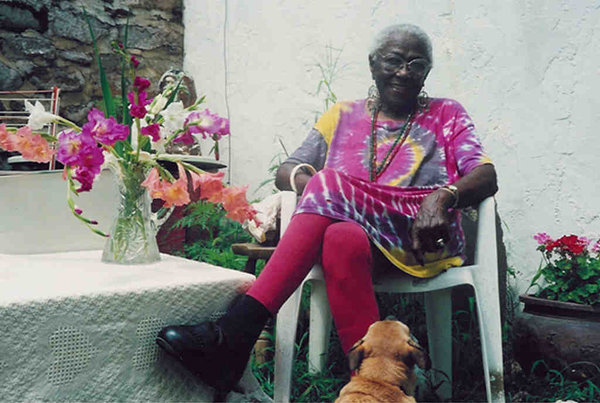
Thornton Township Black History Program Honors Dr. Margaret Burroughs

Tuesday, March 8, 2011 9:14 AM CST
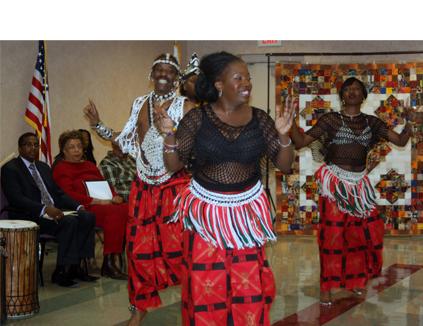
Thornton Township paid tribute to the late Dr. Margaret Burroughs, artist, poet, teacher and co-founder of the DuSable Museum of African American History during their annual Black History Month celebration held on Feb. 25. Those whose lives she touched shared their stories. The celebration also included performances by the Najwa African Dance Group, songs by Ugochi and the reading of two of Dr. Burroughs most well-known poems.

Barbara Horton of Dolton called it a wonderful, inspiring program. Although she never met Dr. Burroughs, Horton learned about her while transcribing her tapes as part of her work study program at Chicago State University. “I was surprised to learn about everything she did and was unaware of her artistic talent,” she said. Some of Dr. Burroughs artwork is now part of the township’s permanent collection which she had donated through the years.

Diane Dinkins-Carr, board president of the Southside Community Art Center said Dr. Burroughs was a wonderful mentor. She recalled visiting Margaret’s kitchen with her parents and hearing her great words of wisdom. “She left great footsteps to follow,” she said. Dinkins-Carr grew up at the art center where her father was the educational director.

Dr. Burroughs convinced her to join the board of directors. From there she became president in 1998 and continues to serve in that capacity.Dr. Burroughs was instrumental in starting the art center because she wanted a place for African American artists to exhibit their work. In 1935 a WPA (Works Project Administration) member told her that if she could find a facility they would fund it. The Southside Community Art Center opened in 1935 at 3831 S. Michigan. When the funding ceased Dr. Burroughs held drives to money to purchase the building and the lot which now has landmark status. Dinkins-Carr has vowed to continue Dr. Burroughs dream of bringing art the community and providing a place where emerging African American artists can become established artists.

Dr. Carol Adams, executive director of the DuSable Museum, said Dr. Burroughs lived her life between her two most well-known poems, What Will Your Legacy Be? and What Should I Tell My Children Who Are Black? That was her inspiration for starting the museum which is celebrating its 50th Anniversary. Dr. Burroughs often spoke of the needs of the community, stating “None will do it for me,” Adams said. She urged those in attendance to go out in the community and do what needs to be done. She added that Dr. Burroughs legacy also included reaching out to those who were imprisoned giving them hope for the future. “She memorialized her love of people by continuing to share her artwork with the community. She was a global activist, artist, and an institution builder,” Adams said.

Phillip London who served as her personal photographer in a volunteer capacity starting working with Dr. Burroughs in 1978 when he was a student. Several years later she asked him to travel with her around the world. Their trips included visits to South Africa and Cuba. “She was like a mother. She always had time to speak with you. She loved meeting the people and always had something to give them,” he said.

London shared some of his photos of Dr. Burroughs travels with the township for display and will donate them to the DuSable Museum. He too, carries on Dr. Burroughs legacy by mentoring young people pursuing a career in photography.

David Lowery, Jr., president of the South Suburban Branch of the NAACP, stressed the importance of continuing Dr. Burroughs dream. “We need to focus on our young people. Our children are perishing because they don’t know who they are and where they come from, “he said. “We must teach them.”

The participants thanked Thornton Township Supervisor Frank Zuccarelli and the Human Relations Commission for presenting the Annual Black History Program and for honoring the achievements of Dr. Margaret Burroughs. She was a longtime friend of the township.

Malcolm X’s Daughter Extradited to New York


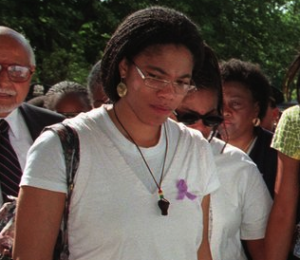
Malikah Shabazz, youngest daughter of iconic human rights activist, El Hajj Malik el-Shabazz (Malcolm X), has been extradited from North Carolina to New York City to face criminal charges stemming from the 2009 identity theft of a family friend.

Shabazz, who holds a Ph.D in Educational Administration and Human Development, will stand trial in Queens, NY for possession of stolen property, grand larceny, forgery, and criminal possession of forged instruments.

On February 22, one day after the 46th anniversary of her father’s death, Shabazz wasarrested for her crimes against the widow of her father’s bodyguard, who was with Malcolm X when he was assassinated in the Audubon Ballroom in Manhattan, NY.

“She used the fake identity to charge more than $55,000 in the victim’s name between August 2006 and November 2007,” said Queens District Attorney Richard Brown. The alleged theft represents a shameful betrayal of the friendship that existed between the two families.

Shabazz’s crimes were revealed when investigators, responding to a misleading report of truancy in her Mars Hill, North Carolina home, discovered a warrant for her arrest. Shabazz’s thirteen-year-old daughter was inside the home being properly home schooled, but the investigators were searching for a previous resident.

The beginning of February found several of the Shabazz sisters continuing their protracted fight over portions of their parents’ estate, with the proceedings escalating into accusations of theft, irresponsibility and “mental incapacity.”

Regardless of the arguments and legal battles, though, Shabazz’s five sisters were ready to hop a flight to North Carolina until they were informed by Malikah’s attorney that she would probably be returning to New York.

“We’re all sisters, despite the false and vicious reports put out in the media,” twin sister Malaak Shabazz said Tuesday. “We love her and our niece dearly. We’ll get through this.”

From Qubilah Shabazz’s attempted assassination of Minister Louis Farrakhan for his alleged involvement in her father’s murder, to the murder of Dr. Betty Shabazz by her grandson, Malcolm, this family has endured more pain than any one group of people ever should.

In her autobiographical book, “Growing Up X,” Ilyasah Shabazz offers a rare glimpse into the lives of one of Black America’s most revered families. The searing revelation that all the girls, Attallah, Qubilah, Gamilah, and twins Malikah and Malaak, had to live in silence with their mother holding on to Malcolm’s memory, often speaking of him in present tense, paints Malikah in an entirely different light


Benjamin Alvin ‘Al’ Drew Jr. Performs 2 Spacewalks as Part of Final Discovery Mission


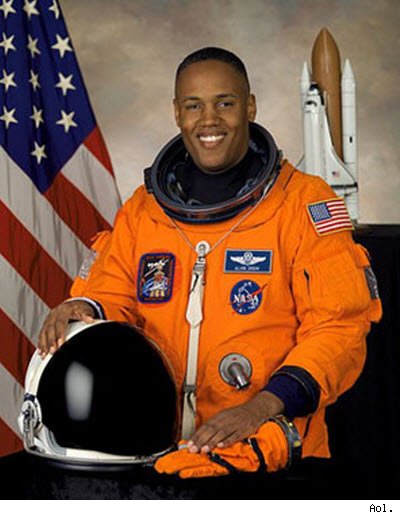
As the Space Shuttle Discovery makes its final descent from the International Space Station Wednesday morning and then heads to the Smithsonian Institute to be preserved for history, Benjamin Alvin “Al” Drew Jr. will be able to say that he was part of a historic moment.

The retired Air Force colonel is the only African American aboard what will be the final mission of the Space Shuttle Discovery. The crew delivered the first humanoid robot in to space. Drew, 48, also performed a pair of spacewalks during this final historic trip.

The two spacewalks helped to upgrade important parts of the international space station. During one of the spacewalks, Drew was tasked with removing toxic ammonia from a cooling unit. According to Space.com, Drew was also “removing thermal coverings, attaching camera lens covers and adjusting loose radiator grapple beams that had been improperly installed during a previous shuttle mission.”

Discovery is NASA’s oldest and most traveled shuttle. Only two more shuttle launches remain before the program is shuttered for good. The shuttle is expected to disconnect from the International Space Station this morning and spend another two days in orbit before returning to Earth on Wednesday.

“What a great program, and I got to be a part of it,” Drew said in an interview before this trip.

Usher joins Beyonce, Nelly Furtado in donating Qaddafi money

R&B crooner Usher (pictured above) is the most recent A-lister celeb who is hanging his head low after learning that he accepted “blood monies” from Libyan terrorist dictator Muammar Abu Minyar el-Qaddafi (pictured below middle).

Usher released a statement on Friday, saying that although he was paid for only appearing at Beyoncé ‘s 2009 St. Bart’s concert, he is “sincerely troubled” and will donate monies to human rights organizations:

“I will be donating all of my personal proceeds from that event to various human rights organizations,” he said in a statement released to the Associated Press.

The statement also said Usher made a contribution Friday to Amnesty International, which the organization confirmed. Now, as far as how much Usher donated, according to the group, the performer requested the donation amount be kept private.

The singer is not the only performer who has decided to take their Qaddafi earnings and re-gift it to some humanitarian charity.


Former Black Pizza Chain CEO Herman Cain Wants to Be President?

By Paul Shepard


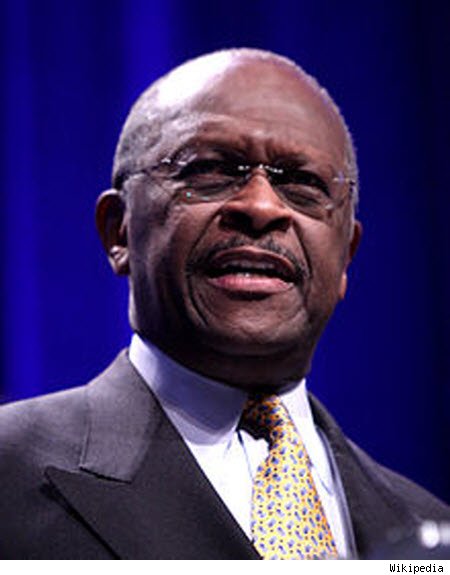
Herman Cain (pictured), former part-owner of the Godfather’s Pizza chain, wants to be president; yet, the 65-year-old Atlanta man is a stranger to most Americans.

That will likely prove to be a blessing and a curse as the field of Republican challengers to President Barack Obama sorts itself out over the next year.

The fact that Republicans are giving some attention to the businessman who has done little more politically than lose while running for a U.S. Senate seat in Georgia shows how desperate the GOP is in finding a torchbearer for the 2012 presidential election.

But maybe the lack of a political track record means the one-time pizza kingdoesn’t have the baggage many other possible candidates have, getting a fair hearing from Americans if he decides to go full force for the GOP nomination.

Like the search for the the Holy Grail, Republicans are continuing the search for a black face to help define the party.

So far, the quest has resembled a Keystone comedy sketch, with party leaders stumbling all over themselves chasing down a field of ill-equipped candidates, like the rigid Alan Keyes or the confusedMichael Steele.

About all we know about Cain thus far – beyond his part ownership of the pizza stores – is that Cain is opposed to abortion, wants a strong national defense and a return to the gold standard.

With a platform like that (the gold standard, really?), it’s no surprise that Cain is finding friends with some Tea Party folks. With the number of Tea Party activists who won election to Congress in November, Cain could gain an audience as the primaries draw near.

One thing in Cain’s favor is that the Republican field is doing little to distinguish itself so far:

Mike Huckabee keeps putting his foot in his mouth: First he made a mistake talking about where President Barack Obama was born and how it affects his policy making. Now Huckabee is starting fights with actress Natalie Portman over the issue of out-of-wedlock births.

Sarah Palin is clumsily trying to force a feud with First Lady Michelle Obama over her campaign to improve the health of Americans. Palin is proving she hasn’t advanced much from her days of writing notes on her hand during public speaking events.

I’m not holding my breath for Cain’s success, but Cain would have to do little more than pick useless fights and make just a little sense on the campaign trail to zoom to the top of the GOP field.


read more>>>>>>>>>>>>>>>>>>>>

President Clinton Honors Little Rock Nine


By: Manning Marable

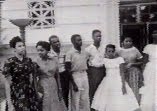
President Clinton joined members of Congress in presenting Congressional Gold Medals to the members of the “Little Rock Nine” (left) in recognition of the selfless heroism they exhibited and the pain they suffered in the cause of civil rights when they integrated Central High School in Little Rock, Arkansas in 1957.

“We honor them today, but let us not forget to heed their lessons,” Clinton said during the presentation in the East Room of the White House November 9. “They taught us that you can turn your cheek from violence without averting your eyes to injustice. And they taught us that they could pay their price and go on. Let us learn from them and honor their example.”

Clinton said that in some instinctive way, the “Little Rock Nine” knew that “honest and real differences can only be explored, confronted and worked through, and diversity can only be celebrated when we recognize that the most important fact of life is our common humanity.”

“The truth is, almost all children know that. They have to be taught differently,” the President said. “Because so many were taught differently, it fell to these nine Americans when they were young, as children, to become our teachers. And because they taught us well, we are a better country.”

The “Little Rock Nine” consists of Ernest Green, Elizabeth Eckford, Jefferson Thomas, Dr. Terrence Roberts, Carlotta Walls Lanier, Minnijean Brown Trickey, Gloria Ray Karlmark, Thelma Mothershed-Wair and Melba Pattillo Beals.


read more>>>>>>>>>>>>>>>>>

The Murder Of Emmett Louis Till The Spark that Started the Civil Rights Movement


By: Keith A. Beauch

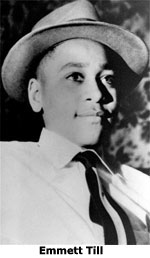
Unless you know the story of Emmett Louis Till, you do not know the racial dynamics that led to the Civil Rights Movement. The murder of Emmett Till was the first media event of the Civil Rights Movement. It demonstrated the horrors of racism in an event circulated throughout America and around the world. African Americans clearly understood that all African Americans were under attack, that no African-American male in the South was safe. The murder of Emmett Louis Till was to African Americans what the Japanese attack on Pearl Harbor was to Americans in December 1941, or the attack of 9/11 to Americans of our own day. We therefore take refuge in telling you what happened only because why it happened is too difficult to handle, so irrational as to be incomprehensible.

Emmett Louis Till was a fourteen-year-old African American born July 25, 1941 on the south side of Chicago, Ill. He was murdered by Roy Bryant and his half brother, John W. Milam, in Money, Mississippi. on August 28, 1955 for “Wolf Whistling” at Carolyn Bryant, wife of Roy Bryant.

When Emmett was two years old, his father, a soldier, was hanged in the Italian campaign of WWII directed by General Dwight D. Eisenhower. At five, he contracted the polio that made him stutter. At fourteen, he had just finished the eighth grade. At McCosh Elementary, in Chicago, Emmett, “Bobo” as he was called, was known as a 160 pound, energetic, practical jokester who was a fair student always at the center of attention. One of his teachers described Emmett as a natural leader. Saturday, August 20, 1955, Emmett and his cousin, Wheeler Parker, boarded the Illinois Central train to visit Emmett’s great-uncle, Mose Wright, his second cousin, Simeon Wright, his cousins Maurice and Robert Wright, and friends, all of whom he had visited before in the Mississippi Delta, near Money, Mississippi. They arrived in Mississippi on Sunday, August 21st. With their stories of life in Chicago, the two cousins were the center of attention. Monday morning, Emmett and his cousins began picking cotton for his great-uncle, Mose Wright, a sharecropper whose farm was near Money, Mississippi.

On Wednesday, August 24th, Emmett (14), along with Simeon (12), Maurice (16) Wright, Wheeler Parker (16), Roosevelt Crawford (15) and Ruthie Mae Crawford (18), went into town, Money, Mississippi, after a day of picking cotton. Each had a few pennies for candy, bubble gum, and soft drinks. Downtown Money, Mississippi. consisted of four buildings, one of which was Bryant’s Grocery and Meat Market, owned and operated by Roy Bryant. The Bryant’s store catered to African-American field hands, so African Americans often hung around the store playing checkers and otherwise having fun after a day in the fields picking cotton. Carolyn Bryant, wife of Roy Bryant, and Juanita Milam, wife of J.W. Milam, ran the store that afternoon. Roy Bryant was away.

Wheeler Parker went into Bryant’s Grocery first, made his purchase, and returned outside, rejoining his friends. Emmett then went into the store for his purchase. Simeon Wright, Emmett’s cousin, went into the store to get Emmett who was then on his way out. Ruthie Mae, the only female among the Black teenagers, watched Emmett through the store window the whole time that he was in the store. She saw Emmett Till place the money into Carolyn Bryant’s hand, rather than on the counter as he was supposed to do. An eyewitness to Emmett’s actions inside Bryant’s store, she would have seen any unusual gesture towards Carolyn Bryant had Emmett made any. The testimony of Ruthie Mae, and that of Wheeler Parker, is still available. In court, Carolyn Bryant testified that Emmett Till grabbed her around the waist and made lewd acts toward her.

Carolyn Bryant followed Emmett and Simeon outside the door of the store. As soon as she came outside of the store, Emmett turned around and “wolf-whistled” at her. Someone yelled that Carolyn was going to get a gun, so the boys jumped into Mose Wright’s car and headed home, Mose’s cabin. While the car was racing down the highway they looked back to find a car overtaking them. Thinking that the car contained Carolyn Bryant with her pistol, they quickly pulled to the side of the road, ditched their vehicle and ran into one of the cotton fields. They had not been followed. Carolyn Bryant never told her husband about the incident with Emmett Till, whom she did not know. But because of the number of African-American men outside of Bryant’s Grocery at the time, the news of Emmett Till’s “wolf-whistle” began to circulate around the African-American community. Emmett, his cousins, and his friends agreed not to tell Mose Wright, fearing that the boys would be sent home, back to Chicago, before their vacation was up.

Informed of the incident two days later, Roy Bryant and his half brother, J.W. Milam, began looking for Emmett Till. They found him at 2 a.m. the morning of August 28, 1955 at his uncle’s cabin. Entering the cabin with flashlights and Colt 45 pistols, they carried Emmett away, “To teach him a lesson,” they later reported to William Bradford Huie, a journalist for Look magazine. Three days later, on August 31, 1955, Emmett Till’s corpse was pulled from the depths of the Tallahatchie River, with a 75-pound cotton gin fan tethered to his neck with barbed wire, his right eye hanging midway to his cheek, his nose flattened, and a bullet hole through his head.

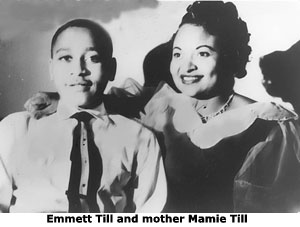
After days of lobbying state officials, Emmett’s mother obtained a writ of court ordering the Mississippi sheriff to release Emmett Till’s body for return to Chicago. The court order was received three hours before Emmett was to be buried in Mississippi without notice to his relatives, without ceremony, and without witnesses. Upon releasing Emmett’s body, the sheriff ordered the casket pad-locked and sealed with the Mississippi State seal. He prohibited anyone from opening it. In Chicago, Funeral Home Director, A.A. Rayner, obeying sheriff’s order, refused to open the box containing Emmett’s body. When he told Emmett’s mother his decision, she demanded a hammer, because she said, “I need to see my son.” The late, Mamie Till-Mobley, describes the corpse of her son she saw on September 2, 1955, in Chicago as follows:

I decided that I would start with his feet, gathering strength as I went up. I paused at his mid-section, because I knew that he would not want me looking at him. But I saw enough to know that he was in tact. I kept on up until I got to his chin. Then I was forced to deal with his face. I saw that his tongue was choked out. The right eye was lying midway of his chest. His nose had been broken like someone took a meat chopper and broke his nose in several places. I kept looking and I saw a hole, which I presumed was a bullet hole, and I could look through that hole and see daylight on the other side. I wondered, “Was it necessary to shoot him”?

Mr. Rayner, she says, asked me, “Do you want me to touch the body up?” I said, “No. Let the people see what I have seen. I think everybody needs to know what had happened to Emmett Till.”

read more>>>>>>>>>>>>>>>>>>>

African-American Shakespeare Company Closes Season with TWELFTH NIGHT

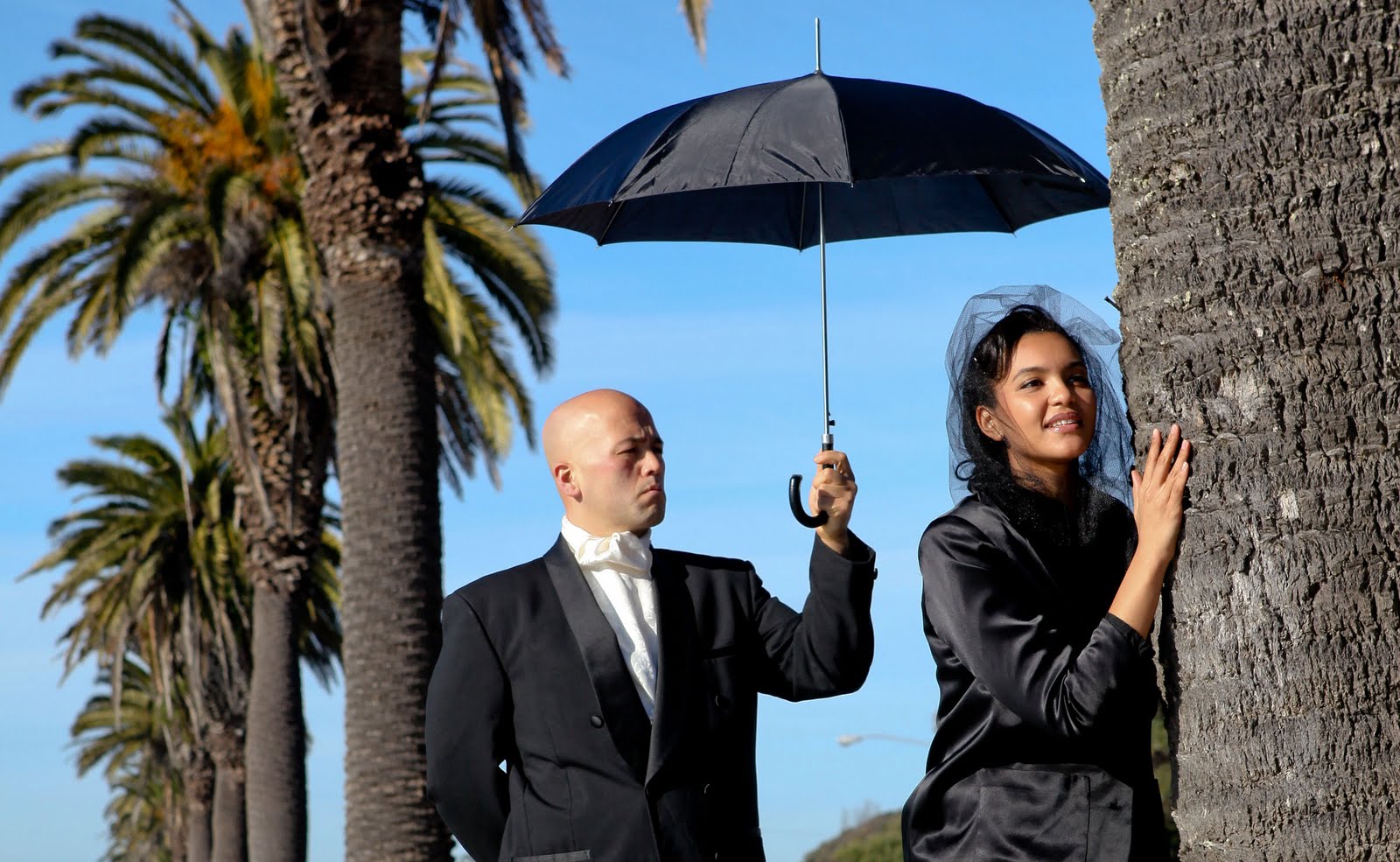
Closing African-American Shakespeare Company’s 16th season is a spellbinding take on Shakespeare’s TWELFTH NIGHT. Acclaimed actor and African-American Shakespeare Company Artistic Director L. Peter Callender directs TWELFTH NIGHT, featuring an original jazz score by renowned Bay Area jazz musician and composer Marcus Shelby. TWELFTH NIGHT plays April 1 through May 1 (press opening: April 1) at the African American Art & Culture Complex in San Francisco. For tickets ($15-35) and more information, the public may call 1-800-838-3006 or visit African-AmericanShakes.org.

This riveting, film noir-inspired production of TWELFTH NIGHT, The Bard’s most popular comedy, gets a provocative re-setting in the mid-1940s. African-American Shakespeare Company’s stylish re-imagining combines Shakespeare’s poetry with an original jazz score, transporting this tale of loss, new-found love, and mistaken identities to the fog-drenched streets and smoke-filled clubs of San Francisco.

” ‘Twelfth Night’ has always been my favorite of Shakespeare’s comedies,” said African-American Shakespeare Company Artistic Director L. Peter Callender. “Film noir is one of my favorite genres of movie-making as well; it recalls the hey-day of San Francisco and the hot and sultry sounds of the jazz music of the 1940s.” Continued Callender, “African-American Shakespeare Company’s re-imagining of this Shakespeare classic resets the story in my favorite

Read more >>>>>

‘The Rebirth of Black’ showcases local African-American artists

Betty Turney-Turner’s fascination with stained glass dates back to when she was a little girl attending church. She admits that plenty of times she paid more attention to the stained glass windows than to the message being delivered.

“I loved the way the sun would make the colors land on the pews,” she says. “It was alive. There was movement in it.”

Today Turney-Turner is one of a small handful of artists in the United States who depict African-American experiences in stained glass. Her images range from soulful jazz bassists to African women balancing baskets of fruit on their heads.

Her work, along with 11 other local artists, will be on display Saturday at the Ha Factory Gallery & Lounge downtown as part of the inaugural Rebirth of Black artist showcase. The event, which will coincide with the First Saturday Art Crawl, is being organized by the Nashville Black Artists Renaissance 12, a cooperative that aims to showcase the talents of area African-American artists.

jeff obafemi carr, a commissioner with the Metropolitan Nashville Arts Commission, says it’s difficult to find large collections of African-American art in Nashville, and he says he hopes this show will help fill that void.

“To my knowledge, there hasn’t been a coming-together of this level in a couple of decades,” says carr, who isn’t involved with the show. “There is a whole lot of talent here. It’s operated off of the radar of the mainstream. I’ve seen some of the artists’ work, and it will make you angry if you don’t have money to buy it.”

The artist showcase will feature 36 pieces, in mediums ranging from watercolor, oil, acrylic and airbrush painting to stained glass and photography.

Museums-East Bay Through March 13

AFRICAN AMERICAN MUSEUM AND LIBRARY AT OAKLAND ongoing. The Oakland Public Library’s museum is designed to discover, preserve, interpret and share the cultural and historical experiences of African Americans in California and the West. In addition, a three-panel mural is on permanent display.
Free. Tuesday-Saturday, noon-5:30 p.m. 659 14th St., Oakland. (510) 637-0200, www.oaklandlibrary.org.www.alamedamuseum.org.