Yale Show Looks At Black Identity


By: ROGER CATLIN

NEW HAVEN — — Before Black History Month disappears next week, it’s worth noting a major show on the subject of African American identity that opened last week at the Yale University Art Gallery.

The 54 pieces in “Embodied: Black Identities in American Art from the Yale University Art Gallery” were chosen from the Yale collection by students from New Haven and from the University of Maryland, College Park, where the exhibit showed at the David C. Driskell Center last fall.

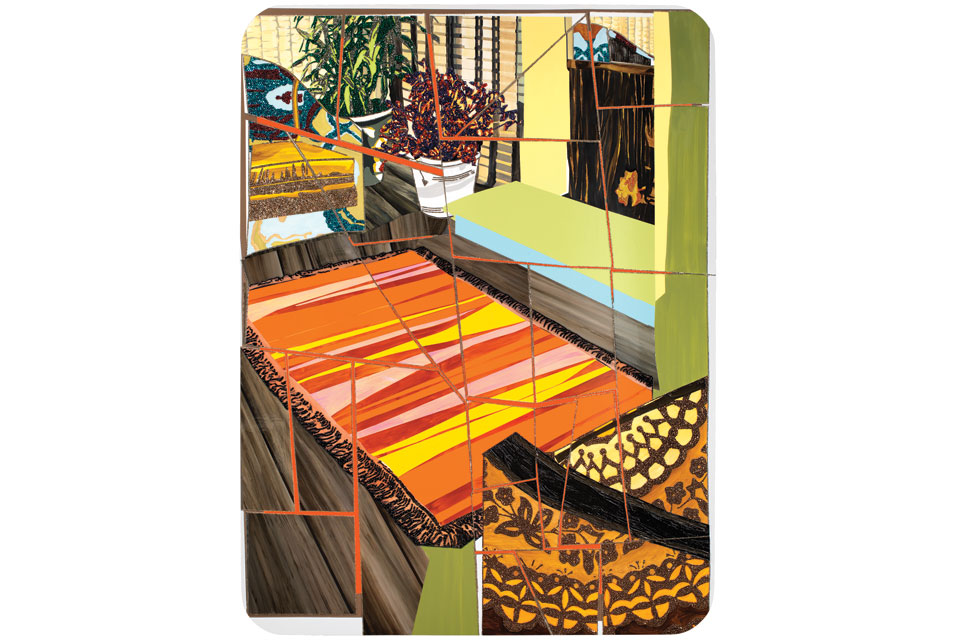
Organized around three large pieces, its centerpiece is Kerry James Marshall’s untitled 2009 acrylic of an African painter looking defiantly out from her work between the impressionist daubs of paint on a palette and a paint-by-number work behind her. From the no-nonsense gaze from the artist to the abstractions of her blouse, all manner of artistic possibility seem reflected.

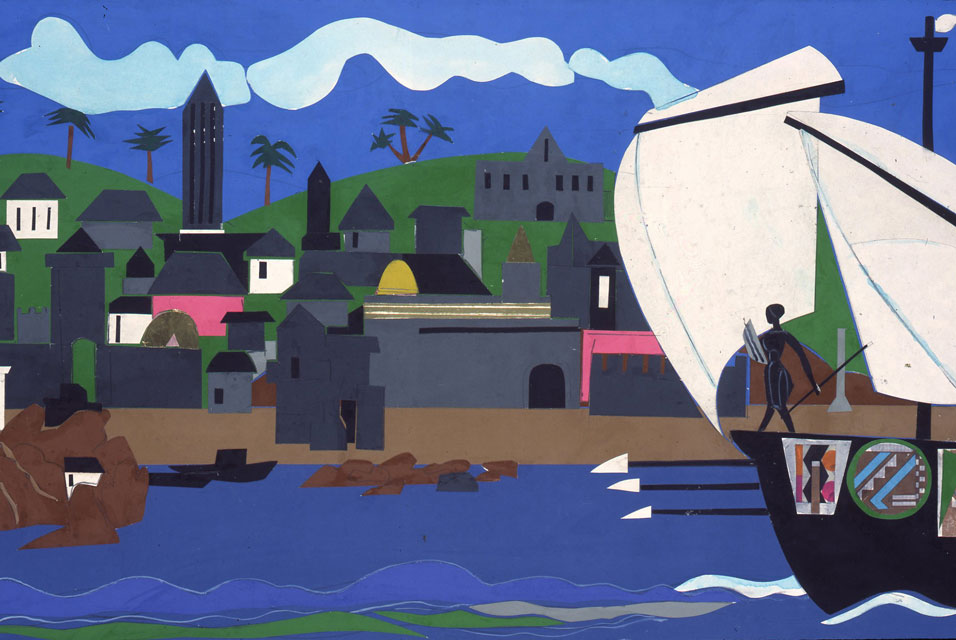
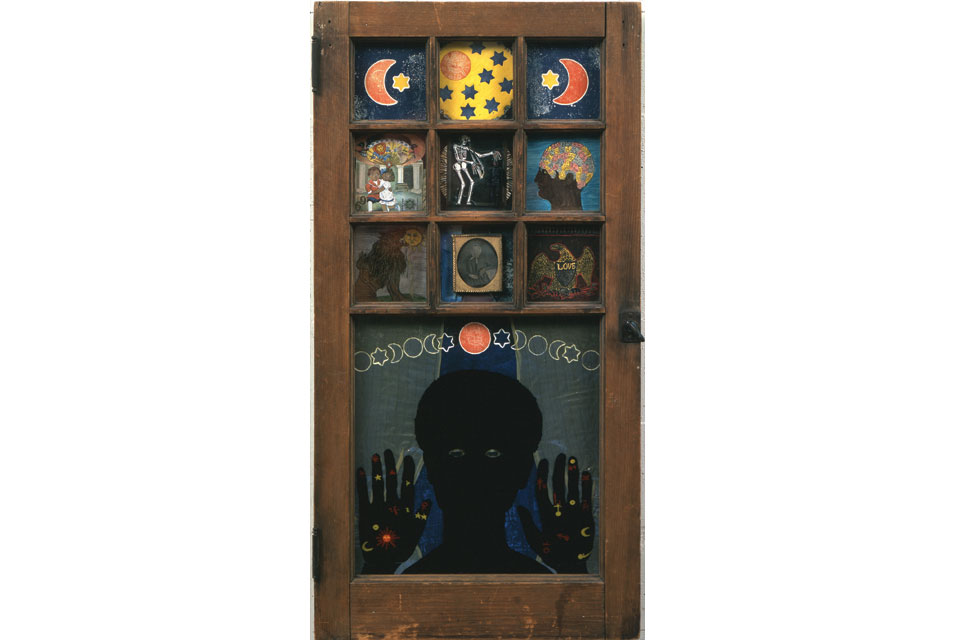
That’s the case with the works near it, from a collage by Romare Howard Bearden to the geometric abstraction of Felrath Hines to the explosive color field expressionism of Sam Gilliam.

read more>>>>>>>>>>>>>>>>>>>>>

American civil rights: the Welsh connection


by: Gary Younge

When Reverend Andre Reynolds, minister of music at the 16th Street Baptist church in Birmingham, Alabama, looks out to the congregation for inspiration, he occasionally lifts his eyes over the pews, beyond the balcony and sets his gaze on the Wales window.

“I think it’s wonderful that people halfway around the world should choose to affiliate with both the accomplishments and the disappointments of African Americans,” he says. “It just reminds us that the world is smaller than we think, and that there are brothers and sisters somewhere else who thought about us.”

The story of how those “brothers and sisters” transferred those thoughts into actions, and produced an enduring testament to their solidarity in the face of tragedy, involves a white craftsman, a black Jesus, a campaigning editor and two Klansmen. It’s a saga that starts with the murder of four black girls and ends with a little piece of Wales embedded in the heart of one of the most iconic venues of the American South.

On the morning of 15 September 1963, just after Sunday school at the 16th Street Baptist church, 15-year-old Carolyn McKinstry went upstairs to hand in some papers to the office. She heard the phone ring. “When I answered it the caller on the other end said, ‘Three minutes’. As quickly as he said that he hung up. I stepped out into the sanctuary and took about 15 steps . . . when the bomb exploded.”

Racist bombings were not extraordinary in Birmingham at that time. There had been more than 50 in the city during the civil rights era, all unsolved, earning it the nickname Bombingham among African Americans. And it was hardly a surprise that the assailants chose this church. Throughout the previous six months it had become the organising centre for the local civil rights movement, which had grown ever more strident.

But this bombing was different. It killed four young girls: Cynthia Wesley, Carole Robertson and Addie Mae Collins, all 14, and 11-year-old Denise McNair. Even for hardened segregationists, murder in a church was too much. But the outrage was not confined to the US. The revulsion was global. Four thousand miles away in Llansteffan, Carmarthenshire, artist John Petts heard the news. “Naturally, as a father, I was horrified by the death of the children,” he recalled in 1987. “As a craftsman in a meticulous craft, I was horrified by the smashing of all those [stained-glass] windows. And I thought to myself, my word, what can we do about this?”

Back in Birmingham, African Americans assumed nothing would be done.Four men, who formed a splinter group from the Klan, called the Cahaba Boys, were identified as complicit in the bombing. It was 14 years before Robert Chambliss, a Klan member, was brought to justice: it would take 37 years before another, Thomas Blanton, was put behind bars. Bobby Frank Cherry was jailed for life in 2002. Another man died before charges were brought.

In Wales, Petts, who died in 1991, decided to offer the only practical thing he could – his skills as an artist. “An idea doesn’t exist unless you do something about it,” he said. “Thought has no real living meaning unless it’s followed by action of some kind.”

So he called David Cole, editor of the Western Mail, and shared his idea. Cole launched a front-page appeal the next day to raise the funds to replace the smashed window. “I’m going to ask no one to give more than half a crown,” he told Petts. “We don’t want some rich man as a gesture paying the whole window. We want it to be given by the people of Wales.”

The campaign caught on, and soon the Mail was publishing pictures of black and white children in Cardiff’s Tiger Bay, lining up to hand over their pocket money. Within a short time the money had been raised. Petts travelled to Alabama to get a sense of what the church wanted. “They had never heard of Wales,” he said. “They had no idea where it was, but they were very quickly told something of the little country Wales was, and how it put great value on independence and freedom, to bandy with the great big words.”

He returned home and struggled to come up with a design worthy of the occasion. “How could it begin to be near the huge issue that was involved at a Christian level – the problem of what we do to each other during the short time we have the gift of living on the earth?”

Then it struck him. A verse from Matthew 25:40 that spelt out the Christian message of brotherly love: “Truly, I say to you, as you did it to one of the least of these my brothers, you did it to me.” Petts employed the last refrain: “You do it me”. Once the words were in place, the image followed. The window was installed in 1965. It showed a black figure, his chest thrust out and arms outstretched as though on a crucifix, the right one pushing away hatred and injustice, the left offering forgiveness. A rainbow, representing racial diversity, arcs over the head. Christ. As a black man. In the South. In the 60s.

“The boldness – in this country – of having a black Christ speaks volumes. For the African American community that’s not a stretch at all, but for many people in the white community during that time, to say that Jesus Christ was black and of African descent would be blasphemous,” explains the present 16th Street pastor, Reverend Arthur Price. “But I think the major message we try to take out of the window is not so much identifying Christ’s colour but knowing that Christ identifies with us. To the white community this is that the Jesus you love identifies himself with the African American community, so you are really crucifying him again when you persecute someone who does not look like you.”

Today, the Wales window is embedded not just in the church’s architecture but its identity. When visitors come from the Civil Rights Institute, an excellent museum cataloguing the era, just over the road, Petts’s window is always part of the tour. The story the guides tell has been somewhat embellished: “When the children of Wales heard of the tragedy they saved their pennies to buy a new window.” Roughly half the visitors I spoke to had heard of Wales (one thought it was London) – not a surprising number when you consider that Wales could fit into Alabama six times. But that’s what, beyond the imagery, makes the window so powerful. Even as people geographically closest to them saw them as alien and inferior, people they didn’t know existed not only identified them as fellow humans but sought to demonstrate support.

“I was surprised that people cared about blacks altogether,” explains Kathleen Bunton, a member of the church and lifetime resident of Birmingham. “Because if you had encountered the situations that were going on here . . . it was as if nobody cared. Of course you want to feel, that I know God cares and he loves us all, but to think that another race would respond to this was very moving for me.”

read more>>>>>>>>>>>>>>>>>>>>

Barbara Grad’s exhibit is a higher form of art

By ELISABETH KIRSCH


Long before Google Earth, artists (or, perhaps, aliens) created images that could only be viewed in their entirety from way up high.

Witness the Nazca Lines in Peru, the prehistoric Serpent Mounds in Ohio, and crop circles just about everywhere. Rock drawings in the Australian continent demonstrate that mapping the Earth — or what one thought was the Earth — began before recorded time.

Barbara Grad’s paintings reflect that ancestral need to take a bird’s-eye view, the better to locate oneself on the planet.

Her recent paintings in “Video Villa,” now at Kemper at the Crossroads in her first solo museum exhibit, are contemporary evocations of urban and natural landscapes fabricated from a virtual reality high in the sky. Her dizzying compositions spin, catapult and melt into abstract roadways that seem to plummet to the center of the Earth.

Curator Barbara O’Brien notes in the exhibition essay that Grad refers to the colors, forms, meaning, and perspectives in her work as “collisions,” an apt description for the globe’s current state of boundary disputes, cultural overloads and shifting allegiances.

In all her work, Brad also abuts one painted panel next to another of different size, which reinforces the notion of a collision or of fluctuating perimeters.

Grad is a professor of painting at the Massachusetts College of Art. As an art student in Chicago, she became familiar with the work of Joseph Yoakum (1890 – 1972), an African-American outsider artist whose pen and pencil artworks of abstracted, sinuously drawn, flattened landscapes first came to attention in Chicago.

Grad was inspired by his art, as well as the ethereal, translucent 15th century paintings of Piero della Francesca in Tuscany.

The density of Grad’s compositions, along with their strong graphic quality, also aligns her work with the muscular, contorted abstractions of Gregory Amenoff, and the tangled, painted skeins of Terry Winters’ organic abstract art. Grad clearly shares the same love of painting for the sake of painting for which both those artists are famous.

But her work differs significantly from theirs. Besides using a multi-paneled format, Grad’s art possesses a viscous emotionality. Her paintings consistently allude to the necessity and difficulty of communicating across the geographical and psychological divides that are now every where.

In works such as “Video Villa” and “Erosion,” which are packed with circuitous passageways and maze-like spaces, escape is clearly not an option. “Executive Shift” acts as a visual for both the seductiveness and the depravity of Wall Street’s famed corporate corridors, which here offer no exit or entryway. “Greenspace” has an otherwordly, underwater sensibility that is inviting but chaotic.

“Round Trip,” one of the smallest, simplest and most appealing works in the exhibit, looks like a spider web spinning out of control. It is so flirty and meticulously painted that it presents one ride we wouldn’t mind taking. In a world with too much information, Grad’s art insinuates, at least try to enjoy part of the journey.


Read more: http://www.kansascity.com/2011/03/09/2708804/barbara-grads-exhibit-is-a-higher.html#ixzz1GE9vxuAP

West Michigan Symphony, Muskegon Museum of Art team up for enrichment program

A fun day steeped in the arts and humanities is in store for more than 130 seventh- and eighth-grade students from six Muskegon County school districts on Friday.
Follow Your Art, a collaboration of the West Michigan Symphony (WMS) and the Muskegon Museum of Art (MMA), will be part arts and humanities festival, part arts education and will feature artistic workshops, museum tours and a live orchestral concert.
Structured similar to an adult conference, the day will begin with workshops presented by practicing artists and humanities professionals at St. Paul’s Episcopal Church.
“We wanted the workshops to be something the students wouldn’t necessarily have access to at school, giving them new exposure to different varieties of the arts and humanities,” said Cathy Mott, MMA curator of education.
Students will choose to participate in two of a variety of 10 workshops including a Storytelling workshop with former Chronicle reporter Clayton Hardiman, Face to Face portraiture with artist/professor Jon McDonald, Stage Fighting techniques by Kirk Wahamaki of the Muskegon Civic Theatre, and Violin vs. Fiddle with Becky Bush.
See You in the Funny Pages will explore the characteristics of heroes and superheroes, Sketch Up will show the youngsters how to use a sketchbook combining drawing and writing and, in Hot Off the Press, students will craft their own prints on MMA’s printing press.
Students also will be able to select one of three morning museum tours featuring the MMA exhibition, “We Are the Ship: The Story of Negro League Baseball.”
The day will conclude in the Beardsley Theater with a special concert presented by the West Michigan Youth Symphony, created especially for Follow Your Art participants, titled “All That Jazz: African-American Music.”
“We believe it is a nice connection for the younger students in Follow Your Art to be able to see older students pursuing their music with such enjoyment,” said Karen Vander Zanden, WMS director of education.
Of Follow Your Art, Vander Zanden said she learned about a similar program that her colleagues at the Omaha Symphony had created and she wanted to model that in Muskegon.
“I approached Cathy (Mott) and we both wanted to work together to bring a day of the arts to middle-school students,” Vander Zanden said. “We felt it was a great fit for our organizations and the close proximity that we both share in downtown Muskegon.”
The MMA submitted a grant request to fund Follow Your Art to the Michigan Humanities Council and found out in November that the $15,000 request had been approved.
Mott said both organizations were very interested in making the experience available to a wide range of students, and that they are pleased to have a great mix of urban and suburban students who will experience the day together.
“This has been a great collaboration,” Mott said. “Each student will experience historical buildings, great workshops, an art museum tour and a WMS performance in one day. We want the students to have a positive experience that will show them the great value the arts and humanities can offer them now and in the future.”
Vander Zanden is excited to offer students so much variety in a one day event.
“I hope this day sparks an interest in the arts, and an understanding and appreciation for the arts,” she said. “Hopefully, for some students, this ignites a passion for art and its opportunities for creativity and expression.”
Follow Your Art participating middle schools include Bunker, Steele, Muskegon Heights, Ravenna and Whitehall.

Georgia Museum of Art Hosts Artists’ Panel Discussion

The Georgia Museum of Art at the University of Georgia will host a panel discussion featuring 11 artists from the museum’s current exhibition of works by African-American artists, “Tradition Redefined: The Larry and Brenda Thompson Collection of African-American Art,” on March 24.

Carl Christian is primarily an abstract painter who earned an M.A. in music education from Georgia State University and attended the Art Institute of Atlanta. His work has been displayed in institutions such as the Civil Rights Institute in Birmingham, Ala., Morehouse College and Georgia State University in Atlanta.

Kevin Cole currently serves as the chairman of fine arts at West Lake High School in Atlanta and as a consultant for the Savannah College of Art and Design in Atlanta. He has been involved in numerous public art commissions, including the 1996 Coca-Cola Centennial Olympic Mural in Atlanta.

Stephanie Jackson envisions the African-American experience through figurative painting. She is currently a professor of art at UGA and has received awards including the 2002 Adolf and Esther Gottlieb Foundation Award in recognition of 20 years of sustained art making and dedication to the arts.

Larry Walker combines photos and other reproduced images with paint. He graduated from the renowned High School of Music and Art in New York City. He retired as professor emeritus from Georgia State University’s Ernst G. Welch School of Art and Design.

Larry Lebby specializes in lithography, watercolor and paintings in oil and acrylic. His work has been displayed throughout the United States and featured in the White House, the Smithsonian Institution, the United Nations and in the Vatican.

Richard Mayhew is primarily a landscape painter who considers himself an improvisationalist. He studied art in the 1950s at the Brooklyn Museum of Fine Art School, the Art Students League and the Brooklyn Museum Art School. His works have been exhibited widely in solo and group shows and are in the collections of major museums, including the Metropolitan Museum of Art and the Los Angeles County Museum of Art.

Valerie Maynard is an expressionist artist who draws her inspiration from spiritual and political sources, putting African-American culture and the political struggle of blacks into visual form. Her work has been displayed in international venues such as the Reichhold Center for the Arts, University of the Virgin Islands, St. Thomas, and the Riksutallnlgar National Museum, Stockholm, Sweden.

Maria-Lana Queen is a former runway model who began painting to transform the sorrow of her brother’s death into a celebration of his life. Her abstract paintings serve as a visual diary of her feelings. Queen received a B.A. from the University of the District of Columbia.

Preston Sampson studied under David C. Driskell at the University of Maryland, College Park. Since graduating in 1984, he has been awarded numerous grants and honors, including the Absolut Expressions ad campaign for Absolut Vodka in 1997. Joyce Wellman is an abstract painter and printmaker from New York who is known for her interest in the relationship among mathematics, physics and art. She also specializes in creating artist’s books and public art projects.

Abstract artist William T. Williams earned a B.F.A. from Pratt Institute and an M.F.A. from Yale University. He was the first African American to be included in H.W. Janson’s textbook History of Art. His work has been displayed all over the world in museums such as the Museum of Modern Art, the Whitney Museum of American Art and the Studio Museum of Harlem.

“Tradition Redefined” features 72 works by 67 African-American artists who typically have not been recognized in the traditional narratives of African-American art. This exhibition, which contains works created from the 1890s to 2007, is organized by the David C. Driskell Center for the Study of the Visual Arts and Culture of African Americans and the African Diaspora at the University of Maryland, College Park.

ART REVIEW: "No Boundaries" at Baobab


By Rebecca Rafferty

The Baobab Cultural Center gives voice to local and regional African-American concerns, joys, and visual talents more frequently than the designated annual Black History Month. Year round, the center serves as an important meeting space for community members, and as a venue for film screenings about African-American and African issues, community dialogue series and art exhibits, and even yoga classes.

Gallery Director Terry Chaka explained that the current exhibition, “No Boundaries: New Expressions in Black Art,” is the second in a series of three shows, each representing contemporary African American art from a different age group. The previous show featured 40- to 60-year-old photographers from New York City. “No Boundaries” is a representation of “how we see ourselves,” says Chaka, and includes two Rochester- and two Buffalo-based artists ranging in age from 27 to 41, “born post-Civil Rights era,” and featuring more technological aspects in the creation and presentation of their work. The final show will feature three artists in their early 70s, who Chaka calls exhibition veterans.

Upon entering the center, viewers will first encounter work by Rochester artist Michelle Harris that discusses the limiting stereotypes and definitions of women and races in American society. “Mudflaps” I & II are mixed-media works made to resemble the pin-up silhouettes often seen on the titular truck accessories. The left silhouette contains names women are called, ranging from the semi-flattering “Shorty,” “Betty,” and “Princess,” to the offensive “Heifer,” “Hoochie,” and “Bitch.”

In Harris’ “Three Graces,” nude and masked Barbie dolls are grouped in provocative poses together and surrounded by mirrors; as the viewer approaches for a closer look, cat calls and whistles emitted from an electronic element assault the viewer. “Barbie Mirror” is an interactive video installation in which a camera picks up your image as you look on and reflects you in pixels made up by images of the feminine-defining toy.

Photographic work by Harris includes the tender and maternal print, “Feet,” as well as more political works in which the artist takes on the ironic persona of Scarlett O’Hara. In “Scarlett Hopes,” the artist reaches, in silhouette, for lace curtains and beyond the transitioning day; the image is paired with the film’s memorable quote, “After all, tomorrow is another day.”

Buffalo-based visual artist and hip-hop MC and producer Edreys Wajed (a.k.a. Billy Drease Wiliams) demonstrates his illustration skills with acrylic and ink works celebrating creative and sustaining forces in black culture. “Strong-Willed” is a work of abstract gold and black, with the title in brass lettering. His “Scarification Series” features linear works in pen and ink of faces with waves and symbols in decorative patterning, and often incorporating birds and plants to show humans and nature in beautiful balance. In “Sing Peace,” a female singer emits a bird from her breath, and in “Breathe Life,” both a fetus and tree gust from breath. Check out Wajed’s music online, particularly his self-illustrated video for “Get Free.”

Also featured in this exhibition is artist and community arts organizer Shawn Dunwoody, whose own artistic talents occasionally get a much-deserved spotlight. One of my favorite works in the show is his simple, beautiful portrait “Moses,” a pastel and colored pencil, delicately rendered aged black man, his face and hair made up of highlights emerging from darkness like truth emerging from obscurity. The remainder of Dunwoody’s contributions are mixed-media works that engage our political and social understandings, challenging us to contemplate the past and consider the present and future. The collage, “I Am a Man,” includes news articles, a painted image of Martin Luther King Jr., and images of maps, protestors and soldiers.

In his provided artist statement, Buffalo State College graduate Hiram Cray reveals his understanding of something crucial in art and in life: “I am the art and I am the art work, the process and the product. My greatest, most grueling, and simple creation is me and the life I live – can’t create anything more beautiful or grotesque.” He also nods to influences from an artist mom and Montessori education, an “enriched and culturally diverse life,” and an interest in cartooning. This latter matter is apparent in his drawing and portraiture skills, with heavy emphasis on varying facial expressions found in his self-portrait series, and enhanced by his background as a facial prosthetics designer for a hospital in New York City.

Cray’s “4our Vices and T3ree Statues of Misguided Reality” self portrait reveals a beautiful face with a grounded expression, warm tones against a blue background, and youthful and contemplative brown eyes glancing up at a white square, on which is printed “Time is a here and there relative, existing only in its designation.” Cray’s work is joyful, celebrates wonder and discovery, and reflects his interests in philosophy and the human experience. Also included is his verse work, “I Love Tea,” which praises the sensual and near-spiritual experience of drinking the tonic. I hope this poetic youth retains his sense of wonder and play.

read more>>>>>>>>>>>>>>>>>>>>>>>>>>>

African folk art collection hangs in Natchez museum


by:Jennifer Edwards


PAM FINLEY holds a carving done by a New Orleans artist that is part of the African-American folk art owned by her and her husband, John Finley, at the National Association for the Preservation of African-American Culture Museum in Natchez. The art piece is one of several in a collection of west African and African-American folk art that was initially housed at the Ohr-O’Keefe Museum in Biloxi when that building was destroyed by Hurricane Katrina. The nearly 300-piece collection has found a new home at the Natchez museum.


Art and History Meet in African-American Exhibit at Museum


by: Margaret Burroughs


FAITH LAPIDUS: The National Museum of African American History and Culture is presenting the exhibit. It is called “The Kinsey Collection: Shared Treasures of Bernard and Shirley Kinsey – Where Art and History Intersect.”

It is being shown at the NMAAHC gallery at the National Museum of American History on the National Mall. The National Museum of African American History and Culture is to begin building its own center next year.

Bernard and Shirley Kinsey began collecting African American art and historical objects in the nineteen seventies. Bernard Kinsey says it started with an old document sent to him by a friend.

BERNARD KINSEY: “It was a bill of sale from William Johnson, eighteen thirty-two, for five hundred dollars. And when I opened that Fed-Ex up and held this document in my hand it was like I was holding this brother in my hand. And I said I want to know everything about him, and how he lived and this period. And that just started this deep and wide quest.”

The bill of sale is in a part of the show called “Stories of Slavery and Freedom.” The bill of sale, like many objects in this area, is extremely unsettling. The physical fact deepens the knowledge that people were once considered property.

There is a second bill of sale nearby. This time the purchaser is Henry Butler in eighteen thirty-nine. The bill shows a payment of one hundred dollars to Anne Graham of Washington, D.C. for the freedom of Henry Butler’s wife and four children. The bill states: “Signed, sealed and delivered.”

There are also a pair of shackles from around eighteen fifty. This device was placed around the ankles to restrain captives on the way from Africa to the Americas. The exhibit display explains that the shackles are so small they may have been for a child.

As visitors move through the show, they move forward in time. Covers of Harpers Weekly magazine give an idea of the involvement of black men in the Union Army. One cover shows the Twentieth Colored Infantry of Eighteen Sixty-Four receiving a silk banner in New York City. The banner was made by their mothers, wives and sisters. A proud African American crowd watches the ceremony.

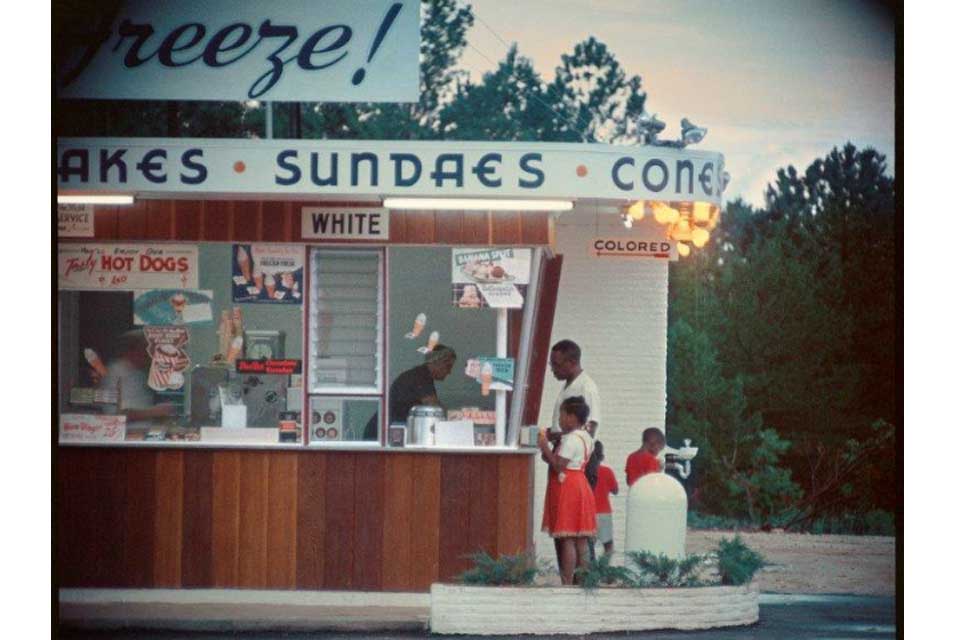
In the “Freedom Struggles” area, there are signs of racial separation. These include a drinking fountain sign with arrows pointing one way for “whites” and another for “colored.”

Toward the end of the exhibit visitors reach “Remembering the Faces of a People.” This joyous section includes oil paintings, woodcuts, drawings, sculpture, photographs, fabric art and more. It shows the many ways African American artists see themselves and their community.

And it was the best part of the Kinsey Collection for visitor Aaron Crenshaw, of Woodbridge, Virginia.

AARON CRENSHAW: “The touching artwork. I never knew about, never knew existed. Been in the military so I’ve seen, like, the military side. But the art factor. It’s just an eye opener, if you’ve never seen it before.”

The Kinsey Collection will be on view until through May first. For a link to the exhibit visit our website at voaspecialenglish.com.


read more>>>>>>>>>>>>>>>>>>>>

THE ART INSIDE OF ME!!!!!


I am a professional artist from Philadelphia,Pa. I am focused on providing high-quality service and customer satisfaction. I’m also focus to help my customers feel better. I can draw portraits,logos or any illustrations for any special occasions. I am based on the belief that my customers’ needs are of the utmost importance. I am committed to meeting those needs. As a result, a high percentage of my business is from repeat customers and referrals. I welcome the opportunity to earn your trust and deliver you the best service.

THE ART INSIDE OF ME!!!!!


Thank you for visiting my website. Art Inside Of Me is focused on providing high-quality service and customer satisfaction – I will do everything I can to meet your expectations.
Look around at my website and if you have any comments or questions, please feel free to contact me. I can also be found on www.octobergallery.com

Black History Museum: The Nobility of the everyday


By MAUREEN ELGERSMAN LEE

Before I moved to Virginia three and a half years ago, I started an intellectual journey unlike any I had embarked on before. The goal was as complex as it was simple: reconstruct the history of a small African-American community in a small city in northernMaine, a state with one of the smallest black populations in the country.

The goal was to understand why this black community almost tripled in size in the decades after the Civil War — and to learn where its members came from, where they lived and worked, what families they formed and what institutions they created.

While on this journey, I transcribed manuscripts of census returns that gave names, ages, occupations, addresses, property ownership, military service and literacy. I thumbed through countless high school and college yearbooks and found honor students, student-paper editors and band members. I read innumerable obituaries, which, in turn, led me to birth, marriage and death records. I even studied probate records — the final balance sheets of people’s lives.

read more>>>>>>>>>>>>>>>>>>>>>>>

Artist Explores African American Experience on Canvas


By Karla Dorweiler

“The most consistent theme in my work is that of visibility because I recognize that historically black people have generally been rendered invisible,” Best writes.

That theme carries through in all of her powerful paintings and collages, three of which are on display at the Farmington Hills Public Art Exhibition at City Hall. One piece, titled “Tubman’s Passage,” represents a slave’s journey from south to north.

Best didn’t approach the painting with the intention of telling that story.

“I had no idea what I was going to do when I went over to the canvas that day,” Best said. “After I started, it just came to me. I was really inspired in that piece.”

In December 2009, Best’s work was selected for a show at the Charles H. Wright Museum of African American History in Detroit. “Life for Me: The Artwork of Robbie Best” was on display for five months and featured 36 works.

The title of the show was taken from the name of the collage at the center of the display, “Life for Me.” The piece was inspired by a Langston Hughes poem, “Mother to Son.”

“It’s about black women and their experience in this country,” Best said. “There are lots of black women with college degrees that still have to do manual labor to make a living.”

One of Best’s favorite paintings, “Depth,” was purchased by Henry Ford West Bloomfield Hospital and hangs in its Artist Avenue Gallery. She used a staining technique in which she dilutes the oil paint and then manipulates it on the canvas without a brush, adding layers as she goes. Best has used this process with other paintings, including “Tubman’s Passage.”

Creating art is spontaneous for Best. She never starts with a sketch, even when she has an idea in her mind.

“When I have tried to start with a sketch, my hands take over and do what they want,” she said. “It’s that interplay between the hand, the canvas, and the mind.”

Best hopes people will look at the layers in her art, just as she hopes they also see the layers of her culture.

“I want to tell a story with my art,” said Best. “If that comes across in my work, then I’m successful.”

To see Best’s artwork and learn how to purchase one of her pieces, visit robbiebest.com.

read more>>>>>>>>>>>>>>>>>>>>>

Artist Talk: Shantrelle Lewis


By C. Zawadi Morris

New Orleans Native and Bed-Stuy resident Shantrelle P. Lewis is the director of public programming and exhibitions at the Caribbean Cultural Center African Diaspora Institute (CCCADI). She also is curator for a new exhibit, “Sex Crimes Against Black Girls,” which opened Saturday February 5th at the Skylight Gallery in Restoration Plaza.

Lewis has traveled around the world in her pursuit to gain greater understanding of the African aesthetic first-hand, including to Cuba, Ghana, Nigeria, Brazil, Jamaica, the Dominican Republic, Haiti, Puerto Rico, Spain and London.

Her curatorial credits include exhibitions on a variety of topics, including Contemporary Haitian Art, a tribute to Betty Davis, the Haitian Revolution, The Feminine in African Sacred Traditions and New Orleans sacred traditions. Lewis is producing her first documentary The Wild Magnolia, as part of an oral history project of the Magnolia Projects in New Orleans, of which she is the Project Director.

Lewis sat down with Patch to provide insight on her motivation behind a very serious subject matter pervasive in the black community, and within the black Diaspora – childhood sexual abuse – also the subject of her latest project at Skylight Gallery.

read more>>>>>>>>>>>>>>>>>>>>

A Black History Moment: Synthia St. James, Fine Artist, Illustrator, Designer, Author


by Rev. Irene Monroe
Synthia Saint James (1949 – )
Fine Artist, Illustrator, Designer, Author

You may not know her name, but you have seen her paintings everywhere from gift bags in Macy’s Department Store to a 2’8″x150 foot tile mural for Ontario International Airport. Synthia Saint James is an internationally known artist whose illustrations are on over 60 book covers including the literary works of African American women authors like Alice Walker, Terry McMillan, Iyanla Vanzant and Julia Boyd.

With her paintings running in the thousands of dollars Saint James most noted work costs no more than 37 cents when the United States Postal Service commissioned her to create the first Kwanzaa Stamp in 1997.

As a self-taught visual artist Saint James command of color and geometric forms intertwined with history and tradition exude an indelible Afrocentric style promoting family and unity. Saint James early influences were French Impressionists, primarily Van Gogh and Monet. Her contemporary influences are Ernie Barnes, Charles Bibbs, Larry ‘Poncho” Brown and Varnette Honeywood.

“When I was five years old, I knew that I wanted to be an artist simply because I loved to color and draw. When I actually truly knew that I wanted to be an artist, I was probably about eleven years old and that was after seeing “Moulin Rouge.” The movie dealt primarily with the life of Henri Toulouse-Lautrec, but it spoke to me of the passion of artists, the struggle to succeed in making a living as an artist and the importance of remaining true to your individual creativity and your own style of painting. I fell in love with the French Impressionists and that whole era.”

A graduate of Los Angeles High, Saint James attended Los Angeles Valley College and Dutchess Community College in Poughkeepsie, N.Y. She conducts art-marketing seminars and is a keynote speaker for major corporations, organizations and schools promoting art.

Saint James has completed over 50 commissions for major organizations, corporations and individual collectors, including Brigitte Matteuzzi’s School of Modern Jazz Ballet (Geneva, Switzerland), Essence Magazine’s 25th Anniversary, The Girl Scouts of the USA’s 85th Anniversary, Attorney Johnnie L. Cochran, Jr., Coca Cola for “The Lady of Soul Awards”, the International Association of Black Professional Fire Fighters, in tribute to the 12 black fire fighters lost in the terrorist attacks on the World Trade Center, etc.

Saint James has also licensed her images on gift bags, T-shirts, magnets, boxes, deck cards, puzzles, mugs, and calendars, watches, a CD-ROM, and she has recently signed a deal introducing “THE SYNTHIA SAINT JAMES COLLECTION”, a sportswear clothing line.

She is the recipient of numerous awards like the 1996 Coretta Scott King Honor for her illustrations in NEENY COMING, NEENY GOING, the 1998 Black Women Lawyers, Inc. Women of Vision Award and the 2004 Women of the Year in Education from the Los Angeles County Commission for Women.

Synthia Saint James’s paintings are a treat to your soul and an uplifting experience conveying family, harmony and unity.

“My art, for me, is a release, but at the same time, every painting is a child that I’ve created. There are several messages that I wish to convey through my art. They are unity and acceptance of all cultures because we’re actually all the same.”

read more>>>>>>>>>>>>>>>>>>>>

Artist Captures Artists in Local Show, B. jAXON wants to keep the legacy of African American blues and jazz alive.


By Jim Caroompas

The faces say it all – the sorrows, passions, joys, pain, are all there in the folds of the face, and most of all in the eyes. The faces are portraits of singers, musicians, fighters, actors and comedians. Most all of them are African American, and all are legends. And they can all be seen now through Feb. 28 at I’ve Been Framed on Ferry Street.

The artist is b jAXON (yes, that’s how he spells his name), a Hercules resident who has collaborated with frame shop owner and fellow artist Cathy Riggs to show his work in Martinez, after a successful stint at Hercules City Hall.

“I stumbled into Cathy’s realm,” he said. “She’s inducted me into the Martinez Arts Association. She’s been fabulous.”

His portraits include singers Marvin Gaye and Nancy Wilson, musicians Miles Davis and Louis Armstrong, boxer Mohammed Ali, and comedian Richard Pryor. He has also drawn rock musicians Jimi Hendrix and Carlos Santana.

“I’ve got hundreds of these portraits. They all evolve from the activity I’m engaged in at the time,” he said. “I get beat down trying to be an artist, then I pick it back up.”

“I’m a multi-media artist,” jAXON said. “There is audio that goes along with the visuals. I’ve definitely got music to go along with the faces. Trying to capture the passionate nature of the performance is what motivates me.”

His portraits definitely reflect that motivation. Many of the pieces show the subjects in the middle of a performance. Others, like the one of blues master Muddy Waters, don’t need more than a facial expression to galvanize the observer into the subject’s world. jAXON’s deft handling of charcoal and pencil on canvas reveal a subtle mastery of the medium that requires close attention to appreciate.

But even a casual observer can see that mastery at work in the eyes of the subjects. Singer Diana Ross looks sorrowful, even though her pose is one of casual happiness, due to the eyes. jAXON captures that dichotomy superbly. Even more contradictory is the sadness in the eyes of late comedian Richard Pryor.

jAXON has big plans for his work. He wants to get a grant that will allow him to bring the portraits and the music that goes with them on a tour of schools, so that young people can see and hear the musical history of their culture.

“It’s important to me that kids know where their music comes from,” he said. “Once they hear it, they understand.”

read more>>>>>>>>>>>>>>>>>