Students channel African-American writers

By Sarah Campbell

scampbell@salisburypost.com

SPENCER — Students at North Rowan Middle School channeled African-American writers ranging from Langston Hughes to Maya Angelou to Tupac Shakur on Wednesday during an African-American Read-In held in the school’s media center.

Language arts teachers Angie Fleming and Robin Hendrick hosted the second annual event, inviting students to read their favorite poems and passages from African-American literature.

“I checked out a bunch of books from the public library and we reviewed some of the authors we had already read,” Fleming said. “I encouraged the students to choose a poem that meant something to them.”

Eighth-grader Megan Braun read Maya Angelou’s “Phenomenal Woman” and “Woman Work.”

She said “Phenomenal Woman” reminds her that one’s values mean more than the opinions of others.

Samantha Souble said reading “Doubtless” by Nikki Grimes motivated her.

“With all the high school and college dropouts people must have lost their dreams along the way,” she said. “This poem reminds them they should still hold on to their dreams no matter what they are going through.”

Angela Elliot said “A Song of Hope” by Thomas Hardy filled her with emotion.

“When I was reading it I felt a lot of different things,” she said.

Fleming and Hendrick enlisted the help of a few other classes to complete the event.

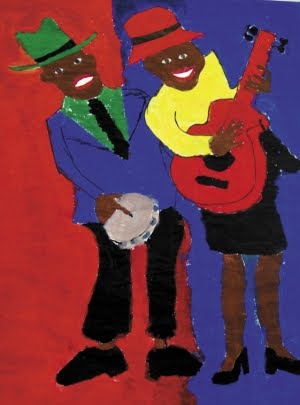
The chorus sang “Lift Every Voice and Sing” and art classes crafted colorful decorations to adorn the media center’s walls.

About 225 students in sixth, seventh and eighth grades participated in the event.

Eighth-grader Mark Moore, who read “Dream Variation” by Langston Hughes, said he would like to see the read-in continue for years to come.

“I thought it was a very good way for students to express their inner thoughts and emotions,” he said.

Eighth-grader Courtney Wright, who read “Just for a Time” by Maya Angelou, echoed Moore’s sentiments.

“I think the African-American Read-In is a good event to express yourself and learn about different cultures,” she said. “And, the more diversified you are the smarter you are.”

Elliot said the read-in was uplifting.

“It was very inspiring because when you read a poem you can put your own life into it.”

The event was hosted in conjuction with the 22nd annual African-American Read-In, sponsored by the National Council of Teachers of English.

The goal of the read-in is to make the celebration of African-American literacy a traditional part of Black History Month activities.

Contact reporter Sarah Campbell at 704-797-7683.

Read More >>>>>

For Youthbuild students, arts honors are just the beginning

CHARLIE LARDNER – The York Dispatch

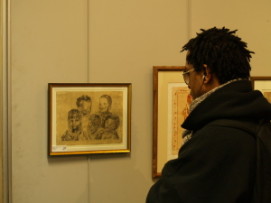
Being honored Wednesday by York Mayor Kim Bracey for their charcoal portraits of African-American icons was just the start of a year-long endeavor by Crispus Attucks Youthbuild Charter School students to dovetail art lessons with the history of black and Hispanic Americans.

An initiative by the York Art Association to spread appreciation of art and tap into new talent brought 13 Youthbuild students – mostly 17- and 18-year-olds – into formal art instruction by selecting an important black American figure and reproducing the person’s likeness under the tutelage of Association artist Evelyn Eighmey.

Voters in an online poll contest selected the winners. First place with 23.23 percent of the votes went to Talitha Rideout for her drawing of Duke Ellington, and second place with 19 percent of the tally went to Isiah Jones for his portrait of Mayor Bracey.

“There is a lot of talent here,” Bracey said. “I saw me, and I saw Barack Obama, but my favorite was Duke Ellington.”

Bracey also complimented D’Ante Hedgepeth for capturing the “sternness” of former Supreme Court Justice Thurgood Marshall’s sideways gaze.

Jones said he has long enjoyed drawing but that learning the textbook basics was far different than he anticipated.

“It was really complicated, and very different from the freestyle drawing I do,” he said. “They had us stand back from the easel as you draw and you have to get the depth of the cheekbones and the facial features. I think I killed it though.”

Youthbuild Principal Eugene Washington said the students will now proceed to the second phase of the Association’s Black History Art Project, “Symbolically Speaking,” where art instructor Ophelia Chambliss will challenge the students to create art inspired by looking to culture and heritage of the past in order to move forward.

The York Art Association and Youthbuild are also planning a project for National Hispanic Heritage Month in September and October, and possibly a wall mural at the Crispus Attucks Center tying together everything the students have learned.

Other Youthbuild students and their art displayed at City Hall are:

**Luz Rodriquez’s portrait of Barack Obama **Jessica Morales’ portrait of Martin Luther King **Mathew Arango’s portrait of Frederick Douglass **Noel Guerrero’s portrait of Booker T. Washington **Alex Mantalvo’s portrait of Dr. Ben Carson **Davina Roscoe’s portrait of Maya Angelou **Francheska Serrano’s portrait of W. E. B. DuBois **Ya’Riah Crawford’ portrait of Jesse Owens **Brianna Jackson’s portrait of Harriet Tubman **Brittany McClain’s portrait of Rosa Parks – Reach Charlie Lardner at 505-5439 or clardner@yorkdispatch.com.

Read More >>>>>

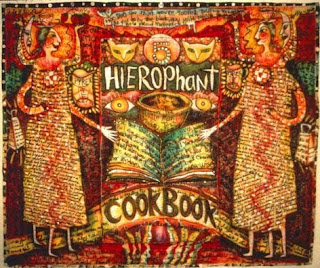
art quilts, combining text and image, & the Kitchen Tarot Continue reading on Examiner.com: Susan Shie — art quilts, combining text and image, & the

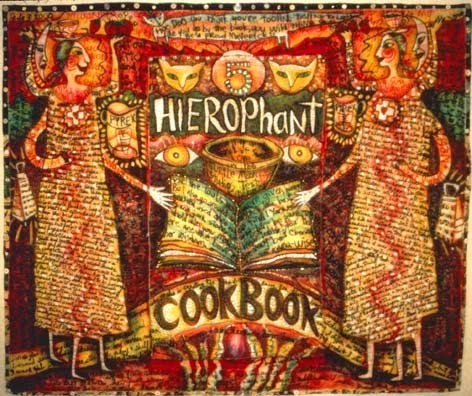
Susan Shie is an Ohio-based fiber artist and educator who has done a lot of amazing work with quilting. Her projects include Green Quilts, the Turtle Art Camp, and the book The Kitchen Tarot. Recently I spoke with Susan about her influences and ongoing projects.

Dan: How did you first get interested in the arts?

Susan: I drew a lot, painted, wrote, sewed, knitted, and worked in modeling clay as a small girl.

Dan: Did you get encouragement from your your family when you were young?

Susan: Yes, my parents and other adults really encouraged me. My eyesight has been very limited from birth, so I think that creating art was what I loved doing, because it didn’t involve trying to see well enough to catch balls at play, etc. At church, my folks let me sit on the floor and use the pew as a table for my drawing, so they could keep me contented during the church service, when I was tiny.

Dan: What is an early memory you have of doing something in the arts?

Susan: When I was little, I drew a lot of pictures in pencil, and was thrilled at age 4, when my mom found an Our Miss Frances Ding Dong School coloring book that was full of blank pages. Now we’d call it a sketchbook, but then it was a coloring book. And when I filled it up and we tried to buy another, they were gone. It was my favorite coloring book, by far!

Dan: What other kinds of artistic things did you do as a child?

Susan: I made story books for my friends, sometimes sending elaborate, one-of-a-kind drawing and writing combinations. Even in grade school, I was always the student who got asked to make murals for decorating our home room’s walls. Later I did our prom murals and watched them burn up in a bonfire after the prom. Ugh.

Dan: Oh no, that’s too bad. A lot of schools must do that — have students create these artworks that are temporary things that get tossed soon after they’re made. Who would you say are some of your influences?

Susan: Primitive art like that by Reverend Howard Finster. Henri Matisse, Chinese art, Egyptian art, Japanese art, Marc Chagall.

Dan: Who would you say is a contemporary artist who has influenced you a lot?

Susan: The American feminist artist Miriam Schapiro, who became one of my penpals after she did an artist’s residency at The College of Wooster in 1979, when I was a painting student there.

Dan: What were some things that Shapiro taught you?

Susan: I didn’t pick things up from her visual style, but she gave us the message that we might want to fuse our “women’s work” art from home with our studio art work. For me it was merging my sewing and my painting, as my feminist statement. And this was back before they had the term “art quilts.”

Dan: What are some interesting things that you like about working in fiber art?

Susan: My art quilts are easier to pack and ship than my stretched canvas paintings would be, but they’re pretty much the same imagery. Also most fibers photograph much easier than hard surfaced artworks do, because the light bounces off of cloth in many directions at once, allowing for almost no glare.

Dan: What are some things that you find fascinating about working with fabric, as opposed to creating artworks on paper?

Susan: Fabric is tougher against fading and water damage than anything done on paper. And its surface is more interesting, due to its varied surface undulations – how light and shadow play across it. You don’t have to frame most fiber art, which is great, as I hate frames!

Dan: What don’t you like about frames?

Susan: To me, frames strangle the artwork’s imagery…just my own opinion.

Dan: Hmm…that’s interesting. I’ve never heard it put that way… What do you like about painting on fabric?

Susan: Painting on fabric with an airbrush is a LOT easier than painting on a hard surface, because the paint immediately soaks into the bare fiber.

Dan: Do you have a particular way of working, or does each different project suggest different methods of working? How do you decide on color schemes and fabrics?

Susan: My way of working just slowly evolves. Right now I tend to make a lot of sketches with pens, til I hit one that feels good. It has the right characters and right actions going on in it. I’ve come down a path to this composition. Then I don’t look at it when I actually paint freehand with my airbrush or marker on the cloth.

Dan: Do you rely on sketches as you develop your compositions?

Susan: I can only peek at any or all of my sketches, especially the last one, but maybe others — to remember how the idea goes. I don’t want to copy the sketch; I want the drawing to again flow out fresh. The sketches are just records of my ideas.

After sketching, I draw with paint on fabric — usually with an airbrush. I color in the images in the painting with my airbrush, too. This is all done vertically, on the wall. Then I use my airpen to do the writing for a couple of months, after just days of making my painting. When the whole piece is written on, I quilt it very intuitively, and then I write a little more on the quilt’s borders.

Dan: I like how a lot of your quilts combine text with image. What are some things that you find so interesting about combining words with the images you create?

Susan: I love how I don’t have to embroider over all my words anymore. I used to hand sew for months and couldn’t write much. Now I use the airpen, which I had to figure out for this type of work, and write tons of stories on my work; because it goes fast, I can work very large now.

Dan: How do you decide on the content of the text in your art quilts?

Susan: Sometimes I include lots of current events and political news commentary, along with my personal diary stories. Each piece becomes a time capsule of that particular few months. I like that I can be showing a piece soon enough now, that the current events are still current. This is thanks to the airpen and to having switched to machine sewing, from all that hand sewing and beading.

Come in. Have a seat – the couch is comfortable, the side chairs, too.

Playing on the TV is a video you’ll enjoy. “Hello,” begins the charming gray-haired woman on the screen. “My name is Vivian Davidson Hewitt. Welcome to our home.”

Welcome to the Gantt Center in uptown Charlotte and a full and proper introduction to the John and Vivian Hewitt Collection of African-American Art. All 58 works by 20 artists that form the center’s core collection – a gift from Bank of America – are on view for the first time.

Paintings, prints and drawings by famous artists such as Jacob Lawrence, Charlotte native Romare Bearden and Elizabeth Catlett grace the west gallery. And then there’s Vivian Hewitt telling the story of the art, the artists and what she and her late husband created over almost a half century of collecting.

The video provides a fresh window into a remarkable collection. Together with the works, it tells a story not just of African-American art in the 20th century but how such art is appreciated and shared.

“The show is very personal,” said Michael Harris, consulting curator. “It’s not a museum collection; it’s a personal collection, and in a way the gallery felt like a big room in a home – and that’s why we have the couch and the video.

“It came together in a wonderful way.”

With a bang

About half of the collection went on view when the Gantt Center opened in 2009 on South Tryon Street. An opening in the schedule – and Vivian Hewitt’s birthday Feb. 17 – sparked the exhibit.

“It’s an extraordinary time to fully introduce the collection,” said David Taylor, center president.

Thinking about installing it, Harris wanted to open with a bang. He used “Gate in Tangiers,” an Impressionist-influenced work by Henry Ossawa Tanner, a famous artist of the 19th and early 20th century.

But now it is joined by two Tanner figure drawings, giving a fuller sense of the artist’s graphic skills.

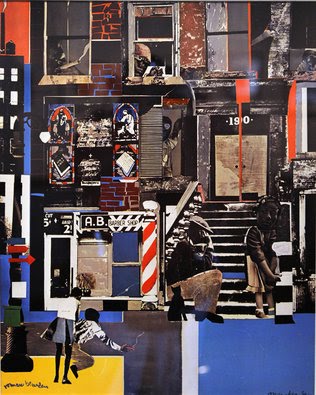
To end the show, also with a bang, Harris used work by Bearden. Here is a not-seen-before print, “Harlem Street Scene,” with people gathered before a barber shop and a holiness church.

Also on view: “Waiting,” by Ernest Crichlow from about 1965 showing a pretty and pensive young girl behind a screen of barbed wire and evocative of the struggle for civil rights. “Two Generations,” a portrait of two women by James Denmark in pastel tones that shows the influence of African sculpture. And “Harlem Games,” Virginia Evans Smit’s exuberant street scene.

These works were gathered by Vivian and the late John Hewitt, a New York couple who had limited means (she was a librarian, he a medical writer) but a passion for art. They bought works to celebrate birthdays and holidays – and always a special piece at Christmas.

NationsBank, a predecessor of Bank of America, bought the collection in 1998 for what was then called the African-American Cultural Center. While the city conceived and executed plans for a new facility renamed in honor of former Charlotte mayor Harvey Gantt, a portion of the Hewitt Collection toured the country.

The video showing Vivian Hewitt in her New York home was made by the bank to accompany the tour.

Read more: >>>>>

Black arts on stage in McKees Rocks

It looked like a dreary winter day outside, but inside the Father Ryan Arts Center in McKees Rocks, it sounded like a West African celebration.

The sensation of four hands and two drum sticks hitting five drums pulsed through the theater, as three drummers, dressed in purple African garb, played traditional West African songs.

The audience members sat back in their chairs, listening quietly until, at the urging of one of the drummers, they accompanied the ensemble’s rhythm with whooping and clapping and arm waving.

February is Black History Month, and Sunday evening’s “Celebration of African American Arts” was the first held at the McKees Rocks arts center. The theme was “past, present, future,” and the focus was paying tribute to the African-American arts and artists in the Pittsburgh area.

“We wanted to do something special during Black History Month to commemorate and to bring the community together for art and music,” said Barbara Owens, the co-chair of the event.

Ms. Owens and her co-chair, Isaiah Dent, gathered a long program of performers eager to show off their musical talents to the audience. Wanda Jones Dixon, a McKees Rocks councilwoman, and Debbie Norrell, lifestyle editor for the New Pittsburgh Courier, emceed the event.

Members of the Langston Hughes Poetry Society recited published and original poetry, sang spirituals and performed musical numbers on topics that ranged from slavery to the Harlem renaissance to the 2008 election of Barack Obama.

Sto-Rox High School senior and aspiring architect Terrance Moses, also known as Sergeant Streetz, performed a rap song he wrote called “One Way Road,” about the path he’s taking in life, as pictures and drawings to illustrate his words flashed on the screen behind him.

Four women in the musical group “Chosen” performed an original song and choreography called “Step Up Ya Game,” a message directed at absent black fathers. There were other singers, dancers and performers, and in the small room next to the theater, an art exhibit displayed work by African-American and African artists.

Breaking down barriers through art

Gene Austin and Todd Douglas Bailey are two artists living in Corning who won’t be pigeonholed.
Austin makes Afrocentric fine art and photographs. He’s also an accomplished graphic designer and website builder.
Bailey writes, produces and directs independent films and is a guitar player in a rock band.
Though they have divergent artistic directions, both use visual media for artistic expression, an area where African-Americans have seen gains in recent decades.

The first museums dedicated to African-American art began to open in the 1960s. Other museums that don’t have a black focus have been increasingly collecting and showing the work of black artists.
“There are a lot of indications that the visual arts, in terms of the African-American community, are expanding, growing, being called to not just the attention of African-American collectors; it’s available to a very large community,” said Collette Hopkins, the director of education and public programs at the National Black Arts festival in Atlanta.
Hopkins said one of the people she credits for bringing attention to African-American visual art is comedian Bill Cosby, who is scheduled to appear Friday at the Clemens Center.
Works by black artists found their way into many living rooms through “The Cosby Show,” she said, because it was in the home of the fictional Huxtable family.
“All over the walls were all of this artwork by African-American artists,” Hopkins said, noting that the artist Varnette Honeywood, who died in September, and others received exposure through the show. (The show is mentioned in the first paragraph of Honeywood’s obituary in The New York Times.)
“That was a major impetus for people to look at African-American visual artists who perhaps never might have seen it before,” Hopkins said.
Gene Austin
Gene Austin, who has lived in the Corning area for about nine years, thinks of himself primarily as a graphic designer and website developer for companies. But his artistic expressions extend beyond his professional life.
“Completely, as a person, I love doing photography and I love creating artwork,” he said.
Austin learned he loved art when he was young. His mother and aunt were both artists, he said.
He sold his first pastel painting, of sunlight hitting sand dunes, when he was around 14.
Austin has exhibited his work at Corning Community College, Corning Inc., Lockheed-Martin and other places. He’s sold about a couple of dozen works locally.
Austin decided to focus on Afrocentric art after observing that most of the locally made fine art he’s seen depicts the scenic aspects of the region.

Does America Need a Black History Month?

by Lyssette Trujillo

Billie Holiday, Palmer Hayden, Richard Wright, Garrett Morgan, George Washington Carver do any of these names ring a bell yet? These are all African American individuals who have contributed to American society in the way of music, art, literature and science.

Black History Month was first celebrated in 1976 and since then it has been honored every year on the month of February. It is to educate individuals about the contributions and achievements of African Americans to our society.

It is now 2011, 35 years later, and an inevitable question arises, do we still need a Black History Month? This question brings up several emotions from individuals across the country and the answer is a simple, yes.

This year, in proclaiming February the black history month, President Barack Obama said, “Though we inherit the extraordinary progress won by the tears and toil of our predecessors, we know barriers still remain on the road to equal opportunity.

Knowledge is our strongest tool against injustice, and it is our responsibility to empower every child in America with a world-class education from cradle to career.

We must continue to build on our Nation’s foundation of freedom and ensure equal opportunity, economic security, and civil rights for all Americans.”

Children around the country are not aware or educated about African American history and very little know of individuals, besides Dr. Martin Luther King Jr., that helped shape this country.

The study of African American culture will be necessary until US history education stops watering down the facts that makes slavery seem as less severe as it once was.

Social inequality is still very prominent in our country. It is our job to educate others about racism and the effects of it in our society. Black History Month sheds light on the social inequality that still exists and it educates individuals about how African Americans have contributed.

Black history, done eclectic

All across the Hudson Valley, Black History Month is being celebrated in the arts. From stage shows to art exhibits and jazz concerts, the legacy of African-American culture is out in full view this month in numerous venues. Here’s a look at a few events you can enjoy this month focused on African-American culture.

‘Made in Woodstock V: Artists of Color’

WOODSTOCK — There are no historical markers, and the sites have been destroyed over the years, but William Cordova’s photographic exploration of Mid-Hudson Black Panther and Young Lords chapters overlays activist history over modern life as a black or Latino man in America.

The photos of Timothy Portlock capture the effect of urban planning on the black community. The photographic work of these and 16 other artists from across the country draw from three years of work and participation in the Center for Photography of Woodstock’s Artist-in-Residency program.

“They’ve worked in traditional film capture, gelatin silver and computer techniques … really the full range of photographic options to express their art,” said Ariel Shanberg, CPW’s executive director.

“Made in Woodstock V: Artists of Color” is on display from noon-5 p.m. Wednesday-Sunday this month at the Center for Photography, 59 Tinker St., Woodstock. Call 679-9957 or visit www.cpw.org.

‘Sam Cooke: Where You Been Baby?’

BEACON — Passing the Torch Through the Arts lights up the Howland Cultural Center Saturday with a performance of “Sam Cooke: Where You Been Baby?” at 8 p.m., detailing the life of singer, composer and music entrepreneur Sam Cooke.

“Sam Cooke is a pop-American fable,” said the show’s producer Michael Monasterial. “It’s not a documentary. It’s the essence of the fall from grace of a genius. Given the same options, what would you do? Cooke had a sense of pride in his company and in himself as an African-American man.”

The play will also be performed Feb. 24 at SUNY Sullivan’s Seelig Theater and Feb. 26 at the Rosendale Theatre, Main St., Rosendale.

The evening also features a musical tribute to three generations of African-American musicians, including Cooke’s songs from the 1960s, R&B classics of the 1970s performed by Wendell Anderson and songs of the 1980s by Maya Monasterial.

The performance begins at 8 p.m. at the Howland Cultural Center, 477 Main St., Beacon. Tickets are $20, free for students. Monasterial said the same pricing will be in place for the Loch Sheldrake and Rosendale shows. Visit www.passingthetorchthroughthearts.com.

Read More >>>>>

African American groups excluded from county funding

The Erie County Executive’s decision to shut out dozens of cultural organizations from his budget has raised a host of concerns. Among them, some critics question why there weren’t any African American groups chosen to receive funding.

That’s the focus In the second part of the WBFO series, Culture in the Balance. Thrusday and Friday WBFO takes a look at how these groups – and the African American neighborhoods they serve – are especially vulnerable. That includes two of the largest groups.

You can stand outside and hear the drum class echoing deep within the walls of the plain, white cinder-block building on Masten Avenue. It’s almost like the heartbeat of an institution that’s kept on pumping for 53 years in this ailing, East Side neighborhood.

The African American Cultural Center provides dance and drum classes for children, theatre, festivals and events for people of color, and a host of after school programs that keep kids off the streets.

“What is going to happen to our children…it’s going to be a real sad situation if something isn’t done,” said Bain.

Agnes Bain has watched a couple generations of those children grow up at the Cultural Center. The Executive Director started here herself when she was just a teenager in 1976.

Bain leans forward with her body propped against her arms on a desk piled high with papers, grant proposals and a large calculator. She admits that years of roller coaster funding cuts have taken a toll on her. But she worries most about the Center. “If the current [public funding] trend continues, ther won’t be an African American Cultural Center,” said Bain.

When the county pulled out, the cultural center lost $132,000 for it and all of its umbrella programs – roughly a quarter of its budget. Bain said they especially count on that money to sustain the after school and cultural programs that teach kids to become good citizens.

Right now, these classes are free. Bain said parents in this neighborhood would have a tough time coming up with money for after school care. Bain says it is only fair that the county should assist them by helping to support an alternative.

“As we said to the county exec, there are African Americans who pay taxes,” said Bain.

The County Executive declined a request to comment on tape for this story. But his spokesman pointed out that the county did provide $300,000 of funding last year for an expansion project at the Colored Musicians Club.

But some county lawmakers said that one-shot funding decision was politically motivated. Still others have stronger words for why African American cultural groups are getting no operational funding.

“I would say it was racist, only because that’s what he’s showing me,” said Ghirmatzion. I’m going to call it like I see it. I think it’s just absolutely racist.”

Read More >>>>>

Obama on African American History Month

A proclamation by the President of the United States:

The great abolitionist and orator Frederick Douglass once told us, “If there is no struggle, there is no progress.” Progress in America has not come easily, but has resulted from the collective efforts of generations. For centuries, African American men and women have persevered to enrich our national life and bend the arc of history toward justice. From resolute Revolutionary War soldiers fighting for liberty to the hardworking students of today reaching for horizons their ancestors could only have imagined, African Americans have strengthened our Nation by leading reforms, overcoming obstacles, and breaking down barriers. During National African American History Month, we celebrate the vast contributions of African Americans to our Nation’s history and identity.

This year’s theme, “African Americans and the Civil War,” invites us to reflect on 150 years since the start of the Civil War and on the patriots of a young country who fought for the promises of justice and equality laid out by our forbearers. In the Emancipation Proclamation, President Abraham Lincoln not only extended freedom to those still enslaved within rebellious areas, he also opened the door for African Americans to join the Union effort.

Tens of thousands of African Americans enlisted in the United States Army and Navy, making extraordinary sacrifices to help unite a fractured country and free millions from slavery. These gallant soldiers, like those in the 54th Massachusetts Infantry Regiment, served with distinction, braving both intolerance and the perils of war to inspire a Nation and expand the domain of freedom. Beyond the battlefield, black men and women also supported the war effort by serving as surgeons, nurses, chaplains, spies, and in other essential roles. These brave Americans gave their energy, their spirit, and sometimes their lives for the noble cause of liberty.

Over the course of the next century, the United States struggled to deliver fundamental civil and human rights to African Americans, but African Americans would not let their dreams be denied. Though Jim Crow segregation slowed the onward march of history and expansion of the American dream, African Americans braved bigotry and violence to organize schools, churches, and neighborhood organizations. Bolstered by strong values of faith and community, black men and women have launched businesses, fueled scientific advances, served our Nation in the Armed Forces, sought public office, taught our children, and created groundbreaking works of art and entertainment. To perfect our Union and provide a better life for their children, tenacious civil rights pioneers have long demanded that America live up to its founding principles, and their efforts continue to inspire us.

Though we inherit the extraordinary progress won by the tears and toil of our predecessors, we know barriers still remain on the road to equal opportunity. Knowledge is our strongest tool against injustice, and it is our responsibility to empower every child in America with a world-class education from cradle to career. We must continue to build on our Nation’s foundation of freedom and ensure equal opportunity, economic security, and civil rights for all Americans. After a historic recession has devastated many American families, and particularly African Americans, we must continue to create jobs, support our middle class, and strengthen pathways for families to climb out of poverty.

Read More >>>>>

Dance group brings culture, art of Brazil to Phila.

Brazil’s premiere professional folk dance company, Balé Folclórico da Bahia (BFB), was officially welcomed to the region on Thursday by Philadelphia Mayor Michael Nutter; Chief Cultural Officer, Gary Steuer; Councilwoman Jannie Blackwell and Stanley L. Straughter, chairman of the Mayor’s Commission on African and Caribbean Affairs.
The Brazilian state of Bahia is said to be the most African part of Brazil, a place where otherwise long forgotten gods are still remembered.

The 38-member troupe of dancers, musicians and singers performs a repertory based on “Bahian” folkloric dances of African origin, and includes slave dances, capoeira (a form of martial arts), samba and those that celebrate Carnival.

The company presents the region’s most important cultural manifestations under a contemporary theatrical vision that reflects its popular origins. Balé Folclórico has a well-earned, prestigious reputation performing internationally throughout Europe, Asia and North America.
Over the course of their weeklong visit, from Feb. 7-11, Balé Folclórico will seek to establish relationships with key stakeholders within the region’s artistic, cultural, academic and philanthropic communities.

“This week here, I am sure we are going to be able to show the African root left by the slaves in Bahia centuries ago,” said BFB co-founder Walson Botelho.
Balé Folclórico will present several unique opportunities for Greater Philadelphia to learn more about its work and the Afro-Brazilian cultural traditions that inform the company’s repertoire.

There will be various activities, including private Afro-Brazilian dance and drum master classes at both University of the Arts and Temple University, capoeira presentations at the International Capoeira Angola Foundation, lecture-demonstrations at Imhotep Institute Charter School, public workshops at the Performance Garage, meetings and other social gatherings. Balé Folclórico is keen to explore potential future collaborative opportunities with Philadelphia’s arts and cultural community and academic institutions.
“Our young people, and those who are young at heart, are going to enjoy the performances and the engagement of having you here for a little while,” Nutter said.

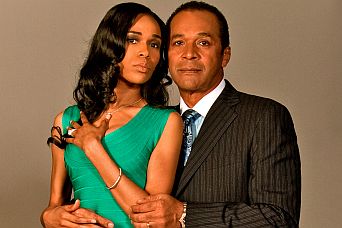
Destiny’s Child alum stars in ‘What My Husband Doesn’t Know’

Michelle Williams, formerly a member of Destiny’s Child, widely recognized as the best-selling female group of all time, stars in David E. Talbert’s “What My Husband Doesn’t Know,” coming to the Merriam Theater, 250 S. Broad St., Feb. 8–13.
The talented cast also includes the multi-talented Clifton Davis, Grammy Award-winning gospel singer Ann Nesby (former lead singer of Sounds of Blackness) and Brian White, the son of NBA great Jojo White and one of the stars of the hit movie “Stomp the Yard.”
Williams stars as Lena Summer in “What My Husband Doesn’t Know,” and she recently spoke about her new role as she and Talbert were traveling together to promote the show’s upcoming national tour.

“Lena Summer [is] a wife and a mother,” Williams explained. “She [does] those things very well, but she married a man who had a very successful business, and he gets very busy — his job is very demanding, and he neglects some important things at home. People see women with rich husbands, big houses and cars and they think everything is peaches and cream, but they don’t realize that woman is longing just for her husband. She wants him.”

Clifton Davis stars in the role of Lena’s husband Franklin, while Brian White plays Paul, a top-notch plumber who is hired to lay some pipe — I mean, do some work on the couples’ home.
“Paul was highly recommended to my husband for this job, so my husband hired him as he was the best one — he got all these great referrals,” Williams says. “So [Paul] is just amazing at what he does, and then Lena finds out that he’s amazing at what he does!”
Talbert, a longtime friend to the Philadelphia Tribune, says that Williams, who made her theatrical debut in 2003 when she replaced Toni Braxton on Broadway in the title role of “Aida,” is perfect for the role of Lena.

“I’ve been trying to work with Michelle for a few years and her schedule
was all over the place, from ‘The Color Purple’ to ‘Chicago,’ said Talbert, as Williams sat nearby.

“So when it was time to cast this one, I sent her an email – you how sometimes big celebrities, they give you a fake email? I had to check and see if it was still working. She hit me back in about 30 seconds. She was in London finishing up ‘Chicago,’ and so we ended up getting on Skype and talking for two hours. I told her about the play and read her some of the scenes, and by the time it was over she said, ‘Okay. Let’s do it!’
“Not only do I think she’s elegant as a lady, but I love her voice, and what I did not know is that her comedy chops are like they are. The girl’s got crazy comedy chops! I mean, her comedy I.Q. is through the roof, so she’s just wearing the role out!”
Now a seasoned actress, Williams studies acting with Ivana Chubbuck, and is inspired by actors Halle Berry, Jack Nicholson, Angela Bassett, Nicole Kidman and Alfre Woodard.

She starred in the touring production of “The Color Purple,” and appeared in “Chicago” in London and on Broadway, but says that landing her first professional role in “Aida” was a defining moment.

Flint Public Library celebrates African authors with ‘Read-In’ this month

Children, teens, adults, families, groups and organizations are invited to join the Flint Public Library (FPL) in its celebration of African American History Month by reading works by African American authors.

FPL is hosting its third African American Read-In from 11 a.m. to 2 p.m. Feb. 12.

The celebration begins with African American tales for families and children from 11 a.m. to 12:30 p.m. There will be crafts, story time and the tell-a-tail therapy dog will there.

From 12:30 to 2 p.m. everyone is invited to hear stories by and about African American authors.

Guest presenter Rodney Creech, resident artist and instructor at the Flint Youth Theater will be performing works by James Baldwin at 12:30 p.m.

The Dr. Betty Shabazz Delta Academy girls youth group, sponsored by Delta Sigma Theta Sorority, Inc., will follow sharing poetry, literature and dance.

“This can also be a time of discovery,” Wanda Harden, public relations coordinator for the Library, said in a press release.

“The Flint Public Library’s Gloria Coles Black Life collection has over 1,000 titles and authors to explore. In addition, our children’s collection is full of books by and about African Americans. The Library is a host site for the Mott-Warsh Collection of fine art created by artists of the African diaspora and we currently have an exhibit through February 25 to meet The Divine Nine: Historically African American Fraternities and Sororities. Our February calendar is full of free events celebrating African American history.”

The African American Read-In is a national event which began in 1990, and was sponsored by the Black Caucus of the National Council of Teachers of English.

In 1991, the National Council of Teachers of English joined in the sponsorship. The Read-In has been endorsed by the International Reading Association.

Over a million readers of all ethnic groups, from 48 states, the District of Columbia, the West Indies, and African countries have participated. The goal is to make the celebration of African American literacy a traditional part of Black History Month activities.

Admission is free to all of these events at FPL.

The Library is located at 1026 E. Kearsley St., Flint.

For more information, call (810) 232-7111 or visit www.fpl.info.

Read More >>>>>

New Rochelle Library Hosts Annual African American Art Exhibition

The African American Art & Cultural Appreciation Council held its 18th annual art exhibit Sunday afternoon, featuring works by artist Carolyn Maitland and her stunning array of abstract paintings and visual representation of African culture and history.

“These events do take a great deal of work and I’m happy if I can get a few exhibitions a year,” said Maitland, whose work has been featured around the world over the past five decades.

“My first painting I did out of college in 1953, my husband bought me some supplies and I went to work,” recalled Maitland.

Each year, the council selects an artist and artistic theme to highlight. One of last year’s honorees was George Patterson, who also has been an artist for most of his life. “Once I retired I was happy that I could focus on my art full time and being honored by the council is a very satisfiying accomplishment,” said Patterson.

The spotlight on Sunday belonged to Carolyn Maitland, who was born and raised in New York.

“Later in life I became interested in African history and the arts and when I studied everything I could about the subject, I saw so many similarities from hundreds of years ago to today, such as the hairstyles and even their dress,” said Maitland, who recently began painting with oils.

“Her work is very interesting, some being very abstract while her metal work shows such realism,” said Bernard Raymond of Mammaroneck while gazing at a print portrait of Malcolm X from the 1960s.

Read More >>>>>

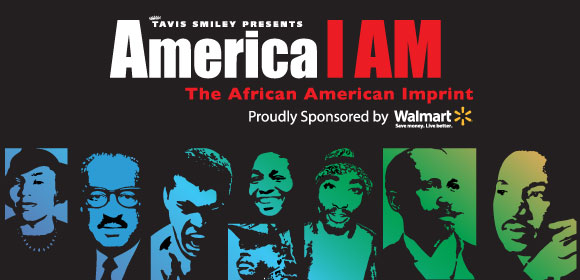
NATIONAL GEOGRAPHIC MUSEUM TO HOST ‘AMERICA I AM: THE AFRICAN AMERICAN IMPRINT’ EXHIBITION

America I AM: The African American Imprint,” an award-winning touring exhibition conceived and presented by broadcaster Tavis Smiley, opens at the National Geographic Museum in Washington, D.C., this week. With more than 200 artifacts, the exhibition celebrates nearly 500 years of African American contributions to the United States. The museum’s presentation, opening Wednesday, Feb. 2, 2011, during Black History Month, and continuing through Sunday, May 1, 2011, is the fifth stop on the exhibition’s 10-city, four-year tour.

“We are pleased to host this exhibition highlighting the contributions of African Americans and furthering a dialogue about our collective experience,” said Susan Norton, director of the National Geographic Museum. “We look forward to sharing the stories — some familiar, some surprising — of the influential African Americans featured in the exhibition. Our hope is that visitors leave with a richer understanding of the diverse culture and history of the United States.”

Through 12 galleries, this ticketed exhibition offers an in-depth look at the pivotal role African Americans have played and continue to play in the development of America.

“America I AM: The African American Imprint” is developed in partnership with Tavis Smiley and is organized by Cincinnati Museum Center and Arts and Exhibitions International, a division of AEG Live.

The exhibition is made possible by presenting sponsor Walmart Stores Inc. Educational partner Northern Trust has provided free tickets and transportation to underserved school groups in the D.C. area one day a week for the first month of the exhibition. Local sponsors include GEICO; The Madison, the museum’s Official Hotel Partner; and Amtrak.

“Walmart is proud to sponsor the ‘America I AM’ exhibition as the nation embarks upon its annual celebration of black culture and contributions in the United States,” said Alex Barron, regional general manager, Mid Atlantic States, Walmart U.S. “To help give all families access to this rich collection of history and culture, we are making tickets available for purchase in select Washington, D.C., area stores.”

“Northern Trust is proud to be the educational partner of this inspiring exhibition portraying some of the many significant contributions African Americans have made to our society,” said Northern Trust Chairman and CEO Frederick H. Waddell. “We are deeply committed to promoting cultural understanding and inclusion among our employees, clients and the communities we serve. We hope many people in the Washington, D.C., area and around the world will experience ‘America I AM’ and its celebration of African American history and culture.”