“Past Forward: African Spirituality in Contemporary Black Art”

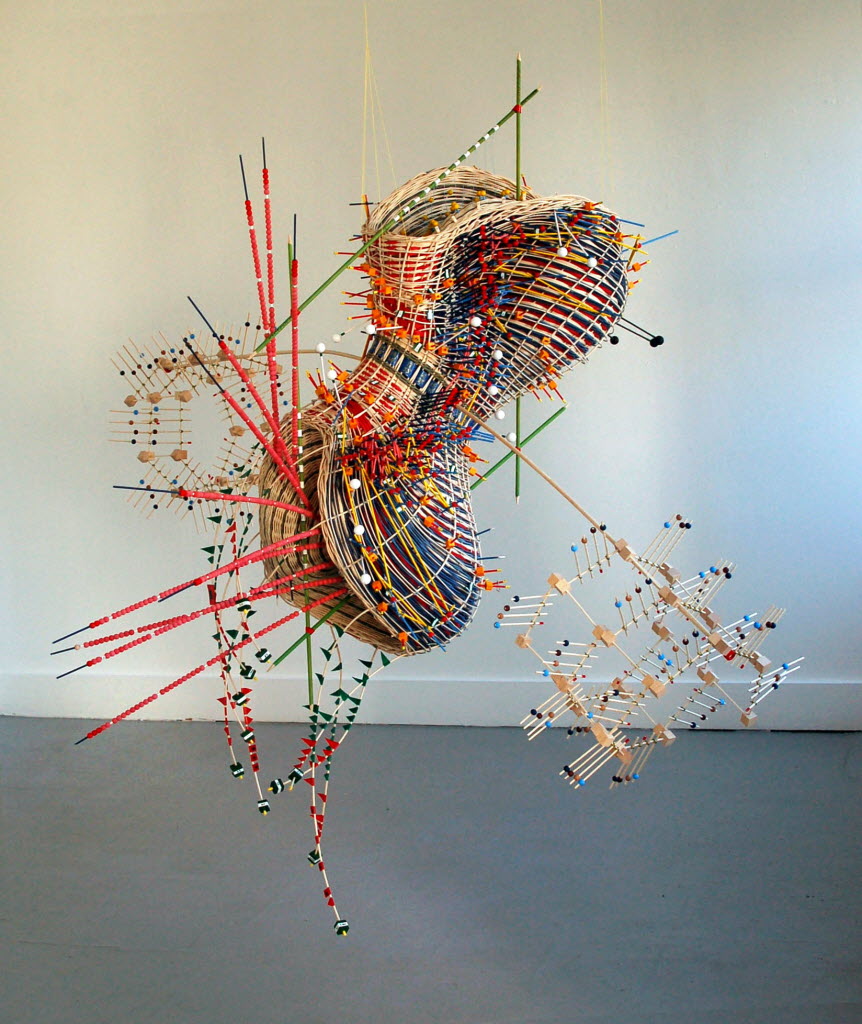
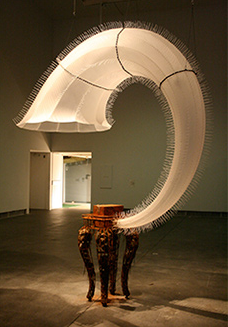
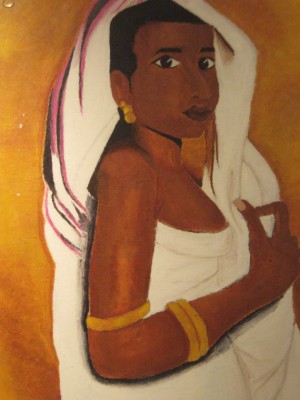
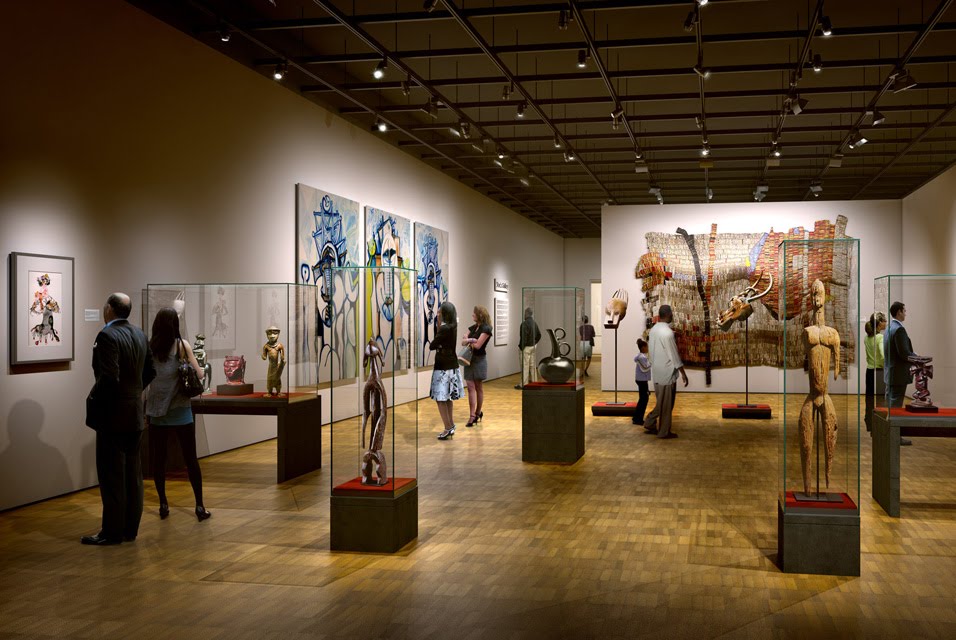
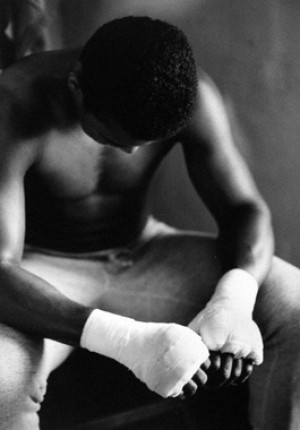
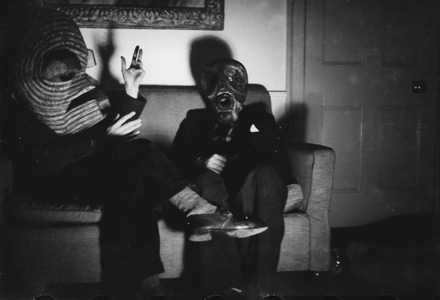
The Sargent Johnson Gallery in San Francisco, CA, is showcasing a special exhibit, entitled “Past Forward: African Spirituality in Contemporary Black Art.”

This exhibit is a shout out to African rituals and magic, through contemporary art. Says one of the artists, “Through my art, I want to be a shaman… that shows others how to reach the other side of emotional and psychological pain.”

That’s deep. So is the visual art which is multifaceted and inspires the admirer’s contemplation.

Admission is $2-$5 and the exhibit shows until Thursday, August 19th.

Oprah and Bernie Mac’s Favorite Black Artist

If pictures are worth a thousand words, then self-taught artist Kevin A. Williams has created enough elements of love, intimacy and passion on canvas to write a book. The sensual art that he creates is among the most contemporary African-American art of our time. Williams combines acrylic and air brush techniques to speak to different generations of people. He enjoys expressing love, community and the family through his paint and brushes. Williams, thirty-something, and best known by his reversed initials, WAK, stays busy creating mixed-medium pieces inspired by his coming of age during the ‘70s and ‘80s (a time when music inspired major cultural shifts in fashion and art). While still in high school, he was very much aware of the cultural shift.

Williams’ artistic talent was recognized early. At age 15, he realized that painting was what he would spend the rest of his life doing. He was truly fascinated by painting, and stayed long hours in his studio to polish his talent. He then launched his career as a commercial artist. His talent earned him numerous honors including three National Scholastic Awards, and a coveted ACT-SO Gold Metal. His debut print, “Taking Her Back,” the first in a five-part series, pays homage to the beauty of black love with muted, natural tones and an emotionally charged scene. This piece conveys the respect and honor that the black man should hold for black women. “We are powerful people and there are certain messages I try to portray,” says Williams. “I try to capture the elements of love.” He reminisced about the ‘70s: The romanticism, music, culture and black folks making a statement. “I paint my music,” he says, referring to Marvin Gaye, Earth Wind & Fire, and Maxwell. His paintings reflect the process of a relationship (a man meeting a woman, to magnificent love, to having a family).

Black Women’s Art Festival


The kick off of the 7th Annual Black Women’s Art Festival (BWAF) will take place July 29th-August 1 @ The Rotunda, 4014 Walnut Street, Philadelphia, PA 19104 For more info check out their website

Art After 5

Friday evenings take on a whole new groove with Art After 5, at the Philadelphia Art Museum, located at 2600 Benjamin Franklin Pkwy, Philadelphia, Pennsylvania. A unique blend of entertainment from 5:00–8:45 p.m.** in the Great Stair Hall. With an eclectic mix of international music on the first Friday of each month, and recognized and emerging jazz artists performing all other Fridays, it’s a stylish way to start your weekend. This Friday Toni Miceli Tribute to Modern Jazz Quartet. For more information, please contact Evening Programs/Art After 5 by phone at (215) 684-7506 or by e-mail at artafter5@philamuseum.org

The Angel of peace – Angelic Collection by Charles Bibbs

The fifth in“Angelic Collection” series
Giclee on Paper
Limited edition size=100
Remarque edition=25

Image size=20.5″h x 34″w

Charles Bibbs

An artistic genius educated in and a native of Los Angeles Bay Area, Charles Bibbs creates his special brand of stylized art capturing the attention of art enthusiasts around the world. Charles Bibbs noble compositions and signature technique fuses acrylic paint and ink coupled with African and contemporary African American themes. The art of Charles Bibbs is born through a creative process which comes from a level of spirituality and commitment to empowerment in the African American community.

Back to Art for Sale

Margo Humphrey (The David C. Driskell Series of African American Art)

In Margo Humphrey, Adrienne L. Childs explores the career of one of the most inspiring artists and printmakers of our time. Best known for her “sophisticated naïve” style, Margo Humphrey (b. 1942) transforms personal experiences into narratives that speak to the human spirit. Bold colors and flat planes intertwine using the artist’s unique iconography to address issues of race, gender, spirituality, and relationships. Part autobiography and part fantasy, Humphrey’s work alludes to the correlation between the temporal and the spiritual as they coexist in her world.

Humphrey employs visual metaphors to channel her experience growing up as an African American woman. Everyday objects become recurring symbols in her prints: zebras embody the strength of her heritage; a plate of yams represents nourishment or survival. Whether celebrating her childhood or confronting her personal fears, Humphrey’s artwork navigates her life story to convey hope, possibility, and love.

Margo Humphrey presents over forty-five color plates, from the artist’s early abstract art through her groundbreaking lithographs in the figurative narrative style. The text by Adrienne L. Childs considers the memories and events that inspired Humphrey’s powerful oeuvre, and the foreword by David C. Driskell places Humphrey in the forefront of contemporary printmaking.

Since Humphrey’s first solo exhibition in 1965, her art has been exhibited and collected worldwide and now resides in the collections of the Museum of Modern Art, the Smithsonian American Art Museum, the National Museum of Women in the Arts, and the Victoria and Albert Museum. Humphrey has lectured and taught across the world and is currently a tenured professor of art at the University of Maryland, College Park.

ADRIENNE L. CHILDS is curator-in-residence at the David C. Driskell Center for the Study of the Visual Arts and Culture of African Americans and the African Diaspora at the University of Maryland, College Park. She received her PhD in nineteenth-century European art from the University of Maryland, College Park, as well as an MBA from Howard University and a BA from Georgetown University. Dr. Childs specializes in twentieth-century African American art, as well as race and representation in eighteenth- and nineteenth-century European art. She teaches African American and European art history and is the author of Evolution: Five Decades of Printmaking by David C. Driskell (Pomegranate, 2007).

DAVID C. DRISKELL is Distinguished University Professor of Art Emeritus, University of Maryland. A noted artist, curator, scholar, and lecturer, Driskell received the National Humanities Medal from President Bill Clinton in 2000. His paintings were exhibited in 1993 at the American Academy of Arts and Letters and are in many public and private collections worldwide.

more>>>>>>>>>>>>>>>>>

Connecting People With Art : African American Art by October Gallery

“The book is amazing,” said Walter Shannon, who owns The Famous E&S Gallery, 108 S. 10th St., with his wife, Cathy. “I think it does a great job of researching black art into the 21st century, and helps expose a lot of newer artists, and a lot of dealers who have made these artists successful. It gets into Alonzo Adams and William Tolliver and Paul Goodnight but also has Joshua Johnson, Romare Bearden and Jacob Lawrence.” –Courier Journal, Louisville, KY

This book is a written account of what October Gallery (OG) means to us. We attempted to unfold the saga of how OG evolved over time. In addition we queried patrons and artists alike: “What is the value of African American art to you?” Their personal responses, interesting and insightful, are included throughout our story. Both our national and international patrons and artists have witnessed (first hand) the creation and development of the African American art industry, which prior to the 1970s was almost non-existent. This group of patrons and artists are part of what we call “BlackStream Renaissance”. Most African American artists market and exhibit in the African American community. Successful African American art festivals and expos, where artists sell and exhibit, recognize the importance of marketing to this special community. It is in this community where the strength and the value of African American art begins. It is this community that has provided the foundation for Blackstream Renaissance. It is this community that has given us the content, the material, the stories for “Connecting People with Art”. This book recognizes the pioneers of Blackstream Renaissance.


more>>>>>>>>>>>>>>>>>>>>>>

The Other Side of Color: African American Art in the Collection of Camille O. and William H. Cosby, Jr.

David C. Driskell’s easy-to-read and thorough critique of the African American art experience—the other side of color—breaks new ground in presenting almost one hundred selections from a unique art collection that provides the context for this book.

First is an overview of the history of African American art–which in this country predates the Civil War–and a detailed explanation of the raison d’etre behind the Cosby collection. Part 2 discusses five prominent postcolonial African American artists who lead the way for future black artists and the struggles they overcame to promote cultural emancipation and acceptance in the American mainstream.

Subsequent parts reveal how African American artists continued the quest for recognition, culminating in the turning point of black culture in the twentieth century in the United States: The Harlem Renaissance. Throughout the discussions within each of the book’s six parts, beautiful full-color artworks from the Cosby collection highlight and validate Driskell’s writing. Rene Hanks’s biographies add even more information about the featured artists as well as indicate the locations of the major collections of their works.

more>>>>>>>>>>>>>>>>>>>>

Is Blackface Racist, Bad Taste or Art?

Pundits are asking whether some folks may be taking this post-racial thing a little too far.

A year after Vogue Italia published an edition featuring all-black models to draw attention to the lack of opportunity for black women on high-fashion runways, the French edition of Vogue put a model in blackface.

An episode of “America’s Next Top Model” took the contestants to a sugar cane field in Hawaii and, after a short explanation of immigrants coming to work in the fields, race mixing and the resulting mixed-raced children, the models were assigned mixed heritages and colorized with makeup to create the images and ethnicities that Banks admitted may not necessarily have been culturally accurate, but were a fashion “interpretation” of what their blends could look like.

An Asian, for example, was dressed as half-Botswanan and half Polynesian.

You get the picture.

Last month, Harry Connick Jr. nearly walked off the set of an Australian TV show he was guest-judging when a group parodying the Jackson Five came onstage in blackface. Two months ago, a lead character in the hit, 1960s-set drama “Mad Men” performed a song in blackface.

Is it racist, bad taste or a bit of artistic license?

Gazelle Emami, writing on The Huffington Post, said Banks went from over the top to offensive with the lastest stunt.

“Call it what you want, but that’s basically a euphemism for putting them in blackface,” Emami wrote.

But others disagreed.

“I don’t see this as blackface,” cultural critic Michaela Angela Davis told BlackAmericaWeb.com in an e-mail. “Perhaps a little lacking in substance, like why didn’t each model have to research the cultures or at the very least have a ‘mood board’ of images of the cultures they are interpreting, which most seasoned photographers and editors do? But, alas, this is reality TV and a new photographer, though not new in fashion.”

Davis, in an opinion piece for Essence.com, said the real post-racial news is in the power that First Lady Michelle Obama exhibits as a fashion icon and how it turns the table on how black women can now be viewed.

“Much of white mainstream identity has benefited from and counted on black women being portrayed as sick, poor, ignorant, abused and sexually deviant or just a loud, hot ghetto mess. Our pitiful position secured, and in some ways created, their position on the pedestal. What now? Is it really time for the white standard of beauty to step off?” Davis wrote.

“When the identity of an entire culture and industry is dependent upon the negation or the degradation of the beauty or even existence of another, (there was not one featured black model in Vogue‘s historic September 2007 issue, its biggest ever) what happens when that very image is dominating media all over the world? What happens when a society addicted to the image of white women is faced with the inevitable existence of Michelle Obama representing many other women like her?”

And while Mrs. Obama no doubt is helping change many folks’ definition of black womanhood, there are still images out there making it hard for black women to be seen at all.

“I feel like we’ve gone backwards,” Susan Gordon Akkad, senior vice president for corporate marketing for Estee Lauder Companies, Inc., said of Vogue’s decision to put Dutch model Lara Stone in blackface.

There are fewer black models on the runways and in fashion magazine spreads, yet, Akkad said, there was a time when black models were designers’ muses.

“There was Naomi (Campbell) front and center; there was Veronica Webb,” Akkad told BlackAmericaWeb.com.

“Part of it is the way models are cast is different. They are chosen by casting …..

more>>>>>>>>>>>>>>>

R&B singer, Marvin Gaye mentor Harvey Fuqua dies

DETROIT (AP) — Singer, songwriter and record producer Harvey Fuqua, an early mentor of Marvin Gaye, has died. Fuqua was 80.

Ron Brewington of the Motown Alumni Association says Fuqua died of a heart attack Tuesday at a Detroit hospital.

The Louisville, Kentucky, native founded the R&B-doo-wop group the Moonglows, which signed with DJ Alan Freed. The group’s first single was the 1954 hit “Sincerely.”

Fuqua added Gaye and others in 1958 to a reconstituted group that he called Harvey and the Moonglows. It had the 1958 hit “Ten Commandments of Love.”

He started Tri-Phi and Harvey Records in 1961, recording the Spinners, Junior Walker & the All Stars, and Shorty Long.

Motown Records founder Berry Gordy later hired Fuqua to develop recording talent.

Copyright 2010 The Associated Press.

more>>>>>>>>>>>>>>>

Market for African-American art continues to grow

At its sixth biannual specialist sale, Swann sets four new artist records

By Viv Lawes | Web only
Published online 9 Mar 10 (market)

Hot on the heels of resurgent sales of impressionist, modern and contemporary works in London, auction records for African-American artists continued to stack up as Swann held its sixth dedicated biannual sale on 23 February in New York.

Sales were patchy but healthy enough: of 162 works offered, 118 sold (73% by lot) at a premium-inclusive total of $1.24m, just under the $1.3-1.9m total estimate. The top seller was auction virgin Malvin Gray Johnson’s best-known and celebrated oil painting Swing Low, Sweet Chariot, 1928-29, for which a collector paid $228,000 (estimate $200,000-$250,000). Four new artist records followed as institutions, collectors and dealers competed for the best works—this included a record for Sargent Claude Johnson’s tan painted terracotta figure Untitled (Standing Woman), 1933-35, which went to an unnamed institution for $52,800.

Swann’s inaugural sale of African-American art took place in February 2007, growing from specialist-in-charge Nigel Freeman’s observation of the frisson caused by African-American artists’ works on paper during regular prints and drawings sales.

“Three years ago, there was no auction market for African-American artists that even came close to their fair market value, with the exception of works by Jacob Lawrence, Romare Bearden and Henry Ossawa Tanner”, said Mr. Freeman. “Now we have set auction records for many more important artists and have introduced over 100 African-American artists to auction”.

Swann’s market for printed and manuscript African-Americana is significantly more mature. Specialist annual sales were launched 16 years ago by Wyatt Houston Day. The latest took place on 25 February, two days after the African-American fine art sale—with matching sales statistics of 73% sold by lot (287 of 390).

Institutional interest was spurred by an African-American art history archive built over five decades by artist-writer James Amos Porter, author of the groundbreaking Modern Negro Art, 1943. Packed with correspondence, photographs, catalogues and other data, four major institutions examined it before the sale. One anonymous institution secured it for $50,400 (estimate $30,000-$40,000), described by Wyatt Day as “a very good but still modest price [considering] the richness of the prime research material”. The result was second only to the departmental record of $57,600, set last February for five hours of original 16mm film of black life in the 1920s, shot by Reverend Solomon Sir Jones.

more>>>>>>>>>>>>>>>>>

Introducing First Lady Edition of Michelle Obama Life-Like Figurine From Thomas Blackshear’s Ebony Visions Collection

With all the aspects of a highly collectible and rare offering, collectors and enthusiasts anticipate high demand for this First Lady Edition. Artfully detailed, the figurine captures the essence of Michelle Obama…elegant, sophisticated yet disarmingly down-to-earth, traits she is certain to pass on to her own lovely daughters.

Ripon, CA (BlackNews.com) — Limited to only 3000 pieces worldwide, Thomas Blackshear’s figurine of Mrs. Obama is an heirloom quality work of art that can be passed down for generations. Mothers, daughters, sisters, cousins, girlfriends and co-workers, who appreciate value and true character, will want to own this significant piece of modern history. However, considering the popularity and limited production of Blackshear’s soon-to-be-released First Lady Edition, it is expected that this figurine won’t be available long. Orders should be placed now at Collector Hub to guarantee delivery of First Lady Edition of Michelle Obama.

In the likeness of her official White House portrait, Thomas Blackshear’s interpretation of the First Lady is sure to impress. A lovely complement to the President Barack Obama figurine; Michelle wears a classic sleeveless dress resembling the one designed for her by Michael Kors. As in the official photograph of Mrs. Obama taken in the Blue Room of the White House by Joyce N. Bognosian, the First Lady Edition figurine bares her delicately sculpted arms to show off her signature style.

Much like the highly sought after Presidential Edition of the Barack Obama figurine, collectors will be lining up to purchase the First Lady Edition Michelle Obama. Both pieces are part of Blackshear’s Ebony Visions(TM) Collection and pay honor to America’s first African-American Couple in the White House. Order both figurines today at Collector Hub and begin a personal legacy that can be handed down from mother to daughter or other members in the family tree.

America’s infatuation with its First Ladies is not at all a passing trend. President’s wives are an intricate part of this nation’s history. Serving their country silently, the presidential wives have remained loyal and supportive from the past to the present. First and foremost a mom and wife, Michelle Obama is an inspiring example of one who believes it is also her duty to serve her country.

“I believe that each of us – no matter what our age or background or walk of life – each of us has something to contribute to the life of this nation.” — Michelle Obama, Speech at the Democratic National Convention

Kicking off her campaign Let’s Move, Obama practices what she preaches by working with parents and community to help fight obesity in children. A motivating example of hope, commitment and determination, First Lady Michelle Obama is sure to be an unforgettable figure in American history and Blackshear’s First Lady Edition figurine is an excellent way to celebrate this remarkable woman.


About Thomas Blackshear:
Widely known for his dignified and uniquely powerful depictions of African-Americans, Thomas is one of the hottest contemporary collectible artists in the world. His imaginative portrayals are full of lifelike details that transcend stereotypes and resonate with universal truths. Thomas has helped bring the African-American experience to life in a way that’s never been conceived of before. A touring exhibit of his Black Heritage works premiered at the Smithsonian Institution’s National Museum of American History. He has been honored with the coveted International Collectible Artist award. He has also been featured on The 700 Club, Ebony/Jet Showcase, and in The Saturday Evening Post. Blackshear has created works for Disney, Coca-Cola, National Geographic, the United States Postal Service and Universal Studios; and these are just a few of his accolades.

About Collector Hub
Formerly known as Blackshear Online, Collector Hub, established in 2001 is the Internet’s preeminent gathering place for collectors of internationally acclaimed African American artist, Thomas Blackshear. Our goal is to continue to be the most comprehensive Thomas Blackshear community by providing the essential link collectors need to interact and share ideas and information, and conveniently and confidently purchase Thomas Blackshear products online. Visit our web site at www.CollectorHub.com or call us at (209) 599-8599. And don’t forget to bookmark our new web site.

All trademarks and brands are the property of their respective owners.


PRESS CONTACT:
Larraine Covington
info@CollectorHub.com
209-599-8599

more>>>>>>>>>>>>>>>>

Ed Terrell, art director and curator, African American Coalition of Reading

Why he’s in the news: The African American Coalition of Reading joined with Outsider Folk Art Gallery to create an exhibit that was one of Pennsylvania’s largest tributes to black artists. Originally on view in February and March in a Penn Street gallery, “Believe, Achieve, Succeed” was so popular, it was extended through the end of May. Terrell has also worked on 13 murals around Reading.
Personal: Terrell, 61, grew up in Reading and lives in the Glenside neighborhood with his 13-year-old son, Rupa. His wife, Maria, passed away 13 years ago.

Education: Terrell attended Reading High School and is a self-taught artist.

Career: Terrell has worked around the world as an artist and interior designer. He created props for a theater near Tel Aviv, Israel, and spent two years designing the decor for the Oasis nightclub in Reading. As art director and curator for ACOR for the past five years, Terrell finds art for the gallery, organizes exhibits and coordinates collaborations with local schools and groups.

How he got involved with the arts: As a child, Terrell was part of a group of students from Reading schools who were asked to paint windows on Penn Street stores from October through the holidays. He was hooked. “You can take something drab and change it to something that’s beautiful,” he said.

History of ACOR: The group of artists started in 2000 as coordinator of Black History Month programs with the Reading Public Museum. The group became more active, putting up exhibits at different galleries to educate the public through the arts. ACOR moved into the GoggleWorks when the center opened in 2005. “As African-American artists, we feel that we can inform the people about our culture through the arts,” Terrell said

Why focus on the arts? “Art is something that’s appreciated by people in all walks of life. Art is therapeutic and relaxing, especially for children.”

Most rewarding part of the job: “The most rewarding part of what I do is to be a liaison between the artist and the community. Art is a medium where you can make pleasant things happen.”

You might be surprised to know: Since Terrell left Reading at age 19, here are the places he’s called home: Topanga Canyon, Calif.; Oregon; Norway; Spain; Portugal; Senegal; Gambia; Italy; Israel; India and then back to Reading 13 years ago.

– By Erin Negley

more>>>>>>>>>>>>>>>>>>>>>>

The Charles H. Wright Museum of African American History

The Charles H. Wright Museum of African American History is the world’s largest institution dedicated to the African American experience. The Museum provides exhibitions and programs that explore the diversity of African American history and culture. The Museum houses over 30,000 artifacts and archival materials and is home to the Blanche Coggin Underground Railroad Collection, Harriet Tubman Museum Collection, Coleman A. Young Collection and the Sheffield Collection, a repository of documents of the labor movement in Detroit. The Museum features:

  • Seven exhibition areas devoted to African Americans and their stories.
  • The Core Exhibit: And Still We Rise: Our Journey Through African American History and Culture. The interactive, multi-level exhibit opened to rave reviews in November 2004.
  • A Glass Dome, 100 feet in diameter and 55-feet high. The architectural wonder is two feet wider than the State Capitol dome.
  • The terrazzo tile creation, Genealogy, by Hubert Massey located in the Ford Freedom Rotunda floor.
  • The Louise Lovett Wright Research Library.
  • The General Motors Theater, a 317-seat facility for live performances, film screenings, lectures, presentations and more.
  • A Museum Store that sells authentic African and African American art, books and merchandise.

more>>>>>>>>>>>>>>>

The African American Heritage Preservation Cultural Complex

The African American Heritage Preservation Cultural Complex (AACC) originated in 1984,as a hobby, by Dr. and Mrs. E.B. Palmer, then opened in 1989 as the Black Heritage Park. The Palmers’ and George Barner incorporated AACC in 1994. The Palmers’ entered into a Lease Agreement in 1991 for $1.00 per year. The park occupies approximately 3 acres of the wooded land to the rear of the Palmer House at 119 Sunnybrook Road. The AACC was chartered and granted 501 (c)(3) tax status in October 1994. The AACC currently has 3Exhibit Houses located along a natural trail beside a creek, a Mini-Amphitheater, a Bird Sanctuary, Nature Preserve and a Picnic Area and Botanical Gardens. There is no admission fee, however, visitors and friends have donated small sums of money. Friends and organizations have also donated labor and artifacts.

The AACC is striving to be self-sustaining. Plans for the acquisition of additional land for the construction of a major museum complex are being developed. A permanent and mobile exhibit of, “Women of Note” is one of the museum’s new outstanding expansion projects. Plans for the display of a reproduction of the “Amistad” Slave Ship are being developed. The mutiny on the “Amistad” symbolizes the first Civil Rights Case in America and a pronounced example of how the judicial appellate system worked in America and North Carolina. A drama, telling the Amistad Story will be produced during July and August annually. The history of The Benjamin Spaulding Family (NC Mutual Life Insurance Co.) will be presented and preserved in a 4th exhibit house.

Word of what the Palmers’ have done spread slowly throughout the Triangle area and friends began to request guided tours for small groups. As educators, the Palmers’ made verycapable lecturers, thus the facilities were opened to these visitors with the Palmers’ conducting tours through the Complex. During 2000, over 140,000 visitors experienced the program of AACC. Some of the organizations which have visited the AACC site, have endorsed its program, and which have given support are: Capital Area Visitors Bureau, North Carolina Department of Archives, schools in the Piedmont Area, North Carolina Association of Educators, Downtown Raleigh Development Corporation, Raleigh Arts Commission, A.J. Fletcher Foundation, Cannon Foundation, United Arts Council, Triangle Community Foundation, National Education Association and the D. Michael Warner Foundation to name a few. Tour groups have come from across the state of North Carolina, out-of-state and from foreign countries.

Groups which have visited the Complex have come from schools, churches, sororities, fraternities, community organizations and organized group tours. Individuals have come as a result of referrals by tourist center tours and individual testimony. With increased volunteers, staff, upgraded mobile and permanent exhibits, electronic lectures and brochures, the AACC will be able to provide more service to a broader and larger society.
Dr. Tonea Harris Stewart, Actress, was designated “National Spokesperson” for the AACC, while Christopher Coombs, Jr. (nine years old-Durham) was designated “National Youth Spokesperson” for the Amistad Project.

Non-Profit Founded in 1984, the Organization for African American Heritage Preservation Cultural Complex (AACC) is a Chartered organization by the state of North Carolina (October 13, 1994) and tax exempt under the Internal Revenue Code 501(c)(3), with a Foundation Classification of 509(a)(2). AACC operates with a lease agreement at 119 Sunnybrook Road, Raleigh, NC (a site zoned “museum” by the Raleigh City Council in February 1995). The AACC Enjoys a $1.00 per year rental agreement with options to extend or to buy (thanks to Curators Dr. E. B. and Mrs. Juanita B. Palmer).

African American Cultural Complex
119 Sunnybrook Road
Raleigh, North Carolina 27610-1827

Office Telephone
919-250-9336

more>>>>>>>>>>>>>>>>>