An overview
Swaziland profile
An overview

Connecting People with Art since 1985
An overview
When
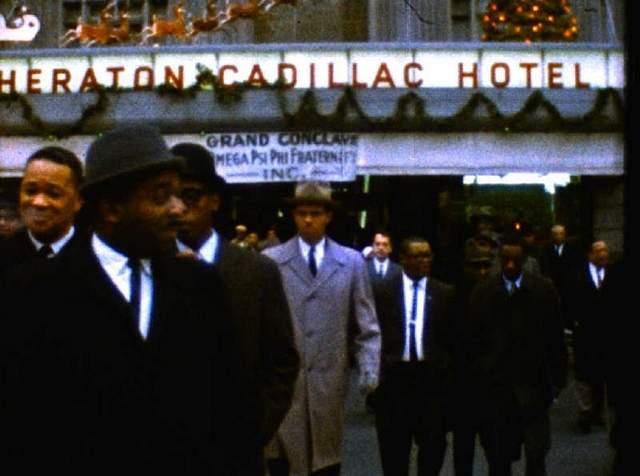
Prelinger returns this weekend with three screenings of motion-picture snapshots of the city. The footage was recorded mostly by amateur filmmakers from 1916 through the late 1970s. The video-projected program comes from mostly one-of-a-kind 8mm and 16mm films that are part of his Prelinger Archives, a collection of historical industrial and home movies.
“Much of this year’s edition came from films I have found recently,” Prelinger said in a phone interview. “The biggest difference from last year is the amount of African-American film footage that has come my way.”
Among the scenes:
•
• Women working at a Chrysler auto plant during World War II.
• The 1965 national meeting of the Omega Psi Phi fraternity, with special guest speaker Wilt Chamberlin.
• Detroiters making a pilgrimage to the newly opened
As with last year’s program, Prelinger will present the footage without sound.
“This isn’t about nostalgia, another chance to mourn the loss of the old
7 p.m. Friday-Saturday ($5) and a matinee at 4 p.m. Saturday (free when you come with a child) at the
‘The Tree’ worth trip to DFT: In the first few minutes of “The Tree” ( * * *), a young father and husband drops dead suddenly, leaving his wife and four kids scrambling for closure.
Then 8-year-old daughter Simone (Morgana Davies) discovers that the massive fig tree at the side of their house whispers to her as she nestles in its welcoming arms. Soon her mother (Charlotte Gainsbourg), who has taken to her bed after the loss of her husband, is also hanging out in the tree. “It’s not a tree; it’s an octopus,” barks a disapproving neighbor as the tree’s roots spread almost supernaturally.
With a big heart and an eye for stunning color composition, director Julie Bertuccelli turns “The Tree” into a symbolic fable about the way people mourn. Though the kids are good, the movie is anchored by Gainsbourg’s understated performance as a young widow who’s unprepared to raise a family alone.
7 p.m. Friday-Saturday and 2 p.m. Sunday at the Detroit Film Theatre at the Detroit Institute of Arts, 5200 Woodward, Detroit. 313-833-4686 or www.dia.org/dft. $7.50; $6.50 students, seniors.
This weekend, the theater will show “Irma Vep” ( * * *), starring Maggie Cheung as the star of a troubled French film shoot, and “The Corporation” ( * * *), an acclaimed 2004 documentary that puts a human face on big business.
“We want to provide diversity for Detroiters, not the narrow focus of the former programmers,” says Landy. He was referring to the offbeat cult and horror films that showed at the theater between October 2009 and May of this year, when a lease dispute closed the theater.
The new Cass City Cinema is named after a former program that showed political and socially minded art films and documentaries in the
“We have already been in contact with several cultural organizations and film collectors to put upcoming programs together,” he says.
Cass City Cinema is at
Ferndale Film Festival this weekend: The third annual Ferndale Film Festival screens mostly short films in three locations this weekend. The focus will be on independent, locally produced films, and many of the filmmakers will be in attendance.
Titles range from horror movies like Matt Cantu’s “The Zombie Factor” (7 p.m. tonight) to Erin Curd’s documentary “The Gentleman’s Club” (1 p.m. Saturday) about a transformative program for fifth-graders in a
Venues include the Ringwald Theatre (22742 Woodward), the Ferndale Public Library, (222 E. Nine Mile) and Blumz (503 E. Nine Mile). Info at www.ferndalefilmfestival.org . $5 per screening, except for the free 1 p.m. Saturday program at the Ferndale Public Library.
Zombies invade
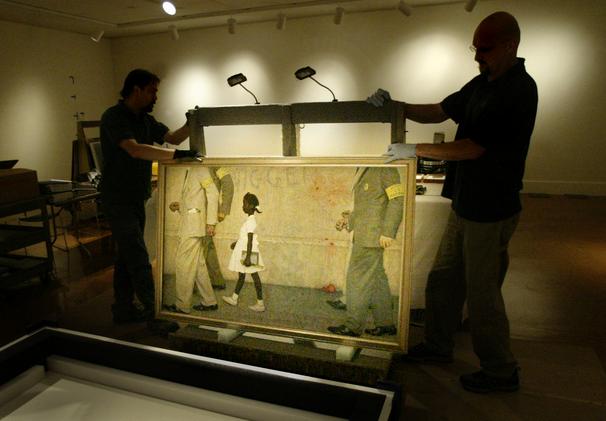
An iconic painting that has most recently been on display at the White House was transported by truck from Washington this week and uncrated Tuesday morning at the Dayton Art Institute.
“The Problem We All Live With” depicts a young African-American girl on her way to school accompanied by four federal agents. On the wall behind her are racial slurs and tomato stains.
The famous image, inspired by a real-life incident, will be a highlight of “American Chronicles: The Art of Norman Rockwell,” the exhibit that opens Nov. 12 at the DAI. The traveling exhibit was organized by the Rockwell Museum in Stockbridge, Mass.
The inspiration for Rockwell’s painting came from Ruby Bridges’ historic walk integrating the William Franz Public School in New Orleans on Nov. 14, 1960. The incident took place six years after the landmark 1954 United States Supreme Court Brown v. Board of Education ruling declaring that state laws establishing separate public schools for black and white students were unconstitutional.
Rockwell’s famous painting appeared ion the cover of Look magazine on Jan. 14, 1964.
“It is really unbelievably moving,” said DAI education director Susan Anable, who was gazing at the painting after it had been carefully removed from a large navy crate, transported by dolly, and hung on the gallery wall. “It feels like it could be happening in front of our eyes. That tomato splatter looks like someone just threw it.”
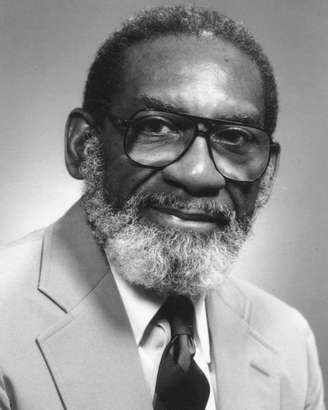
A crowd of movers and shakers was exiting an event at the White House during the
As Reid was leaving, civil rights leader and
“He didn’t say the mayor,” Reid recalled. “He didn’t say the governor. He said tell Arthur Johnson. I think that speaks volumes about who Arthur Johnson was. He was a quiet man of enormous strength.”
Human rights activist, educator and arts advocate Arthur Johnson died at home Tuesday after an extended illness, prompted in part by the debilitating effects of Parkinson’s disease, said Trevor Coleman, family spokesman and former Free Press editorial writer. Johnson was 85; he would have turned 86 on Saturday.
“When I came to Detroit there were three men I looked up to: Coleman Young, Damon Keith and Art Johnson,” said Detroit Mayor Dave Bing, upon learning of Johnson’s passing. “They were the kind of role models who represent what we expect in strong black men. They were sensitive to the issues facing our people and weren’t afraid to stand up and speak out.
“Whether it was leading the NAACP, Wayne State or in the arts community, Art was always there,” Bing said. “He had a tremendous positive impact on this city, and will be greatly missed.”
In recent years, Johnson was best known as a university administrator. He retired as senior vice president of Wayne State University in 1995 after 23 years in various high-ranking posts.
But his impact was perhaps greatest as a stalwart soldier in the battle to end racial discrimination in housing, public education, restaurants and other public places in Detroit — the adopted home he came to love and fight tirelessly for after moving to the city from Georgia in 1950.
He was born in Americus, Ga., and educated at Morehouse College and Atlanta University, both in Atlanta. Johnson was a trusted adviser to Mayor Coleman A. Young and a comrade of Dr. Martin Luther King Jr. Johnson and King graduated in 1948 from Morehouse, a historically black college.
“Art rose from poverty to prominence, largely on the strength of his intellect, integrity, determination and compassion for all people,” said longtime friend Judge Damon Keith of the U.S. 6th Circuit Court of Appeals.
Johnson was a “man of absolute integrity, loyalty and commitment to this city and community,” Keith said.
“There was nothing too small or too big for Art to step forward if he thought it was in the best interest of this city and the constituents he served,” said former Detroit Mayor Dennis Archer. “And he was one of the most levelheaded people you ever want to see. His demeanor was such that he was never loud or boisterous; he was always very measured and effective.”
Archer said Johnson’s memoir, “Race and Remembrance” (Wayne State University Press, $24.95), published in 2008, ought to be required reading for all Detroiters.
“It is a must-read for our young people because it gives a flavor of the challenges many black people faced living in the city of Detroit, not to mention his own personal challenges; yet he went on to triumph and make this place a better place for all of us,” Archer said.
Former Detroit City Councilwoman Sheila Cockrel described Johnson as “one of the lions of Detroit’s civil rights movement. … His own life story showed that you can overcome the awfulviciousness of blatant racism.”
The national NAACP recruited Johnson to Detroit in 1950 to become its executive secretary. As the organization’s top staff person, Johnson held the post for 14 years. Under his leadership, the organization became one of the most respected in the nation.
He was president of the Detroit Branch NAACP in 1987-93
Johnson was one of the creators of the Freedom Fund Dinner, which continues to be one of the largest fund-raising events of any civil rights group.
“He was a man of high integrity and commitment to civil rights,” said civic leader Mary Blackmon, a former board member of the Detroit branch. “He epitomized what a leader should do in helping to make the NAACP responsive to the community, as well as fighting on behalf of the community as a whole. He used whatever resources he had to elevate the mission of the NAACP.
“And he was able to do things others couldn’t do because people respected him so much.”Johnson also served as deputy director of the Michigan Civil Rights Commission. In 1966, he was appointed assistant superintendent of the Detroit Public Schools, becoming the first African American to hold the post.
Sen. Carl Levin, D-Mich., said: “Arthur Johnson’s passing is a deep personal loss for me and my wife, Barbara. While his manner was gentle, his drive to achieve justice was strong and effective. He was a close personal friend of ours, and a great neighbor to us in Green Acres in Northwest Detroit during the 1960s and ’70s. I also had the privilege of working closely with him when I was the general counsel for the Michigan Civil Rights Commission and he was the deputy director. His work for the NAACP was legendary. We will miss him terribly, as will all who knew him and all who strive for justice.”
A huge fan of the arts, Johnson viewed opening the arts to the masses as an extension of his civil rights work.
He was on the board of the Detroit Symphony Orchestra and pushed for diversity within the orchestra on stage and among concertgoers.
He encouraged the DSO to perform works of African-American composers, and encouraged the organization to hire African-American musicians and conductors.
“Arthur Johnson, for many years, has been the catalyst for accessibility and inclusion for the entire community to the full breadth of the arts experience in Detroit,” said Wayne Brown, director of music and opera for the National Endowment for the Arts in Washington, D.C.
Brown was a DSO administrator in the 1970s.
“He was a real champion for inclusion before the establishment of formalized programs that exist throughout the country today,” Brown said. “He wanted the orchestra to be a resource more broadly embraced by the entire community.
“Through his leadership, the Detroit community has been able to benefit from the arts in ways that are not obvious,” Brown said. “He had a persistent drive to advance the arts. I wish I could clone Arthur Johnson so we would have that voice and passion for the arts all over the country.”
Peter Cummings, chairman emeritus of the DSO, called Johnson “one of the most inspiring and loving people I’ve ever met.”
He credited Johnson with being the impetus for the Classical Roots series — an annual concert in February in which the DSO pays tribute to African-American composers.
“A lot of the vitality of the orchestra resulted from Arthur acting as the African-American conscience of the institution,” Cummings said.
Cummings recalled being at a retreat where several people were discussing the progress of the DSO in including African-American music and musicians.
“I remember Art put his hand up to speak — and when Arthur speaks, people stop and listen. He said, ‘We’re still not doing enough.’ And that was Arthur to me. He was always saying, we can do more. We can do better whether it’s in the role of African Americans in the orchestra, the role of the Festival of the Arts in Midtown or for the City of Detroit. He always believed we needed to and could do more.”
In Johnson’s book, he wrote that one of the accomplishments he is most proud of is the creation of the Detroit Festival of the Arts, which annually presents a variety of art free in the city’s Cultural Center.
“It’s because of Art’s affection for the festival that I made it a part of my inaugural activities,” said Reid, who became president of Wayne State in 1998.
“I always felt the hot breath of Arthur Johnson on my neck as I was making decisions,” Reid said. “He became the conscience of the university for so many of us who he taught that serving the community was not just our mission, but our destiny. He was never asking anything for himself; it was always what could we do for others, for the city, and the broader Detroit community.”
Johnson is survived by his wife of 31 years, Chacona, and three children, Wendell Johnson, Brian Johnson and Angela Sewell. He was preceded in death by three sons, Averell, Carl and David.
Funeral arrangements are pending at Swanson Funeral Home of Detroit.
Read More >>>>>
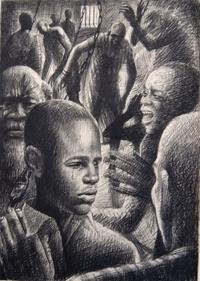
Emory University’s Manuscript, Archives, and Rare Book Library (MARBL) recently acquired two major collections related to African American art and art history: the papers of the late internationally recognized artist John Biggers and the late renowned arts patron Paul R. Jones.
Both acquistions will be celebrated at a public event, “Art, Artists, and Archives: A Conversation with Hazel Biggers and Amalia K. Amaki,” at 4 p.m. Thursday, Nov. 3 at Emory’s Robert W. Woodruff Library. Moderated by Emory Professor Emeritus Richard A. Long, the event will address the importance of preserving papers related to artists and art history.
Panelists will include Hazel Biggers, through whose generosity Emory received the papers of her late husband. John Biggers traveled widely in Africa and studied African artistic and cultural traditions. This knowledge had a significant impact on his own work as a muralist, printmaker and painter.
Dr. Amalia K. Amaki, professor of modern and contemporary art history at the University of Alabama, also will participate in the symposium. She was instrumental in enabling Emory to acquire the gift of papers of Paul Jones. Jones’ interests and life as a businessman, civil rights activist and collector are documented in more than 75 linear feet of manuscripts, photographs, audio and visual material and books.
The Biggers and Jones papers join the rapidly expanding collection of Emory’s holdings of artists, art historians and art collectors. Among these are the papers of Benny Andrews, Camille Billops, Cedric Dover, Edwin Harleston, Samella Lewis and James A. Porter. Emory is quickly becoming recognized as one of the premier institutions for research related to African American art and art history.
The Nov. 3 program, which is free and open to the public, will be held in the Jones Room on the third floor of Woodruff Library, 540 Asbury Circle on the Emory campus in Atlanta, 30322. Parking is available in the Fishburne Deck.
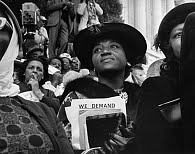
On Thursday, November 3, The Little Theatre and Community Darkroom will present “Positive Negatives,” a documentary about photographer David Johnson, Ansel Adams’ first African-American student at the California School of Fine Arts in San Francisco. Johnson’s work recorded Fillmore Street jazz clubs in San Francisco during the 1940’s, 50’s, and 60’s and the civil-rights movement in San Francisco, the NAACP registration drives, and the march on Washington. His subjects include important civil-rights leaders, Langston Hughes, and musical icons.
The film will screen at 7:30 p.m. and tickets cost $12 ($8 for members). A talkback with Johnson himself will immediately follow the screening. For more information, call 258-0444, or visit thelittle.org.
On Friday, November 4, the Community Darkroom Galleries at Genesee Center for the Arts & Education (713 Monroe Ave., geneseearts.com) will host an opening of “The Photography of David Johnson,” and you can meet the artist in person at the 7 p.m. reception, which is free to attend, and will feature music by Paradigm Shift.
Provides overview, key facts and events, timelines and leader profiles along with current news about Zimbabwe.
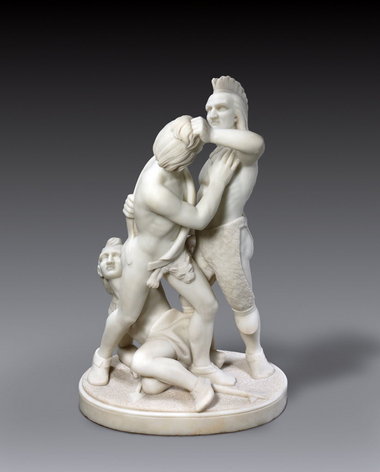
The daughter of a black father and an American Indian mother, she became famous during the 19th century as an expatriate artist living in Rome.
And now she’s in the permanent collection of the Cleveland Museum of Art.
The museum announced on Monday it has acquired for an undisclosed price an exceedingly rare, multifigure marble sculpture by Edmonia Lewis, an artist whose life might be the subject of a full-length movie.
The sculpture, “Indian Combat,” depicts three American Indians locked in a fierce struggle, in poses that recall the classical Greek and Roman art that fueled Lewis’ imagination.
“I’m excited about it,” said museum Director David Franklin. “It seems to knock a few balls out of the park.”
Franklin said the Lewis is a significant addition to the museum’s collection of 19th century American art and its holdings in neoclassical sculpture. Moreover, it’s a piece by a female artist with a highly unusual story.
Born after 1845 (the date is uncertain), Lewis was able to attend college first in Albany, N.Y., and then at Oberlin College, after her brother struck it rich in the California gold rush.
After having been accused of poisoning two white women at the college, Lewis was acquitted at trial, but only after she was severely beaten, according to the newly published catalog of the Allen Memorial Art Museum at Oberlin, which bought a portrait bust by Lewis in 2002.
The Oberlin catalog states that after the trial, abolitionists helped Lewis move to Boston to study sculpture. It was there that Lewis sculpted a noted bust of Col. Robert Gould Shaw, who led a regiment of black soldiers, the 54th Massachusetts Volunteer Infantry, in an ill-fated Union attack on Fort Wagner in South Carolina in July 1863.
Lewis earned enough from selling plaster copies of her Shaw portrait to enable her to travel to Rome, where she established a studio and worked for many years before her death in 1911.
Mark Cole, the Cleveland museum’s curator of American art, said that “Indian Combat” was unknown to scholars before it surfaced in 2010 at the Gerald Peters Gallery in New York.
The sculpture was offered for sale by a Massachusetts collector who had inherited it from his father, who had in turn bought the piece in the 1950s, Cole said.
He said the sculpture is notable for the action and grace of its combatants, and also for the fine variations in the surface textures Lewis used to evoke animal fur, moccasins, animal claw necklaces and hair.
Lewis loved depicting American Indian subjects, and derived much of her imagery from the Henry Wadsworth Longfellow poem “Song of Hiawatha,” but “Indian Combat” is not specifically derived from the poem, Cole said.
Franklin said the museum had to be “aggressive” in the price it paid for the sculpture because other museums were pursuing the piece.
“It’s a coup for Cleveland,” he said.
The work will go on view in the museum’s 19th-century American galleries within two weeks, Cole said.
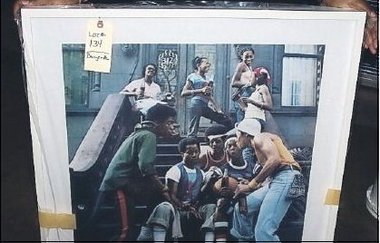
A large collection of photographs and paintings, including many by emerging African-American artists, will be sold at an IRS auction later this month after being seized from a prominent Birmingham attorney to settle a tax debt.
The collection of about 250 paintings and photographs by artists including William Eggleston and Mickalene Thomas has been appraised at more than $500,000 and was seized by the IRS from Russell J. Drake, of the Birmingham firm Whatley Drake & Kallas.
Drake, in an interview Monday, said art is his passion, particularly the work of emerging young African-American artists, and he’s saddened to see the collection go.
“I regret that I’m in this position,” he said. “The recession had a devastating effect on me. It was sort of a perfect storm for a lot of lawyers.”
According to documents on file in Jefferson County Probate Court, the IRS filed two liens against Drake totaling about $497,000. He said that’s “an old number,” and is no longer representative of what he owes the IRS.
Regardless, the collection could raise a substantial amount, said Roberta Colee, the IRS liquidation specialist handling the sale. About 50 different artists and photographers are represented, including Kerry James Marshall, Raymond Pettibon and Mark Flood.
Marshall, a Birmingham native who grew up in South Central Los Angeles, was featured on the PBS program “Art 21” and is known for paintings and sculpture that pay tribute to the civil rights struggle. New York artist Mickalene Thomas is famous for her enamel and sequined paintings of women, which the New York Times called “as impenetrable as they are spectacular.”
One of her works, a painting of a topless prostitute titled “She works hard for the money,” was pulled from the sale after it was judged too provocative by the IRS. At least two other of her works remain in the auction.
To casual observers, though, the photographer Hank Willis Thomas may be the most recognizable. The collection includes at least two photos by Thomas, who is perhaps best known for his “Priceless #1,” a satirical take on the “priceless” Mastercard commercials that makes a powerful statement about inner-city violence.
The piece includes text placed over a photo of a grieving African-American family. It says “3-piece suit: $250; new socks: $2; 9mm pistol: $79; gold chain: $400; bullet: 60 cents … Picking the perfect casket for your son: Priceless.”
Thomas, a graduate of California College of Fine Arts’ masters program and artist in residence at Johns Hopkins University, once lectured at the Birmingham Museum of Art.
The art may be sold individually or in the aggregate, with a minimum bid of $20,000, the IRS said in a prepared statement.
Key facts, figures and dates

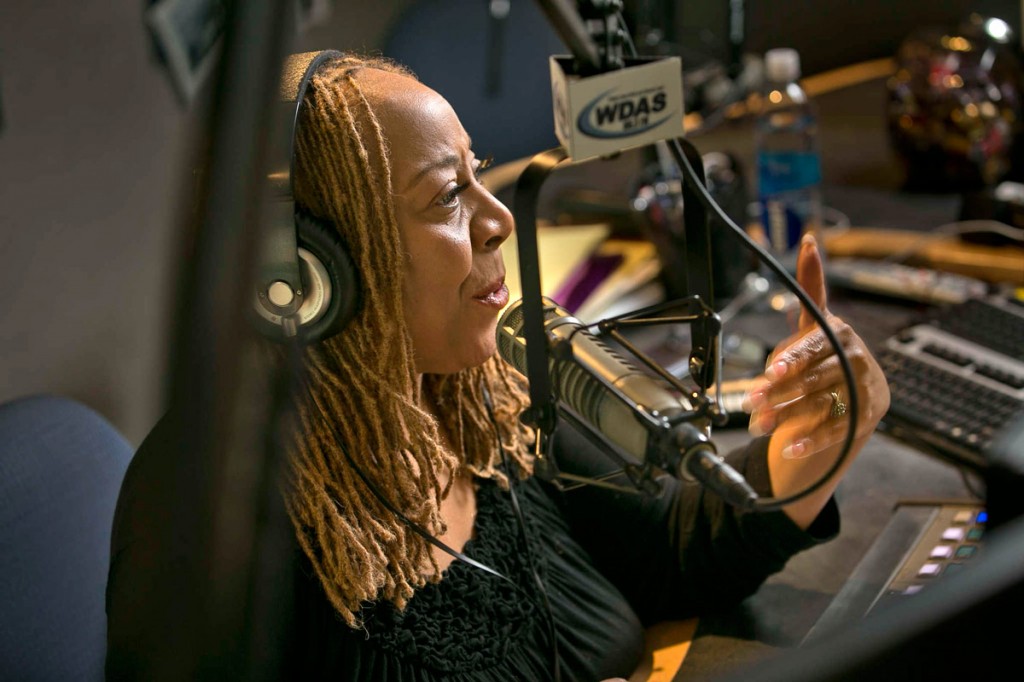 WDAS FM Patty Jackson
 Al Gray, Steve Green and Mercer Redcross III in the studio – WDAS FM
 WDAS FM Patty Jackson at Expo 2011
Provides an overview of Cameroon, including key events and facts about this former French and British colony in Africa

ABOVE PHOTO: David Charles, AKA The Illest Illustrator, from Baltimore.
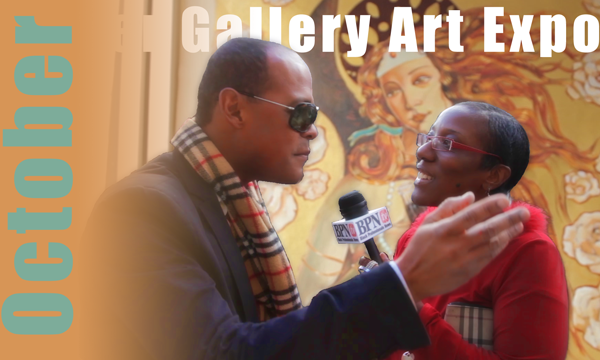
The 26th Annual Philadelphia International Art Expo is a three day indoor/outdoor art event along the 7100 – 7200 blocks of historic Germantown Avenue in the city’s Mt Airy neighborhood running Friday, Saturday, and Sunday, October 14, 15 and 16; Friday and Saturday, 10 AM to 7 PM and Sunday, 10 AM to 6 PM

Artist and sponsor booths will be placed up and down historic Germantown Avenue from Mt.Pleasant St. to Allens Lane.
This is an Expo of popular world art and the art of living well, combining unique visual art with an opportunity to meet and network with a diverse group of visual and craft artists in a setting that is exciting and multifaceted. This event features over 150 art and craft exhibitors / vendors from 45 states and six countries including the many shops and businesses along the avenue.
Expo is presented by October Gallery, which is celebrating 26 years in the art industry and has operated a physical art gallery in Philadelphia since 1985. Its current location is 6353 Greene Street, Philadelphia, PA 19144.
Call (215) 629-3939 or visit the website www.mtairyartexpo.com
About 150 exhibitors will participate representing 45 states and 6 countries. Meet in person: Joyce Lomax of Atlanta and David Charles from Baltimore. Also, meet Cal Massey from New Jersey, Annie Lee of Las Vegas, Edwin Lester from Wilmington and Frank Frazier from Dallas. Many local artists sucn as Raymond Holman, David Lawrence and Ominihu will be exhibiting. The art of world famous visual artists Romare Bearden, Andrew Turner and Diego Rivera will be represented.